A Kalshi parlay isn't technically called a parlay at all. Kalshi calls it a Combo, and the distinction matters more than it sounds like it should, because the mechanics underneath are genuinely different from what a sportsbook does with the same word.
Can you parlay on Kalshi, then? Yes, functionally, even if the branding avoids the term. Polymarket now offers something similar too, launched months later and built on a different regulatory filing. This piece breaks down how both products actually work, how they're priced, and why that pricing difference is the whole reason this topic is worth understanding rather than skimming the past. For the bigger legal picture both products sit inside, Kalshi Sports Betting: Is It Legal, Is It Gambling, and How It Works covers the gambling classification question these parlay style contracts keep running into.
What Is a Kalshi Parlay, Really?
Start with what it isn't. A Kalshi parlay doesn't come from a sportsbook oddsmaker setting a line and baking in a house edge. It comes from a request for quote system, meaning you propose a combination of outcomes and market makers bid to take the other side. No fixed multiplier handed down from above. A price, offered by another trader, that you can accept or walk away from.
Kalshi launched this feature, branded Combos, on September 29, 2025, timed to a Monday Night Football doubleheader. The first day handled about $255,000 in volume across 175 combos. Small numbers next to what a major sportsbook does in an afternoon, but enough to prove the model worked. Since then coverage from Legal Sports Report and several dedicated prediction market sites has confirmed the product is live and actively used, not a beta feature quietly shelved. One outlier source floating around from earlier this year claimed Kalshi has no native parlay product at all. That claim doesn't hold up against the volume of reporting, and a direct check of Kalshi's own site confirms Combos are very much active.
How Do Kalshi Combos Work?
Building one starts simply enough. You pick two or more event contracts, say a team to cover a spread and a specific player to score, and submit that bundle as a request for a quote. The system sends your proposed combo out to market makers, who respond with a price somewhere between zero and a dollar. You accept the quote or you don't. There's no guaranteed match waiting for you the way there is on a regular order book.
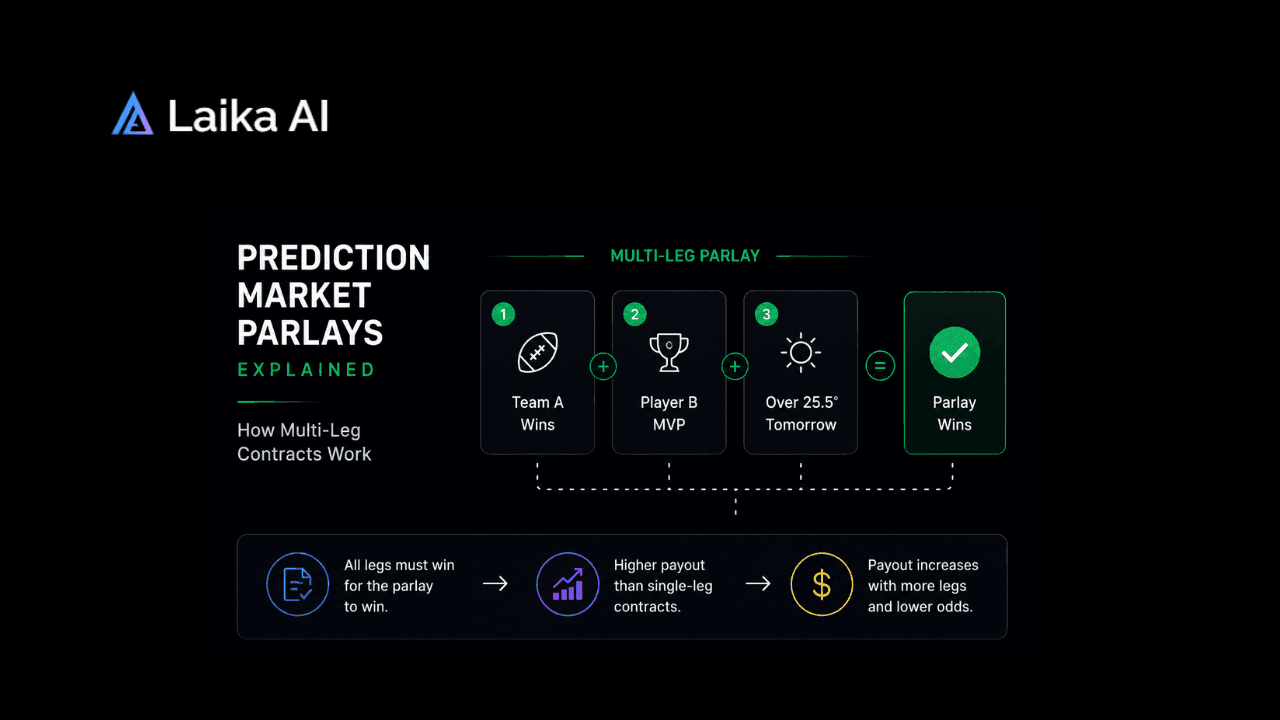
Every leg has to hit. That's the part that mirrors a traditional parlay most closely. If one leg fails, the whole combo resolves to zero, and Kalshi's own documentation describes payout as the mathematical product of each leg's underlying value rather than some separately negotiated bonus multiplier. Once you accept a quote, the trade is locked in. No canceling, no partial refunds if you change your mind an hour later.
Coverage right now places Kalshi Combos on professional football, professional basketball, and something Kalshi calls "Mention" markets, tracking whether specific words or names come up during a broadcast. Oddly narrow scope for a product with this much attention, and worth checking directly since Kalshi tends to expand sport coverage without much advance notice. The current, official rundown lives at kalshi.com, and it's the only place worth trusting for exactly which sports are eligible today.
Polymarket's Answer: Multi-Leg Contracts
Polymarket parlay functionality arrived much later than Kalshi's, and through a noticeably different regulatory path. The company filed a self-certification with the CFTC in mid May 2026 for something formally named Combinatoric Athletic Outcome Contracts, or CAOCs if you want the acronym nobody actually says out loud. The filing described the product plainly: a joint settlement amount built from two or more underlying contracts, resolving to a dollar only if every single leg is satisfied. The filing also set a $25,000 position accountability threshold and restricted the product to users 18 and older, standard boilerplate for a CFTC filing but worth knowing if you're used to Polymarket's looser offshore product.
The product went live May 22, 2026, alongside an MLS market expansion for the new season and a content partnership with Yahoo Sports. That timing wasn't an accident. Polymarket was moving to close the gap with Kalshi's Combos, and doing it during the same stretch that DraftKings was also pushing its own multi-leg product into the market. Three major platforms chasing the same feature in roughly the same season tells you something about where this category is heading. Sports trading volume across the industry hit roughly $28.4 billion in May 2026 alone, according to Dune data, with Polymarket alone accounting for somewhere between $7 and $9 billion of that. For the sports side of Polymarket's build out specifically, Polymarket Sports Markets 2026 Complete Guide to NFL NBA MLB Soccer covers the wider expansion this parlay style feature slots into.
Despite Kalshi and Polymarket landing on strikingly similar structures, Polymarket's public framing stays deliberately careful. The company still calls these event contracts, not parlays and not betting slips, language that matters given how much regulatory heat both platforms are already absorbing over sports coverage generally. A separate, older feature on Polymarket's international site shows pre-built parlay style markets too, things like a combined SGA MVP and championship bet, but those are fixed, pre-packaged contracts rather than something a user builds leg by leg the way Kalshi's combo builder works.
Sportsbook Parlays vs Prediction Market Parlays: The Math
Here's the part that actually matters if you're deciding whether any of this is worth using. A traditional sportsbook parlay compounds vig across every leg. Stack three legs together and the effective house edge on that ticket often climbs past 13%. Add a fourth leg and you're regularly past 15% before the game even starts. That's not an accident. Parlays are one of the most profitable products a sportsbook offers precisely because the house edge compounds instead of staying flat.
A Kalshi Combo or Polymarket multi-leg contract skips the fixed multiplier entirely. Each leg still needs to hit, same all or nothing structure, but the price comes from a live quote against another trader or market maker rather than a house number designed to guarantee a margin. That doesn't mean the price is automatically better. Research into RFQ pricing has shown retail traders on the receiving side of these quotes lose more often than not, since institutional market makers are the ones setting the price they see. The compounding vig problem genuinely disappears. A different pricing risk replaces it.
Kalshi Combos vs Polymarket Multi-Leg: Side by Side
Kalshi has the longer track record here by a wide margin, having run Combos since late 2025 against Polymarket's launch just months ago. Whether that head start translates into better pricing or deeper liquidity for any specific combo is genuinely unclear without watching both platforms closely over time.
Anyone trading both platforms already understands the individual products, and How Does Kalshi Work? A Complete Beginner's Guide is worth a read first if Kalshi itself is still new to you.
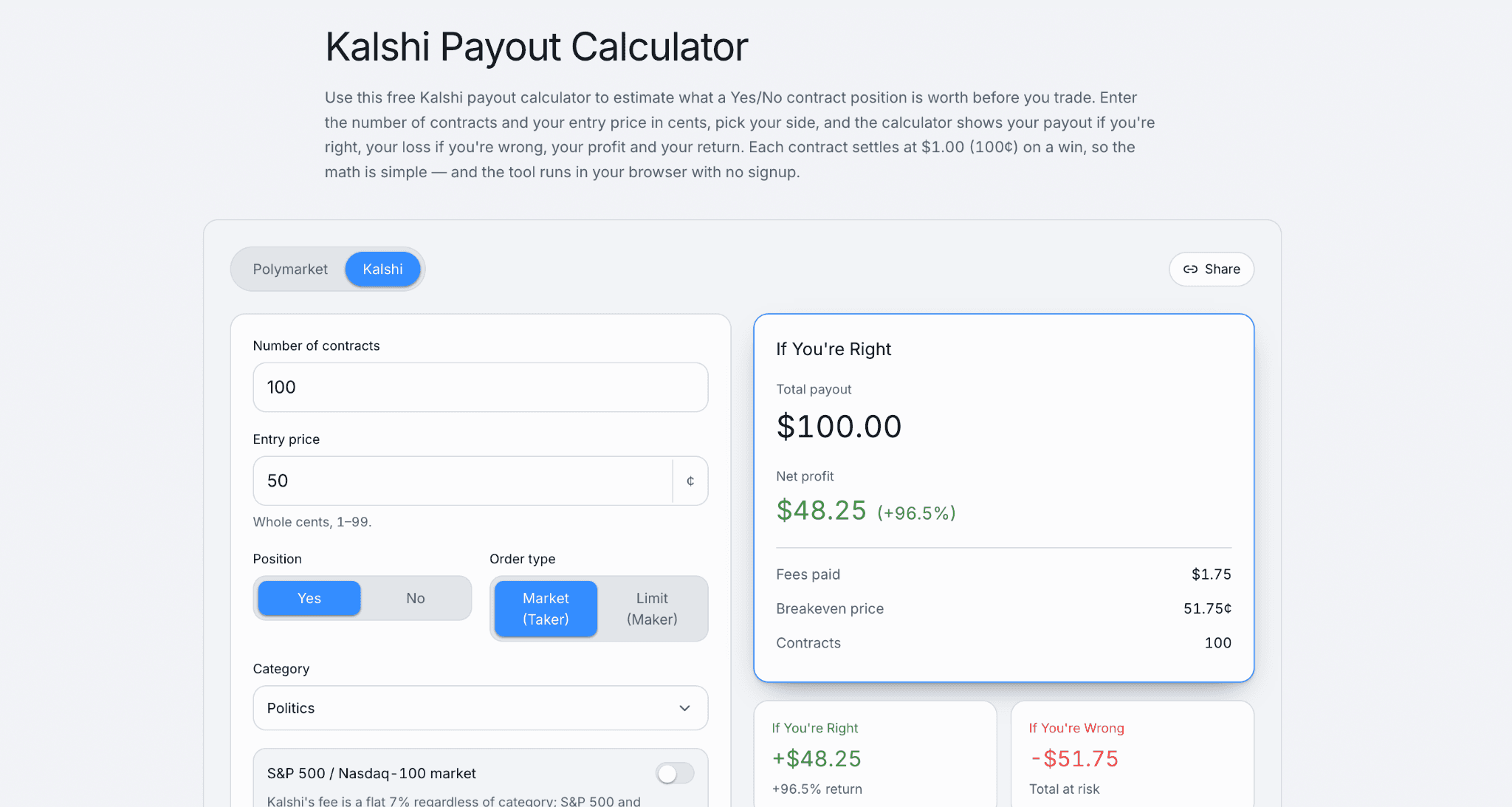
Polymarket's own product page, at polymarket.com, is the better source for confirming exactly which sports and leagues are eligible for multi-leg contracts right now, since that list has room to grow well beyond MLS.Try the Kalshi Payout Calculator to estimate your returns before every trade and make more informed trading decisions.
The Regulatory Angle
Sports focused contracts, parlays especially, sit closest to the line regulators keep drawing between a legitimate derivatives exchange and an unlicensed sportsbook. Kalshi has processed more than $83 billion in sports volume since expanding into that category in early 2025, and more than 85% of its total sports activity ties back to that single vertical. That's not a side project. That's the core business for a huge share of the platform.
Polymarket's push into the same territory landed during a month that also saw the CFTC sue Minnesota over its prediction market felony ban and Rhode Island add Polymarket specifically to a gambling enforcement action. More than 20 separate lawsuits and cease and desist actions have targeted the platform by various counts. None of that stopped either company from shipping a parlay style product anyway, which tells you how central sports has become to the whole industry's growth story regardless of the legal noise surrounding it. For the fuller legal framing behind why these products keep drawing scrutiny, Prediction Markets vs Sports Betting: What Is Actually Different? breaks down where regulators actually draw that line.
Should You Actually Use These?
If you already trade individual sports contracts and understand how RFQ pricing works, a combo can genuinely beat a sportsbook parlay on price, since there's no compounding vig sitting underneath the number you're quoted. That's a real structural advantage and not just marketing language.
But the advantage isn't automatic. You're trading against market makers who price correlation and risk professionally, and the same research showing retail traders losing more often than winning on these quotes applies here too. A polymarket parlay built through the CAOC structure faces the same underlying pricing dynamic as a Kalshi Combo, since both ultimately run through market makers rather than a neutral, house-free order book. Treat a combo the way you'd treat any leveraged, correlated bet: size it small, understand that one bad leg zeroes the whole thing, and don't assume "no house edge" means "good deal" by default.
For traders weighing how a same-platform comparison plays out on cost and coverage more broadly, FanDuel Predicts vs Kalshi: Which Is Better for US Sports Traders? is a useful next read before deciding where to put a multi-leg trade in the first place.
If you'd rather sharpen your approach on Kalshi specifically before layering in combos, Kalshi Prediction Market: 7 Strategies That Work in 2026 covers proven single-leg tactics worth mastering first.
And regardless of which platform or product you're using, Prediction Market Bankroll Management Guide covers the position sizing discipline that matters even more once a single wrong leg can wipe out an entire combo at once.
Worth trying with money you can afford to lose entirely. Not a replacement for understanding what you're actually pricing.
FAQs
Can you parlay on Kalshi?
Yes, functionally, though Kalshi doesn't use the word "parlay" for its own product. Kalshi's version is called Combos, and it lets traders bundle two or more event contracts into a single position priced through a request for quote system rather than a fixed sportsbook multiplier.
What are Kalshi Combos?
Kalshi Combos are Kalshi's parlay style feature, letting traders bundle multiple event contracts, currently limited mainly to professional football, professional basketball, and Mention markets, into a single trade. Every leg has to resolve successfully for the combo to pay out, and pricing comes from market makers responding to a request for quote rather than fixed odds.
How do Kalshi Combos work?
To use Kalshi Combos, a trader selects two or more contracts and submits them as a request for a quote. Market makers then respond with a price between zero and one dollar per contract, reflecting their view of the combined probability. Accepting the quote locks in the trade, which cannot be canceled or partially refunded afterward.
Does Polymarket offer parlays?
Yes, as of May 22, 2026. Polymarket parlay functionality launched under the name Combinatoric Athletic Outcome Contracts, following a CFTC self-certification filing, and works on a similar all-or-nothing structure to Kalshi's Combos, though Polymarket frames the product as event contracts rather than parlays specifically.
Are Kalshi Combos all or nothing?
Yes. Whether Kalshi Combos are all or nothing comes down to one rule: every leg included must resolve successfully for the combo to pay out anything. If even one leg fails, the entire combo resolves to zero, mirroring the all-or-nothing structure of a traditional sportsbook parlay even though the pricing mechanism underneath works differently.
What are people saying about Kalshi parlays on Reddit?
Discussion around can you parlay on Kalshi reddit tends to focus on two things: confusion over the RFQ pricing model compared to a familiar sportsbook parlay slip, and debate over whether skipping the compounding vig actually translates into better real world payouts once market maker pricing is factored in. Opinions split fairly evenly between traders who see genuine value in the structure and those who think the pricing advantage gets erased by how quotes are generated in practice.