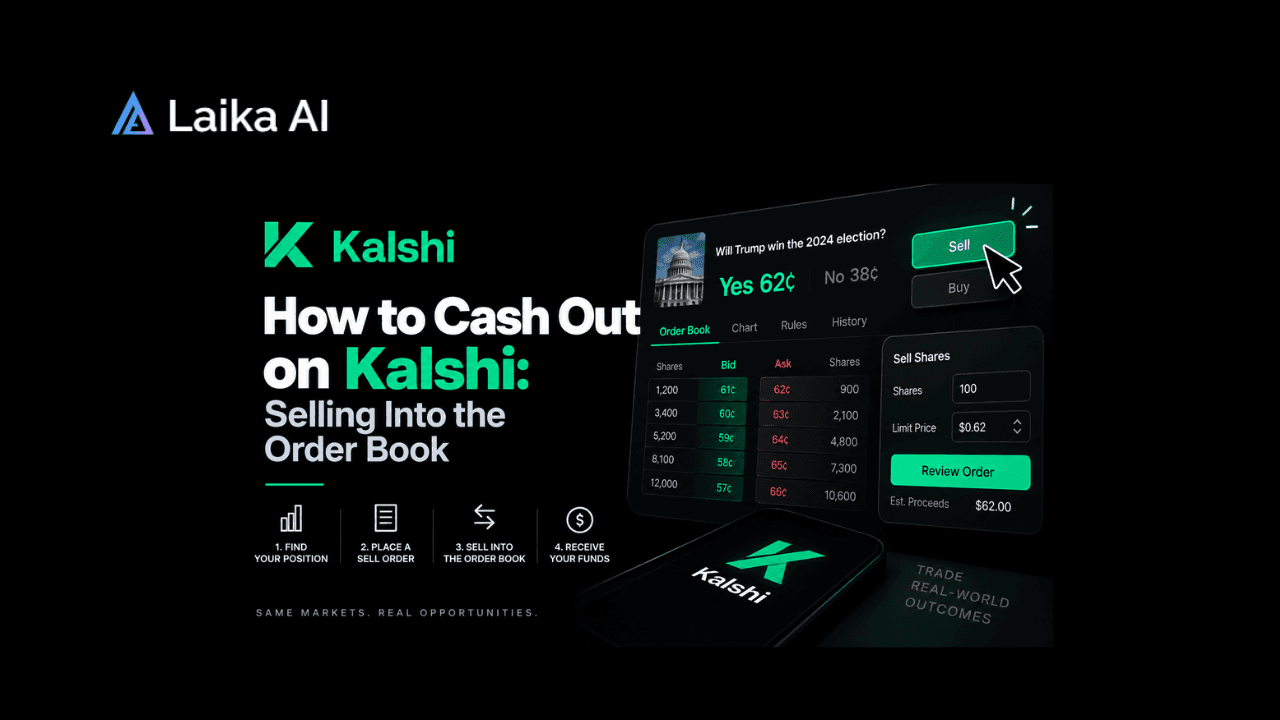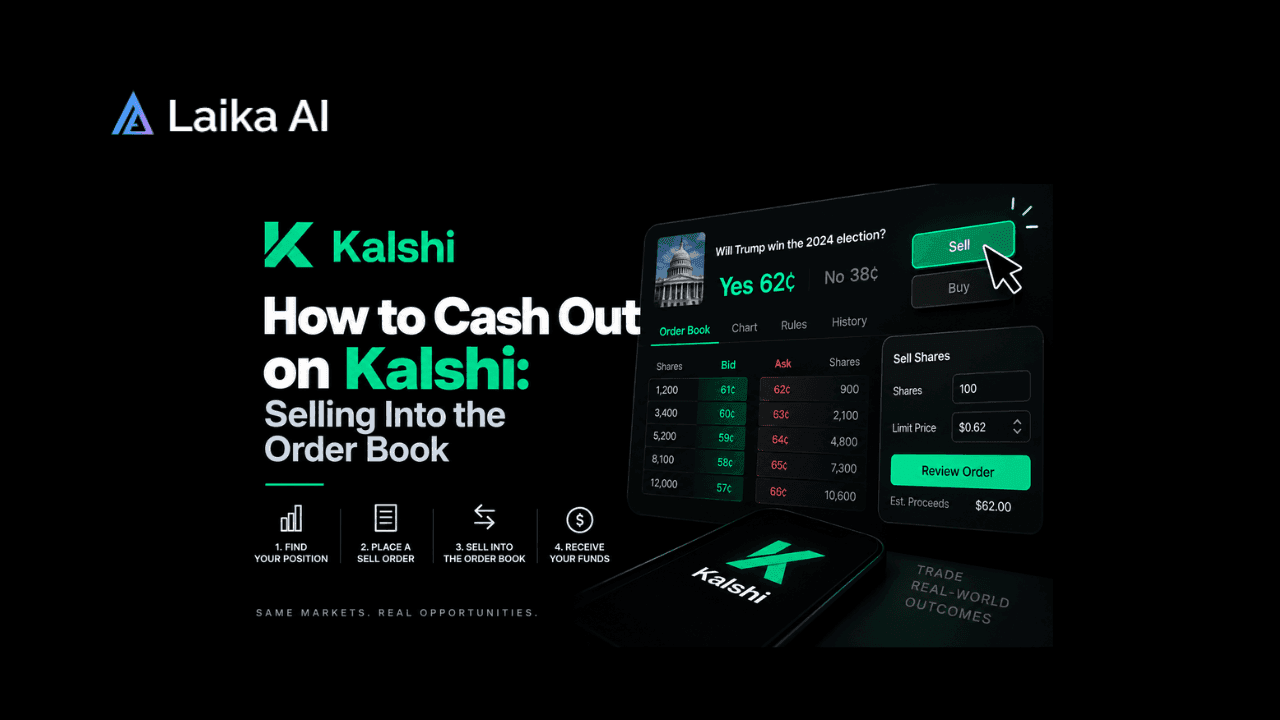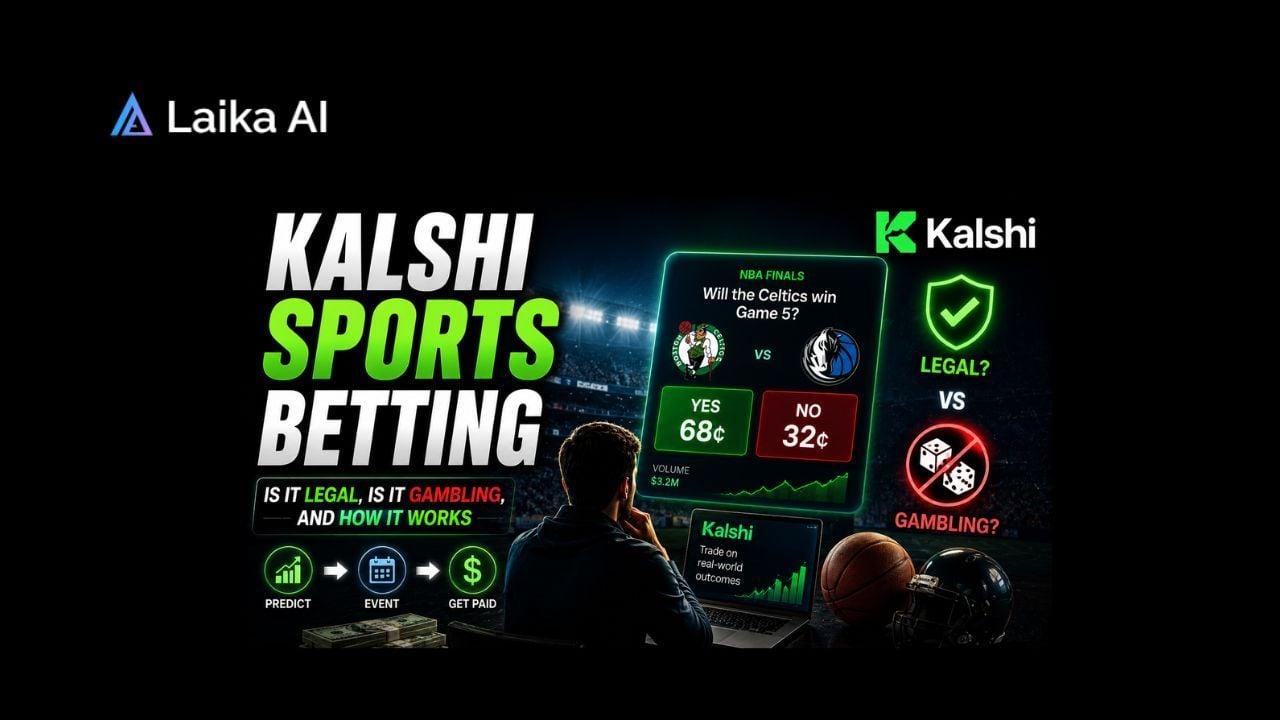
Kalshi sports betting is one of the most searched and most misunderstood topics in the prediction market space. The confusion is understandable. Kalshi lets you trade NFL games, NBA championships, and World Cup outcomes. It looks like sports betting. It feels like sports betting. Several state regulators have argued it is sports betting. But the federal government disagrees, and that disagreement is currently being resolved in federal courts with significant stakes on both sides.
The short answer is that Kalshi is not legally classified as gambling under federal law, which is why it can operate legally in California and Texas where DraftKings and FanDuel cannot. Whether that federal classification holds against ongoing state challenges is a live question in 2026. This article explains the classification question first, because it is the most important one, then covers how Kalshi sports contracts actually work and what the current state-level legal map looks like.
Is Kalshi Gambling? The Classification Question
The question of whether kalshi is gambling is not a philosophical one. It is a legal one, and the answer depends entirely on which regulatory framework applies.
The federal answer: no
Kalshi is a CFTC Designated Contract Market, the same federal classification as the Chicago Mercantile Exchange. Its sports event contracts are classified as derivatives under the Commodity Exchange Act, not as gambling products. The CFTC formally designated prediction market contracts as swaps in early 2026, placing them under exclusive federal jurisdiction.
Under that framework, trading a Kalshi sports contract is legally equivalent to trading a futures contract on a commodity exchange. You are not gambling under federal law. You are trading a regulated financial instrument.
The CFTC regulatory framework is available at cftc.gov for anyone who wants to read the primary regulatory source rather than take an assertion at face value.
The state answer: it depends
Several state regulators take a different position. Their argument is that a contract tied to the outcome of a sports game is functionally identical to a sports bet regardless of how the federal government classifies the underlying instrument. Under that reading, Kalshi needs a state-issued gambling license to offer sports-adjacent contracts in those states, and operating without one is illegal.
Nevada, New Jersey, Connecticut, and several other states have issued cease and desist orders or enforcement actions based on this position. Rhode Island filed a lawsuit against Kalshi in May 2026 citing an 8% drop in state lottery sports betting revenue.
Why the disagreement exists
The disagreement comes down to a fundamental question about federal preemption. Kalshi's position, supported by the Third Circuit's April 2026 ruling, is that the Commodity Exchange Act preempts state gambling laws when applied to CFTC-regulated derivatives. The states' position is that preemption does not apply because sports betting is a matter of state law under a different legal tradition.
That question will likely require Supreme Court resolution if the circuit courts split, which becomes more likely if the Ninth Circuit rules against Kalshi on Nevada's appeal.
For the full legal framework distinguishing prediction markets from gambling under current US law, prediction markets vs gambling: what is the legal difference in 2026 covers the complete analysis. For the structural comparison between Kalshi sports contracts and traditional sportsbook products, prediction markets vs sports betting covers the head-to-head.
How Kalshi Sports Betting Actually Works
Understanding how Kalshi sports contracts work mechanically is the fastest way to understand why the federal government does not classify them as gambling products.
The contract structure
When you trade a sports market on Kalshi, you are not placing a bet with a bookmaker. You are buying a binary event contract on a central order book from another trader. Each contract asks a yes or no question about a specific outcome: will the Kansas City Chiefs win Super Bowl LXI, will the NBA Finals go to seven games, will France win the 2026 World Cup.
Each contract is priced between $0.01 and $0.99. That price is the market's implied probability of the YES outcome occurring. A contract at $0.62 means traders collectively assign a 62% probability to that outcome. If the outcome occurs, the contract pays $1.00. If it does not, it pays $0.
The structural differences from a sportsbook
On DraftKings or FanDuel, you place a bet against the house. The sportsbook takes the other side of your wager, sets the line to embed a profit margin, and profits from the difference between the true probability and the juice-adjusted implied probability. Your win is their loss.
On Kalshi, you trade against another user. Kalshi matches your buy order with another trader's sell order on a central order book. Kalshi earns a small transaction fee regardless of who wins. There is no house taking the opposite side of your position. There is no built-in margin in the price. The price reflects the aggregate of all capital-backed positions from every trader in the market.
Three practical differences that flow from this structure:
You can exit before the game ends. A Kalshi contract can be sold at any time before resolution at the current market price. A sportsbook bet is locked until the final whistle. If you buy a Super Bowl contract in October and your team makes it to February but the price has moved in your favor, you can sell and realize the profit without waiting for the game.
Winning accounts are not limited. Sportsbooks routinely restrict or ban profitable bettors because profitable bettors cost the book money directly. Kalshi earns fees regardless of who wins, so there is no incentive to restrict accounts that win consistently.
No vig embedded in the price. Sportsbooks build 4.5 to 8% into every line invisibly. Kalshi's fees are explicit, charged separately, and typically lower than sportsbook vig on equivalent markets.
Fees on Kalshi sports contracts
Kalshi charges a taker fee with a coefficient of 7% applied to expected profit per trade. On a contract priced at $0.60 where maximum profit per share is $0.40, the fee is approximately 7% of $0.40, which equals $0.028 per share. In practice this works out to roughly 1 to 2% of total position size on most contracts, significantly below the 4.5 to 8% built into most sportsbook lines. For the full fee comparison with worked examples, prediction market fees in 2026: Kalshi vs Polymarket covers every calculation.
Does Kalshi have sports betting across all sport categories?
The live Kalshi sports markets page at kalshi.com currently lists NFL, NBA, MLB, NHL, NCAA football and basketball, UFC, and major soccer leagues including the Premier League and Champions League. Futures markets, game-by-game moneylines, spreads, totals, and player award contracts are all available on high-volume matchups.
Horse racing is not available on Kalshi. The Interstate Horseracing Act creates a separate legal framework that excludes prediction markets from horse racing outcomes.
For the full background on Kalshi's regulatory structure and how the platform was built around CFTC compliance from its founding, Kalshi explained: billionaire founder and prediction markets covers the complete history.
Is Kalshi Sports Betting Legal in Your State?
How is Kalshi legal at all in states where sports betting is banned? The answer is the federal preemption argument described above. Kalshi's CFTC license gives it legal standing under federal law, and in the CFTC's view, federal law preempts state gambling regulations when applied to regulated derivatives.
That argument has prevailed in the Third Circuit. It is being tested in the Ninth Circuit. And it has not yet been tested at the Supreme Court.
The practical current status by state:
States where Kalshi is fully accessible as of mid-2026
California, Texas, Florida, Georgia, New York, Illinois outside of sports restrictions, Pennsylvania, Colorado, Virginia, North Carolina, and most other US states outside the nine with active restrictions. Kalshi's sports contracts are available in these states regardless of whether traditional sports betting is legal there.
States with active restrictions or enforcement actions
A note on how quickly this can change
The state-level legal map for Kalshi is changing faster than almost any other regulatory topic in the prediction market space. A Ninth Circuit ruling against Kalshi could add states to the restricted list. A Supreme Court ruling in Kalshi's favor could remove the existing restrictions entirely. Verify current access for your specific state at Kalshi's official help center before depositing, because a table written today may not reflect tomorrow's status.
Is kalshi sports betting legal in California? Yes as of mid-2026. California has not taken enforcement action and residents have full access including sports markets, which is significant because California is one of the largest US states where traditional sportsbooks cannot legally operate.
Is kalshi sports betting legal in Texas? Yes as of mid-2026. Texas has not filed enforcement actions and residents have full access to Kalshi's sports markets.
Is kalshi sports betting legal in Nevada? This is the most contested state. Nevada's Gaming Control Board issued a cease and desist and the appeal is currently pending in the Ninth Circuit. Sports markets are restricted for Nevada residents.
Is kalshi sports betting legal in Florida? Yes as of mid-2026. Florida has not taken enforcement action and residents have full access.
Who Kalshi Sports Betting Is a Good Fit For
Kalshi sports contracts are not for everyone. The platform suits specific types of users and is genuinely inferior to alternatives for others.
Good fit: experienced sports bettors who have been limited at sportsbooks
If you have been restricted or banned at DraftKings, FanDuel, or BetMGM because you win too consistently, Kalshi's exchange structure removes that problem entirely. There is no house to limit you. Profitable traders generate more fee revenue for Kalshi, not less.
Good fit: US-based sports fans in states without legal sportsbooks
California and Texas residents who want to trade on NFL or NBA outcomes currently have few legal options. Kalshi is one of the most accessible legal venues for sports market trading in these states, which is a direct result of its CFTC regulatory structure.
Good fit: traders who want to exit before the event ends
The exit mechanic is a genuine structural advantage over traditional sports betting. If you hold a Super Bowl contract that has doubled in value before February, you can sell and take the profit without needing your team to win the game.
Less ideal fit: casual bettors who want parlay products
Kalshi does not offer same-game parlays. The platform's market structure does not support the correlated multi-leg parlay products that DraftKings and FanDuel have built their retail businesses around. If parlay betting is your primary activity, a traditional sportsbook serves that use case better.
Less ideal fit: bettors who want deep prop coverage on every game
Kalshi's prop market depth is strong on major matchups and flagship markets. On lower-volume regular season games between non-marquee teams, the prop menu is thinner than major sportsbooks. The order book requires enough participants to stay liquid, and that liquidity concentrates on high-interest events.
Less ideal fit: users in the nine restricted states
If you are in Arizona, Illinois, Massachusetts, Maryland, Michigan, Montana, New Jersey, Nevada, or Ohio, Kalshi's sports markets are currently inaccessible. That may change depending on how the Ninth Circuit and potential Supreme Court proceedings resolve, but as of mid-2026 the restriction is active.
Frequently Asked Questions
Is Kalshi sports betting considered gambling?
Under federal law, no. Kalshi is a CFTC Designated Contract Market and its sports event contracts are classified as derivatives under the Commodity Exchange Act, not as gambling products. Under several state laws, the answer is contested. Nevada, New Jersey, and several other states argue the contracts are functionally equivalent to sports betting and require a state gambling license. That disagreement is being resolved through federal courts.
How is Kalshi sports betting legal in the US?
Kalshi holds CFTC Designated Contract Market status, the same federal regulatory classification as the Chicago Mercantile Exchange. The CFTC classifies Kalshi's event contracts as derivatives, and the Commodity Exchange Act gives the CFTC exclusive federal jurisdiction over regulated derivatives exchanges. The Third Circuit Court of Appeals upheld this federal preemption argument in April 2026. Why is Kalshi legal where sportsbooks are not? Because its contracts are classified as regulated financial instruments rather than gambling products under federal law.
Is Kalshi sports betting legal in my state?
Kalshi is accessible with full sports market access in most US states. Nine states have active restrictions or enforcement actions: Arizona, Illinois, Massachusetts, Maryland, Michigan, Montana, New Jersey, Nevada, and Ohio. All other states including California, Texas, Florida, and Georgia have full access. The legal status can change as court cases proceed, so verify at Kalshi's current help center before depositing.
How does Kalshi sports betting actually work?
You buy a binary YES or NO contract on a specific sports outcome. Contracts are priced between $0.01 and $0.99, reflecting the market's implied probability. A YES contract pays $1.00 if the outcome occurs and $0 if it does not. You trade against other participants on a central order book, not against the house. You can sell your position at any time before resolution at the current market price. Kalshi charges a small fee per trade rather than embedding a margin in the price the way sportsbooks do.
Is Kalshi a sports betting app or something else?
Kalshi is a CFTC-regulated event contracts exchange that includes sports markets among its offerings. Sports contracts were a major focus of Kalshi's expansion starting in 2025 and as of early 2026 accounted for an estimated 91.1% of the platform's monthly trading volume. But Kalshi also offers markets on economics, politics, weather, crypto, and other categories. Describing it as a sports betting app is accurate in terms of where most of the volume sits, but the regulatory classification, contract structure, and legal framework are fundamentally different from a sportsbook. The Kalshi betting app is available for iOS and Android alongside the web platform at kalshi.com.
The Bottom Line
Kalshi sports betting is legal under federal law, contested in nine US states, and structurally different from traditional sportsbook products in ways that matter for both the legal classification and the practical trading experience.
The federal classification argument has won in the Third Circuit and is pending in the Ninth Circuit. If the Ninth Circuit rules against Kalshi, the Supreme Court becomes the likely next venue. If the Supreme Court upholds federal preemption, the state restrictions would likely dissolve. If it does not, the current patchwork could become permanent.
For traders deciding whether Kalshi makes sense for their sports activity, the structural advantages over a sportsbook are real: no vig in the price, no account limiting, and the ability to exit before the event ends. The limitations are also real: no parlay products, thinner coverage on lower-volume games, and active restrictions in nine states.
For strategies that go beyond the basics and apply specifically to sports markets on Kalshi, Kalshi sports trading strategy covers the full framework for active traders who want to extract consistent value from the platform's sports market structure.
Track how Kalshi sports market prices move in real time across every active contract with Polymetric by Laika AI. Live market intelligence for traders who want to see price movements before the crowd does.