When you bet $100 on a football game, everyone agrees that's gambling. When you buy $100 of contracts predicting the next president, is that gambling too? Courts, regulators, and lawyers disagree.
The distinction between prediction markets and gambling determines whether platforms need gambling licenses, whether users face legal restrictions, and whether these markets can operate openly or must stay offshore.
This guide breaks down the legal differences between prediction markets and traditional gambling, analyzes how courts and regulators classify prediction markets, compares key features in detailed tables, and explains why the distinction matters for traders and platforms.
Legal Definitions: Gambling vs Prediction Markets
Understanding how laws define each category reveals where prediction markets fit.
What Legally Constitutes Gambling
Three-Element Test
Courts typically define gambling using three required elements:
- Consideration - Money or something of value at stake
- Prize - Potential to win money or something valuable
- Chance - Outcome determined primarily by chance not skill
If all three elements are present, the activity is legally gambling requiring licenses and regulatory compliance.
Traditional Gambling Examples
What Constitutes Prediction Markets
Advocates' Definition
Prediction market proponents argue these platforms are
- Information aggregation tools - Collect collective wisdom about future events
- Hedging instruments - Allow risk management on uncertain outcomes
- Price discovery mechanisms - Reveal true probabilities through trading
- Financial derivatives - Contracts on event outcomes, not games of chance
Structure Differences
Key Differentiating Factors
Several characteristics distinguish prediction markets from gambling in legal analysis.
1. Purpose and Intent
Gambling
- Primary purpose is entertainment and potential profit
- Participants hope for lucky outcomes
- Social/recreational activity
- No informational benefit to society
Prediction Markets
- Primary purpose is information aggregation
- Participants analyze data and make informed predictions
- Produces useful probability estimates
- Social benefit through improved forecasting
Legal Significance
Courts consider purpose when classifying activities. Some jurisdictions exempt activities with "legitimate purposes" beyond entertainment from gambling restrictions.
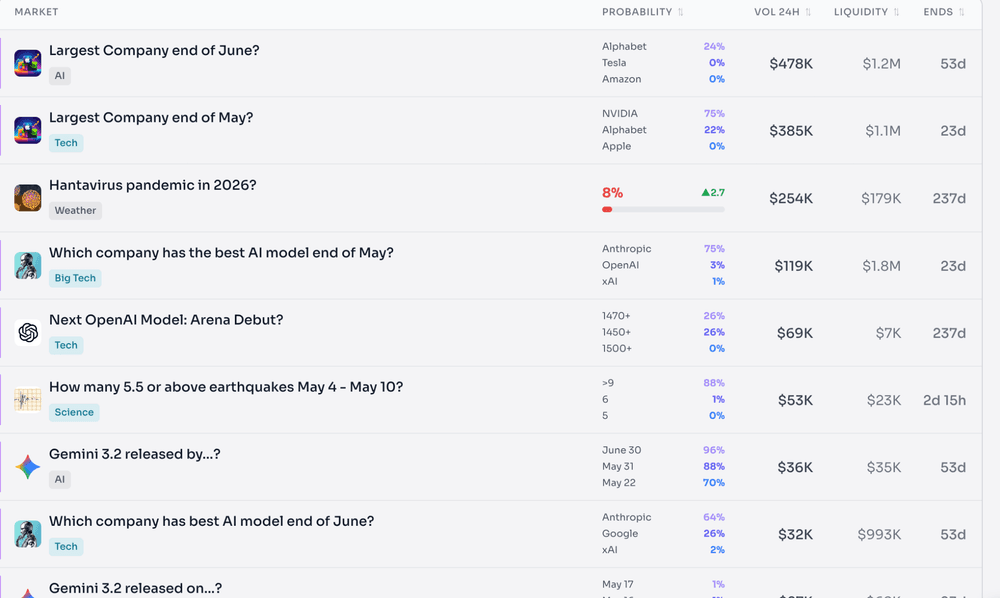
Most Polymarket traders rely on headlines, emotions, and market momentum. That’s why they lose.
Polymetric by Laika AI gives you a real trading edge with AI-powered market analysis, whale wallet tracking, probability breakdowns, sentiment monitoring, and live market intelligence across politics, crypto, sports, and macro events.
If you're trading Polymarket without data, you're trading blind.
2. Skill vs Chance
Legal Test
Many jurisdictions apply "predominance test" if skill predominates over chance, activity may escape gambling classification.
Gambling Skill Analysis
Prediction Market Skill Analysis
Arguments
Prediction markets involve more skill because
- Requires analysis of data, models, historical patterns
- Successful traders use quantitative methods
- Information gathering and processing determines outcomes
- Long-term profitability requires expertise
Counter-arguments
- Ultimate outcome still uncertain and beyond participant control
- Analysis doesn't guarantee success
- Many participants trade on hunches not analysis
- Skill level varies widely among participants
Regulatory Classification by Jurisdiction
Different authorities classify prediction markets differently creating patchwork legal landscapes.
United States Federal Level
CFTC (Commodity Futures Trading Commission):
Position
Event contracts are derivatives under CFTC jurisdiction if structured as commodity futures or swaps.
Kalshi Example
- Received CFTC approval as Designated Contract Market (DCM)
- Can offer event contracts legally in US
- Subject to CFTC regulation not gambling law
- Operates as financial exchange not gambling site
Classification Factors
Polymarket Contrast
- Operates offshore without CFTC approval
- Settled $1.4 million CFTC fine (2022) for operating without registration
- Blocks US users to avoid regulatory scrutiny
- Classified by CFTC as unregistered derivatives trading
State Level (United States)
State gambling laws still apply even if CFTC approves platforms.
Legal Patchwork
Key Issues
- Federal CFTC approval doesn't preempt state gambling law
- States can ban prediction markets even with federal approval
- Kalshi navigates state-by-state restrictions
- Polymarket avoids issue by blocking all US access
European Union
Gambling Directive Approach
The EU treats prediction markets primarily as gambling requiring licenses under national gambling frameworks.
Country-by-Country:
Polymarket Status
Blocks most EU countries proactively to avoid licensing requirements and regulatory enforcement.
Why Classification Matters
Legal distinction has practical consequences for platforms and users.
For Platform Operators
If Classified as Gambling
- Must obtain gambling licenses (expensive, time-consuming)
- Subject to strict advertising restrictions
- Age verification requirements (21+ in most US states)
- Responsible gambling provisions mandatory
- Tax rates on gambling typically higher
- Geographic restrictions (many jurisdictions ban online gambling)
- Compliance costs significantly higher
If Classified as Financial Market
- Requires financial regulatory approval (still costly but different process)
- Financial regulations apply (KYC/AML, reporting)
- Broader geographic access potential
- Lower stigma than "gambling site"
- Can market as information/analysis tool
- Different tax treatment
- Access to financial services and banking easier
Revenue Impact
For Users
If Using Gambling Platform
- Age restrictions apply (18+ or 21+)
- Geographic restrictions enforced
- Gambling addiction resources required
- Winnings reported to tax authorities
- Self-exclusion options mandated
- Loss limits may be imposed
If Using Financial Platform
- Standard financial services access
- Fewer geographic restrictions
- Treated as trading/investment activity
- Different tax treatment (potentially favorable)
- Access to derivatives trading tools
- Professional trader accommodations
The "Skill" Debate in Detail
Skill versus chance remains central to classification disputes.
Research Evidence
Academic studies show
- Prediction market prices are more accurate than expert polls
- Sophisticated traders consistently outperform casual participants
- Markets aggregate information efficiently suggesting skill-based activity
- Top traders maintain performance across multiple events suggesting skill not luck
Counter-Arguments
Gambling Industry Position
- Ultimate outcomes are still uncertain chance events
- Skill in analysis doesn't change that outcomes are beyond participant control
- Many prediction market participants trade on hunches not analysis
- Similar to sports betting which is classified as gambling
Regulatory Skepticism
Regulators note
- Classification as "skill-based" used to circumvent gambling restrictions
- Skill component doesn't eliminate gambling nature if all three elements present
- Purpose matters more than skill level
- Consumer protection concerns apply regardless of skill involved
Frequently Asked Questions
Are prediction markets legally gambling?
Legal classification varies by jurisdiction. In the US, CFTC treats them as financial derivatives not gambling if properly registered. Many states still classify them as gambling under state law. EU countries generally treat them as gambling requiring licenses. The legal answer depends on specific location and how the platform is structured.
What makes Kalshi legal but Polymarket not in the US?
Kalshi obtained CFTC approval as Designated Contract Market, making it a legally operating financial exchange under federal law. Polymarket operates offshore without CFTC registration, settles enforcement action in 2022, and blocks US users to avoid regulatory issues. The difference is regulatory compliance not fundamental structure.
Can prediction markets be both financial derivatives and gambling?
Yes, depending on jurisdiction and regulatory framework. Some authorities classify them as derivatives, others as gambling, some as both requiring dual licensing. Legal classification is not mutually exclusive across different regulatory regimes even for the same platform.
Do prediction markets have house edge like casinos?
No, legitimate prediction markets operate as peer-to-peer platforms without house edge. Platform profits from transaction fees (typically 2-7%) not from participants losing to unfair odds. This is a key distinction from traditional gambling where house edge is built into game structure.