Five years ago, Kalshi was a startup nobody outside fintech circles had heard of. Now its odds run across a live ticker on CNN, show up inside actual Bloomberg terminals, and a kalshi cnbc search turns up dozens of segments built entirely around a single market price. That's a genuinely fast climb from obscure derivatives exchange to something resembling a news source, and it happened through a specific set of deals worth understanding rather than just accepting at face value.
This piece covers what the CNN partnership actually includes, a real and unresolved dispute over who pays whom in that relationship, the separate CNBC and Bloomberg situations, and how Kalshi's approach compares to what Polymarket has been doing on the same front. For the basics of how Kalshi itself works before any of this media context matters, How Does Kalshi Work? A Complete Beginner's Guide covers the mechanics this article assumes you already understand.
The CNN Deal: What It Actually Includes
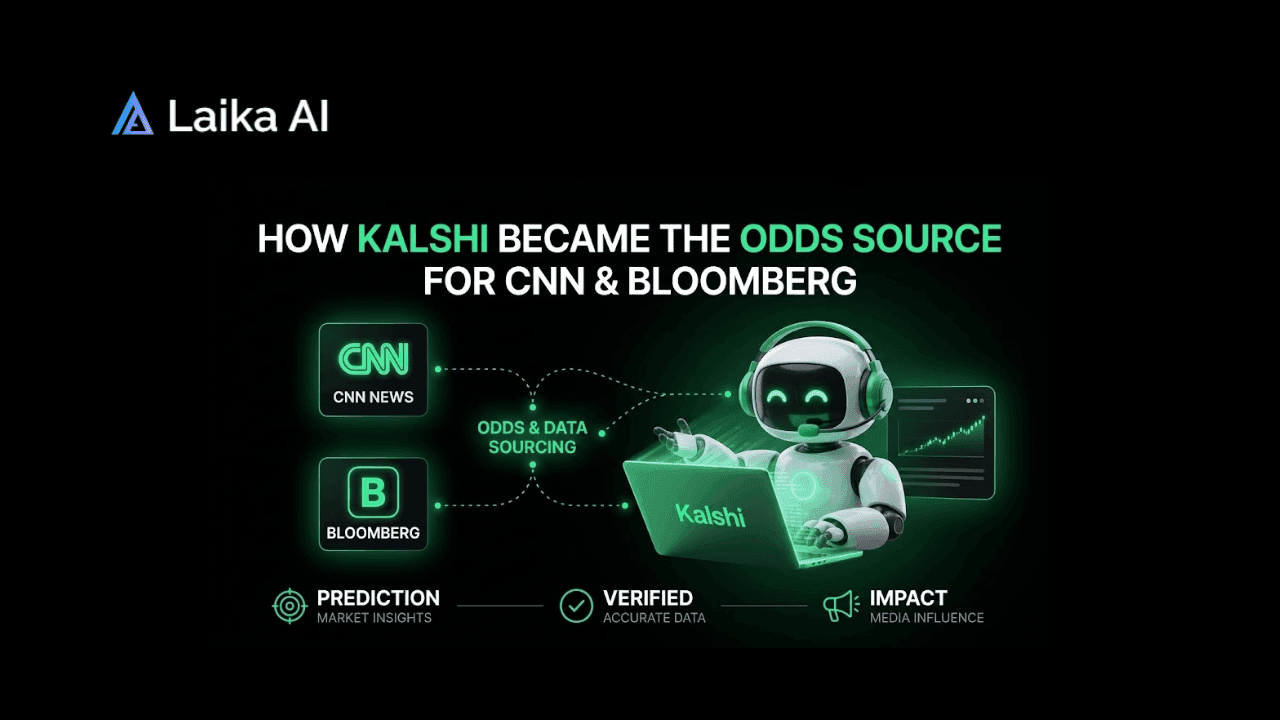
CNN announced its Kalshi CNN partnership on December 2, 2025, naming Kalshi its official prediction market data provider. The deal has three real components, not just a vague "data sharing" arrangement: a live, on-air ticker showing Kalshi odds during relevant segments, full newsroom access to Kalshi's real-time feeds for CNN's editorial and production teams, and integration into Harry Enten's data-driven reporting specifically, since CNN's chief data analyst was named as the internal lead on the whole rollout.
Enten's involvement matters more than a passing mention. He's built his reputation on polling and probability analysis, and folding Kalshi's live market odds into that work gives CNN a second, market-based number to sit alongside traditional polling whenever a race or event is close. Kalshi has pointed to its own read on the 2025 New York City mayoral race, called correctly within minutes of polls closing, as the kind of speed traditional polling simply can't match. Kalshi's own announcement of the partnership lays out the full scope directly, worth reading if you want the deal described in Kalshi's own words rather than filtered through a second source.
One detail from the original announcement deserves particular attention: the arrangement is exclusive. CNN doesn't feature competing platforms alongside Kalshi's numbers, even though Polymarket runs deeper, more liquid markets on plenty of the same political topics CNN covers regularly.
Does Kalshi Pay CNN, or the Other Way Around?
Here's where the story gets genuinely murky, and where this article is going to resist the urge to just pick a side. When the deal was first announced, Axios reported directly from CEO Tarek Mansour that CNN would not be paying to license Kalshi's data, a specific, narrow claim about one direction of payment.
Seven months later, a joint investigation from Popular Information and Public Notice, citing reporting from The Wrap and The New Yorker, reported the opposite flow of money: that Kalshi pays CNN to promote its data, not the other way around. Public Notice's investigation into the arrangement lays out that reporting directly, worth reading alongside the original Axios piece rather than in place of it. That's not automatically a contradiction of the original Axios framing, worth noting carefully. "CNN doesn't pay to license the data" and "Kalshi pays CNN for placement and promotion" can both be true at once, describing two different transactions inside the same broader relationship rather than one outlet simply getting the story wrong.
When Popular Information's story broke, all three parties responded, and it's worth quoting their actual statements rather than summarizing around them. CNN called Kalshi data "a complement to other reporting and data sources." CNBC described it as "part of the broader set of market indicators." Kalshi's own statement leaned on a now-familiar line: "in a world of echo chambers and clickbait, wisdom-of-the-crowd data can add additional context and perspective." None of the three directly denied the underlying payment claim. All three defended the newsworthiness of the data instead, which is a notably different thing to say.
Kalshi's kalshi cnn partnership also came with a specific on-screen tag, "The Odds, brought to you by Kalshi prediction market," language reporters have argued reads more like standard advertiser boilerplate than a disclosure of how extensive the actual financial relationship is. If transparency and disclosure practices around Kalshi generally are something you're weighing before trusting the platform, Is Kalshi Legit? A Straight Answer With the Full Context covers that broader question directly, this specific media dispute being one data point among several worth factoring in.
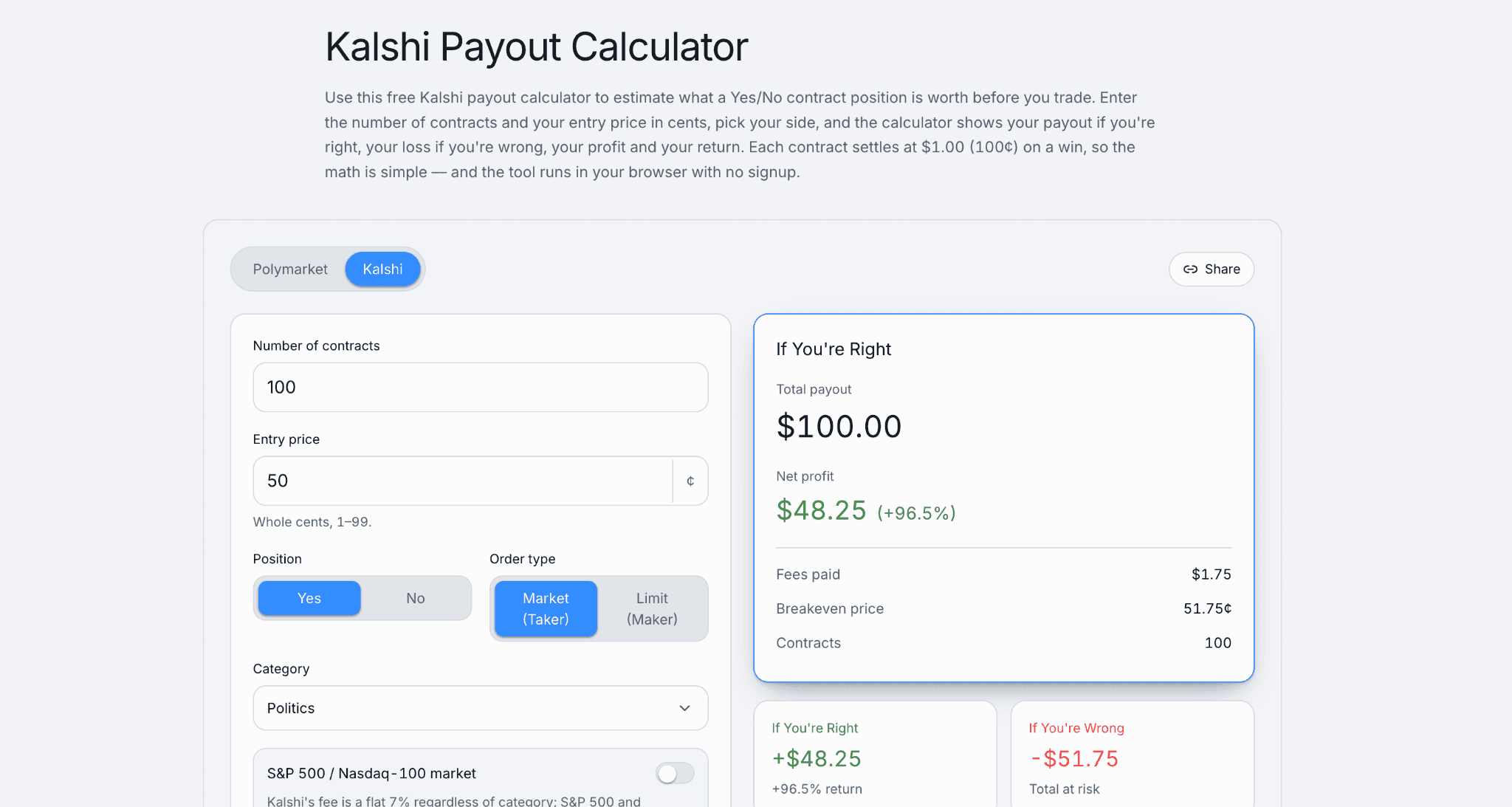
Try the Kalshi Payout Calculator to estimate your returns before every trade and make more informed trading decisions.
What About CNBC?
CNBC's relationship with Kalshi runs on a separate but overlapping track, and it's actually more transparent on paper than CNN's, even if the underlying dynamics look similar. CNBC has disclosed directly, in its own reporting, that "CNBC and Kalshi have a commercial relationship that includes customer acquisition and a minority investment." That's two things at once: CNBC gets paid when it converts a viewer into a Kalshi user, and CNBC's parent company holds an actual equity stake in Kalshi, meaning the network benefits financially if Kalshi's valuation keeps climbing the way it has.
Separate reporting from The Wrap adds a third layer: CNBC is also paid directly for using Kalshi's data in its coverage, distinct from the customer-acquisition and equity pieces. Since December, CNBC has published dozens of short articles built almost entirely around the existence of a specific Kalshi market, headlines like odds on a celebrity biopic's Spotify performance or a local mayoral runoff, content that reads less like traditional financial journalism and more like advertising with a byline attached. A quick kalshi cnbc search today turns up dozens of these market-anchored stories stacking up week after week. That volume of coverage lines up with Kalshi's own valuation trajectory during the same window; Kalshi Valuation & IPO: The Complete Timeline and What It Means for Traders covers how fast that number moved and why media distribution like this is part of the growth story investors have been pricing in.
Kalshi on the Actual Bloomberg Terminal, and Kalshi's Own "Terminal"
Two completely different things share the phrase "Kalshi Bloomberg terminal," and mixing them up is an easy mistake. The first is real and straightforward: Kalshi's data genuinely appears on the actual Bloomberg Terminal, the financial data product Wall Street has used for decades, through a dedicated function traders can pull up directly. Bloomberg's own Terminal account has publicly demonstrated this, showing both Kalshi and Polymarket odds side by side on questions ranging from Fed chair speculation to geopolitical events.
The second thing is Kalshi's own internal product, nicknamed a "Bloomberg Terminal for prediction markets" in CNBC's June 2026 reporting, but built entirely by Kalshi itself rather than any actual Bloomberg involvement. It's a professional-grade interface aimed at high-volume traders, alpha testing since roughly May 2026, with real-time order books, customizable contract tracking, and portfolio-style position management. No pricing or launch date has been confirmed, though comparisons to Bloomberg's own terminal, which runs upward of $24,000 a year, give a rough sense of the tier Kalshi is aiming for. If you're weighing Kalshi against its main competitor on infrastructure and product depth generally rather than just media reach, Kalshi vs Polymarket: Which Prediction Market Is Right for You? covers that fuller comparison.
How This Compares to Polymarket's Media Deals
Polymarket didn't sit out this trend, it just moved on a different timeline. Its first major traditional media partnership landed January 7, 2026, with Dow Jones, putting Polymarket's data into the Wall Street Journal, Barron's, and Investor's Business Daily. That followed an earlier deal making Polymarket the exclusive crypto prediction market provider for Yahoo Finance, and Polymarket has since added a partnership with Substack too.
The framing difference between the two companies is worth noting. Kalshi went hard into cable news and financial television, CNN, CNBC, and reportedly advanced talks with Fox Corp according to Columbia Journalism Review's coverage. Polymarket leaned toward print and digital financial publishing instead. Neither approach is obviously better, but they do target different audiences, cable news skews toward a broad general public, while Dow Jones properties reach a more finance-literate readership already comfortable parsing market data. What the $15 Billion Polymarket Valuation Actually Means for Retail Traders covers how Polymarket's own growth story has unfolded alongside these distribution deals, useful context if you're comparing the two platforms' momentum rather than just their odds.
Why This Matters Beyond Media Trivia
It's tempting to treat all of this as inside-baseball media gossip, but the practical stakes are real for anyone actually using these odds to understand a news event. When a Kalshi or Polymarket number gets treated as an independent, purely informational data point on air, without clear disclosure of the financial relationship behind it, that number carries more perceived authority than its actual sourcing necessarily deserves.
That matters most around exactly the events where prediction markets get the most airtime: elections and major economic decisions. How to Trade US Midterm Elections on Polymarket: The Complete 2026 Playbook covers how to actually interpret election odds as a trader, which is a different skill than passively absorbing them as a TV viewer being told a number is simply "what the market thinks."
The same logic applies to economic data. How to Read Fed Meeting Prediction Markets: What's Priced In and What Still Moves covers how to read those odds critically rather than treating a ticker number as settled fact.
The bigger regulatory backdrop matters here too. Prediction markets are already fighting genuine legal battles in multiple states over whether they're legitimate derivatives or unlicensed gambling, and a media ecosystem that treats their odds as neutral, trustworthy financial data, without consistently disclosing the money changing hands, arguably makes that regulatory fight harder to referee fairly. Kalshi and Polymarket: The Prediction Market Boom, Risks, and Regulation covers that wider legal and reputational picture in full.
The Bottom Line
Kalshi's climb from niche derivatives exchange to CNN's official odds partner happened through real, documented deals, not exaggeration. The CNN partnership includes a live ticker, newsroom access, and Harry Enten's direct involvement. The CNBC relationship is more explicitly commercial, disclosed customer-acquisition payments and an actual equity stake. Kalshi genuinely sits on the real Bloomberg Terminal, separate from the in-house product Kalshi is building under a similar nickname.
The one thing that isn't settled is exactly who pays whom and how much in the CNN relationship specifically. Treat that as a live, disputed question with credible reporting on both sides rather than a fact either direction, and treat every on-air Kalshi mention with the same healthy skepticism you'd apply to any other sponsored content that isn't labeled quite as clearly as it probably should be.
FAQ
What is the Kalshi CNN partnership?
The Kalshi CNN partnership, announced December 2, 2025, made Kalshi CNN's official prediction market data provider. It includes a live on-air ticker, full newsroom access to Kalshi's real-time data feeds, and direct integration into chief data analyst Harry Enten's reporting. The deal is exclusive, meaning CNN doesn't feature competing prediction market platforms alongside it.
Does Kalshi have a deal with CNBC?
Yes. Kalshi cnbc coverage runs on a disclosed commercial relationship that includes customer acquisition payments and a minority equity investment in Kalshi held by CNBC's parent company, plus separate direct payment for data use according to reporting from The Wrap. CNBC has published dozens of articles built around specific Kalshi markets since the relationship began.
Is Kalshi data available on the Bloomberg terminal?
Yes, genuinely. Kalshi Bloomberg terminal access is real, with both Kalshi and Polymarket odds available through a dedicated function on the actual Bloomberg Terminal used across Wall Street. This is separate from Kalshi's own in-house professional trading interface, which CNBC nicknamed a "Bloomberg Terminal for prediction markets" despite having no connection to the real Bloomberg product.
What other news partnerships does Kalshi have?
Beyond CNN and CNBC, Kalshi's broader kalshi news partnership strategy includes reported advanced talks with Fox Corp, according to Columbia Journalism Review's coverage. Kalshi's rival Polymarket has taken a different path, partnering with Dow Jones properties like the Wall Street Journal and Barron's, Yahoo Finance, and Substack instead of cable news. Whether the next major kalshi news partnership lands with a broadcaster or a print outlet remains to be seen, but the pattern so far clearly favors television and financial cable over print.
Who leads CNN's Kalshi data integration?
Harry Enten kalshi integration is led personally by Harry Enten, CNN's chief data analyst, who was named directly in the original partnership announcement as the person responsible for weaving Kalshi's real-time odds into his polling and probability-based reporting across CNN's television and streaming coverage.