Short answer: yes, Kalshi is a real, federally regulated exchange, not a scam. Longer answer, the one worth actually reading: "legit" doesn't mean "problem-free," and Kalshi has had a rough few months that deserve to be named specifically rather than waved away. There's been an insider trading case involving a MrBeast employee, a $54 million lawsuit over a death-related payout dispute, and a New York Attorney General suit calling the whole platform illegal gambling. None of that means you should walk away. It means the full picture is more interesting, and more useful, than a simple yes or no.
If you searched "is Kalshi legit Reddit" because you saw a video calling it "the biggest legal scam ever" or stumbled on a WikiHow page asking if it's a scam, you're not being paranoid. Those are real pieces of content ranking for this exact question, and a review that doesn't address them directly isn't actually answering what you're asking.
What CFTC Regulation Actually Means
Kalshi is a Designated Contract Market registered with the Commodity Futures Trading Commission, the same federal agency that oversees major derivatives exchanges like the CME. That's not a marketing claim. It's a checkable fact on the CFTC's own registration records.
In practice, that status means Kalshi is subject to real audits, real capital requirements, and real enforcement authority that can fine or shut the company down if it breaks the rules.
Here's what that regulatory status does and doesn't guarantee
That distinction matters a lot for the rest of this article, because most of what's fueling "is Kalshi legit" search volume right now isn't a question about whether the CFTC registration is real. It's whether the company handles disputes and bad actors well once something actually goes wrong. If you want a fuller mechanical picture of how contracts, pricing, and settlement actually work before judging any of the specific incidents below, our explainer on how Kalshi works is the right starting point.
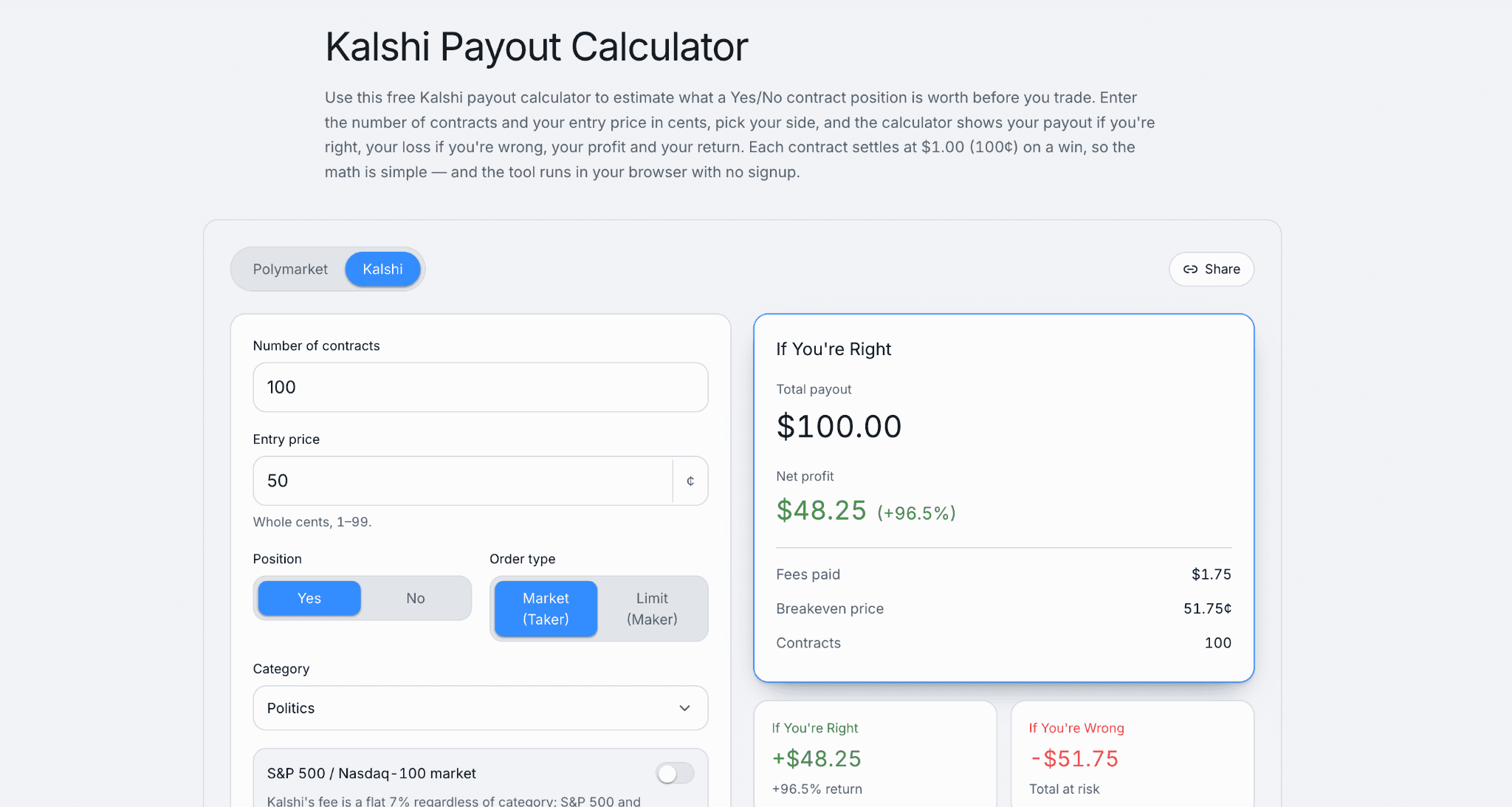
Try the Kalshi Payout Calculator for free →
The MrBeast Insider Trading Case, Explained Straight
In February 2026, Kalshi published its first public enforcement disclosure, and the case it chose to lead involved a MrBeast video editor.
Artem Kaptur, an editor employed by Jimmy Donaldson's production company Beast Industries, was found to have traded around $4,000 on Kalshi markets tied to MrBeast's YouTube content. He used knowledge from his job that wasn't available to the public. Kalshi's own surveillance systems flagged the trades first, citing "near-perfect trading success on markets with low odds" that was, in the company's words, statistically anomalous. Multiple users separately reported the same suspicious pattern, since Kalshi's trading data is public.
Once the investigation confirmed the violation, Kalshi fined Kaptur just over $20,000, made him return his roughly $5,400 in profit, banned him from the platform for two years, and referred the case to the CFTC. Beast Industries fired him shortly after. Kalshi disclosed at the same time that it had opened around 200 insider trading investigations over the prior year, with more than a dozen becoming active enforcement cases, including a separate one against a former California gubernatorial candidate who traded on his own election odds.
Read that sequence again, because it's worth sitting with: a bad actor exploited an information advantage, Kalshi's own systems caught it, and the company punished it publicly and reported it to federal regulators. That's not evidence of a scam. That's closer to what enforcement infrastructure at a legitimate exchange is supposed to look like. It's a fair question whether every exchange would have caught it, or self-disclosed it this publicly, and Kalshi choosing transparency here is arguably a point in its favor rather than against it.
Compare that to how a similar situation played out on Polymarket around the same time. A trader turned a $32,000 bet into more than $400,000 by wagering on Venezuelan leader Nicolás Maduro's removal from power hours before US forces actually captured him, a trade that later turned out to involve someone with direct knowledge of the operation. That case only surfaced publicly through federal prosecution rather than the platform's own enforcement team catching it first, and it's now the basis of the first criminal case built around prediction market insider trading. The contrast is instructive: it doesn't mean Polymarket is less legitimate, but it does illustrate that self-policing and external detection are two very different starting points for the same underlying problem. Our fuller rundown of Polymarket's own insider trading cases and how detection actually works there covers that side in more depth.
The Active Lawsuits: What They Actually Allege
This is the part that deserves the most direct treatment, because vague reassurance doesn't hold up against specific headlines. Two lawsuits are driving most of the current scrutiny, and they're about very different things.
Neither the Khamenei case nor the New York case has been resolved as of this writing, and it would be inaccurate to claim otherwise.
The Khamenei dispute prompted broader Capitol Hill scrutiny over whether prediction markets should list contracts tied to someone's death at all. The New York suit isn't an isolated action either. Arizona has filed criminal misdemeanor charges over election-related contracts, and Kalshi is currently facing more than twenty separate lawsuits from states, tribes, and individuals nationally. New York's own estimate puts potential fines and forfeitures in that suit as high as $36 billion, pending a full accounting. Our breakdown of how the CFTC and individual states are fighting over who actually regulates this category covers the legal mechanics behind why this keeps happening.
Neither lawsuit is about whether your funds are safe from fraud or theft, which is a meaningfully different risk than what either one actually alleges.
What Reddit and Trustpilot Users Actually Say
Searches for "Kalshi review Reddit" and "is Kalshi legit Reddit" turn up a genuinely mixed picture, and it's worth being honest about the shape of that split rather than cherry-picking one side.
Reddit sentiment skews more favorable than Trustpilot's. Threads discussing Kalshi tend to focus on strategy, specific market liquidity, and fee mechanics, treating the platform's basic legitimacy as settled rather than actively disputed.
Trustpilot tells a rougher story. Its rating hovers around 2 out of 5, driven largely by complaints about slow withdrawals and confusion over the price-weighted fee structure rather than allegations of fraud.
That gap has more to do with who's motivated to leave a review after a bad support experience than with any real dispute over whether the platform is legitimate. If you want the fuller day-to-day experience, including how the app itself holds up against that Trustpilot pattern, our complete Kalshi review covers the product side in more depth than sentiment alone can.
A Quick Note on Phishing Emails
Separate from anything above, there's a wave of phishing emails circulating that impersonate Kalshi's branding, asking users to "verify" account details or click a link to avoid a suspended account. These are not from Kalshi. If you're searching "is this Kalshi email legit" rather than asking about the platform generally, treat any unsolicited email asking for login credentials or payment information as fraudulent, and confirm anything account-related by logging into Kalshi directly through its app or official site rather than clicking a link in an email. This is a common pattern across every growing fintech platform, not something unique to Kalshi, but it's worth separating clearly from the platform-legitimacy question, since the two get conflated in search behavior more than you'd expect.
Who Should Be Cautious, and Why
Kalshi's federal registration gives it nationwide reach in principle, but "is Kalshi legit in the USA" doesn't have a single uniform answer once you get to the state level. If you live in New York, sports contracts specifically are in active legal dispute, and depending on how that lawsuit resolves, availability could change. The same is true, to varying degrees, in a handful of other states currently litigating similar claims. Our full tracker of prediction market legality by state stays current on exactly where things stand if your state isn't explicitly mentioned here, and our deeper look at whether Kalshi's sports contracts actually qualify as gambling walks through the legal argument both sides are making, since that's the crux of nearly every state lawsuit currently filed.
Beginners specifically should know that "is Kalshi legit for beginners" really comes down to understanding what you're trading. Standard contracts are cash-collateralized, meaning you can't lose more than you put in, which is a meaningfully lower-risk structure than leveraged products elsewhere on the platform. The risk with Kalshi isn't fraud. It's the normal risk of trading on outcomes you might be wrong about, plus the operational friction some users report around withdrawals and support response time.
The Bottom Line
Kalshi is legitimate in the sense that matters most: it's a real, CFTC-regulated exchange with actual enforcement infrastructure, not an offshore operation hiding from oversight.
The incidents covered here, an insider trading case the company caught and disclosed itself, a contested death-related payout dispute, and a state lawsuit challenging its gambling classification, are real and worth knowing before you trade. None of them amount to evidence that the platform is a scam. They're closer to the normal friction of a fast-growing, heavily scrutinized company operating at a scale that's attracted real regulatory and legal attention, the kind that tends to come with a valuation that's climbed as fast as Kalshi's has.
If you want to see how the company's growth and legal exposure connect, our full timeline on Kalshi's valuation and IPO trajectory covers that side of the story. And if you're weighing Kalshi against its closest competitor on exactly these questions, our comparison of Kalshi and Polymarket's respective risks and regulatory positioning lies both out side by side.
Once you've decided a platform is legitimate enough to trade on, Polymetric can help you go a step further and actually compare its pricing and depth against the alternatives.
Frequently Asked Questions
Is Kalshi legit and safe to use?
Yes. Kalshi is registered with the CFTC as a Designated Contract Market, meaning it operates under federal oversight with segregated user funds and real enforcement mechanisms. Safety concerns that do come up tend to involve withdrawal speed and specific contract disputes rather than fund security or fraud.
Is Kalshi legit in the USA?
Federally, yes, nationwide. At the state level, it's more contested in specific places. New York, Arizona, and several other states are actively suing Kalshi over whether its sports and event contracts require separate state gambling licenses, so availability could shift in those states depending on how the litigation resolves.
What are people saying about whether Kalshi is legit on Reddit?
Reddit discussion generally treats Kalshi's basic legitimacy as settled, with most threads focused on trading strategy and market liquidity rather than fraud concerns. That's a notably different tone than Trustpilot, where the lower average rating reflects operational complaints like slow withdrawals more than legitimacy doubts.
Is Kalshi legit for beginners?
Reasonably, yes. Standard Kalshi contracts are cash-collateralized, so you can't lose more than you put into a trade, and the platform's core mechanics are simple enough to pick up quickly. The main things beginners should understand upfront are the fee structure and the fact that specific contract disputes, like the Khamenei case, can and do happen.
What does Kalshi's app review look like?
Kalshi's app consistently scores well in reviews, around 4.7 on the App Store, for its clean interface and clear pricing. The gap between that and Kalshi's lower Trustpilot score suggests the product itself tests well, while the support experience after something goes wrong is the more common source of complaints.
What are Kalshi reviews saying on Reddit?
Kalshi review threads on Reddit tend to be more balanced and detail-oriented than star-rating platforms, with users comparing fee mechanics, discussing specific market liquidity, and occasionally debating the legal disputes covered above, rather than broadly questioning whether the platform itself is real.