Polymarket insider trading moved from a persistent rumor to a federal indictment on April 23, 2026, when the Southern District of New York and the CFTC unsealed charges against an active-duty US Army soldier accused of using classified military intelligence to trade prediction market contracts. Six weeks later, a second case landed against a Google engineer, this time built around confidential corporate data rather than national security information.
This is the first Polymarket insider trading case brought as a criminal matter anywhere in the world, and the government has described it that way directly. This guide walks through what actually happened in both cases, the specific charges involved, and what the government's legal theory means for anyone trading event contracts going forward. For a broader look at how this risk shows up across the platform beyond these two cases, Polymarket Insider Trading Explained: Real Cases, Risks, and Detection covers the wider pattern of suspicious trading that regulators have been watching.
What Happened: United States v. Gannon Ken Van Dyke
Gannon Ken Van Dyke, a Master Sergeant with US Army Special Forces, was involved in planning and executing Operation Absolute Resolve, the military operation that captured former Venezuelan President Nicolás Maduro on January 3, 2026. According to the indictment, Van Dyke gained access to classified, nonpublic details of that operation beginning around December 8, 2025, despite having signed nondisclosure agreements covering exactly this kind of sensitive information.
On December 26, 2025, prosecutors allege Van Dyke created and funded a Polymarket account under the handle "Burdensome-Mix" with roughly $35,000. Between December 30, 2025, and January 2, 2026, he allegedly used his classified knowledge of the operation's timing to buy more than 436,000 "Yes" shares on the "Maduro Out by January 31, 2026?" contract, along with related Venezuela markets. The government alleges the trades generated more than $400,000 in profit.
Prosecutors say Van Dyke also took steps to cover his tracks after public reporting flagged the suspicious trading pattern in Maduro-related markets, including routing funds through a foreign cryptocurrency wallet, changing his account's associated email, and requesting deletion of his Polymarket account. Notably, records show Van Dyke had also tried to open an account at Kalshi, the CFTC-licensed US event-contract exchange, around the same time; Kalshi's compliance system flagged and rejected the attempt, which is part of why the trades ended up on Polymarket instead.
Van Dyke has pleaded not guilty, and a federal judge has set a tentative trial date of December 7, 2026. His attorneys have separately moved to dismiss the CFTC's parallel civil case, arguing the Maduro-related contracts were geopolitical wagers rather than regulated swaps, a legal theory that could matter well beyond this one case. For the official government account of the charges, the Department of Justice and CFTC press releases at justice.gov and cftc.gov lay out the full allegations directly.
The Charges Against Van Dyke
Van Dyke faces five federal counts, several of which rest on a provision most people have never heard of before this case.
The "Eddie Murphy Rule," named for the plot of the film Trading Places, was added to the Commodity Exchange Act by the Dodd-Frank Act and specifically bars government employees or others who obtain confidential government information from trading futures, options, or swaps on the basis of that information. Before this case, it had never been used to bring charges. The CFTC's parallel civil complaint pursues disgorgement and other remedies alongside the Justice Department's criminal case, marking the first time the agency has applied insider trading theory to event contracts specifically.
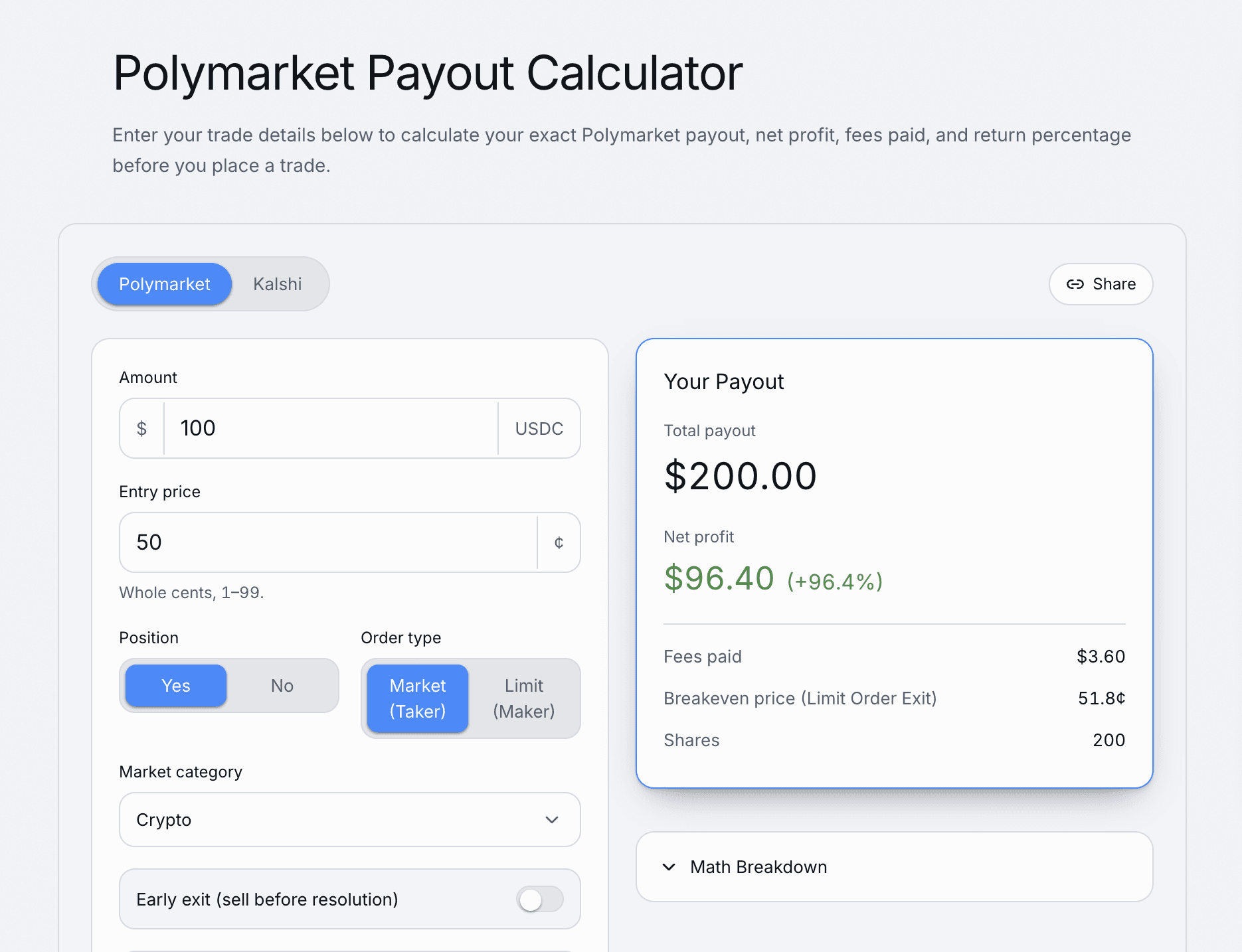
Try the Free Polymarket Payout Calculator → Calculate Your Profit Before You Trade
Is Polymarket Insider Trading Legal?
No. Whether the confidential information involves classified military operations or private corporate data, using material nonpublic information to trade event contracts on Polymarket falls within the same anti-fraud and insider-trading provisions of the Commodity Exchange Act that apply to traditional futures and swaps. The government's position, stated directly by senior CFTC and SDNY officials at the time of the Van Dyke charges, is that these laws apply to prediction markets exactly the way they apply to any other regulated derivative.
That said, the legal terrain here is genuinely being tested in real time, not settled decades ago the way securities-fraud law is for stocks. Both Van Dyke's and Spagnuolo's defense teams are challenging whether Polymarket contracts even qualify as regulated swaps in the first place, since Polymarket's core business operates offshore and largely outside direct US oversight. If that argument succeeds in either case, it could reshape how enforceable insider-trading law actually is on prediction markets going forward. For the wider jurisdictional picture behind this fight, CFTC vs States: Who Really Regulates Prediction Markets in 2026 covers how federal and state authority over this space is still being contested on multiple fronts.
The Second Case: Google Engineer Michele Spagnuolo
On May 27, 2026, prosecutors unsealed a criminal complaint against Michele Spagnuolo, a Google security engineer, in the same Southern District of New York court that charged Van Dyke. Spagnuolo, trading under the handle "AlphaRaccoon," allegedly used a Google internal software tool to access confidential, nonpublic data from the company's 2025 Year in Search results before the list became public.
Prosecutors allege Spagnuolo used that information to place bets on Polymarket's "2025 Year in Search List" contracts, correctly predicting the musician d4vd would top the list over public figures like Pope Leo XIV, and profiting roughly $1.2 million in the process. He faces charges of commodities fraud, wire fraud, and money laundering, and the CFTC separately filed a civil case alleging he misappropriated confidential information in breach of his duties to his employer. Spagnuolo was released on a $2.25 million bond after his arrest, and Google confirmed he was placed on leave while it cooperates with the investigation.
This google engineer Polymarket case is notable less for the size of the profit than for what it establishes precedent-wise: the government brought essentially the same legal theory used against Van Dyke, commodities fraud and wire fraud tied to nonpublic information, but applied it to ordinary corporate confidential data rather than classified national security material. That combination signals prosecutors are treating the venue itself, not just the type of secret being traded, as the thing subject to enforcement.
What This Means for Traders
Both cases point to the same underlying message: trading Polymarket contracts based on information you have access to only because of a job, security clearance, or other position of trust carries the same legal exposure as insider trading in any other market, regardless of how informal or new the platform feels.
The polymarket insider trading laws being tested in these two cases aren't new statutes written specifically for prediction markets. They're existing commodities-fraud and wire-fraud provisions, plus the rarely used Eddie Murphy Rule, applied to a genuinely new kind of trading venue for the first time. That's part of why defense attorneys in both cases are challenging whether Polymarket contracts even count as swaps under the relevant statutes, a question that hasn't been definitively resolved by a court yet.
For context on the platform-wide risk environment these cases sit inside, Kalshi and Polymarket: The Prediction Market Boom, Risks, and Regulation covers how insider trading concerns fit alongside the broader regulatory scrutiny both major platforms are facing as they grow. And since state-level rules can layer on top of federal enforcement in ways that vary significantly by jurisdiction, Prediction Markets Legal Status by State 2026: Full 50-State Tracker is worth checking for anyone trading from a specific state with its own gambling or securities framework.
Geopolitical Markets and Insider Trading Risk
Van Dyke's case specifically involved war-and-conflict-related contracts, the exact category of market where someone with privileged access, whether military, diplomatic, or corporate, has historically had the clearest opportunity to trade on information the public doesn't have yet. That risk isn't unique to Venezuela-related markets. Prediction markets tied to other active conflicts carry the same structural exposure, since anyone with early access to troop movements, negotiations, or leadership changes could theoretically trade on it before the public knows.
Iran-related markets are a clear current example of this same dynamic playing out. Iran War Markets on Polymarket: What Traders Need to Know Before Placing Bets and Iran Polymarket Odds 2026: War Risk and Market Analysis both cover how quickly these contracts can move on unconfirmed reports, which is exactly the kind of environment where insider information could move a price well before public confirmation. Polymarket Traders Are Pricing a Leadership Crisis in Iran shows how sensitive these markets already are to unverified information, which is worth keeping in mind given how the Van Dyke case played out.
Where Things Stand Now
Both cases remain active. Van Dyke has pleaded not guilty, his criminal trial is scheduled for December 7, 2026, and his attorneys are separately fighting to dismiss the CFTC's civil case on jurisdictional grounds. Spagnuolo's defense has raised a similar argument, contending Polymarket contracts aren't the kind of regulated swaps that would bring insider-trading law into play at all.
Beyond these two cases, scrutiny of Polymarket's trading activity has intensified. Polymarket has referred close to 100 wallets to authorities amid broader concerns about roughly $200 million in trades during the first half of 2026 showing patterns associated with potential insider activity, much of it concentrated in geopolitical markets tied to Iran and Venezuela. A flagged wallet doesn't mean insider trading occurred, and a referral doesn't guarantee charges will follow, but the volume of activity under review signals this is unlikely to remain a two-case story.
The Bottom Line
The Van Dyke case is the actual first insider trading case built around a prediction market, and the Spagnuolo case that followed six weeks later confirmed it wasn't a one-off. Together they establish that federal prosecutors are willing to apply existing commodities-fraud and insider-trading law to Polymarket contracts regardless of whether the nonpublic information involved is classified military intelligence or ordinary corporate data.
Whether that legal theory survives the dismissal motions now pending in both cases is still an open question, and the outcome will likely shape how enforceable this area of law actually is on prediction markets going forward. For traders, the practical takeaway is simple regardless of how the legal questions resolve: trading on information gained through a job, clearance, or position of trust carries real legal exposure on Polymarket, the same as it would anywhere else.
FAQ
Is insider trading on Polymarket illegal?
Yes. Federal prosecutors and the CFTC have taken the position that using material nonpublic information to trade Polymarket contracts violates the same anti-fraud and insider-trading provisions of the Commodity Exchange Act that apply to traditional futures and swaps. Whether Polymarket contracts specifically qualify as regulated swaps is being challenged in both active cases, so the legal question isn't fully settled by a court yet, but the government's enforcement position is clear.
Is insider trading actually happening on Polymarket?
Yes, based on two confirmed criminal cases and a broader pattern under review. Beyond the Van Dyke and Spagnuolo prosecutions, Polymarket has referred close to 100 wallets to authorities tied to roughly $200 million in trades during the first half of 2026 that showed characteristics associated with potential insider activity, concentrated largely in geopolitical markets.
Who was the Google engineer charged with Polymarket insider trading?
Michele Spagnuolo, a Google security engineer, was charged in May 2026 with commodities fraud, wire fraud, and money laundering. Prosecutors allege he used a Google internal tool to access confidential 2025 Year in Search data and traded on Polymarket contracts tied to that list before it became public, profiting roughly $1.2 million. The google engineer Polymarket case is separate from the earlier Van Dyke case and involves corporate rather than government information.
What laws apply to insider trading on Polymarket?
The core polymarket insider trading laws at issue are the Commodity Exchange Act's anti-fraud and commodities-fraud provisions, standard wire fraud statutes, and, in Van Dyke's case specifically, the rarely used "Eddie Murphy Rule" that bars trading swaps on the basis of confidential government information. These aren't laws written specifically for prediction markets; they're existing derivatives-law provisions being applied to this type of platform for the first time.
Is there a tracker for suspicious Polymarket trading activity?
There isn't a single public polymarket insider trading tracker, but Polymarket has disclosed referring nearly 100 wallets to authorities amid scrutiny of roughly $200 million in trades showing potential insider-activity characteristics during the first half of 2026. Independent analysts and outlets covering blockchain data have also published their own analyses of suspicious wallet activity, particularly around major geopolitical markets.
What are traders saying about Polymarket insider trading on Reddit?
Discussion around polymarket insider trading reddit largely centers on two threads: skepticism about how much insider activity goes undetected given Polymarket's historically limited KYC requirements, and debate over whether the Van Dyke and Spagnuolo cases represent real deterrence or unusually careless individual mistakes that happened to get caught. Both cases are frequently cited as evidence that blockchain-based trading, while pseudonymous, is traceable enough for prosecutors to build a case once a pattern draws attention.