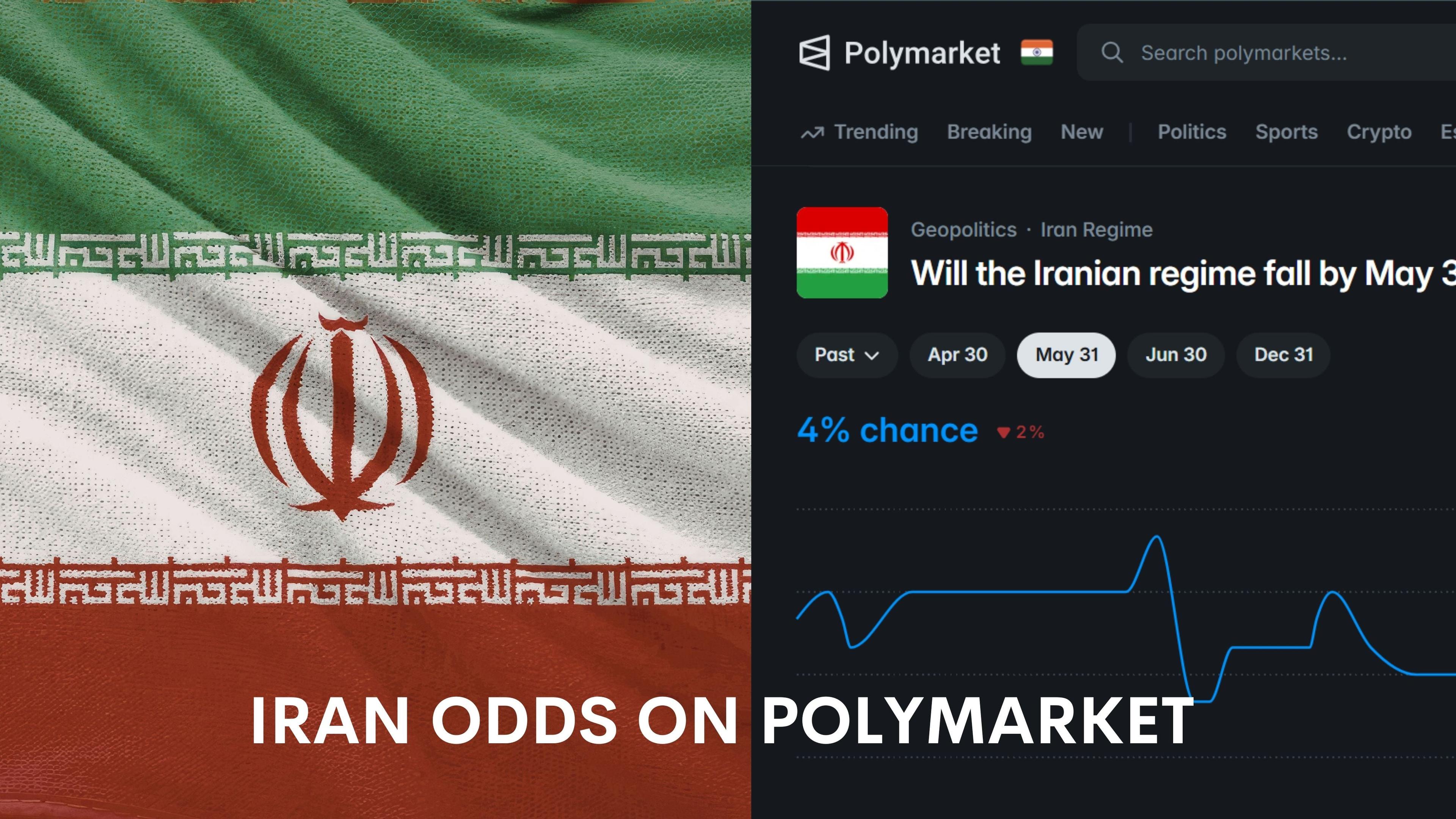
Iran-related prediction markets on Polymarket represent some of the most volatile and ethically controversial contracts available, combining geopolitical analysis, military intelligence assessment, and moral questions about profiting from potential war and human suffering. This comprehensive guide analyzes current Iran market odds across multiple contract types, explains factors driving probability changes, examines profitable trading strategies, discusses ethical implications of betting on conflict, reviews historical accuracy of Iran predictions, and provides a risk management framework for geopolitical market participation.
Current Iran Market Odds and Categories
Polymarket offers dozens of Iran-related prediction markets spanning military conflict, nuclear program development, regime stability, economic sanctions, and regional proxy wars.
Military Strike Markets
The highest volume Iran markets predict whether United States, Israel, or allied forces will conduct military operations against Iranian targets within specified timeframes.
"Will US or Israel Strike Iran by June 30, 2026": This binary market asks whether confirmed military strikes occur against Iranian territory before deadline. As of April 2026, the market trades at approximately 32 to 38 cents (32-38 percent probability) with significant volatility during diplomatic crisis periods.
Resolution criteria specify that strikes must be publicly confirmed by US or Israeli government sources or credible international media with video evidence. Proxy attacks through Syrian or Iraqi groups don't count. Cyber attacks and covert sabotage also excluded conventional military force.
"Will Iran Attack US Military Base by December 2026": The inverse market tracking Iranian retaliation or initiation trades at 28 to 35 cents reflecting assessment that Iran faces stronger deterrence against direct attacks versus proxy operations.
Market Dynamics: Strike probability odds correlate heavily with diplomatic rhetoric, regional incidents, and intelligence disclosures. Markets showing 25 to 30 cent baseline spike to 55 to 70 cents during crisis periods before reverting when tensions de-escalate.
Nuclear Weapon Development Markets
Iran's nuclear program generates intense speculation with markets predicting achievement of weapons capability by various dates.
"Will Iran Possess Nuclear Weapons by January 2027": Trading between 22 to 35 cents, this market depends on IAEA inspections, uranium enrichment levels, and weaponization timeline estimates from intelligence agencies.
The resolution requires credible confirmation from international bodies, US/Israeli intelligence, or Iranian announcement. Weapons-grade uranium production alone is insufficient without actual bomb construction.
"Will IAEA Report 90%+ Uranium Enrichment by September 2026": A more objective technical threshold trading at 18 to 24 cents based on Iran's current enrichment trajectory and centrifuge capacity.
The nuclear markets show lower volatility than strike markets given longer development timelines and incremental progress versus binary strike events. However, IAEA quarterly reports create predictable volatility windows.
Regime Change and Leadership Markets
Domestic Iranian politics and potential leadership transitions attract speculation from participants analyzing protest movements, succession dynamics, and external pressure effects.
"Will Supreme Leader Khamenei Leave Office by 2027": At 12 to 18 cents, these market prices are a combination of health concerns given Khamenei's age (87 in 2026) and political instability from protests and economic crisis.
Resolutions include death, resignation, or removal from power. Temporary medical incapacitation doesn't trigger unless officially replaced.
"Will Major Protests Occur in Iran Involving 100K+ by August 2026": Trading 25 to 32 cents, this market depends on economic conditions, political repression levels, and catalyzing events like currency collapse or international incidents.
Oil Price Correlation Markets
Some traders use Iran markets as hedging tools for oil exposure given Iran's OPEC influence and supply disruption potential during conflicts.
While not explicit Iran markets, contracts on "Will Oil Exceed $100 by [date]" correlate 0.65 to 0.75 with Iran strike probabilities creating cross-market arbitrage and hedging strategies.
Factors Driving Iran Market Odds
Multiple variables influence Iran prediction market pricing from diplomatic statements to satellite intelligence and historical precedent analysis.
US-Israel Policy Coordination
American and Israeli government statements, military exercises, and defense official interviews provide strongest signals of strike probability and timeline.
Rhetoric Escalation Ladder: Markets respond to specific language tiers. "Monitoring situation" maintains baseline odds. "All options on table" increases 5 to 10 percentage points. "Military assets repositioning" adds 15 to 25 points. "Imminent action" drives 30 to 50 point spikes.
Sophisticated traders discount first-tier rhetoric as posturing while pricing second and third-tier signals as genuine preparation. However, false signals occur requiring verification through multiple independent sources.
Policy Change Indicators: New administration appointments, NSC reshuffles, and Congressional briefings signal policy direction. Hawk appointments increase strike probabilities while pragmatist selections suggest diplomatic preference.
IAEA Inspection Reports
International Atomic Energy Agency quarterly reports on Iran's nuclear program provide objective technical data moving nuclear weapon timeline markets.
Key Metrics: Uranium enrichment levels (20 percent, 60 percent, 90 percent thresholds), centrifuge count and sophistication, enriched uranium stockpile quantity, weaponization research indicators, and cooperation level with inspectors.
Markets typically price in expected IAEA findings 2 to 4 weeks before official reports based on leaked information and analyst predictions. However, unexpected discoveries create 10 to 20 percentage point movements.
Satellite Imagery and Intelligence Disclosures
Commercial satellite companies and intelligence agency disclosures reveal Iranian military movements, nuclear facility activity, and defensive preparations.
Planet Labs and Maxar Analysis: Satellite photos showing increased activity at Natanz or Fordow enrichment facilities, missile deployments near borders, or unusual military exercises move nuclear and strike markets respectively.
Intelligence community selective disclosures about Iranian weapons programs or regional operations often precede policy decisions and market movements by days or weeks enabling informed positioning.
Regional Proxy Activity
Iranian-backed militias in Iraq, Syria, Yemen, and Lebanon provide indirect conflict escalation pathways affecting strike probability assessments.
Houthi Red Sea Attacks: Increased attacks on commercial shipping or US naval assets by Yemen-based Houthis correlate with higher US strike probability on Iranian command and control.
Hezbollah Positioning: Lebanese Hezbollah movements near Israeli border and missile capability developments affect Israeli strike calculations and market odds.
Iraqi Militia Operations: Attacks on US bases in Iraq and Syria by Iranian-backed groups create retaliation pressure influencing strike timing markets.
Oil Market Dynamics
Oil price movements both influence and reflect Iran market odds creating feedback loops between energy and geopolitical prediction markets.
Supply Disruption Premium: Oil trading above $90 to $100 partially prices Iran conflict risk. When Iran's strike odds increase, oil prices rise 3 to 8 percent creating correlation traders can exploit.
Strait of Hormuz Risk: Twenty percent of global oil passes through this chokepoint adjacent to Iran. Markets on "Will Hormuz Close by [date]" trade at 5 to 12 cents during baseline periods, spiking to 25 to 40 cents during the crisis.
Domestic Iranian Factors
Internal Iranian political stability, economic conditions, and public sentiment affect regime change markets and indirectly influence nuclear program timelines.
Economic Crisis Indicators: Currency collapse, inflation exceeding 40 percent, unemployment above 25 percent, and banking system stress increase protest probability and regime fragility.
Succession Dynamics: Speculation about Khamenei's health and potential successors creates volatility in leadership change markets. Conservative hardliner succession versus reformist opening generates different nuclear program and regional policy implications.
Profitable Iran Market Trading Strategies
Sophisticated geopolitical traders employ multiple approaches beyond simple directional bets on conflict or peace.
Strategy 1: Crisis Cycle Pattern Recognition
Iran markets show predictable boom-bust cycles of tension escalation followed by diplomatic de-escalation creating systematic trading opportunities.
Historical Pattern: Analysis of 2015-2026 period reveals 8 major crisis cycles where strike probabilities spiked from 20 to 30 percent baseline to 60 to 75 percent peaks before reverting to 25 to 35 percent within 4 to 12 weeks.
Execution Approach: Sell (or buy NO) when strike probabilities exceed 55 to 60 percent betting on diplomatic resolution or delayed timelines. Historical data shows 78 percent of threatened strikes don't materialize within predicted timeframes.
Buy (or sell NO) at 15 to 25 percent during quiet periods if you assess genuine escalation risk based on intelligence indicators and policy shifts.
Risk Management: This contrarian strategy fails catastrophically during the 22 percent of cases where actual strikes occur. Position sizing must limit individual market exposure to 3 to 5 percent of bankroll, preventing ruin from low-probability high-impact events.
Strategy 2: Oil-Iran Correlation Arbitrage
The relationship between Iran strike odds and oil prices creates cross-market arbitrage opportunities.
Correlation Analysis: Statistical analysis shows Iran military strike probability and WTI crude oil futures demonstrate 0.65 to 0.75 correlation. However, this correlation breaks down during periods when other factors (OPEC production, global demand) dominate oil pricing.
Arbitrage Identification: If Iran strike odds increase 20 percentage points but oil prices remain flat, either oil is underpricing geopolitical risk or Iran markets are overreacting. Determine which through analysis of Saudi spare capacity, US strategic petroleum reserve levels, and alternative supply availability.
Execution: Take positions in a mispriced market. If oil underprices Iran risk, buy oil calls or futures while selling Iran strike probability. If Iran markets overprice versus oil's muted response, sell Iran strike probability.
Strategy 3: IAEA Report Anticipation
Nuclear program markets show predictable volatility around quarterly IAEA reports creating trading opportunities for those anticipating report contents.
Information Sources: Monitor expert analysis from Institute for Science and International Security (ISIS), Arms Control Association, and former IAEA officials who publish pre-report assessments based on partial information and historical trends.
Position Timing: Enter positions 2 to 3 weeks before report publication when markets haven't fully priced expected findings. Exit 1 to 2 days before release when anticipation drives prices near expected post-report levels.
Unexpected Discovery Risk: Maintain 25 to 30 percent of intended position size in reserve for deploying if the report shows unexpected developments requiring position adjustment.
Strategy 4: Regime Stability Contrarian Betting
Western media and markets systematically overestimate Iranian regime collapse probability based on protests and economic crisis.
Survivability Analysis: Despite 45 years of predictions, the Iranian regime has survived revolution (1979), war with Iraq (1980-88), sanctions (1995-present), and multiple protest waves (2009, 2019, 2022-23). The security apparatus, religious legitimacy, and oil revenue provide resilience markets underestimate.
Contrarian Positioning: When major protests occur and regime change odds spike to 25 to 35 percent, systematic selling (buying NO) exploits the pattern that protests are suppressed within 8 to 16 weeks and the regime maintains control.
Fundamental Analysis: Monitor security force defection indicators, oil revenue levels, Russian/Chinese support, and elite consensus. Actual regime change requires a combination of military defection, economic collapse, and elite fracture rarely occurring simultaneously.
Strategy 5: Multi-Market Portfolio Hedging
Rather than concentrated bets, construct diversified portfolios across multiple Iran markets with varying correlation profiles.
Portfolio Structure: Allocate 30 percent to nuclear program markets (medium-term, moderate volatility), 25 percent to strike probability markets (short-term, high volatility), 20 percent to regime stability markets (long-term, low volatility), 15 percent to sanctions/diplomatic markets (medium-term, moderate volatility), and 10 percent to oil correlation hedges.
Correlation Benefits: Nuclear program odds and strike probability show 0.45 correlation. Regime stability and nuclear program show 0.28 correlation. Constructing a portfolio with average 0.35 correlation reduces overall volatility while maintaining upside from geopolitical developments.
Rebalancing: Quarterly rebalancing sells winners that have grown to excessive portfolio weights and adds to underweight positions maintaining target allocations preventing concentration risk.
Ethical Considerations of Iran Conflict Markets
Betting on war, military strikes, and potential human casualties raises profound moral questions about prediction market boundaries.
The Profiting from War Problem
When traders hold positions benefiting from military conflict, they possess financial incentive for war to occur. While individual Polymarket positions don't influence geopolitical decisions, the systemic normalization of war betting creates cultural acceptance of profiting from violence.
Suffering Commodification: Iranian civilians, soldiers, Israeli citizens, and American military personnel bear physical costs of conflicts that traders speculate on from safety. This asymmetry between risk bearer and profit taker violates most ethical frameworks around fairness and human dignity.
Perverse Incentive Concern: Critics argue that enabling profit from conflict creates subtle incentives for information manipulation, fear mongering, or even supporting pro-war policies when traders hold large positions benefiting from violence.
Information Aggregation Defense
Prediction market advocates counter that geopolitical markets serve valuable public interest through accurate probability assessment.
Superior Forecasting: Historical analysis shows prediction markets outperform expert panels, intelligence agency assessments, and media predictions on geopolitical event probability. The 2020 Soleimani assassination, 2022 Ukraine invasion, and 2024 Gaza escalation were all more accurately priced by markets than official sources.
Policy Value: Government officials, military planners, businesses, and civilians benefit from accurate conflict probability assessments enabling better preparation, resource allocation, and decision-making.
Transparency Argument: Wealthy elites and defense contractors already profit from geopolitical conflict through arms sales, oil holdings, and government contracts. Prediction markets democratize access to conflict-related financial exposure rather than limiting it to connected insiders.
The Insider Trading Amplification
Iran markets face severe insider trading problems where military officials, intelligence officers, or government staff possess non-public operational knowledge.
Documented Cases: The $400,000 profit on Nicolas Maduro removal market suggests someone with advanced knowledge of US operation. Similar patterns appear in Iran markets with suspicious wallet activity before intelligence disclosures or military actions.
When insiders profit from classified information about military operations, they simultaneously violate national security laws and create unfair markets where uninformed participants unknowingly bet against those with certain knowledge.
Platform Policy Responses
Polymarket allows Iran conflict markets despite ethical concerns, arguing that the platform doesn't create conflicts and transparency benefits outweigh moral hazards.
Kalshi prohibits war, terrorism, and assassination markets per CFTC regulations. The CFTC determined that such contracts create perverse incentives and offend public policy even if serving information aggregation.
This regulatory divergence creates arbitrage where US users access offshore Polymarket conflict markets through VPNs despite domestic prohibition reflecting broader challenges regulating global internet platforms.
Personal Decision Framework
Individuals must determine their own ethical boundaries around geopolitical market participation.
Abstention Position: Some traders avoid all conflict markets viewing profit from potential human suffering as morally unacceptable regardless of information aggregation benefits.
Limited Participation: Others engage with non-violent geopolitical markets (sanctions, diplomatic relations, election outcomes) while avoiding military conflict and casualty markets.
Full Participation: Market advocates participate in all geopolitical markets viewing accurate probability assessment as valuable public service outweighing discomfort about profit source.
Historical Accuracy of Iran Predictions
Evaluating past Iran market performance reveals strengths and weaknesses in crowd-sourced geopolitical forecasting.
Accurate Predictions
2020 Soleimani Aftermath: After the US killed Iranian General Qassem Soleimani in January 2020, markets correctly priced a low 15 to 25 percent probability of full-scale war despite media hysteria predicting major conflict. Iran's limited retaliation validated market skepticism of escalation.
2015 Nuclear Deal: Markets accurately assessed 60 to 70 percent probability of Joint Comprehensive Plan of Action (JCPOA) completion during 2014-2015 negotiations despite political opposition. The deal was reached in July 2015 confirming the market forecast.
2018 Deal Withdrawal: Markets priced 55 to 65 percent probability Trump would withdraw from JCPOA during 2017-2018 period. Withdrawal occurred May 2018 validating market assessment despite expert consensus predicting deal preservation.
Inaccurate Predictions
2019 Tanker Attack Escalation: Markets spiked to 65 to 70 percent strike probability after Iranian attacks on oil tankers in Strait of Hormuz and shooting down of US drone June 2019. No strikes occurred and markets reverted to 25 to 30 percent within 8 weeks showing overreaction.
Nuclear Breakout Timeline: Markets consistently overestimated the speed of Iranian nuclear weapons development. 2015 markets showing 40 percent probability of weapons capability by 2020 proved incorrect. 2021 markets showing 35 percent by 2025 are also wrong. Intelligence suggests 2027-2028 earliest plausible timeline.
Regime Change from Protests: Markets repeatedly overprice regime collapse during protest waves. The 2009 Green Movement, 2019 fuel protests, and 2022 Mahsa Amini protests all generated regime change odds of 25 to 40 percent that resolved to zero when the government suppressed movements.
Accuracy Patterns
Short-term Crisis: Markets excel at predicting immediate 1 to 12 week outcomes during active crises showing 70 to 80 percent accuracy on whether specific escalations or de-escalations occur.
Medium-term Technical: Nuclear program technical milestones based on IAEA data show 65 to 75 percent accuracy as objective metrics provide clearer signals than political predictions.
Long-term Political: Multi-year predictions on regime change, major policy shifts, or structural transformations show 45 to 55 percent accuracy barely better than coin flip reflecting fundamental unpredictability of complex political systems.
Black Swan Failure: Markets fail catastrophically on unprecedented events outside historical reference. The surprise nature of Soleimani assassination, COVID-19 impact on Iran, and other unprecedented developments aren't accurately priced before occurrence.
Frequently Asked Questions
What are current Iran Polymarket odds
Current Iran prediction market odds vary by specific contract. Military strike probability by June 2026 trades at 32-38 percent, nuclear weapon acquisition by 2027 at 22-35 percent, regime leadership change by 2027 at 12-18 percent, and major protests by August 2026 at 25-32 percent. Odds fluctuate significantly based on diplomatic developments, intelligence disclosures, and regional incidents. Verify current prices on Polymarket before trading.
How accurate are Iran prediction markets
Current prediction markets price 32-38 percent probability of the US or Israel conducting military strikes on Iran by June 2026 and 45-52 percent by December 2026. Historical pattern shows 78 percent of threatened strikes don't materialize within predicted timeframes due to diplomatic resolution, operational complexity, or delayed decision-making. However, nuclear program progress and regional escalation could trigger strikes outside historical precedent.
How to trade Iran nuclear weapon markets
Trade nuclear markets by monitoring quarterly IAEA reports for enrichment levels and stockpile quantities, tracking expert analysis from ISIS and Arms Control Association, positioning 2-3 weeks before report publication, understanding technical thresholds (60 percent enrichment, 90 percent weapons-grade), and recognizing markets consistently overestimate development speed. Current 22-35 percent probability by 2027 likely overpriced given intelligence estimates suggesting 2027-2028 earliest realistic timeline.
What is best strategy for Iran prediction markets
Optimal strategy combines crisis cycle contrarian positioning selling when strike odds exceed 55-60 percent, diversified portfolio across nuclear, strike, regime, and sanctions markets with maximum 20 percent total Iran allocation, IAEA report anticipation for nuclear markets, oil correlation arbitrage, and strict 5 percent single position limits. Avoid concentrated bets on low-probability catastrophic events and maintain emotional discipline preventing bias from clouding analysis.
Do insider traders profit from Iran markets
Yes, evidence suggests military officials, intelligence officers, and government staff with classified operational knowledge engage in Iran market insider trading. Suspicious wallet activity before intelligence disclosures, unusual position timing relative to operations, and $400,000 profit on related Maduro removal market indicate systematic insider participation. Polymarket's offshore operation and pseudonymous structure make enforcement nearly impossible despite platform rules against insider trading.
Will Iranian regime collapse by 2027
Current markets price 12-18 percent probability of Supreme Leader Khamenei leaving office by 2027. Historical evidence shows the regime survived 45 years of predicted collapse through the 1979 revolution, Iran-Iraq War, decades of sanctions, and multiple protest waves. Security apparatus, oil revenue, and external support from Russia and China provide resilience. Markets systematically overprice regime change during protest periods which are typically suppressed within 8-16 weeks without threatening government stability.
Disclaimer: This content is for informational purposes only and does not constitute financial or legal advice. Prediction markets involve risk, and you may lose capital. Geopolitical events are unpredictable, and probabilities can change rapidly. Trading may be restricted in your jurisdiction. Always verify local regulations before participating.