Fight night on Polymarket looks nothing like a sportsbook slip, and that's worth understanding before you put money on anything. Polymarket UFC markets aren't odds set by a bookmaker, they're contracts priced by whoever's actually trading them, moving in real time as the crowd reacts to a takedown, a wobbled fighter, or a judge's scorecard rumor between rounds. That structure changes how you should approach a fight card compared to a traditional sportsbook, and it's the whole reason this guide exists.
Below is how fight-winner and method-of-victory contracts actually work, how to read a card before committing, where live odds move fastest, and the mistakes that quietly cost UFC traders the most money on this platform specifically.
What UFC Markets on Polymarket Actually Look Like
Every UFC card on Polymarket breaks down into a handful of contract types, and knowing which one you're looking at matters more than it sounds.
Fight-winner contracts are the simplest and most liquid entry point, and they behave the way you'd expect: buy Yes on the fighter you think wins, and the contract settles at a dollar if you're right. Method-of-victory and round markets get more interesting and considerably riskier, since you're now betting on how a fight ends rather than just who wins it, and those two things don't always move together. A heavy favorite can still win by decision instead of the finish the market was pricing in, which is exactly the kind of gap that catches inexperienced polymarket UFC bets off guard.
If you're weighing whether this structure makes more sense for you than a traditional sportsbook line, Prediction Markets vs Sports Betting: What Is Actually Different? breaks down the mechanical differences worth understanding before your first fight-night trade.
How to Read and Trade a UFC Fight Card on Polymarket
Reading a card properly before you trade means working through it in a specific order, not just scrolling to the main event.
- Check the full card, not just the top of the poster. Polymarket usually lists markets for every bout on the card, and the undercard is where mispricing tends to sit longest, simply because fewer traders are paying attention to it.
- Compare implied pricing against what you actually know. A contract trading at 70 cents implies roughly a 70% chance of that outcome. If your own read on the matchup disagrees meaningfully with that number, that gap is either your edge or a sign you're missing something the market already knows.
- Watch for late scratches and weigh-in misses. A fighter missing weight or a late opponent change reshuffles pricing fast, and Polymarket's markets typically adjust within minutes of news breaking, well before some casual bettors even hear about it.
- Decide your entry method before the card starts. Fight night pricing moves quickly once the action begins, and having a plan for whether you're using a market or a limit order matters more here than in slower-moving markets. How to Use Limit Orders on Polymarket Like a Professional Trader covers setting these up specifically so you're not chasing a price that's already moved by the time your order fills.
- Separate your pre-fight read from your live read. The analysis that made sense the night before, based on tape study, camp reports, and styles matching up on paper, is a completely different exercise from reading what's actually happening once the fighters are in the cage. Traders who treat these as the same thing tend to hold a pre-fight position too long after live action has already invalidated it.
Live Odds and Live Trading on Fight Night
This is where UFC markets on Polymarket diverge hardest from a sportsbook. Polymarket UFC live odds update continuously through the fight itself, not just before it starts, because the contract is trading against real buyers and sellers reacting to what's happening in the cage in real time.
A single moment, a clean right hand, a submission attempt tightening, a fighter visibly gassing in round three, can move a contract ten or fifteen cents in seconds. That's genuinely useful if you're watching the fight live and trading around what you're seeing, but it's also exactly where inexperienced traders get run over chasing a price that's already stale by the time their order lands. Round-by-round markets specifically can swing wildly between rounds as the crowd re-prices based on who clearly won the round that just ended, sometimes overcorrecting on a close round that a judge might actually score the other way.
This is also where the gap between a fight-winner contract and a method-of-victory contract gets the most obvious. A fighter can be dominating on the feet and pushing their winner contract toward 90 cents while their finish-by-KO contract barely moves, simply because dominating a round on points and actually landing the fight-ending shot are two different events the market is pricing separately. Watching both side by side during a live fight tends to teach that lesson faster than any amount of reading about it beforehand.
If you're the type of trader who likes stacking several related outcomes into one combined position instead of trading each market separately, Prediction Market Parlays Explained: How Multi-Leg Contracts Work covers how that structure works on platforms like Polymarket, and where it differs from a traditional parlay bet.
Current and Recent UFC Fight Cards on Polymarket
Fight cards change constantly, so treat the specifics below as a snapshot rather than something evergreen, and check Polymarket's own UFC category or UFC's official schedule for whatever card is actually next by the time you're reading this.

As of this writing, UFC 333: Volkanovski vs. Evloev is the next numbered card on the calendar, a featherweight title bout in Abu Dhabi with a bantamweight title trilogy between Petr Yan and Merab Dvalishvili as the co-main, and UFC 331 sits close behind it with a Joshua Van vs. Alexandre Pantoja flyweight title rematch. Both are exactly the kind of high-liquidity numbered cards where Polymarket's fight-winner markets tend to see the deepest volume.
Recent numbered cards, including UFC 323, UFC 320, UFC 319, UFC 317, UFC 311, and UFC 309, each had their own set of fight-winner and method-of-victory markets on Polymarket. If you're researching how a specific past card traded, Polymarket's UFC category page keeps historical markets browsable even after they've settled, and UFC's own event archive at UFC.com has the official results for reference.
The Polymarket UFC White House Event
One UFC card in 2026 is worth covering on its own, because it's genuinely unusual and it's a real question people search for: polymarket UFC white house. On June 14, 2026, UFC staged Freedom 250 on the White House South Lawn as part of President Trump's 80th birthday celebration, and Polymarket appeared as a visible sponsor with its branding placed directly on the octagon itself, alongside Crypto.com and other sponsors.
The event drew real trading interest beyond the novelty of its location. The Gaethje vs. Topuria lightweight unification main event alone saw hundreds of thousands of dollars traded on Polymarket before the card even started, with Gaethje priced as the clear favorite heading in. It was also a notable moment for the platform's public visibility more broadly, since Polymarket's sponsorship placement drew coverage in outlets that don't normally write about prediction markets at all, putting the platform in front of an audience that had never heard of it before.
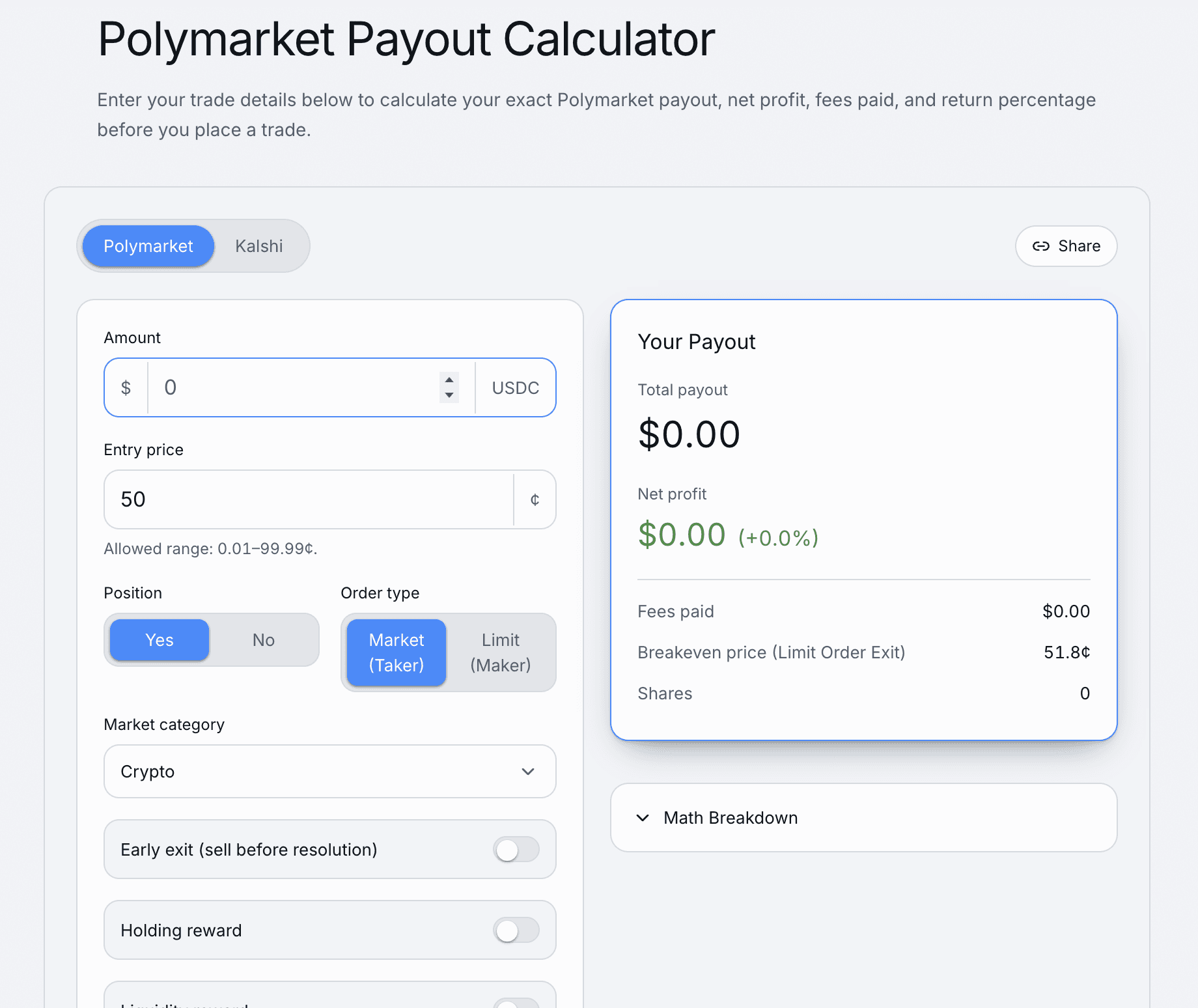
Worth flagging honestly: the event also drew political criticism and legal pushback over its cost and its placement on federal grounds, and Polymarket's participation came while the platform was simultaneously arguing elsewhere that prediction markets are neutral financial infrastructure rather than gambling-adjacent entertainment. None of that changes how the markets themselves worked mechanically, but it's relevant context if you're wondering why this specific card generated so much more general-audience coverage than a typical numbered event.Want to know how much you could make on a Polymarket trade? Enter your amount and entry price to instantly see your potential payout, profit, fees, and return before you trade.
Common UFC-Market Trading Mistakes
A handful of mistakes show up over and over with new UFC traders on Polymarket specifically, and most of them come down to underestimating how different this is from betting a sportsbook line.
- Trading thin undercard markets at size. Early prelim fights often have a fraction of the liquidity of the main card, which means a modestly sized order can move the price against you before it even fully fills. How to Find Liquid Markets on Polymarket and Why Thin Markets Will Ruin You goes deeper into spotting this before it costs you.
- Chasing live price movement with market orders. A ten-cent swing after a big moment feels urgent, but market orders during fast-moving live trading often fill worse than expected, since the price you saw a second ago may already be gone.
- Ignoring method-of-victory correlation. A fighter winning and a fighter finishing aren't the same bet, and pricing one off the other without checking both markets separately is a common way to misjudge value.
- Skipping weigh-in and injury news. Pricing reacts fast to a missed weight cut or a late opponent change, and traders checking in only right before the card starts often miss the window where that information was still cheap.
- Treating every numbered card the same. A stacked pay-per-view-style card with title fights trades very differently from a lighter Fight Night card, both in liquidity and in how efficiently the main event gets priced ahead of time.
For a broader look at how UFC trading fits alongside other sports on the platform, Polymarket Sports Markets 2026: Complete Guide to NFL, NBA, MLB, Soccer covers the same fundamentals applied across other leagues, useful if UFC is one part of a wider sports-trading approach rather than the whole plan.
Bottom Line
UFC markets on Polymarket reward the same discipline that serious sports bettors already apply, reading the full card, respecting liquidity differences between the main event and the prelims, and reacting fast to real information rather than chasing price after the fact, just applied to a market structure that moves continuously rather than sitting on a fixed line until kickoff. The White House-hosted card was a genuine outlier in terms of visibility, but the mechanics underneath every UFC contract on Polymarket, whichever numbered event you're trading, work the same way.
FAQs
Can you trade UFC fights on Polymarket?
Yes. Polymarket lists fight-winner, method-of-victory, and round-based markets for UFC numbered events and Fight Night cards, with pricing that moves continuously both before and during the fight based on real trading activity.
What kinds of UFC bets are available on Polymarket?
Polymarket UFC bets typically include straightforward fight-winner contracts, method-of-victory markets covering KO/TKO, submission, or decision, round-specific props on whether a fight ends inside a given round, and go-the-distance markets on whether the bout reaches a final decision at all.
Where can I see live UFC odds on Polymarket?
Polymarket UFC live odds are visible directly on each fight's market page on Polymarket's own UFC category, updating in real time as trades happen, including during the fight itself as the price reacts to what's happening in the cage.
Has Polymarket ever run UFC markets tied to White House events?
Yes. Polymarket sponsored UFC Freedom 250, held on the White House South Lawn on June 14, 2026 as part of President Trump's 80th birthday celebration, with its branding featured on the octagon and real trading volume on the Gaethje vs. Topuria main event.