Iran War Markets on Polymarket: What Traders Need to Know Before Placing Bets
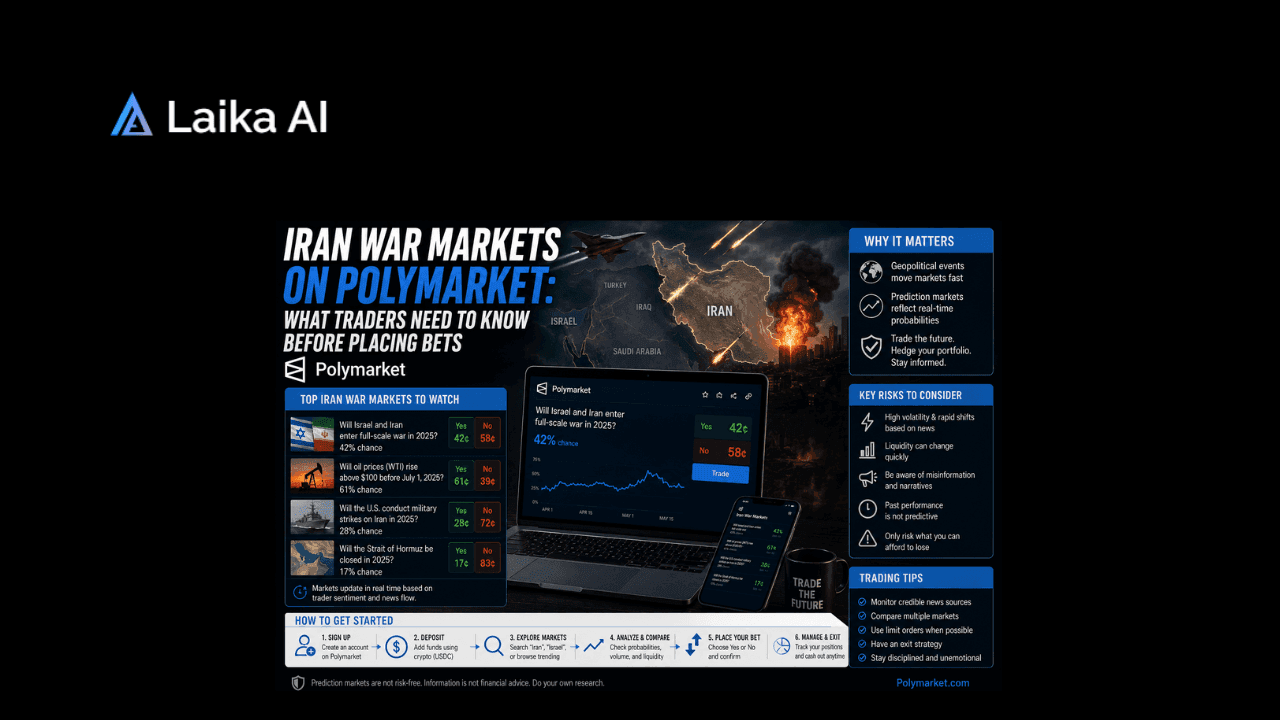
The polymarket Iran war markets represent one of the most actively traded and most ethically complex categories on the entire platform. Geopolitical conflict markets price the probability of human suffering, military escalation, and international crisis as a tradeable contract, and that structure raises legitimate questions that traders need to think through before entering a position. At the same time, these markets serve a genuine information function: they aggregate publicly available intelligence, diplomatic signals, and military positioning data into a single, continuously updating probability estimate that moves faster than almost any other source of public information on the same question.
This guide covers what Iran-related contracts exist on Polymarket, how they are priced, what data sources actually move them, how to approach trading them with proper risk management, and the ethical considerations that any trader entering this market category should think through before committing capital. For the foundational mechanics of how prediction market prices function as probability estimates, Polymarket explained: how prediction markets work covers the structure before going into conflict-market-specific dynamics.
What Iran War Markets Exist on Polymarket
Polymarket's Iran conflict prediction market coverage is not a single contract. It is a category of related markets, each asking a specific binary question about a different dimension of the broader conflict risk.
Direct military confrontation markets
The flagship contracts in this category ask whether a direct US-Iran military confrontation will occur within a specific timeframe. These markets typically define the resolution criteria precisely: a confirmed military strike by US forces on Iranian territory or assets, a confirmed Iranian attack on US forces or US-allied targets, or a combination of both depending on how the specific contract is worded. The resolution criteria matter enormously here because the line between a proxy conflict, a limited strike, and a full military confrontation is not always clear in real time, which is why reading the exact contract language before trading is essential.
Strait of Hormuz and shipping disruption markets
A specific subcategory of polymarket war markets focuses on whether Iran will attempt to close or disrupt shipping through the Strait of Hormuz, one of the world's most critical oil transit chokepoints. These markets have direct relevance for energy traders and portfolio managers with oil-exposed positions, because a Hormuz disruption event would have immediate and significant effects on global crude prices regardless of the broader military conflict's trajectory.
Nuclear program and enrichment markets
Polymarket runs contracts on specific Iranian nuclear program milestones, including whether Iran will reach a specific uranium enrichment threshold by a defined date, whether international inspectors will confirm specific nuclear facility activity, and whether diplomatic negotiations will produce a new nuclear agreement before a stated deadline. These markets are distinct from the direct conflict markets because they price a different kind of escalation: technical and diplomatic rather than military.
Regime stability and leadership markets
A smaller but actively traded category covers Iranian internal political stability, including markets on leadership succession, government stability during periods of internal unrest, and the probability of significant policy shifts following changes in Iranian leadership. These markets require a different analytical approach than the military confrontation contracts because they depend on internal political dynamics that are harder to observe from outside sources than military positioning data.
Sanctions and economic pressure markets
Polymarket also runs markets on specific sanctions actions related to Iran, including new sanctions designations, sanctions relief as part of any diplomatic agreement, and enforcement actions against entities that violate existing sanctions regimes. These markets intersect with the broader conflict risk category because sanctions escalation and military escalation often move together as policy tools applied in sequence.
The full live menu of these contracts is available at the Iran and Middle East conflict markets page on polymarket.com, where current pricing, volume, and resolution criteria for each active contract are listed.
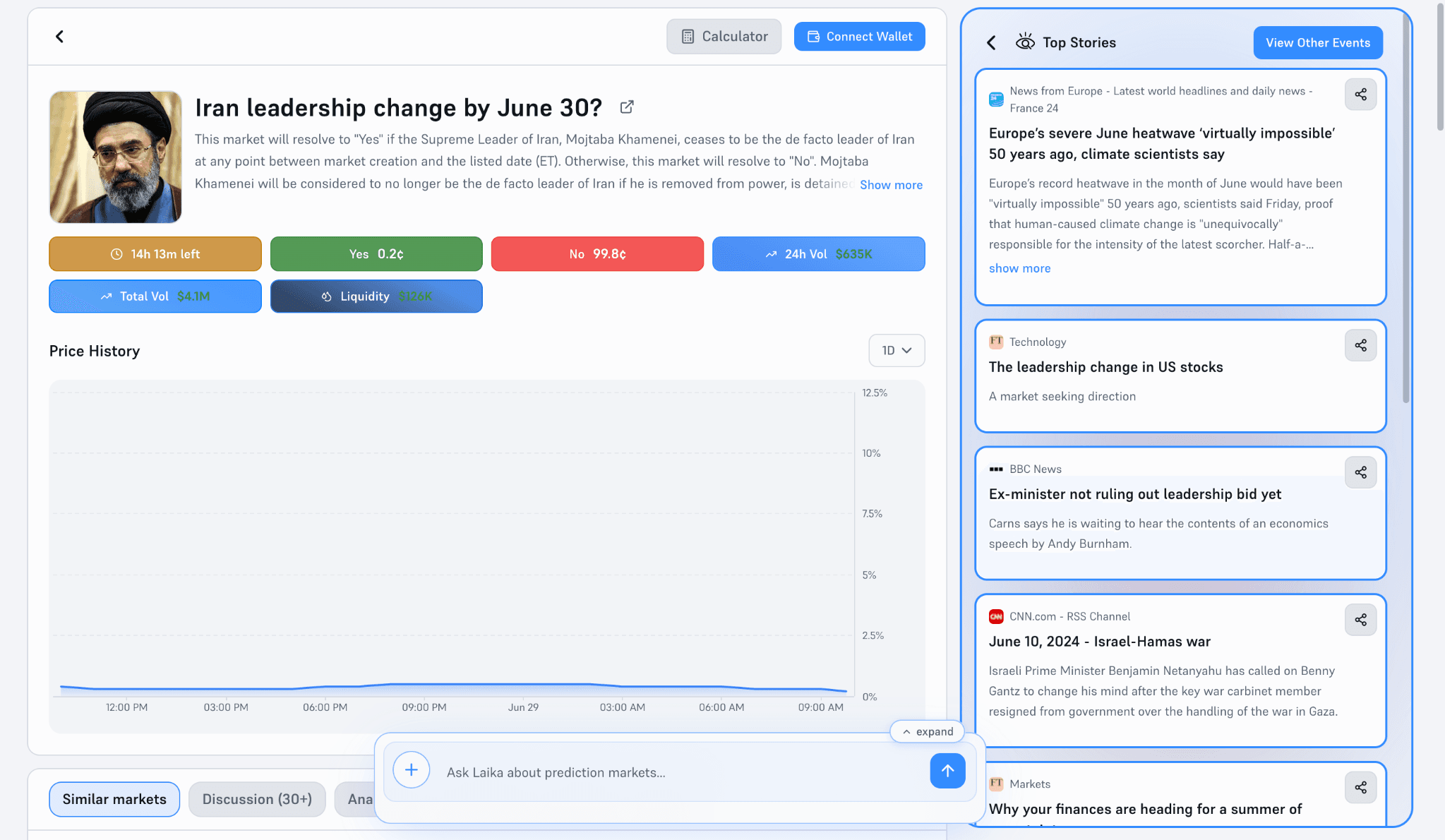
How Polymarket Prices Geopolitical Conflict Probability
Understanding what actually moves the price on an Iran war market requires understanding the specific information sources that traders are watching and how quickly that information gets incorporated into the market price.
The information sources that move these markets
Unlike sports markets where the relevant information is largely public and standardized, such as injury reports and game statistics, geopolitical conflict markets are priced based on a more diffuse and harder-to-verify information environment. Several categories of information consistently move Iran conflict prediction market prices.
Official government statements from the White House, the Pentagon, the Iranian government, and relevant international bodies move prices immediately upon release. A statement that signals de-escalation, even a minor diplomatic gesture, can move conflict probability contracts by several percentage points within minutes. A statement that signals increased military readiness moves prices in the opposite direction with similar speed.
Military positioning data, including troop movements, naval deployments, and aircraft carrier group repositioning, is tracked by open-source intelligence analysts and defense journalists who publish observations that prediction market traders monitor closely. This data is harder to verify in real time than an official statement but often provides earlier signals because military positioning changes typically precede official announcements by days or weeks.
News wire reports from established outlets provide the fastest verified information flow on breaking developments. The Reuters Iran news feed is one of the most consistently cited primary sources among traders monitoring this category, given the wire service's speed and sourcing standards on Middle East conflict coverage. Checking wire reports directly rather than relying on secondary aggregation or social media summaries is a meaningful speed advantage in this market category.
Diplomatic back-channel reporting, often surfacing through specific journalists with established sources inside negotiating teams, frequently moves markets before official confirmation. This is the most difficult information category to verify and the one most prone to producing false signals that create temporary mispricing before correcting.
The repricing speed differential
Iran conflict markets on Polymarket typically reprice within minutes of verified information becoming public, faster than most traditional financial markets respond to the same information and significantly faster than mainstream media narrative formation. This speed advantage exists because the market aggregates thousands of individual traders monitoring different information sources simultaneously, rather than depending on a single editorial process to verify and publish a single interpretation of the news.
This creates both opportunity and risk for traders. The opportunity is that genuinely new information gets priced quickly, which means a trader with a faster or more reliable information source than the broader market can capture value in the window before the price catches up. The risk is that the market also replicates quickly on unverified or false reports, which means a trader acting on unconfirmed information faces real risk of trading into a position that reverses sharply once the report is confirmed or debunked.
For the broader framework on how prediction markets can be used to hedge portfolio exposure to geopolitical tail risk, including specific guidance on using Iran conflict contracts as portfolio insurance, geopolitical hedging with prediction markets covers the complete methodology. For how prediction markets price a different category of binary political risk in the same general environment, how to trade US midterm elections on Polymarket covers the parallel framework applied to domestic political contracts.
How to Approach Trading Iran War Markets
Trading conflict probability markets requires a different analytical and risk management approach than sports or domestic political markets, given the unique information environment and the severity of the outcomes being priced.
Building genuine information edge
The traders who extract consistent value from polymarket Iran war markets are not the ones reacting fastest to breaking news. They are the ones with a structured framework for evaluating the underlying probability of escalation based on stable, observable indicators rather than headline-chasing.
A useful framework tracks four categories of indicator simultaneously rather than relying on any single source. Diplomatic indicators include the status of any active negotiation track, statements from intermediary nations, and the public positioning of allied governments. Military indicators include positioning changes, readiness level announcements, and exercise activity in the relevant theater. Economic indicators include oil price movement, shipping insurance rate changes for Gulf transit, and sanctions enforcement activity. Domestic political indicators on both sides include approval ratings, legislative activity, and public statements from key decision-makers that signal appetite for escalation or de-escalation.
A trader who tracks all four categories systematically builds a probability estimate that is more robust than one based on reacting to individual headlines as they appear. When the market price diverges significantly from what your multi-indicator framework suggests, that divergence is the signal worth acting on, not any single news item in isolation.
Position sizing for low-probability, high-impact events
Most Iran conflict markets price relatively low-probability outcomes in any given short timeframe. A direct military confrontation market for a 30-day window might price at 8 to 15 percent in a tense but not acutely escalating environment. Trading low-probability binary events requires different sizing discipline than trading near-50-50 markets, because the asymmetry between your potential gain and your potential loss is structurally different.
A position on a 10% probability contract that resolves YES returns nine times your stake. A position that resolves NO loses your full stake. This asymmetry means that even a trader with a genuine edge, say believing the true probability is 16% rather than the market's 10%, needs to size conservatively because the loss scenario remains far more likely than the win scenario in any individual trade. Treat low-probability conflict contracts as you would treat any other high-variance position: size for the expected value across many trades, not for the outcome of any single position.
Resolution risk in conflict markets
Conflict markets carry specific resolution risks that traders need to assess before entering any position. The line between escalation short of war and an actual qualifying military confrontation under the contract's specific resolution criteria is not always clean in practice. A limited strike, a proxy attack through an allied militia, or a cyberattack with disputed attribution may or may not satisfy a specific contract's resolution language depending on how precisely that language was written.
Read the exact resolution criteria before entering any position, not just the market title. Ambiguous events in this category have a documented history of triggering disputes that escalate through Polymarket's resolution process, and a position that you believe should resolve YES based on your reading of events may end up contested if the specific contract language does not clearly cover the actual event that occurred.
For the complete framework on position sizing and bankroll management specifically calibrated for high-variance, low-probability binary markets, prediction market bankroll management guide covers the methodology in detail.
Responsible Trading in Conflict Markets
Trading on the probability of war and human conflict raises legitimate ethical questions that deserve direct treatment rather than avoidance.
The information aggregation argument
The strongest ethical defense of conflict prediction markets is the information aggregation function they serve. Markets like Polymarket's Iran contracts aggregate dispersed, decentralized information from thousands of participants with access to different information sources into a single, continuously updating, publicly visible probability estimate. That estimate has demonstrated value for journalists, policy analysts, and even government officials who use it as one input among many when assessing escalation risk.
This is structurally different from the argument against, say, betting markets on violent crime against specific individuals, where the market itself could theoretically create perverse incentives for participants to influence the outcome. A single trader's position in an Iran conflict market has no meaningful capacity to influence whether a military confrontation actually occurs. The market is purely informational with respect to outcomes that are determined by state actors making decisions independent of prediction market activity.
Where the ethical line sits
The more legitimate ethical concern is not whether these markets should exist, but how individual traders engage with them. Trading conflict markets as a purely analytical, information-driven activity, where you are genuinely trying to assess probability based on available evidence, sits in a different ethical category than treating conflict escalation as entertainment or as a casual betting activity disconnected from the gravity of what is actually being priced.
Several practical principles are worth holding onto. Avoid amplifying unverified information specifically to move a market price in your favor, a practice that crosses from information aggregation into market manipulation and potential disinformation. Avoid treating positions in these markets as something to publicize or treat lightly given what a YES resolution actually represents in terms of human cost. And maintain awareness that liquidity in these markets can spike sharply during periods of genuine crisis, which means your trading activity during the most acute phases of any real escalation is happening alongside people who may have personal stakes, including family members or direct exposure, in the actual events being priced.
Liquidity risk during acute escalation
A practical risk worth separating from the ethical discussion: liquidity in Iran conflict markets is highly variable and spikes dramatically during periods of acute tension. A market that has $200,000 in total volume during a quiet diplomatic period can see that figure multiply by ten or twenty times within hours of a significant escalation event. That volume spike comes with wider initial spreads as the market processes the new information and significant slippage risk for traders attempting to enter or exit large positions during the most volatile window.
The practical lesson: positions you want to hold through a potential escalation event should be sized and entered before the acute crisis develops, not during it. Trying to enter a new position in the minutes after a major escalation headline breaks means competing against the fastest traders in the market for a rapidly thinning order book, almost always at a worse price than was available before the news broke. For the parallel dynamic in a different but related category of binary political risk.
Frequently Asked Questions
What Iran war markets are available on Polymarket?
Polymarket runs several categories of Iran-related conflict markets including direct US-Iran military confrontation contracts, Strait of Hormuz shipping disruption markets, nuclear enrichment and program milestone markets, Iranian regime stability and leadership markets, and sanctions and economic pressure markets. Each category prices a different dimension of the broader conflict risk with its own specific resolution criteria and timeframe. Check the live Iran and Middle East conflict markets page at polymarket.com for the current active contracts and their specific resolution language.
How does Polymarket price the probability of an Iran war?
Iran conflict market prices reflect the aggregate of all capital-backed trader positions responding to publicly available information including official government statements, military positioning data, diplomatic reporting, and news wire coverage. There is no single source or formula that sets the price. The market replicates continuously as new information becomes available, typically within minutes of verified developments, reflecting the collective probability assessment of all active traders in that specific contract.
Is it ethical to trade war markets on Polymarket?
This depends on how you engage with the market rather than whether the market category should exist at all. The strongest ethical argument in favor is that these markets serve a genuine information aggregation function, surfacing dispersed public information into a transparent probability estimate without any individual trader having meaningful influence over whether a military confrontation actually occurs. The more legitimate concern is individual conduct: avoiding the amplification of unverified information to move prices, treating positions with appropriate gravity given what they represent, and being mindful of how trading activity interacts with people who have genuine personal stakes in these outcomes.
How do I manage risk when trading Iran conflict markets on Polymarket?
Build a multi-indicator framework tracking diplomatic, military, economic, and domestic political signals rather than reacting to individual headlines in isolation. Size positions conservatively given the low-probability, high-impact structure of most conflict contracts, where the loss scenario is structurally more likely than the win scenario on any individual position even with genuine analytical edge. Read the exact resolution criteria before entering any position, since the line between escalation and a qualifying military confrontation under specific contract language is not always clear. And size and enter positions before acute crisis periods rather than during them, since liquidity and spreads deteriorate sharply in the minutes and hours following major escalation events.
Where can I find Polymarket Iran war discussion?
The prediction markets subreddit carries active discussion of Iran conflict market pricing and analysis, particularly during periods of heightened tension when trading volume and community attention concentrate on these contracts. Polymarket Iran war reddit threads tend to be most useful during active news cycles when multiple community members are independently tracking and verifying breaking developments, providing a faster aggregation point than any single news source. Treat community-sourced information with the same verification discipline you would apply to any other unconfirmed report before acting on it.
The Bottom Line
Iran war markets on Polymarket price one of the highest-stakes and most information-dense categories on the entire platform. The contracts genuinely aggregate dispersed public information into a fast-moving, transparent probability estimate that has real analytical value for traders, journalists, and policy observers. They also carry specific risks that distinguish them from sports or domestic political markets: ambiguous resolution criteria around what actually constitutes a qualifying military confrontation, severe liquidity deterioration during acute escalation events, and the broader ethical weight of trading on outcomes that represent genuine human consequence rather than entertainment.
The traders who engage with this category responsibly build structured, multi-indicator analytical frameworks rather than reacting to headlines, size positions conservatively given the low-probability and high-impact structure of most contracts, read resolution criteria carefully before entering positions, and remain conscious of what they are actually pricing.
Track how Iran conflict market probabilities move in real time across every active Polymarket contract with Polymetric by Laika AI. Live market intelligence for traders who need to see verified information reflected in prices before the broader market catches up.