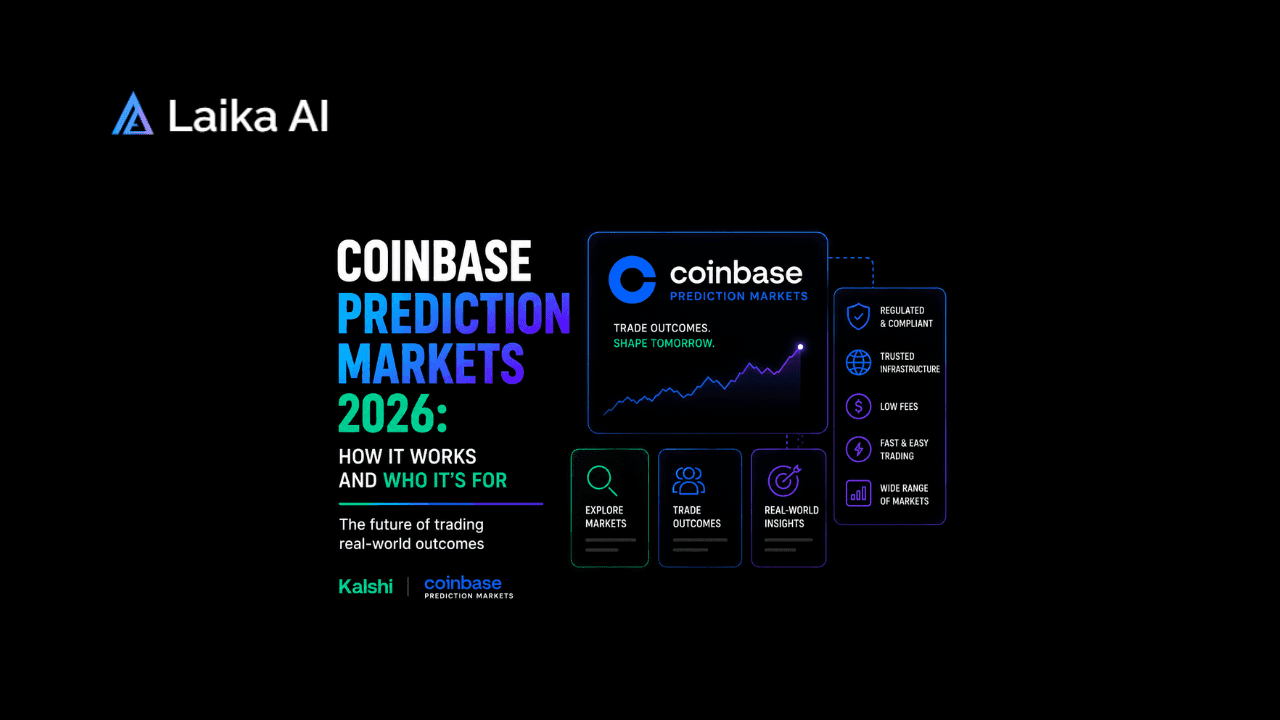
Coinbase prediction markets launched to all 50 US states on January 27-28, 2026, built entirely on Kalshi's regulatory infrastructure rather than any exchange technology Coinbase built itself. The decision to partner instead of build is the single most important thing to understand about this product: Coinbase is the largest cryptocurrency exchange in the US, with the technical capacity to build almost anything, and it still chose to route every prediction market contract through Kalshi's CFTC-regulated exchange rather than launch under its own regulatory umbrella. That choice tells you exactly what this product is for.
This review covers how trading actually works inside the Coinbase app, what funding options exist between cash and USDC, who this product genuinely serves versus who it doesn't, and how it stacks up against using Polymarket or Kalshi directly. For the foundational mechanics of how event contracts work before getting into Coinbase-specific details, what are prediction markets and how do they work covers the basics, if you are already well-versed with the basics, read along to understand Coinbase Prediction Market in detail. .
Why Coinbase Partnered With Kalshi Instead of Building Its Own Exchange
Coinbase Inc, the entity most people associate with the Coinbase brand, is not CFTC-registered and is not a member of the National Futures Association. Coinbase's spot crypto accounts operate under a different regulatory framework entirely. To offer prediction markets legally, Coinbase needed either its own CFTC-regulated derivatives infrastructure, which takes years to build and license, or a partnership with an entity that already had it.
Kalshi, valued at $11 billion following its December 2025 Series E round, was the obvious partner: a fully operational CFTC Designated Contract Market already running event contracts across politics, sports, economics, and culture. Prediction markets on Coinbase are offered through Coinbase Financial Markets, a CFTC-registered futures commission merchant and NFA member, specifically structured to route contract flow through Kalshi's compliant exchange rather than through Coinbase's standard crypto trading entity.
CEO Brian Armstrong has framed this as part of Coinbase's broader push to become an "everything exchange," a single app where users access crypto, payments, and now real-world event trading without leaving the ecosystem. Coinbase's head of consumer and business products, Max Branzburg, described the integration at the December 2025 preview event by comparing the experience directly to buying Bitcoin: "Buying a contract is just as easy as buying Bitcoin." That framing is deliberate. The entire value proposition rests on making event contracts feel like a native extension of an app tens of millions of people already use daily, not a new platform they need to learn.
It's worth noting the partnership launched into active controversy. Kalshi was facing lawsuits in nine states at the time of the announcement, including a Massachusetts suit filed by Attorney General Andrea Campbell alleging Kalshi was operating illegal sports wagering without a state gaming license, and a court loss in Nevada days before the Coinbase launch event. Coinbase proceeded with the partnership regardless, betting on Kalshi's federal CFTC standing to hold up against state-level challenges.
How Trading Works Inside the Coinbase App
Funding: cash or USDC
Coinbase prediction markets accept both cash and USDC as funding methods, a genuine differentiator from platforms that require crypto-only or fiat-only funding. This matters specifically for existing Coinbase users who already hold USDC balances on the platform and would otherwise need to convert to fiat, move funds elsewhere, or set up a separate wallet just to try event contracts. You can fund a position directly from whatever balance you already hold in your Coinbase account.
Contract types
Coinbase's prediction markets span the same broad categories Kalshi already runs: politics, sports, economics, entertainment, culture, and technology. Each contract is priced between $0 and $1, with the price representing the market's implied probability that the event occurs. A contract settling at $1 means the event happened; $0 means it didn't. You can buy, sell, or adjust a position in real time as new information emerges, without needing to hold to a final resolution.
One specific feature launched alongside the broader rollout deserves its own mention: time-based crypto price contracts. These let users bet on whether a specific cryptocurrency, including BTC, ETH, SOL, XRP, BNB, DOGE, and HYPE, will be up or down over a defined window ranging from 15 minutes to a full year, with a minimum position size of just $1 in USD or USDC. The mechanic is deliberately simple: you're not buying the underlying asset, you're taking a binary position on where its price lands at a specific future moment. Beta testing reportedly showed particularly active engagement in the shortest, 15-minute BTC contracts, a genuinely different product experience from either standard Kalshi politics markets or Polymarket's longer-duration crypto price targets.
The custody layer
A specific structural detail worth understanding: Kalshi's USDC-settled prediction markets are safeguarded through Coinbase Custody, giving the partnership an institutional-grade custody backbone on top of the regulatory framework Kalshi provides. Coinbase has described this arrangement as extending to institutional-facing products as well, not just the retail app experience, positioning the partnership as infrastructure rather than a single consumer feature.
What's still rolling out
At launch, all prediction market flow routed exclusively through Kalshi's infrastructure, described explicitly as a design choice to ensure regulatory compliance and operational stability during the initial rollout. A fully native, integrated prediction market experience inside the main Coinbase app was targeted for late Q1 2026, meaning the earliest version of this product functioned somewhat separately even while carrying the Coinbase brand, with deeper integration following in phases. Check the current state of that integration directly on Coinbase's own product page, since this is exactly the kind of rollout detail that shifts quickly. For the equivalent account setup process on Kalshi directly, useful context for understanding what's happening underneath the Coinbase interface, how does Kalshi work: a complete beginner's guide walks through the mechanics. For anyone weighing whether to instead access markets through Polymarket's crypto-native wallet setup rather than through Coinbase's custodial model, how to set up your first Polymarket wallet without losing your funds on fees covers that alternative path in detail.
Explore Live Prediction Markets and Find Your Next Winning Trade.
Who Coinbase Prediction Markets Is Actually For
This product is built for a specific user, and understanding who that is clarifies whether it's the right entry point for you.
Existing Coinbase users who want zero additional setup
If you already have a funded, verified Coinbase account, this is by a wide margin the lowest-friction way to try event contracts. No new wallet, no new KYC process, no separate app to download at launch, and the ability to fund directly from existing cash or USDC balances. For someone who has never used Kalshi or Polymarket and is curious about prediction markets as a category, trying it through an app you already trust and already have funded removes essentially every barrier to entry that exists on a standalone platform.
Casual, short-duration crypto traders
The 15-minute-to-one-year crypto price contracts specifically serve a trader who wants directional crypto exposure without the complexity of leverage, margin calls, or options Greeks, with downside capped at the stake and a $1 minimum making it genuinely accessible. This is a meaningfully different product than either a Kalshi political market or a Polymarket long-duration Bitcoin price target, and it's arguably the single most distinctive feature Coinbase brought to this space rather than simply repackaging existing Kalshi contracts.
Who this is not built for
Dedicated prediction market traders evaluating market depth, contract variety beyond what Kalshi already offers directly, or the lowest available fees have limited reason to route through Coinbase instead of accessing Kalshi's exchange directly. Coinbase is not adding proprietary contract types or its own exchange liquidity; it is simply providing a wrapper and custody layer around Kalshi's existing markets.
Traders who want the deepest available liquidity across international politics, culture, or niche category markets should look at Polymarket directly, since Coinbase's offering inherits Kalshi's category coverage rather than Polymarket's broader global variety. For the full comparison between the two underlying exchanges that determines what Coinbase users are actually accessing, Kalshi vs Polymarket: which prediction market is right for you covers the complete picture.
Coinbase Prediction Markets vs Polymarket vs Kalshi Direct: Fees and Market Depth
Since Coinbase's prediction markets route directly through Kalshi's exchange, the underlying fee structure should closely mirror what Kalshi charges its own direct users, though Coinbase has not published a separate, independently confirmed fee schedule specific to trades made through its own app as of this writing. Check the current fee disclosure directly inside the Coinbase app before assuming exact parity with Kalshi's published rates. For the detailed breakdown of Kalshi's actual fee structure, useful as the closest available reference point, prediction market fees in 2026: Kalshi vs Polymarket covers the specifics. For how Kalshi and Polymarket specifically compare on crypto-related contracts, directly relevant given Coinbase's emphasis on crypto price markets, polymarket vs kalshi: which is better for crypto markets covers that comparison in full.
The market depth question resolves simply: Coinbase adds no independent liquidity of its own. Every contract you trade through the Coinbase app is drawing from the same underlying Kalshi order book that a direct Kalshi user accesses, meaning depth and pricing should be effectively identical for shared contracts, with any difference coming down to interface, custody, and funding convenience rather than genuinely different market conditions.
Frequently Asked Questions
Is Coinbase prediction markets the same as Kalshi?
Not exactly, but they're closely linked. Coinbase prediction markets are offered through Coinbase Financial Markets in partnership with Kalshi, meaning every contract you trade through the Coinbase app is actually executed on Kalshi's CFTC-regulated exchange. Coinbase provides the interface, custody layer, and funding convenience, while Kalshi provides the actual regulated market infrastructure and contract listings underneath it.
What is the Coinbase-Kalshi partnership?
Announced in December 2025 and launched to all 50 US states on January 27-28, 2026, the partnership routes Coinbase's prediction market offering entirely through Kalshi's existing CFTC-regulated exchange rather than Coinbase building its own derivatives infrastructure. Kalshi's USDC-settled contracts are additionally safeguarded through Coinbase Custody, giving the arrangement an institutional custody layer alongside the regulatory framework Kalshi already provides.
Is Coinbase prediction markets built on Kalshi's exchange?
Yes. All contract flow, at least at launch, routed exclusively through Kalshi's exchange, a design choice explicitly intended to ensure regulatory compliance and operational stability during the initial rollout. Coinbase functions as a distribution and custody layer on top of Kalshi's existing regulated market infrastructure rather than operating a separate, competing exchange.
What are traders saying about Coinbase prediction markets on Reddit?
Community discussion has focused heavily on the convenience factor for existing Coinbase users, particularly the ability to fund positions directly from existing USDC balances without needing a separate wallet, alongside genuine interest in the short-duration crypto price contracts, especially the 15-minute BTC markets that reportedly saw active engagement during beta testing. Some discussion has also centered on the ongoing state-level legal challenges facing Kalshi, since those cases directly affect what Coinbase can legally offer depending on the state a user is trading from.
Can I trade sports and election contracts through Coinbase, or only crypto price markets?
Both. While the time-based crypto price contracts, covering BTC, ETH, SOL, XRP, BNB, DOGE, and HYPE across windows from 15 minutes to a year, are a distinctive addition, Coinbase's broader prediction markets rollout covers the full range of Kalshi's standard categories including politics, sports, economics, entertainment, and culture, all inheriting the same underlying Kalshi contract menu.
Do I need a separate Coinbase account for prediction markets?
No, if you already have an existing, verified Coinbase account. Prediction markets were built directly into the existing Coinbase ecosystem rather than requiring a standalone app or separate sign-up, which is the core convenience proposition of the entire product versus using Kalshi or Polymarket directly.
The Bottom Line
Coinbase prediction markets are best understood as a distribution deal, not a new exchange. Kalshi provides every regulatory credential, contract listing, and unit of liquidity; Coinbase provides the interface, the custody layer, and access to a crypto user base that dwarfs either Kalshi's or Polymarket's existing audience on its own. That combination makes this the lowest-friction entry point into event contract trading for anyone who already trusts Coinbase with their crypto, particularly for the short-duration crypto price contracts that don't have a clean equivalent on either underlying exchange in isolation.
It is not, however, a genuinely new or deeper market. Anyone already comfortable using Kalshi or Polymarket directly gains little from routing through Coinbase specifically, beyond funding convenience, since the underlying liquidity, contract variety, and pricing all trace back to the same Kalshi order book either way. The partnership's durability also remains tied to Kalshi's ongoing state-level legal battles, an unresolved fight that shapes what Coinbase can legally offer and where. CFTC vs states: who really regulates prediction markets in 2026 covers that fight in full, and its outcome will meaningfully determine how much runway this entire partnership actually has.
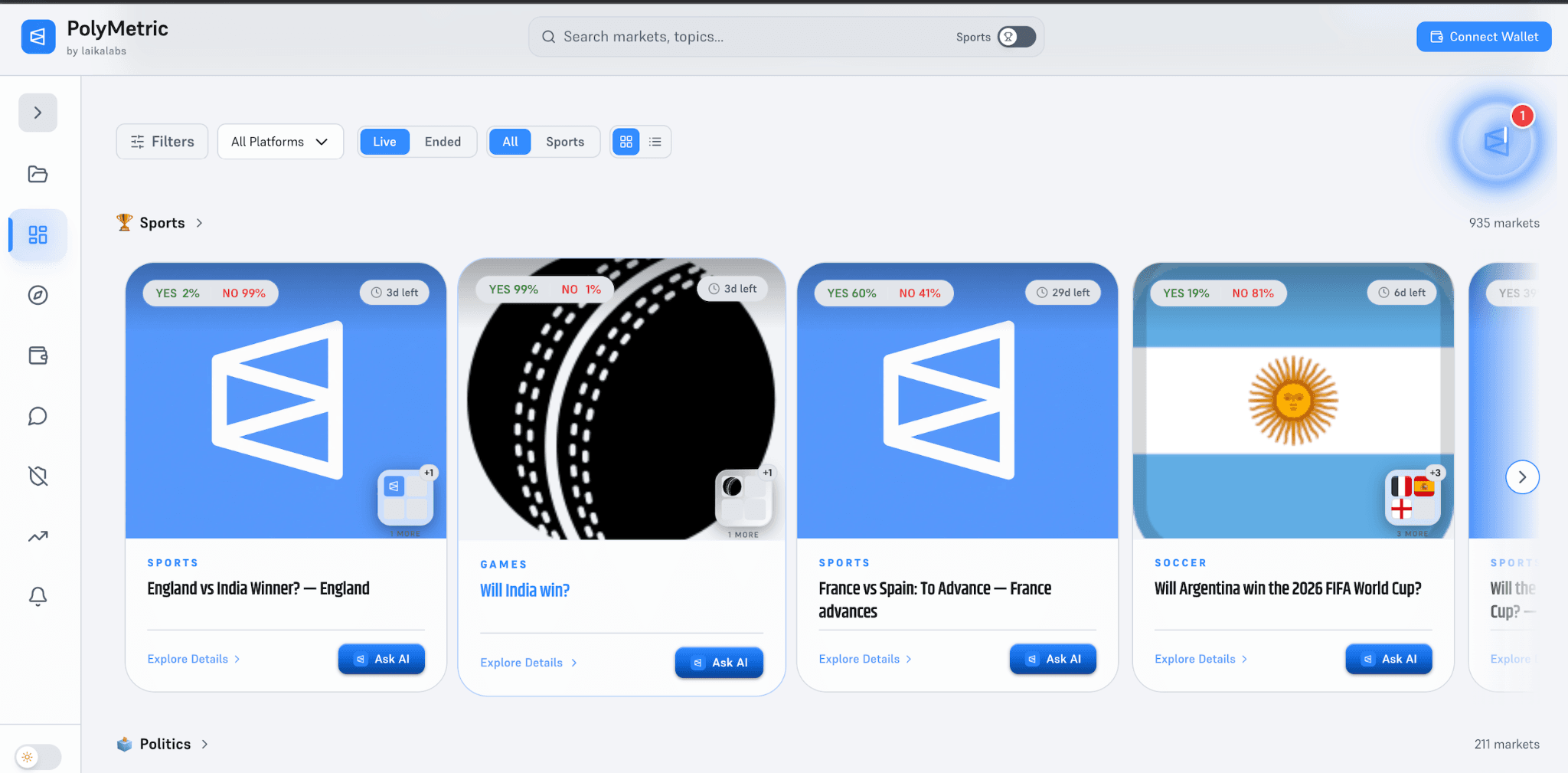
Track how Coinbase, Kalshi, and Polymarket prices move across shared contract categories with Polymetric by Laika AI, so you can compare pricing across every major platform before deciding where to place a trade.