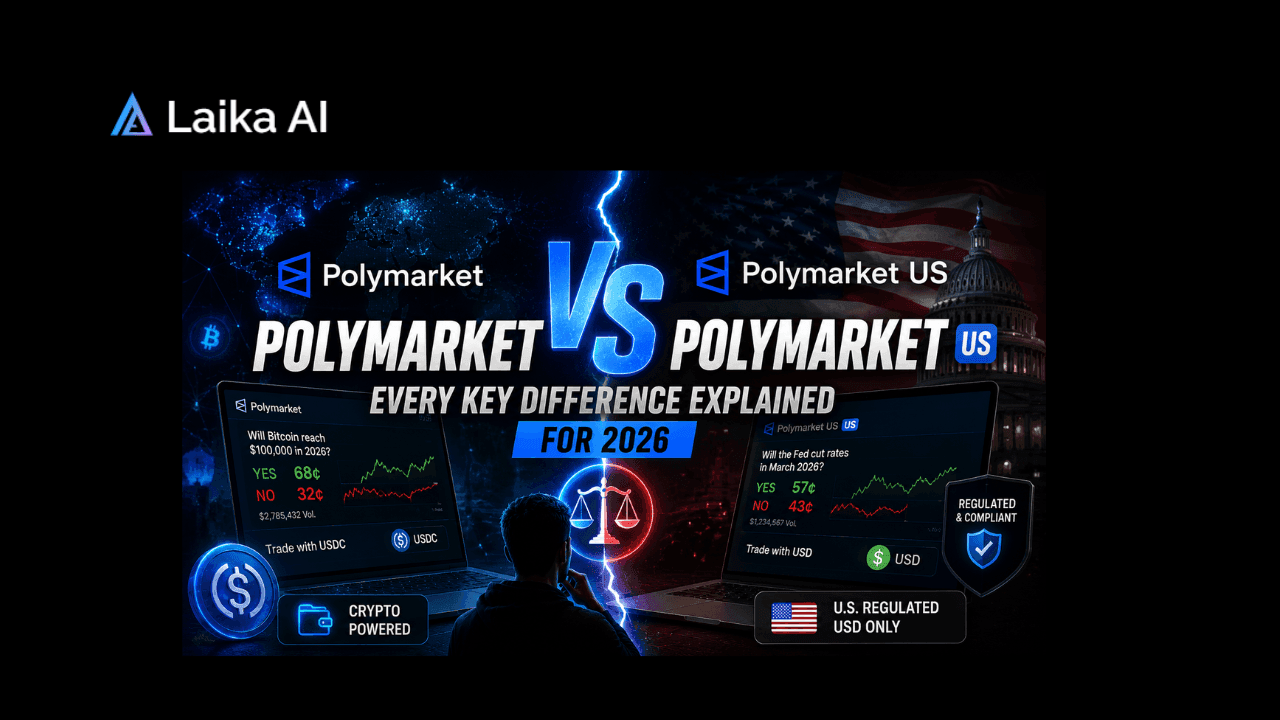
If you've gone looking for Polymarket and landed on a page asking for a U.S. mailing address or a different sign-up flow than what you expected, you haven't stumbled onto a knockoff. You've run into the split between the original offshore Polymarket platform and Polymarket US, a separate, domestically regulated product built specifically to operate legally within the United States.
The split exists because of how U.S. derivatives law treats event contracts. The original Polymarket, built on Polygon and historically geo-blocked for U.S. users, operates outside U.S. regulatory jurisdiction. It settles trades in crypto, doesn't require a U.S. brokerage-style account, and has built its entire product around a global, permissionless user base. Polymarket US, by contrast, was built to operate through a CFTC-regulated exchange structure so that American residents have a legal, compliant way to trade event contracts without needing a VPN, an offshore wallet workaround, or any of the friction that historically came with trying to access the original platform from inside the United States.
This isn't just a naming coincidence, either. The two platforms are related in origin, but they operate under different legal entities, different compliance obligations, and as you'll see below different product experiences as a direct result. A trader who assumes "Polymarket US" is simply a reskinned version of the original site, available to more people, is going to be surprised by how differently the two platforms actually behave once they start trading.
This guide breaks down exactly what separates the two platforms across regulation, eligibility, market catalog, liquidity, funding, fees, and tax reporting so you know precisely which one you can legally use, and what you're trading off by choosing one over the other.
Regulatory Status: The Core Difference
Everything else in this comparison flows from one structural fact: who regulates the platform, and where.
Original Polymarket operates as a decentralized, crypto-based prediction market. It is not registered with the CFTC as a U.S. designated contract market, which is precisely why it has historically blocked U.S. IP addresses and required identity verification steps to enforce that restriction. Its legal structure is built around global accessibility outside U.S. jurisdiction, not around U.S. compliance.
Polymarket US operates through a regulated derivatives exchange structure, meaning it falls under CFTC oversight the same way a designated contract market does. This is the same regulatory category that governs platforms like Kalshi, and it's what allows Polymarket US to legally onboard U.S. residents without the geo-blocking and VPN workarounds associated with the original platform.
This isn't a cosmetic rebrand, it's a fundamentally different legal product wearing a familiar name. Traders who don't understand this distinction sometimes assume signing up for "Polymarket US" gives them access to the same market catalog and mechanics as the original site. It doesn't, and the table below breaks down exactly why.
Regulatory Snapshot
Eligibility and Account Access
Because the two platforms sit under different regulatory frameworks, the entire account-opening experience differs from the first click.
The practical effect is that a U.S. resident who previously needed creative workarounds to access the original Polymarket now has a straightforward, legal alternative but with a narrower market catalog and a different account structure than what offshore users are used to. Meanwhile, a non-U.S. trader has little reason to use Polymarket US at all, since it isn't built or licensed for their jurisdiction in the first place.
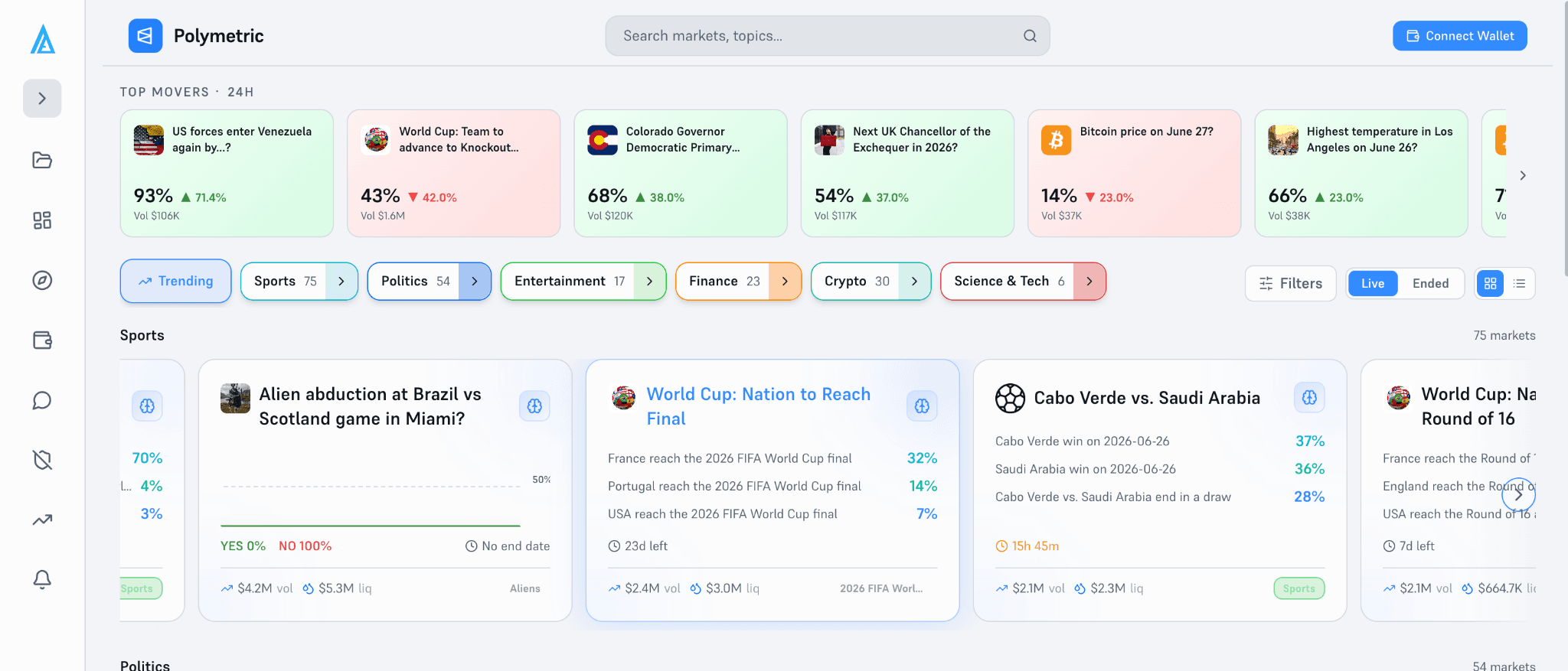
Discover where the market is moving before the headlines. Browse live prediction markets, track real-time odds, and trade on sports, crypto, politics, and breaking global events all in one place.
Explore Live Prediction Markets
Market Catalog Differences
This is where the comparison matters most for active traders, and it's the area with the widest practical gap between the two platforms.
The original Polymarket's market catalog has historically been broader and faster-moving, covering everything from political outcomes to pop culture, crypto-native events, and breaking news markets, often launched within hours of a major story. Its permissionless structure means new markets can go live quickly, without the same layer of regulatory review a U.S. exchange has to clear first.
Polymarket US, operating under U.S. derivatives regulation, faces tighter constraints on what types of event contracts it can list. Certain categories that regulators have historically scrutinized including some political and election-adjacent contracts have faced a more cautious rollout on regulated U.S. exchanges generally, Polymarket US included. The result is a platform that tends to launch fewer, more conservatively vetted markets compared to its offshore counterpart, at least in the near term.
Market Category Comparison
For traders who care primarily about political markets, this gap matters. For traders focused on sports or macro event contracts, the difference is often smaller, since those categories tend to clear regulatory review more easily than politically sensitive ones.
Liquidity and Pricing
Liquidity has historically pooled around the original Polymarket simply because it launched first, attracted the bulk of crypto-native trading volume, and built a global user base unrestricted by U.S. residency requirements. Polymarket US, as a newer regulated entrant, is still building out its own liquidity base independent of the original platform's order books.
This matters in practice because thinner liquidity means wider spreads and more slippage on larger trades. A trader placing a sizable position on a thinly traded Polymarket US market may move the price significantly more than the same trade would on the original platform's deeper order books, particularly on high-interest political and sports markets where the original site's volume advantage is largest.
Our piece on how to find liquid markets on Polymarket and why thin markets will ruin you applies directly here the same caution about avoiding shallow order books holds for Polymarket US, arguably more so while the platform is still scaling its trader base and building out market depth across its more limited catalog.
Funding and Withdrawals
The funding experience is one of the most immediately noticeable differences for a new user, and it's often the deciding factor for traders choosing between the two platforms.
Original Polymarket is crypto-native. Funding typically happens via USDC on Polygon, which means new users need a wallet, a funding source for crypto, and at least a basic understanding of gas fees and network confirmations before they can trade. Withdrawals follow the same crypto-native path back out.
Polymarket US is designed to function like a standard regulated brokerage or exchange account funding via bank transfer or card, without requiring users to touch crypto directly. This removes a real barrier to entry for traders who are interested in event contracts but have no interest in managing a crypto wallet, tracking gas fees, or bridging funds between networks.
Funding Comparison
If you've run into friction trying to fund or withdraw from the original platform, our guide on how to set up your first Polymarket wallet without losing your funds on fees and our breakdown of what to do if Polymarket suspended your account are both relevant though it's worth noting those wallet-specific and access-specific issues are largely non-issues on Polymarket US given its non-crypto funding model.
Tax and Reporting Considerations
Because Polymarket US operates as a regulated U.S. exchange, tax reporting tends to follow a more standardized path familiar to U.S. traders closer to how other regulated derivatives exchanges report activity to both the trader and tax authorities. Traders can generally expect the kind of standardized reporting documentation that comes with any regulated U.S. exchange account.
The original Polymarket, as a crypto-based platform, places more of the tax tracking burden on the individual trader, since there isn't the same regulated reporting infrastructure in place. Traders managing positions across both platforms should expect meaningfully different recordkeeping requirements between the two, not a single unified process — which means keeping separate records for original-platform crypto activity and Polymarket US exchange activity if you trade on both.
For traders specifically concerned with this, our broader Polymarket tax guide covers global reporting requirements relevant to the original platform's crypto-based structure in more depth.
Which One Should You Actually Use?
The honest answer depends entirely on where you live and what you're optimizing for.
If you're a U.S. resident who wants legal, straightforward access without crypto friction, and you're comfortable with a narrower market catalog while the platform builds out liquidity, Polymarket US is the more practical entry point particularly given the ongoing regulatory attention on offshore platforms serving U.S. users.
If you're outside the U.S., or you specifically want access to the broader, faster-moving market catalog and don't mind managing a crypto wallet, the original Polymarket remains the more feature-complete option, assuming you're in a permitted jurisdiction. Our guide on Polymarket supported and restricted countries in 2026 is worth checking before assuming access either way.
If you're trading professionally and liquidity depth matters more than platform branding, it's worth tracking both order books rather than assuming either platform will consistently offer the better price on a given event contract.
At-a-Glance Decision Table
Conclusion
Polymarket and Polymarket US share a name and a basic premise trading on the outcome of real-world events but they are built on different legal foundations, serve different user bases, and currently offer meaningfully different market catalogs and liquidity profiles. Understanding which platform you're actually signing up for, and why the split exists in the first place, prevents the kind of confusion that leads traders to expect features one platform simply isn't built to offer.
For a wider view of how Polymarket fits into the broader prediction market landscape, see our complete 2026 guide to prediction markets and our comparison of Kalshi vs. Polymarket for additional context on regulated alternatives.
FAQ
Is Polymarket US the same company as Polymarket? They share branding and a common origin, but Polymarket US operates as a separately regulated entity built to comply with U.S. derivatives law, distinct from the original offshore platform.
Can U.S. residents use the original Polymarket? The original platform has historically restricted U.S. residents through geo-blocking, which is the core reason Polymarket US exists as a legal alternative.
Does Polymarket US have the same markets as the original platform? No. Polymarket US currently offers a narrower market catalog due to U.S. regulatory constraints on certain event contract categories, particularly some political markets.
Do I need crypto to use Polymarket US? No. Polymarket US is designed for bank transfer and card funding, unlike the original platform, which relies on USDC and a crypto wallet.
Which platform has better liquidity? The original Polymarket currently has deeper liquidity due to its longer operating history and global user base, though Polymarket US is actively building out its own order books.