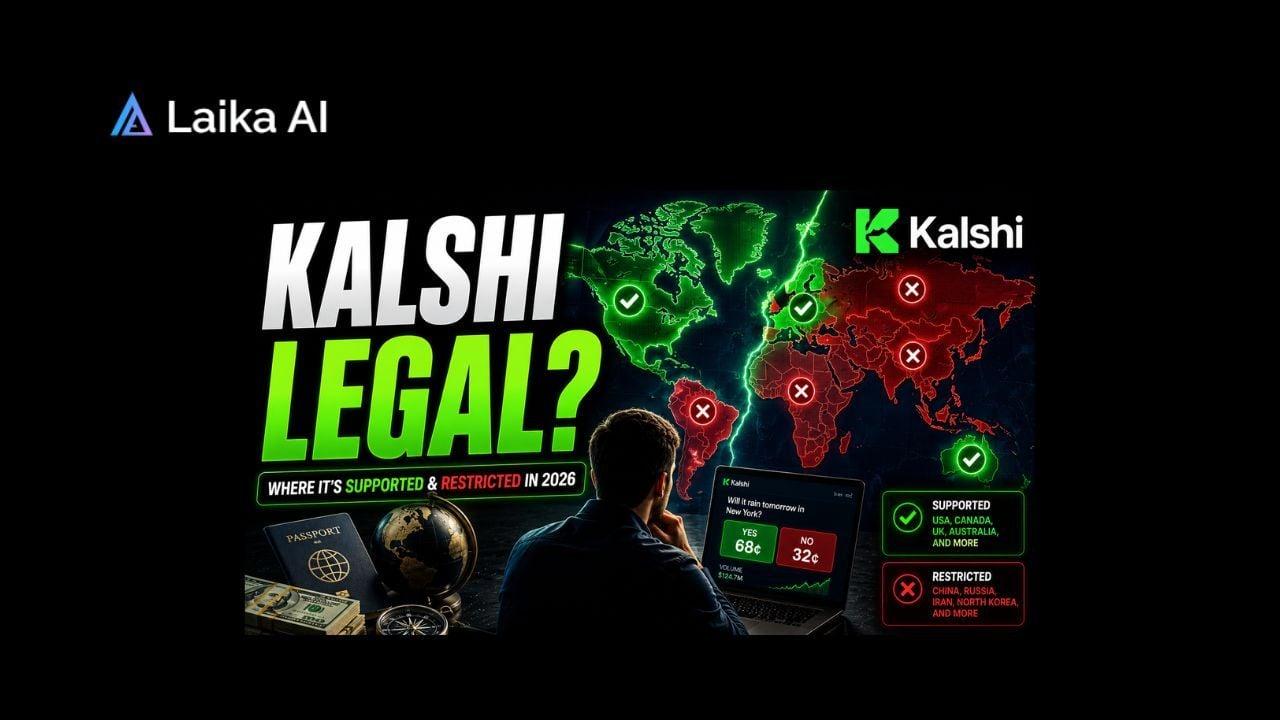
Kalshi is a CFTC-licensed event contracts exchange, which means its legal situation is the opposite of most international prediction market platforms. Where platforms like Polymarket operate globally under a permissive model and then restrict specific jurisdictions, Kalshi started as a US-regulated entity with federal approval and then expanded internationally in October 2025 into markets where it holds no local licenses. As of mid-2026, Kalshi is accessible in over 140 countries, restricted in a smaller set of jurisdictions, and fighting active legal battles in several US states despite holding federal regulatory approval.
That layered situation is what makes the kalshi legal countries question more complex than it first appears. Federal approval in the US does not resolve state-level disputes. International availability does not mean local licensing exists. And the list of restricted jurisdictions is actively changing as legal challenges work through the courts.
This article covers where Kalshi is supported, where it is restricted, why the restrictions exist, and what the current US state-level enforcement map looks like. For comparison with how Polymarket handles jurisdiction restrictions under a different regulatory model, Polymarket supported and restricted countries in 2026 covers the equivalent picture. For Kalshi's full regulatory history and founding context, Kalshi explained: billionaire founder and prediction markets cover the background.
What Kalshi Is
Kalshi is a CFTC Designated Contract Market where users trade binary event contracts on real-world outcomes including sports, politics, economics, and weather. It is regulated at the federal level in the United States under the Commodity Exchange Act and expanded to international users in October 2025.
Where Kalshi Is Supported Internationally
Kalshi's October 2025 international expansion made the platform accessible to users in over 140 countries. The expansion operates without local licenses in most of those jurisdictions, meaning users can access the platform but do not have the same regulatory protections they would have on a locally licensed platform.
The important distinction: available is not the same as protected. When Kalshi is accessible in a country without a local license, users are trading on a US-regulated exchange under US federal law. Local consumer protection rules, dispute resolution mechanisms, and regulatory oversight do not apply.
Where Kalshi Is Restricted or Excluded
The following jurisdictions either block Kalshi explicitly or are inaccessible due to sanctions compliance, gambling classification conflicts, or local regulatory requirements that Kalshi does not currently meet.
Kalshi in the United States: Federal Approval vs State-Level Challenges
This is the most legally complex part of the kalshi legal countries picture, and it is where the most search volume sits. How is Kalshi legal at all, given that sports betting remains banned in several major US states?
The answer is federal preemption. Kalshi holds CFTC Designated Contract Market status, the same federal classification as the Chicago Mercantile Exchange. Under the Commodity Exchange Act, CFTC-regulated derivatives exchanges operate under exclusive federal jurisdiction. The CFTC formally classified prediction market event contracts as swaps in early 2026, placing them under federal law and, in the CFTC's view, preempting state gambling regulations.
Several states disagree. Their position is that event contracts tied to sports outcomes are functionally equivalent to sports betting and therefore require a state-issued gambling license regardless of how the federal government classifies them. That disagreement is currently being resolved through the courts.
The Third Circuit ruling (April 7, 2026)
The Third Circuit Court of Appeals ruled in Kalshi's favor on April 7, 2026, holding that sports event contracts are swaps under the Commodity Exchange Act and that CFTC preemption applies. This is the strongest federal legal validation Kalshi has received to date.
The Ninth Circuit (pending)
Nevada filed an appeal and the Ninth Circuit heard oral arguments on April 16, 2026. The panel's questions during oral argument appeared to lean toward Nevada's position. A ruling against Kalshi in the Ninth Circuit would create a circuit split requiring Supreme Court resolution, which could materially reshape the legal map.
The Rhode Island lawsuit (May 25, 2026)
Rhode Island filed a lawsuit against both Kalshi and Polymarket on May 25, 2026, citing an 8% drop in state lottery sports betting revenue as direct harm. This is the most recent and most aggressive state-level challenge as of the time of writing.
US state-level enforcement table
Is Kalshi legal in California?
Yes, as of mid-2026. California has not filed an enforcement action against Kalshi and the platform is accessible to California residents. California is one of the largest US states where traditional sports betting remains illegal, which is why Kalshi's legality there is frequently searched. Kalshi's CFTC-regulated status allows it to offer sports event contracts in California where DraftKings and FanDuel cannot legally operate.
Is Kalshi legal in Texas?
Yes, as of mid-2026. Texas has not filed an enforcement action and the platform is accessible to Texas residents. Like California, Texas has not legalized traditional sports betting, making Kalshi a rare legal option for Texas-based sports traders.
Is Kalshi legal in Washington state?
Washington state has historically taken an aggressive stance on online gambling. As of mid-2026, Kalshi's status in Washington is not confirmed as restricted through a formal enforcement action, but Washington's regulatory environment is one to monitor. Verify current access at Kalshi's help center before depositing.
Is Kalshi legal in Florida?
Yes, as of mid-2026. Florida has not taken enforcement action against Kalshi and the platform is accessible to Florida residents.
Is Kalshi legal in Georgia?
Yes, as of mid-2026. Georgia has not filed enforcement actions and the platform is accessible.
Is Kalshi legal in Nevada?
This is the most legally contested state. Nevada's Gaming Control Board issued a cease and desist against Kalshi in early 2026 and Nevada's appeal is currently pending in the Ninth Circuit. Kalshi's sports markets are restricted for Nevada residents. Non-sports markets may have different treatment depending on the specific contract category.
For the complete legal analysis of whether Kalshi constitutes sports betting under US law and how the federal and state frameworks interact, Kalshi sports betting: is it legal, is it gambling covers the full framework.
Why Countries and States Restrict Kalshi
The restriction reasons fall into four categories that explain most of the global map.
Gambling classification conflict
The most common reason for both international and US state-level restrictions is that prediction market event contracts are classified as gambling products under local law. In India, the UK, and several US states, the legal position is that contracts tied to real-world outcomes including sports games are gambling regardless of how the federal regulator in another jurisdiction classifies them.
Lack of local licensing
Kalshi holds a US federal license but no local licenses outside the United States. In jurisdictions with strict requirements for locally licensed financial products, Kalshi operates in a legal gray zone. France's AMF and Singapore's MAS are examples of regulators that have flagged offshore platforms operating without local authorization.
Sanctions compliance
Kalshi is blocked in all OFAC-sanctioned jurisdictions: Iran, North Korea, Russia, Cuba, and Syria. This is not a legal dispute. It is sanctions compliance built into the platform's access controls.
Revenue displacement concern
The Rhode Island lawsuit makes explicit what other states have argued implicitly: prediction markets are displacing regulated gambling revenue. Rhode Island cited an 8% drop in lottery sports betting revenue as direct harm. This revenue displacement argument is likely to be used by additional states as the legal battles continue.
Where This Is Heading in 2026
The international trajectory is toward broader availability. Kalshi's October 2025 international expansion covered over 140 countries and the platform has not publicly indicated plans to reverse course. Whether local licensing requirements in key markets like the UK and France result in formal access restrictions or formal licensing applications will shape the European picture in the second half of 2026.
The US trajectory is genuinely uncertain. The Third Circuit ruling in April 2026 was a significant legal win. The pending Ninth Circuit ruling is the most consequential near-term legal event in the prediction market space. A ruling against Kalshi would create a circuit split, almost certainly trigger Supreme Court review, and could result in the sports markets being restricted in the nine states under the Ninth Circuit's jurisdiction for an extended period while the Supreme Court case proceeds.
The Rhode Island lawsuit and the broader pattern of state-level enforcement actions suggest that the number of states with active restrictions could expand before the Supreme Court resolves the federal preemption question.
For the full regulatory risk analysis including how the federal and state legal battles affect both Kalshi and Polymarket, Kalshi and Polymarket: the prediction market boom, risks, and regulation covers the complete picture. For the legal distinction between prediction markets and gambling that underlies all of these disputes, prediction markets vs gambling: what is the legal difference in 2026 covers the framework.
Frequently Asked Questions
In which countries is Kalshi legal?
Kalshi is accessible in over 140 countries following its October 2025 international expansion. The platform holds a US federal license as a CFTC Designated Contract Market but does not hold local licenses in most international jurisdictions. Countries where Kalshi is definitively restricted include India, China, Iran, North Korea, Russia, Cuba, and Syria. The UK, France, and Singapore have inconsistent reporting across sources and should be verified directly before trading.
Is Kalshi legal in the US?
Yes at the federal level. Kalshi is a CFTC Designated Contract Market and its event contracts are classified as derivatives under the Commodity Exchange Act. The Third Circuit Court of Appeals upheld Kalshi's federal legal status in April 2026. However, nine states have active restrictions or enforcement actions: Arizona, Illinois, Massachusetts, Maryland, Michigan, Montana, New Jersey, Nevada, and Ohio. All other US states have full access as of mid-2026.
Is Kalshi legal in Canada?
Kalshi is accessible in Canada following the October 2025 international expansion. Canada does not have a federal enforcement action against the platform. However, Kalshi holds no Canadian regulatory license. Canadian users trade on a US-regulated exchange without local regulatory protections. Individual province-level gambling regulations may apply depending on the nature of the contracts traded.
Is Kalshi legal in the UK?
The UK status is disputed across current reporting. Some sources indicate Kalshi is restricted in the UK due to the Gambling Act's classification of event contracts. Others indicate the platform is accessible. This is one of three jurisdictions, along with France and Singapore, where the current status should be independently verified at Kalshi's help center before depositing any funds.
Why is Kalshi legal federally but restricted in some states?
Kalshi holds CFTC Designated Contract Market status, which gives it federal legal standing under the Commodity Exchange Act. The CFTC classifies Kalshi's contracts as derivatives, not gambling products, and federal law preempts state gambling regulations in the CFTC's interpretation. Several states disagree and argue that sports-adjacent event contracts require a state gambling license regardless of federal classification. That disagreement is being resolved through the courts, with the Ninth Circuit's ruling on Nevada's appeal being the most consequential pending decision as of mid-2026.
Can I use a VPN to access Kalshi from a restricted country?
Using a VPN to circumvent Kalshi's geographic access controls violates Kalshi's terms of service and may violate local laws in the jurisdiction where you are located. Kalshi's terms explicitly prohibit accessing the platform from restricted jurisdictions. In addition to the terms of service issue, a VPN does not change your legal exposure under local law. Trading on a platform you are legally prohibited from accessing creates regulatory and financial risk that a VPN does not resolve.
The Bottom Line
Kalshi's kalshi legal countries picture in 2026 is defined by one paradox: federal approval in the United States coexisting with active state-level legal battles, and international availability in 140-plus countries coexisting with no local licenses outside the US.
The states to watch are the nine with active restrictions, particularly Nevada whose appeal in the Ninth Circuit will produce the next major legal ruling. The countries to verify before trading are the UK, France, and Singapore where current reporting is inconsistent. And the broader regulatory trajectory points toward a Supreme Court confrontation on federal preemption that could define the legal status of prediction markets in the United States for the next decade.
Track how prediction market regulation and access restrictions evolve in real time with Polymetric by Laika AI. Live market intelligence across every active Kalshi and Polymarket contract.