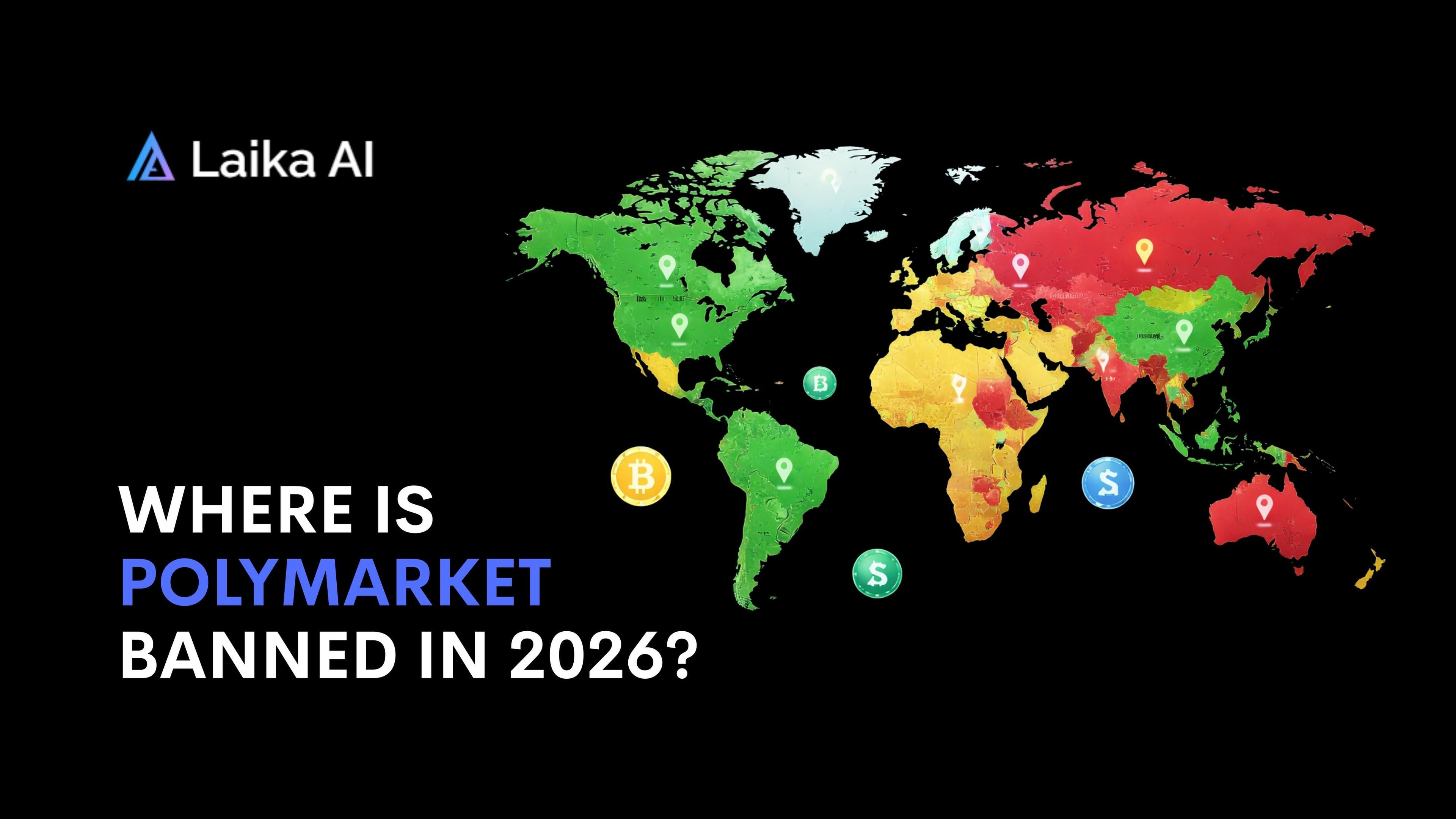
Polymarket is accessible in roughly 150+ countries, but faces full restrictions or bans in 40+ jurisdictions, including OFAC-sanctioned regions, multiple European states, and select U.S. states as of July 2026.
Polymarket started 2026 the same way it ended 2025: facing new bans while simultaneously trying to expand.
In a single week in January 2026, Portugal's gambling regulator ordered Polymarket to shut down within 48 hours after $120 million flowed through the platform on the country's presidential election. Hungary followed the same day with its own nationwide block. Nevada filed a civil enforcement action. Tennessee's sports betting regulator issued shutdown orders. All within days of each other, even as Polymarket was rolling out its regulated U.S. relaunch following CFTC approval in November 2025.
That contradiction defines Polymarket's global position in 2026: federally approved in America while being blocked by American states. Accessible in 150+ countries while getting kicked out of 40+ others. Processing massive annual volume while regulators worldwide still classify it as an unlicensed casino.
This guide breaks down where Polymarket works, where it is blocked, and why restrictions keep spreading.
Where Polymarket Is Fully Accessible (Supported Countries)
Polymarket operates without restriction in approximately 150+ countries, representing most of the world by geography and population. These are jurisdictions where local law either does not classify prediction markets as gambling, does not regulate event contracts as financial products, or has not taken enforcement action yet.
This uncertainty is one reason why Polymarket prediction markets remain widely accessible despite repeated crackdowns in stricter jurisdictions.
Below are the major regions where Polymarket is generally accessible in mid-2026.
| Region | Polymarket Accessibility Status | Key Accessible Countries | Why It's Accessible / Growing |
|---|---|---|---|
| Americas (Excluding the United States) | Generally accessible | Canada (except Ontario), Brazil, Mexico, Argentina, Colombia, Chile, Peru, and most of Latin America | Growth driven by rising stablecoin adoption and expanding crypto usage. Brazil has seen strong volume, especially in political markets. |
| Asia-Pacific | Generally accessible | Australia, Japan, South Korea, Indonesia, Philippines, Vietnam, Malaysia, India, Thailand, New Zealand | High Web3 adoption and strong retail familiarity with non-custodial wallets. Australia and Japan have particularly crypto-native user bases. |
| Europe (Partial Accessibility) | Partially accessible | United Kingdom, Spain, Sweden, Norway, Denmark, Austria, Czech Republic, Romania, and much of Eastern Europe | Polymarket remains accessible in several countries where enforcement has not escalated. The UK remains a major market due to lower regulatory intervention so far. |
| Middle East and Africa | Generally accessible | UAE, Saudi Arabia, South Africa, Nigeria, Kenya, Egypt, and much of sub-Saharan Africa | Limited prediction market regulation in many countries and strong crypto adoption driven by inflation hedging and cross-border payments. |
Important Caveat: Accessible Does Not Mean Safe
Being accessible does not mean Polymarket is legally protected.
France was accessible before November 2024. Portugal was accessible before January 2026. Germany and the Netherlands were both largely accessible before enforcement actions caught up with them earlier this year. Switzerland was accessible before November 2024.
Regulators are moving quickly, and enforcement can change with minimal warning. A country that works today can be restricted tomorrow.
Countries Where Polymarket Is Fully Restricted or Banned (2026)
As of July 2026, Polymarket faces full restrictions in 40+ countries. These restrictions fall into three major categories: OFAC-sanctioned jurisdictions, European gambling enforcement bans, and selective country-specific restrictions in Asia and the United States.
OFAC-Sanctioned Countries (Fully Blocked)
Polymarket blocks all users from countries under U.S. Office of Foreign Assets Control (OFAC) sanctions. These restrictions are mandatory for any U.S.-linked platform. OFAC bans are permanent. If you are in these countries, access is non-negotiable.
Fully blocked OFAC jurisdictions include:
- Russia
- Iran
- North Korea
- Cuba
- Syria
- Belarus
- Venezuela
- Myanmar
European Countries Where Polymarket Is Blocked
Europe has been the most aggressive region for enforcement because most European countries already have established gambling licensing frameworks. Regulators frequently classify prediction markets as unlicensed betting.
| Country | Restriction Type | When It Happened | Regulator / Authority | What It Means in Practice | Main Reason Cited |
|---|---|---|---|---|---|
| France | Geo-blocked (View-only access) | Late Nov 2024 | National Gaming Authority (ANJ) | Users can browse markets but cannot trade | Political election betting volume and enforcement under gambling laws |
| Belgium | Fully banned (ISP-level blocks) | Feb 2025 | Belgian Gaming Commission | Polymarket access blocked through ISPs | Classified as illegal unlicensed gambling |
| Switzerland | Blocklisted (ISP enforcement) | Nov 2024 | Swiss gambling supervisory authority | ISPs required to restrict access | Violating federal gambling and betting regulations |
| Poland | Blacklisted (Internet gambling blacklist) | Jan 2025 | Ministry of Finance | Users can view markets and close existing positions but cannot open new trades | Unlicensed gambling activity |
| Portugal | Shutdown order (Full ban) | Jan 2026 | Gambling regulator (SRIJ) | Ordered shutdown with rapid enforcement | Political betting prohibited under Portuguese law and no local license |
| Hungary | Restricted (ISP domain blocks) | Jan 2026 | Gambling oversight authority | Access blocked nationwide | Operating without licensing, pending further regulatory review |
| Italy | Restricted (Regulatory block) | 2025-2026 | Gambling regulator (ADM) | Users can view markets and data but cannot trade | Event contracts treated as fixed-odds betting without license |
| Germany | Restricted (Trading prohibited) | Confirmed mid-2026 | Federal gambling oversight | Trading is prohibited for German users | Event contracts classified as unlicensed betting |
| Netherlands | Restricted (Enforcement action) | Early-mid 2026 | Dutch gambling regulator | Ordered to stop serving local residents | Operating without a Dutch gambling license |
| Ukraine | Restricted (National ban registry) | Late 2025 to early 2026 | National enforcement authority | Added to ban registry with ISP enforcement | Concern over wartime outcome betting and public order risk |
| Other European (Mixed) | Partial restrictions (varies) | Ongoing | Varies by country | Enforcement depends on ISP compliance and regulator actions | Regulatory uncertainty and gambling classification issues |
Asia-Pacific Restrictions
Asia has fewer formal bans than Europe, but enforcement is increasing.
Singapore
Singapore added Polymarket to the Gambling Regulatory Authority blacklist in January 2025 as part of a crackdown on offshore online betting platforms. Users can close existing positions but cannot open new trades. Singapore has strict enforcement against unlicensed gambling websites.
Additional Asia Restrictions
Several other jurisdictions have restricted access to offshore betting and prediction platforms, with Thailand and Taiwan frequently appearing in restricted lists depending on enforcement actions.
Polymarket in the United States (Federal vs State Conflict)
The United States is the most complex jurisdiction for Polymarket. At the federal level, Polymarket has moved toward compliance. At the state level, regulators are actively trying to block it.
Federal Level Status (CFTC Approval)
Polymarket's regulated return to the U.S. market was approved in November 2025 through the QCEX acquisition.
Polymarket USA relaunched in December 2025 under stricter compliance requirements, including mandatory KYC, regulated intermediaries, and limited onboarding via waitlist. The onboarding waitlist was removed in May 2026, and the platform is now open to users in eligible states without an invite code. The CFTC also published proposed rulemaking in June 2026, with its public comment period closing July 27, 2026, aimed at defining which categories of event contracts are permissible nationwide.
U.S. States With Active Enforcement Actions
| State | Restriction Type | When It Happened | Authority Involved | What It Means in Practice | Legal Basis / Rationale |
|---|---|---|---|---|---|
| Nevada | Preliminary injunction | Jan-Feb 2026, litigation ongoing | Nevada Gaming Control Board | Bars Polymarket from offering event contracts to Nevada residents while the underlying case proceeds | Operating without a state gaming license |
| Tennessee | Shutdown order (enforcement paused) | Jan 2026 | Tennessee sports betting regulator | Ordered Polymarket to cease operations in the state, a federal judge has temporarily blocked enforcement while the fight continues | Classified as unlicensed sports betting |
| Massachusetts | Judicial precedent (injunction ruling) | Jan 2026 | Massachusetts Superior Court | Event contracts deemed illegal sports wagering under state law; Polymarket has since filed its own federal suit against the state | Court ruling in Kalshi case used as precedent |
| Michigan | Federal lawsuit filed by Polymarket | March 2026 | Michigan Attorney General's office / Gaming Control Board | Polymarket is seeking to block Michigan from enforcing state gambling law against its federally regulated contracts; a June 2026 injunction against Kalshi in the state has raised the stakes | State argues event contracts function as unlicensed sports wagers |
What This Means for U.S. Users
Polymarket's U.S. legality depends entirely on location. Federal approval exists, but state enforcement is creating a patchwork environment where access can be permitted in one state and prohibited in another. By mid-2026, well over a dozen states have issued cease-and-desist orders, injunctions, or filed lawsuits against prediction market platforms including Polymarket, and that number is still climbing.
Why Countries Keep Banning Polymarket
Across nearly every jurisdiction, regulators cite one or more of four core concerns.
1. Unlicensed Gambling Classification
Most regulators classify event contracts as gambling or betting. If Polymarket does not hold a local gaming license, it is automatically treated as illegal in many countries.
2. Political Betting Restrictions
Many countries explicitly prohibit betting on elections. This is especially common in Europe, where political betting laws are strict and enforcement escalates rapidly once election volume spikes.
Polymarket's largest markets are often election-related, which makes it an obvious enforcement target.
3. AML and Money Laundering Concerns
Polymarket's permissionless onboarding model creates major compliance problems. Users can connect wallets without mandatory KYC, which raises red flags for regulators concerned about anonymous betting, cross-border flows, money laundering risk, and terrorism financing exposure.
4. OFAC Compliance and Sanctions Enforcement
Platforms with U.S. connections must comply with OFAC sanctions. Failure to block sanctioned regions creates serious legal exposure.
Where Is Polymarket Heading in 2026?
The regulatory trajectory is clear: restrictions are increasing, not decreasing.
Europe: More National Bans Likely
European regulators have proven willing to act quickly once political betting volume spikes. Germany and the Netherlands joining the restricted list in 2026 suggests more countries will follow suit through the rest of the year.
Crypto Reporting Rules Are Increasing Pressure
EU DAC8 reporting rules taking effect in 2026 increase scrutiny of crypto wallets and exchanges. This makes permissionless prediction market participation harder to sustain long term.
Asia: Singapore's Model May Spread
Singapore's blacklist model provides a blueprint for other Asian regulators. Markets like Japan, Australia, and South Korea may increase scrutiny if prediction market volume continues rising.
United States: The Most Important Battleground
The U.S. outcome will shape Polymarket's long-term future. The CFTC's pending rulemaking, with comments closing July 27, 2026, could settle much of this fight at the federal level. If Nevada, Tennessee, and Michigan succeed in state court, more states may follow. If federal preemption holds instead, Polymarket could expand across most U.S. states over time.
Frequently Asked Questions
Is Polymarket legal in my country in 2026?
Polymarket is accessible in around 150+ countries, but it is restricted or banned in 40+ jurisdictions as of July 2026. In many regions, legality remains unclear because prediction markets are not consistently classified under gambling or financial law.
What countries are blocked on Polymarket?
Polymarket blocks OFAC-sanctioned jurisdictions such as Russia, Iran, North Korea, Cuba, Syria, Belarus, Venezuela, and Myanmar. It is also restricted in several European countries including France, Belgium, Switzerland, Poland, Portugal, Hungary, Italy, Germany, the Netherlands, and Ukraine, plus Singapore.
Is Polymarket banned in Europe?
Polymarket is not banned across all of Europe, but it is restricted in multiple countries. France, Belgium, Switzerland, Poland, Portugal, Hungary, Italy, Germany, the Netherlands, and Ukraine have implemented enforcement actions such as ISP blocks, blacklists, or geo-restrictions.
Is Polymarket accessible in the United States in 2026?
Yes. Polymarket returned to the U.S. market after federal approval in late 2025, and the onboarding waitlist was removed in May 2026. Access still depends on state-level enforcement. Availability can vary based on where you live.
Which U.S. states have restricted Polymarket?
As of July 2026, Polymarket faces active enforcement actions or litigation in Nevada, Tennessee, and Michigan, with Nevada currently operating under a preliminary injunction. Massachusetts has also created a major legal precedent through the Kalshi case, which continues to influence restrictions in other states.
Can I use a VPN to access Polymarket in a restricted country?
A VPN may work technically, but it violates Polymarket's Terms of Service and may be illegal in your jurisdiction. Polymarket also uses geo-detection tools, and accounts flagged for restricted-region access may be terminated or frozen.
Final Takeaway
Polymarket remains accessible in most of the world, but restrictions are expanding rapidly.
Europe has become the most aggressive enforcement zone, OFAC compliance permanently blocks sanctioned regions, and the United States is locked in a federal versus state legal battle that could reshape prediction market regulation globally.
If you are trading in 2026, the key risk is not whether Polymarket works today, but whether your jurisdiction could restrict it tomorrow.