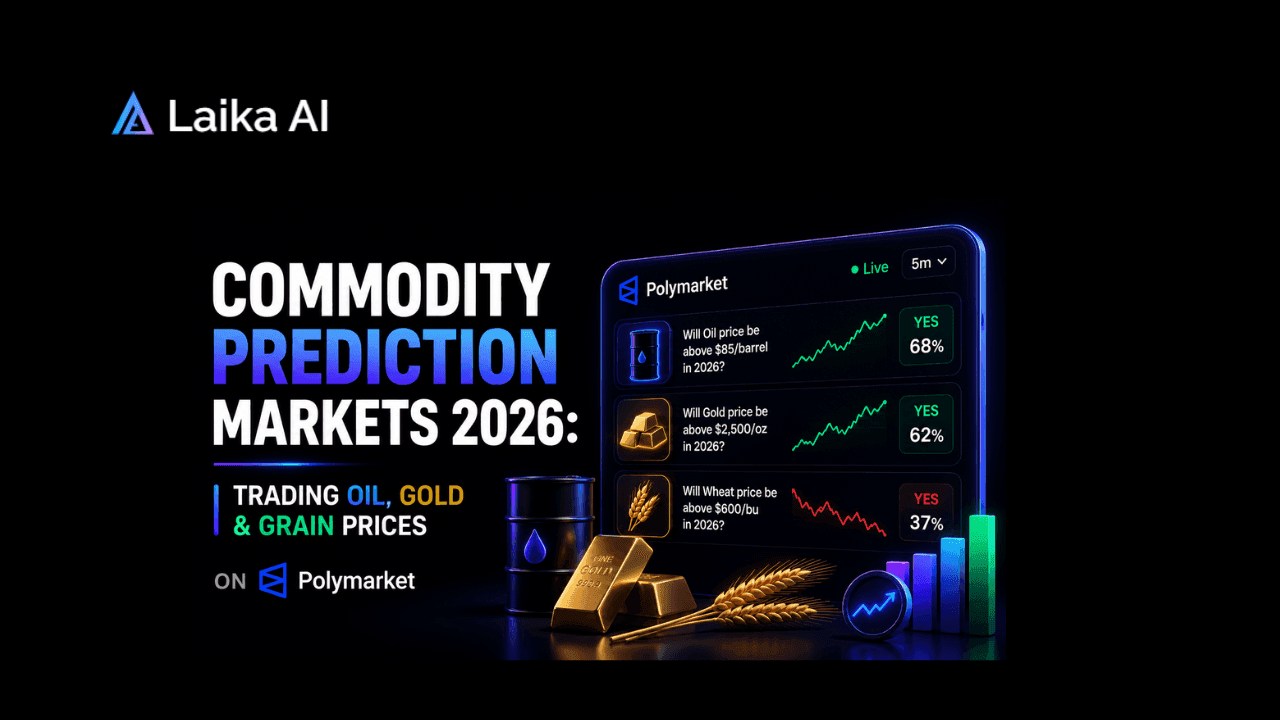
The commodity prediction market 2026 landscape on Polymarket and Kalshi covers oil, gold, and grain price thresholds structured as binary contracts, and understanding how these differ from traditional futures trading is the starting point before placing a single trade. A futures contract obligates you to buy or sell a commodity at a set price on a set date, with margin requirements, mark-to-market daily settlement, and leverage that can amplify both gains and losses well beyond your initial capital. A commodity prediction market contract asks a simpler binary question: will oil close above a specific threshold by a specific date. You risk exactly what you pay for the contract, nothing more, and the payout is capped at $1 per share regardless of how far the actual price moves beyond your threshold.
This guide covers how oil, gold, and grain markets are structured and priced on Polymarket and Kalshi, the specific data sources that move these contracts, practical trading strategies built around the macro calendar and supply shock windows, and the risk management framework these high-volatility, geopolitically sensitive markets demand. For the foundational mechanics of how any Polymarket contract prices probability, Polymarket explained: how prediction markets work covers the structure underlying every market referenced in this guide.
How Commodity Prediction Markets Compare to Futures Trading
This structural difference matters for who each instrument suits. Futures traders who want direct commodity exposure with leverage and the ability to profit from magnitude of price movement are better served by traditional futures markets. Traders who want to express a specific, capital-limited view on whether a threshold gets crossed, without margin risk or daily settlement volatility, are better served by the prediction market structure.
How Oil, Gold, and Grain Markets Are Priced
Oil price markets
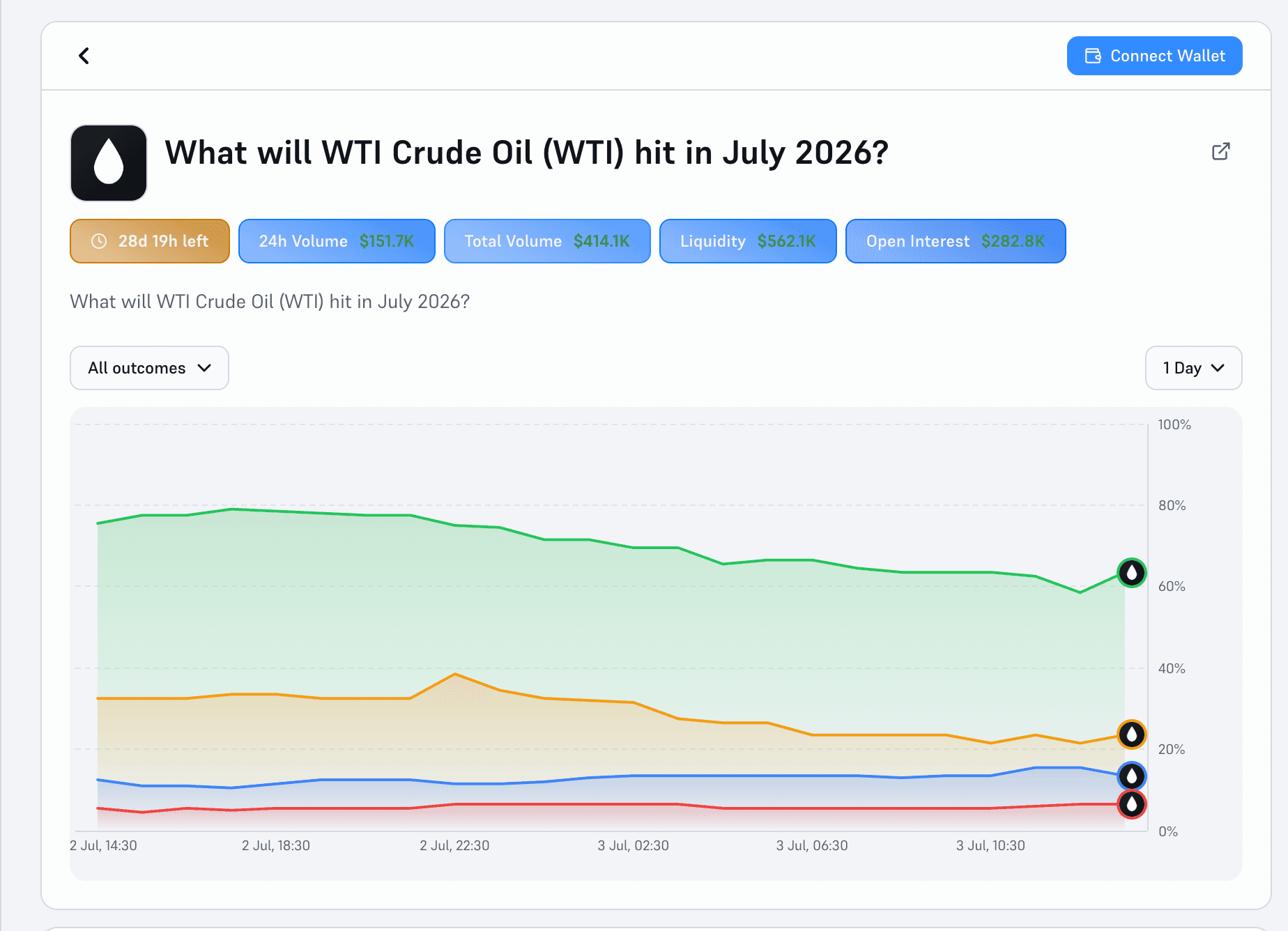
Oil prediction markets on Polymarket and Kalshi typically ask whether WTI or Brent crude will close above or below a specific price threshold by a defined date, often tied to monthly or quarterly windows. Contract prices are priced between $0.01 and $0.99, representing implied probability exactly as with any other Polymarket contract.
The US Energy Information Administration publishes the most consistently market-moving data point in this category: the weekly petroleum status report. A larger-than-expected inventory draw typically pushes oil prices up and correlated Polymarket contracts reprice within the same trading session. Traders who check the EIA release directly rather than waiting for secondary news summaries capture a meaningful speed advantage on the Wednesday release each week.
Gold price markets
Gold commodity price prediction contracts function similarly, asking whether gold will close above or below a specific threshold by a stated date. Gold's price behavior differs meaningfully from oil in what drives it: gold responds primarily to real interest rate expectations, dollar strength, and safe-haven demand during geopolitical or financial stress, rather than to supply and demand fundamentals in the way oil does.
This is where commodity prediction markets intersect directly with the broader macro prediction market ecosystem. A trader positioning in a gold price threshold contract benefits from simultaneously tracking Fed rate decision markets, since the two are directly correlated. For the framework on how this kind of cross-market correlation trading works in more depth, crypto correlation trading with prediction markets covers a parallel methodology that applies directly to gold's relationship with Fed policy markets.
Grain and agricultural markets
Grain prediction markets, covering wheat, corn, and soybeans primarily, are the least liquid and most seasonally driven of the three categories. Prices are most sensitive to USDA crop reports, weather conditions during planting and growing seasons, and export demand data. These markets see concentrated trading volume around specific USDA report release dates and thin volume during off-cycle periods.
Trading Strategies for Commodity Prediction Markets
The macro calendar approach
Commodity prediction markets reprice predictably around scheduled data releases, which creates a calendar-based trading framework rather than requiring constant monitoring.
Building a position ahead of a scheduled release based on your own analysis of the data trend, rather than reacting after the number prints, is the higher-edge approach. By the time a headline number is public, the fastest traders have already repriced the contract within minutes.
The supply shock window
Unscheduled events, an OPEC+ surprise production cut, a major weather event disrupting Gulf Coast refining capacity, an escalation affecting a key shipping chokepoint, create sharp, fast-moving repricing windows that behave differently from scheduled data releases. These events reward traders who are already monitoring primary sources rather than waiting for aggregated news coverage, since the gap between the event occurring and the contract fully repricing can be a matter of minutes on liquid contracts.
For commodity markets specifically affected by geopolitical risk, particularly oil given its sensitivity to Middle East supply routes, the framework for pricing and trading that risk overlaps directly with broader geopolitical hedging strategy. Geopolitical hedging with prediction markets covers the methodology for using event-driven contracts, including commodity-relevant conflict and sanctions markets, as portfolio protection rather than purely speculative positions.
Cross-commodity and cross-market correlation plays
Oil, gold, and broader risk sentiment often move in relationships that create tradeable setups across market categories. Gold's relationship with Fed policy markets is one example already covered above. A similar logic applies to reading broader market sentiment through prediction markets as a leading indicator for commodity positioning. How to use prediction markets to gauge S&P 500 sentiment covers how equity-focused prediction markets can serve as a sentiment gauge, and the same framework extends to using macro prediction markets as an early signal for commodity price direction before the commodity contract itself has fully repriced.
Risk Management for Commodity Prediction Markets
Commodity markets carry a specific risk profile distinct from sports or election contracts, driven by higher baseline volatility and sensitivity to unscheduled geopolitical events.
The resolution mechanics point deserves particular attention. Oil contracts may reference WTI or Brent specifically, and the two benchmarks can diverge meaningfully during supply disruptions concentrated in one region. A contract resolving on Brent will not necessarily track a WTI-based view of the market, and confirming which benchmark and which specific price snapshot, spot versus futures settlement, a contract uses before entering is essential rather than optional.
For the complete framework on sizing positions appropriately given the elevated volatility of commodity markets relative to other prediction market categories, the prediction market bankroll management guide covers position sizing calibrated to different risk profiles across market types.
Frequently Asked Questions
Which commodity markets can you trade on Polymarket?
Polymarket and Kalshi both run price threshold contracts on oil (WTI and Brent crude), gold, and grain commodities including wheat, corn, and soybeans. Contracts ask whether the commodity will close above or below a specific price by a defined date, structured identically to any other binary Polymarket contract. Check the live commodity price markets page at polymarket.com for current active contracts.
How are oil price prediction markets structured on Polymarket?
Oil contracts are typically priced between $0.01 and $0.99, representing the market's implied probability that WTI or Brent crude will close above or below a specific threshold by a stated date. Contracts specify the exact benchmark used, WTI or Brent, and the specific price snapshot referenced, which matters because the two benchmarks can diverge during regional supply disruptions.
What data sources move commodity prediction market prices?
Oil markets respond most consistently to the EIA weekly petroleum status report, OPEC+ meeting announcements, and Baker Hughes rig count data. Gold responds primarily to Fed rate decision markets, dollar index movement, and geopolitical safe-haven demand. Grain markets are most sensitive to USDA WASDE monthly reports and seasonal weather conditions during planting and growing periods.
Can you use commodity prediction markets to hedge a traditional portfolio?
Yes, particularly for portfolios with concentrated exposure to commodity-sensitive sectors like energy, airlines, or agriculture. A trader can seize a position in an oil or grain threshold contract to offset a quantified exposure to commodity price movement, similar to how crypto correlation hedging works with regulatory and macro event markets. The same liquidity, resolution timing, and basis risk limitations that apply to other correlation-based hedges apply here as well.
Where can I find commodity prediction market discussion on Reddit?
The prediction markets subreddit and several commodity and macro trading communities carry active discussion around scheduled release dates, particularly EIA Wednesdays and USDA report days when trading volume and community attention concentrate on specific contracts.
The Bottom Line
Commodity prediction markets in 2026 offer a genuinely different risk profile from traditional futures trading: capital-limited exposure to specific price thresholds without margin risk or daily settlement volatility. Oil, gold, and grain each respond to distinct, trackable data sources on a largely predictable calendar, which creates a systematic framework for positioning ahead of scheduled events rather than reacting after the fact.
The volatility and geopolitical sensitivity that make these markets tradeable also make them riskier than sports or election contracts on a per-position basis. Sizing conservatively, confirming the exact resolution benchmark before entering, and concentrating activity around known high-liquidity windows are the practical disciplines that separate a durable commodity trading approach from one that gets caught out by a supply shock or a thin order book.
Track how oil, gold, and grain contract prices move in real time across every active Polymarket market with Polymetric by Laika AI. Live market intelligence for traders who need to see the data release repricing before the broader market catches up.