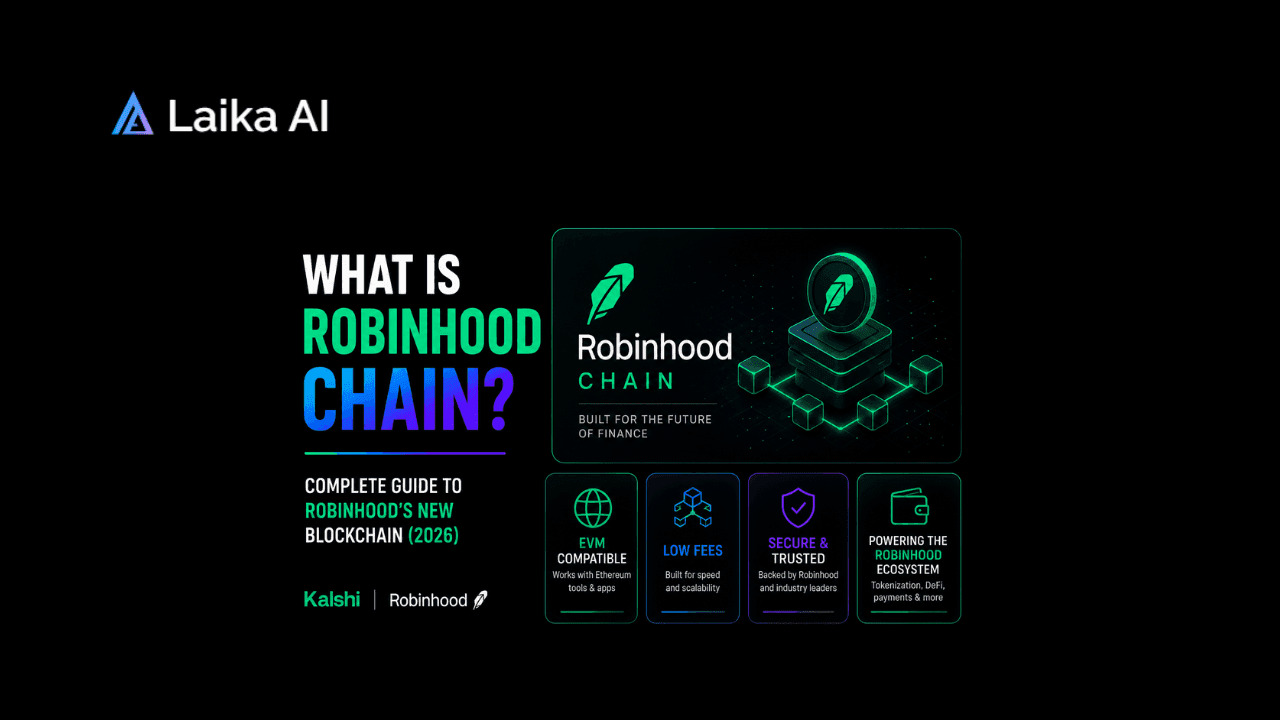
Robinhood Chain is a permissionless, Ethereum-compatible Layer 2 blockchain built by Robinhood for tokenized real-world assets. Its flagship product is Stock Tokens, on-chain instruments that track the price of equities like NVIDIA, Apple, and Google and trade 24/7. The network is built on Arbitrum's technology stack, went live in testnet on February 10, 2026, and launched its public mainnet on July 1, 2026.
This guide covers how Robinhood Chain actually works, what Stock Tokens are, who can access them, and how the chain fits into the broader picture of tokenized stocks reshaping retail investing in 2026.
How Robinhood Chain Works
Robinhood Chain is a Layer 2 network, meaning it processes transactions on its own fast, low-cost rails while periodically posting transaction data back to Ethereum for final settlement. This structure lets the chain inherit Ethereum's security without inheriting its fees or slower block times.
The technical build uses Arbitrum's Orbit framework, the same customizable Layer 2 technology created by Offchain Labs that powers Arbitrum itself. Because Robinhood Chain is fully compatible with the Ethereum Virtual Machine, developers can deploy using the same programming languages and tooling already used across Ethereum.
Key technical details include
- Native gas token: ETH, so network fees are paid in Ethereum rather than a proprietary token
- Block times: approximately 100 milliseconds, aimed at high-throughput financial applications
- Sequencing model: transactions are ordered first-come, first-served, rather than allowing users to pay extra for priority placement
- Mainnet chain ID: 4663, with a separate testnet environment for developers
Chainlink serves as the chain's official oracle provider, supplying price data and cross-chain interoperability through its CCIP and Data Feeds products. Alchemy and BitGo provide backend infrastructure and institutional custody support, while Uniswap and Pleiades operate as day-one automated market makers supplying on-chain liquidity.
Robinhood Chain Timeline: From Testnet to Mainnet
The rollout was deliberately sequenced. Robinhood spent 2025 assembling licensing and infrastructure through acquisitions, then used the testnet phase in early 2026 to stress-test the network before composing everything, tokenized assets, its own wallet, integrated lending, and custody, into a single vertically integrated system at mainnet launch.
What Are Stock Tokens?
Stock Tokens are blockchain-based instruments issued by Robinhood that track the price of real-world equities and ETFs, including names like NVIDIA, Apple, and Google. They are structured as tokenized debt instruments redeemable for cash through authorized participants, with Robinhood signaling plans to eventually allow redemption for underlying shares as well.
It's important to understand what these tokens are not. They do not confer
- Direct legal ownership of company shares
- Shareholder voting rights
- Dividend rights identical to holding the underlying stock
Instead, they provide economic exposure to price movement, wrapped in a format that trades around the clock and can plug directly into DeFi applications, unlike a traditional brokerage position that only trades during market hours. Once on-chain, eligible holders can place these tokens into lending pools, use them as collateral, or trade them across decentralized exchanges such as Uniswap, in addition to Robinhood's own venues.
This new generation of tokens is distinct from Robinhood's earlier EU tokenized stock product, which remains confined to the Robinhood app and available only to European Union residents. The new Stock Tokens are designed to work across external DeFi venues, not just inside Robinhood's own ecosystem.
Who Can Access Robinhood Chain and Stock Tokens?
The underlying blockchain rails are permissionless. Anyone, anywhere, can bridge assets onto Robinhood Chain, deploy a contract, or use its DeFi applications without KYC or platform lock-in.
Access to Stock Tokens themselves is a different story, since that product carries securities-style restrictions layered on top of an open network
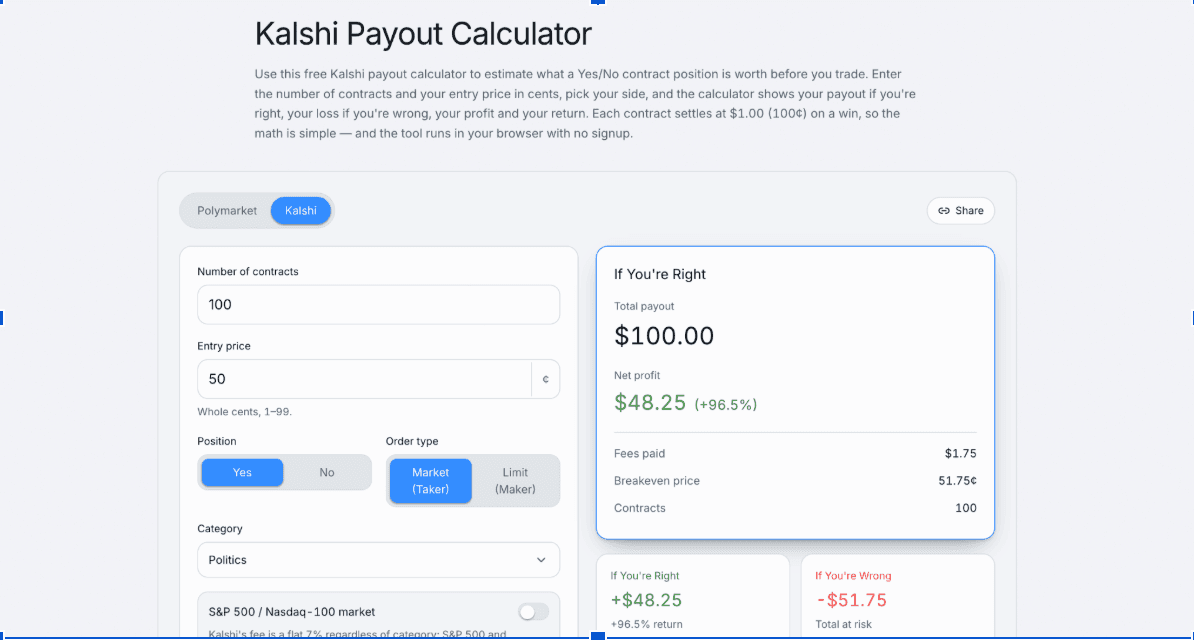
Robinhood has stated Stock Tokens are available through the Robinhood Wallet in more than 120 countries, though exact availability depends on jurisdiction-specific regulation. If you're evaluating a token before trading it on any venue, it's worth knowing how to audit a token smart contract rather than relying on a platform's branding alone.Robinhood's Stock Tokens and prediction markets both give traders new ways to gain market exposure. If you're trading on Kalshi, try the Kalshi Payout Calculator to estimate your potential returns before every trade and make more informed decisions.
Robinhood Chain vs. Other Corporate Blockchains
Robinhood Chain places the company inside a growing category of corporate-issued networks, where financial and payments firms build dedicated rails instead of relying on general-purpose public chains. Coinbase's Base and Stripe's Tempo are the most visible comparisons.
Robinhood's stated advantage over crypto-native competitors isn't novel technology, it's distribution. The company already has millions of retail brokerage users, existing regulatory relationships, and a wallet with global reach, which gives Stock Tokens a built-in user base that newer RWA-focused chains still have to build from scratch.
DeFi and Yield Products on Robinhood Chain
Alongside Stock Tokens, Robinhood launched a decentralized lending product called Robinhood Earn at mainnet. It offers an estimated yield on USDG stablecoin deposits through the lending protocol Morpho, letting users generate returns on stable assets without leaving the Robinhood ecosystem.
The chain also connects to perpetual futures through Lighter, a decentralized exchange partner. Lighter has committed a portion of its token supply to reward users who trade perpetuals through the Robinhood Wallet, with points doubled for wallet-based activity versus using Lighter's own app directly.
Before moving funds into any DeFi lending pool, it's worth applying the same due diligence used for any smart contract, and pairing on-chain activity with proper custody practices, including a hardware wallet for anything beyond small, active trading balances.
Why Robinhood Built Its Own Chain
Robinhood's leadership has framed tokenization as an inevitable shift in how financial assets are issued and traded, comparing it to a freight train that cannot be stopped. The strategic logic breaks down into a few clear drivers:
- Extended trading hours: Stock Tokens trade 24/7, unlike traditional equities confined to exchange hours
- Global reach without local infrastructure: a single chain-based product can reach many countries at once, rather than requiring separate brokerage licensing everywhere
- DeFi composability: tokenized assets can be used as collateral, lent out, or traded on third-party venues, something a traditional brokerage account cannot do
- Reduced reliance on external networks: owning the chain gives Robinhood more control over fees, integrations, and product design than building on someone else's rails
This mirrors a broader pattern of institutional adoption of crypto infrastructure, where large financial firms are increasingly choosing to build dedicated blockchain rails rather than simply integrating with existing public networks.
Risks and Open Questions
Robinhood Chain's launch has been well-resourced, but several risks are still unresolved and worth weighing before using the product.
Regulatory treatment of Stock Tokens varies significantly by country, and the line between a compliant synthetic instrument and an unregistered security is actively being debated by regulators in multiple jurisdictions. A product that is legal and available today could face restrictions later with little warning.
The chain's permissionless nature also cuts both ways. While it allows anyone to build or transact without a middleman, it has already attracted meme coin activity unrelated to Robinhood's tokenized-asset pitch, which is worth knowing before assuming everything on the network carries the same scrutiny as Stock Tokens. There have also been reports of fraudulent third-party "bridge" sites using Robinhood Chain branding, so only bridging assets through the official Arbitrum Portal or channels Robinhood's own documentation names is the safer path.
Finally, no native Robinhood Chain token or airdrop has been confirmed as of this writing. Any site or guide promising a guaranteed token claim tied to the chain should be treated with caution.
The Bottom Line
Robinhood Chain is Robinhood's attempt to become the settlement layer for its own tokenized products rather than depend on someone else's blockchain. It combines Arbitrum's proven Layer 2 technology with Robinhood's existing retail distribution, giving Stock Tokens a shot at reaching millions of users who never previously touched crypto infrastructure directly.
The chain itself is open to anyone. The flagship product, Stock Tokens, is not, and remains restricted in the US and several other jurisdictions. Anyone evaluating Robinhood Chain should treat it the way they would any new financial infrastructure: understand exactly what is and isn't guaranteed, verify jurisdiction-specific access before assuming eligibility, and separate genuine product features from third-party hype, especially around unconfirmed token airdrops.
Frequently Asked Questions
What is Robinhood Chain?
Robinhood Chain is a permissionless Layer 2 blockchain built by Robinhood on Arbitrum's technology stack. It settles transactions on Ethereum while processing them faster and more cheaply on its own network, and it's designed to support tokenized real-world assets, starting with Stock Tokens tied to major public companies.
Is the Robinhood Chain built on Arbitrum?
Yes. Robinhood Chain is built using Arbitrum's Orbit framework, a customizable Layer 2 system developed by Offchain Labs. This gives the network Ethereum-level security along with fast block times and full compatibility with existing Ethereum development tools.
Is Robinhood Chain currently in testnet?
No, Robinhood Chain moved past testnet. The public testnet launched on February 10, 2026, and after processing millions of test transactions, Robinhood switched on the public mainnet on July 1, 2026, at a company event in London.
How do Robinhood's tokenized stocks work?
Robinhood's Stock Tokens are on-chain instruments structured as tokenized debt securities that track the price of an underlying stock or ETF. They can be redeemed for cash through authorized participants and, unlike a standard brokerage holding, can be traded 24/7 or used as collateral inside DeFi applications.
What are Robinhood's blockchain stock tokens?
They are digital tokens representing economic exposure to equities like NVIDIA, Apple, and Google, issued on Robinhood Chain. Holders get price exposure but not legal share ownership, shareholder voting rights, or guaranteed dividend treatment identical to holding the actual stock.
Is Robinhood Chain or its tokenized stocks available in Europe?
Robinhood's newer Stock Tokens are available in more than 120 countries, and European users can access them, though the specific token structure differs from Robinhood's earlier EU-only tokenized stock product, which remains confined to the Robinhood Europe app. Availability and rules still depend on individual country regulation.
Is there a Robinhood Chain airdrop?
As of now, Robinhood has not confirmed a native token or an official airdrop tied to Robinhood Chain. Reward programs currently available, like earning points through Lighter for perpetuals trading, are separate, confirmed programs, not evidence of a future Robinhood Chain token.