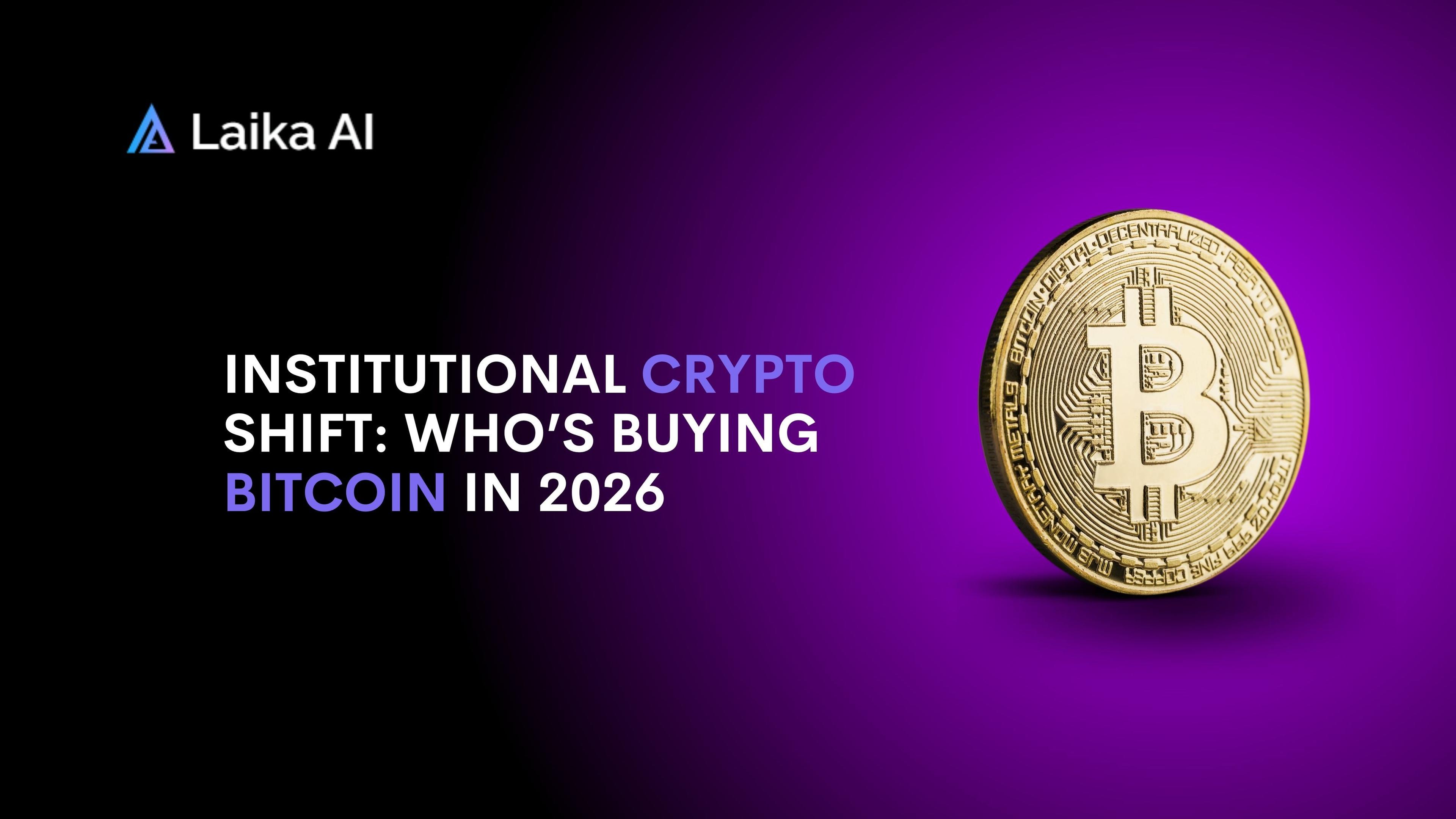
State Street, Sovereign Wealth Funds, Hedge Fund Retreats, and the Road to Q2
Key Insight Q1 2026 produced the sharpest divergence in institutional crypto history. Sovereign wealth funds deployed over $1 billion into Bitcoin ETFs. Hedge funds cut exposure by 28 percent. State Street launched production-grade digital asset infrastructure serving $51.7 trillion in custody assets. The institutions that moved slowly for years are now moving decisively. The ones that moved early are pausing to reassess. Understanding the full picture is not optional for anyone allocating to or trading around crypto in 2026. |
The institutional crypto landscape shifted faster in Q1 2026 than in any prior quarter. Traditional custody banks entered the market in earnest, sovereign wealth funds accelerated Bitcoin accumulation during a price decline, hedge funds rotated capital toward gold and away from crypto, and investment advisers quietly built long-term positions while everyone else debated the narrative.
This analysis covers each actor group in detail, with the data behind their moves, the logic driving decisions, and the regulatory framework that made it all possible. The Q2 outlook closes with the five catalysts that institutional investors are watching most closely.
State Street and the Custody Bank Breakthrough
State Street announced its Digital Asset Platform on January 15, 2026. The bank manages $51.7 trillion in assets under custody. This was not a test or a pilot. The platform launched in production, supporting tokenized money market funds, ETFs, stablecoin deposits, and direct digital asset custody across private and public permissioned blockchains.
The strategic context matters. SAB 121, an SEC accounting rule introduced in March 2022, had blocked US banks from offering digital asset custody by requiring them to record customer crypto as liabilities on their own balance sheets. That rule created untenable capital requirements and effectively handed the institutional custody market to Coinbase, Fidelity Digital Assets, and specialist firms like Anchorage for three years.
SAB 121 was rescinded in February 2025. State Street moved immediately. Citi is preparing its own custody launch in parallel. Together, these two banks manage over $76 trillion in custody assets. Their entry into digital asset services eliminates one of the last remaining structural barriers for pension funds, endowments, and insurance companies that had been waiting for a familiar institutional counterpart.
The practical implication is significant. When State Street offers Bitcoin custody through the same prime brokerage relationships already used for equities and bonds, asset managers face none of the operational barriers that previously required explaining novel custody arrangements to compliance departments. For a detailed breakdown of how BlackRock, the firm most closely associated with Bitcoin ETF growth, structures its own crypto exposure, see BlackRock Crypto Holdings 2026.
State Street already serves as fund administrator and transfer agent for several Bitcoin ETFs including products from BlackRock and Fidelity, giving it existing operational familiarity with the asset class before the platform launch. The bank partnered with Franklin Resources, Fidelity, and Galaxy Digital on initial tokenized fund offerings.
The cascading effect from here is structural. When State Street offers Bitcoin custody, asset managers face fewer barriers to launching crypto funds. When crypto funds proliferate, financial advisers gain more packaged products. When advisers allocate at scale, institutional acceptance compounds. The domino sequence that analysts discussed as theoretical in 2023 is now running in practice.
Sovereign Wealth Funds: The Generational Allocation in Motion
Sovereign wealth funds manage over $9 trillion globally and do not make speculative bets. They make generational allocation decisions based on decade-long return projections, portfolio diversification mandates, and geopolitical positioning. The Q1 2026 picture shows those decisions accelerating precisely during the period when Bitcoin fell from October 2025 peaks above $126,000 to support zones around $60,000 to $70,000.
| Fund | Country | AUM | Bitcoin Exposure | Method | Change (Q4 2025) |
| Mubadala Investment Co. | UAE | $302B | $567M via IBIT | Bitcoin ETF | +46% increase in Q4 2025 |
| Abu Dhabi Investment Council | UAE | N/D | $518M via IBIT | Bitcoin ETF | Tripled from Q3 2025 |
| Norges Bank (NBIM) | Norway | $1.76T | $844M indirect | Equity stakes in MSTR and COIN | +192% BTC equivalent vs 2024 |
| Luxembourg SWF | Luxembourg | $730M | ~$9M | Bitcoin ETF (1% of portfolio) | First Eurozone direct allocation |
| Druk Holding (Bhutan) | Bhutan | N/D | ~$1.2B | Direct sovereign mining | 13,000+ BTC held; 55–75 BTC mined per week |
| Singapore GIC | Singapore | N/D | Undisclosed | Crypto infrastructure equity | Increased adjacent positions |
| Qatar Investment Authority | Qatar | N/D | Evaluating | Dedicated digital assets team | Building internal capability |
What Is Driving Sovereign Accumulation During a Price Decline
The counterintuitive nature of sovereign buying during weakness is the point. Four structural drivers explain the behaviour.
Fiat currency debasement: global debt exceeds $100 trillion with persistent inflation eroding purchasing power of reserve currencies. Sovereigns with long-dated mandates need assets that hold value across decades, not quarters.
Geopolitical fragmentation: demand for assets outside dollar or euro dominated systems is rising, particularly among non-Western sovereign funds diversifying away from traditional reserve structures.
Portfolio diversification: Bitcoin demonstrates low correlation to traditional assets across full market cycles. For a $302 billion fund like Mubadala, even a 0.2% Bitcoin allocation provides genuine diversification without material portfolio risk.
Infrastructure maturity: Bitcoin ETFs through qualified custodians, combined with the regulatory developments covered below, have removed the operational barriers that previously blocked sovereign participation.
BlackRock CEO Larry Fink has stated publicly that sovereign wealth funds view Bitcoin as a long-term hedge against fiat currency debasement and geopolitical uncertainty, analogous to gold's traditional role in reserve portfolios. His projection of $500,000 to $700,000 Bitcoin assumes only 2 to 5 percent global institutional adoption, a figure that looks increasingly plausible given Q1 2026 sovereign flows.
Norway's NBIM approach is particularly instructive for institutions with restrictive mandates. The fund cannot buy Bitcoin directly but gains exposure through equity positions in MicroStrategy, Coinbase, Tesla, and other companies with significant Bitcoin treasury holdings or crypto business operations. As more publicly traded companies adopt Bitcoin treasury strategies, diversified sovereign funds automatically accumulate Bitcoin exposure through normal equity allocation. This indirect route is now being explored by pension funds facing similar mandate restrictions.
Hedge Funds: The 28 Percent Retreat and What Drove It
While sovereign funds accumulated, hedge funds moved sharply in the opposite direction. Aggregate Bitcoin holdings among the largest hedge fund holders declined 28 percent from Q3 to Q4 2025 according to CF Benchmarks data. Spot Bitcoin ETFs recorded nearly $4.5 billion in outflows since the start of 2026. For the first time since ETF launches in January 2024, some crypto hedge funds report zero exposure to both Bitcoin and Ethereum.
| Factor | What Happened | Impact on Allocations |
| Reward-to-risk shift | BTC fell 30% from October 2025 peaks above $126,000 | Upside-downside profile weakened; reduced new entry rationale |
| Basis trade collapse | Funding rates compressed, futures premiums declined sharply | Arbitrage yields eliminated, removing a key return driver |
| Rotation to crypto equities | Capital moved to Coinbase, MicroStrategy, and mining stocks | Indirect exposure via regulated equity markets became preferred |
| Gold outperformance | Gold rose 55% annually vs BTC decline from peak | $407B in gold ETFs vs $166B in Bitcoin ETFs; capital followed returns |
| NFT total wipeout | Zero hedge funds report NFT holdings vs 20% the prior year | Speculative satellite positions fully unwound across the board |
| Macro risk-off | Inflation, rate uncertainty, and geopolitical pressure combined | Broader de-risking across alternative assets, not just crypto |
The gold comparison is the clearest signal. Gold ETFs hold $407 billion in assets, more than double Bitcoin ETFs at $166 billion. Central banks bought record gold amounts during the same period Bitcoin struggled. Bloomberg characterised the situation as Bitcoin facing a $1 trillion identity crisis, trading more than 40 percent below recent peaks despite unprecedented institutional adoption and regulatory clarity.
Traditional hedge funds that maintained crypto exposure concentrated it heavily. Bitcoin and Ethereum now account for 91 percent of crypto holdings, up from 67 percent the prior year. Altcoin and NFT positions were unwound almost completely. This concentration reflects flight to quality rather than conviction, which is an important distinction for reading Q2 positioning.
One notable complication in reading institutional Bitcoin positioning is the role of authorised participants in ETF mechanics. Jane Street's $2.5 billion disclosed IBIT position generated significant market commentary in Q1 2026, with claims of coordinated selling around the 10 AM US market open. The reality of how market maker positions differ from directional Bitcoin bets is explained in detail in Jane Street, Bitcoin Manipulation, and the IBIT Scheme. The short version: authorised participant inventory positions are not the same as directional long allocations, and conflating the two produces incorrect reads on institutional sentiment.
Investment Advisers: Building While Hedge Funds Sold
The sharpest divergence in Q1 2026 was not between Bitcoin and gold. It was between hedge funds and investment advisers. JPMorgan Chase, Mubadala, and BlackRock were among 17 of the top 25 institutional Bitcoin ETF holders that increased exposure during Q4 2025 while hedge funds reduced theirs.
Investment advisers are building Bitcoin into client portfolios as a structural long-term allocation, not a tactical trade. Jay Jacobs, BlackRock's head of US equity ETFs, noted that institutions typically allocate 1 to 2 percent of portfolios to digital assets. At those levels, Bitcoin's risk contribution compares to the exposure investors already accept from large technology stocks within diversified portfolios. The product that makes this most straightforward for yield-seeking institutional allocators is BlackRock's iShares Staked Ethereum Trust, launched in March 2026, which combines Ethereum price exposure with approximately 3.1 percent annualised staking rewards distributed monthly.
71 percent of hedge funds with crypto exposure plan to increase allocations over the next 12 months according to AIMA survey data. The Q1 retreat was tactical, driven by macro positioning and basis trade collapse, not by a structural view change. If that re-entry happens in Q2 and Q3, it reverses the Q1 outflows into meaningful inflow pressure.
How Institutions Structure Crypto Allocations in 2026
More than half of all hedge funds now hold crypto assets according to an AIMA survey of 122 funds managing $982 billion collectively. Average allocation among traditional hedge funds has increased from 4 percent to 7 percent over the past year, though over half of funds with exposure still invest less than 2 percent of total assets, reflecting conservative positioning despite growing acceptance.
| Institution Type | Typical Crypto Allocation | Primary Vehicles | Bitcoin Share of Crypto Portfolio |
| Family offices | 5–10% of AUM | Direct holdings, ETFs, hedge fund exposure | 60–80% |
| Endowments and foundations | 2–5% of AUM | Bitcoin ETFs, custodial Ethereum, fund-of-funds | 70–80% |
| Traditional hedge funds | 4–7% of AUM (rising) | Derivatives (67%), ETFs, equity proxies | 86% of crypto sleeve |
| Crypto hedge funds | Majority crypto | Direct holdings, DeFi, staking, derivatives | 50–70% |
| Sovereign wealth funds | 0–3% of AUM | Bitcoin ETFs, equity stakes, direct sovereign mining | 90%+ of crypto exposure |
| Pension funds and insurance | Under 1% of AUM | Bitcoin ETFs via prime broker, fund-of-funds | Near 100% |
Three portfolio models dominate institutional crypto construction in 2026, differentiated primarily by risk tolerance and operational capability.
| Model | BTC | ETH | Altcoins | Annual Vol. | Typical Users | Common Vehicles |
| Conservative | 80% | 15% | 5% | 42–48% | Pension funds, endowments, insurance companies | Bitcoin ETFs, custodial ETH, minimal altcoin exposure |
| Moderate | 70% | 20% | 10% | 45–52% | Balanced family offices, multi-strategy hedge funds | Direct holdings, ETFs, selective DeFi protocol exposure |
| Aggressive | 60% | 25% | 15% | 55–60% | Crypto hedge funds, tech family offices, venture allocators | Direct holdings, staking operations, active management |
For context on sizing: a $10 million moderate allocation means $7 million in Bitcoin, $2 million in Ethereum, and $1 million distributed across 5 to 10 altcoin positions. Rebalancing occurs quarterly or when any position drifts more than 5 percent from targets.
67 percent of hedge funds now access crypto through derivatives rather than direct holdings, up from 58 percent in 2024. 73 percent of crypto hedge funds generate additional returns through staking. The fund-of-funds participation rate in crypto hedge funds jumped from 21 percent to 39 percent in 2025, and institutional allocations from pension funds, foundations, and sovereign wealth funds increased to 20 percent of inflows compared with 11 percent the prior year. The investor base has matured significantly.
The Regulatory Framework That Made Q1 2026 Possible
47 percent of institutional investors cite evolving US policies as directly prompting increased crypto allocations. Five regulatory developments between early 2025 and Q1 2026 created the predictable legal framework institutions require before committing significant capital to a new asset class.
| Development | Date | What Changed | Institutional Impact |
| SAB 121 Rescission | Feb 2025 | Banks no longer required to record customer crypto as their own balance sheet liabilities | State Street, Citi, and BNY Mellon can now enter the crypto custody business |
| GENIUS Act | Jul 2025 | First federal stablecoin framework introduced; 100% liquid reserve requirement for all issuers | Banks can issue digital dollars and stablecoins become legitimate treasury tools |
| Project Crypto (SEC) | Jul 2025 | Most crypto assets declared non-securities by SEC Chair Atkins | Eliminates retroactive enforcement risk for crypto funds and platforms |
| OCC Letter 1183 | 2025 | National banks explicitly permitted to custody crypto assets and hold stablecoin reserves | Direct regulatory permission removes the remaining compliance ambiguity for banks |
| State Street Platform | Jan 2026 | Production-grade tokenized asset infrastructure launched serving $51.7T in assets under custody | Pension funds and endowments gain crypto access through their existing institutional relationships |
The GENIUS Act deserves particular attention for institutional treasury operations. By establishing a federal framework requiring 100 percent liquid reserves for stablecoin issuers, it legitimises stablecoins as cash management tools rather than speculative instruments. Banks can now issue digital dollars and integrate crypto payment rails into existing treasury operations without regulatory ambiguity. For a full breakdown of how stablecoins now function within institutional finance, see What Is a Stablecoin: Types, Risks, and How It Works in 2026.
The combined effect of these five developments is structural. Institutions that previously cited regulatory uncertainty as their primary barrier have lost that objection. What remains are operational decisions about timing, vehicle selection, allocation sizing, and counterparty selection. These are solvable problems. Regulatory risk was not.
Q2 2026 Outlook: Five Catalysts Institutional Investors Are Watching
Institutional crypto adoption reaches an inflection point in Q2 2026 based on converging catalysts. The question has shifted from whether institutions should participate to when they increase allocations, which vehicles they prefer, and which counterparties they trust.
| Catalyst | Timeline | Mechanism | Scale of Impact |
| Bitcoin halving cycle peak | Apr–Oct 2026 | Every prior halving produced a cycle high 12–18 months after. April 2024 halving sets the window. | Historical precedent; Q1 accumulation positions early movers |
| Federal Reserve rate cuts | 2026 (3 expected) | 89% CME FedWatch probability. Lower rates reduce opportunity cost of holding non-yielding assets. | Improves risk asset valuations broadly; BTC benefits disproportionately |
| State Street and Citi custody | Late 2026 | Both banks launch crypto custody services, unlocking existing institutional client bases. | Trillions in assets currently blocked by custody compliance become accessible |
| Continued sovereign buying | Ongoing | Abu Dhabi bought below $70K. Norway, Singapore, Qatar building positions or dedicated teams. | Each 1% SWF allocation adds $90B+ in net demand; cascades to pensions and endowments |
| Hedge fund reversal | Q2–Q3 2026 | 71% of crypto-exposed hedge funds plan allocation increases over the next 12 months. | Q1 retreat was tactical; reversal could swing ETF flows and derivatives markets sharply positive |
| BlackRock ETHB staking launch | Mar 2026 | First major asset manager offering a staked ETH product with 3.1% annualised staking yield. | Adds a yield dimension to institutional ETH allocation; expands the addressable investor base |
The sovereign wealth fund signal is the most durable of these catalysts. Abu Dhabi demonstrated willingness to deploy over $1 billion at prices below $70,000. If Norway, Singapore, Qatar, and Saudi Arabia follow with even small direct allocations, cumulative buying pressure compounds significantly. Larry Fink's $500,000 to $700,000 Bitcoin projection assumes only 2 to 5 percent global institutional adoption, a figure that requires only a fraction of the capital sitting in sovereign wealth funds globally.
For traders and investors who want to track how these large institutional flows actually manifest on-chain before they appear in quarterly disclosures, understanding how to read exchange netflow data, wallet cohort behaviour, and large transaction signals is essential. The practical methodology is covered in How to Track Crypto Whale Activity During a Market Dip. Sovereign accumulation patterns are often visible in on-chain data weeks before 13F filings or press releases confirm them.
The hedge fund reversal is the variable with the most asymmetric upside. 71 percent of crypto-exposed hedge funds plan to increase allocations over the next 12 months. If the Q1 rotation was tactical and those funds re-enter during a period of price stabilisation, the swing in derivatives and ETF flows could be sharp and fast. Hedge fund capital is more mobile than sovereign capital, which means the reversal, when it comes, tends to move prices more quickly than the accumulation phase suggests.
The State Street and Citi custody launches expected by late 2026 are the longer-dated catalyst but arguably the most structurally significant. When two banks collectively managing $76 trillion in custody assets activate crypto custody services, the addressable market for institutional Bitcoin and Ethereum products increases by an order of magnitude compared to what specialist custodians could access.
Track Institutional Crypto Flows Before They Hit the Headlines Sovereign wealth funds and hedge funds move billions in the weeks before quarterly disclosures confirm it. On-chain data captures large wallet movements, exchange netflows, and institutional accumulation patterns in real time.
Set up institutional-grade whale alerts at Laika Crypto Whale Tracker |