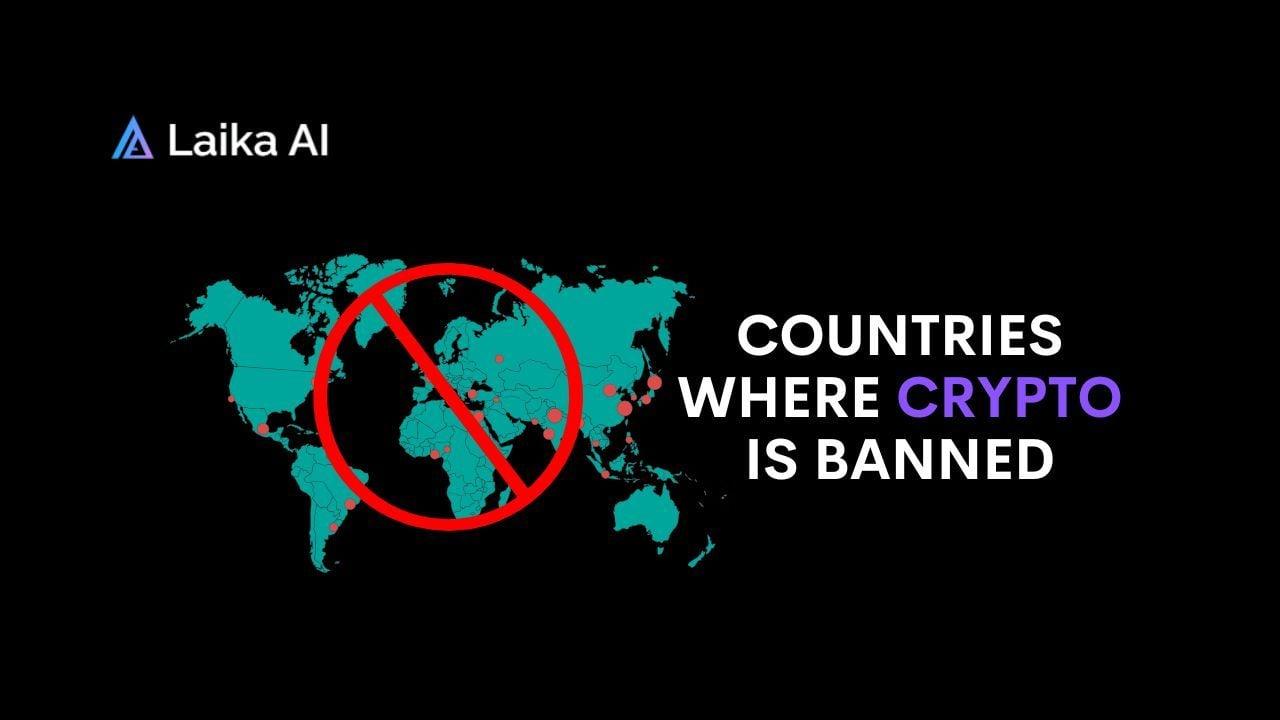
Ten countries maintain complete cryptocurrency bans in 2026 making ownership, trading, and mining of Bitcoin and all digital assets illegal with criminal penalties including fines, asset seizures, and imprisonment. China leads with the strictest enforcement shutting down all mining operations in 2021 while Bangladesh, Egypt, Nepal, Morocco, Afghanistan, Algeria, Bolivia, Tunisia, and Iraq impose total prohibitions on cryptocurrency activity.
Over one billion people live under these restrictions creating a stark divide as most of the world moves toward digital finance. This guide provides the complete list of banned countries, enforcement methods, legal penalties, why governments impose these restrictions, and what happens if you get caught with crypto in prohibited jurisdictions.
Complete Ban Countries 2026 Verified List
Additional countries with severe restrictions but not complete bans include North Macedonia (only European country with explicit ban though regulatory changes expected), Qatar (trading illegal but ownership unclear), Turkey (banned as payment method but trading allowed), India (30 percent tax making it nearly prohibitive), Nigeria (banking ban though ownership legal), and Russia (payment ban but holding and trading permitted).
Level 3 Complete Prohibition Countries Detailed Analysis
Complete prohibition means everything related to cryptocurrency is illegal including owning it, trading it, mining it, and using it for payments. Violations result in criminal charges not civil penalties.
China The Strictest Global Ban
China implemented the world's most comprehensive cryptocurrency ban in September 2021 prohibiting all cryptocurrency transactions and mining operations nationwide.
What the Ban Covers
All cryptocurrency trading is illegal. Financial institutions cannot provide services related to crypto. All mining operations are prohibited regardless of scale. Overseas exchanges serving Chinese citizens face prosecution. Banks cannot process any crypto related transactions. Payment processors must block crypto purchases.
Enforcement Methods
The Great Firewall blocks access to major cryptocurrency exchanges including Binance, Coinbase, Kraken, and all decentralized exchanges. Internet service providers monitor VPN usage flagging accounts attempting to bypass restrictions. Banks freeze accounts suspected of crypto activity based on transaction patterns. Public security bureaus arrest individuals running underground exchanges or large scale mining operations.
Since 2021, China has seized thousands of mining rigs, shut down hundreds of underground exchanges, and arrested dozens of operators. Asset forfeitures totaling billions of dollars have occurred.
Why China Banned Crypto
Cryptocurrency mining consumed excessive electricity straining national power grids especially during peak demand periods. The government wanted complete control over digital payments, launching e-CNY central bank digital currency instead. Capital flight prevention became critical as wealthy citizens used crypto to move money offshore bypassing currency controls. Environmental concerns arose from coal powered mining operations contradicting carbon neutrality goals.
The e-CNY provides all benefits of digital payments while maintaining full government surveillance and control over every transaction.
Bangladesh Strict Enforcement Since 2014
Bangladesh Bank declared all cryptocurrency transactions illegal in 2014 with enforcement intensifying through 2020s under anti money laundering laws.
Legal Penalties
Violators face fines up to 1 million taka approximately $12,000 USD. Prison sentences reach 12 years for serious violations. Asset seizure occurs for any detected cryptocurrency holdings. Banks close accounts showing crypto related transactions. Law enforcement arrests individuals operating exchanges or promoting crypto services.
The Irony of Mobile Payments
Bangladesh has one of Asia's fastest growing mobile payment markets. bKash and Nagad process billions of dollars in digital transactions monthly. Citizens use mobile money for everything from utility bills to ecommerce purchases.
Yet cryptocurrency remains completely illegal. The government embraces centralized digital payments while rejecting decentralized alternatives. This shows the ban targets control not technology.
Underground Markets
Despite strict enforcement, underground crypto trading thrives. People trade through WhatsApp groups, Telegram channels, and cash meetups. Peer to peer transactions happen in person using physical currency to buy and sell Bitcoin. However participants have zero legal protection. If scammed or arrested, no recourse exists.
Egypt Practical Ban Through Financial Restrictions
Egypt's Central Bank prohibits banks and financial institutions from dealing in cryptocurrency while Islamic authorities issue religious rulings declaring Bitcoin transactions haram forbidden under Islamic law.
How the Ban Works
Banks cannot provide crypto exchange services. Payment providers cannot offer crypto wallets. Financial institutions cannot facilitate crypto purchases. Islamic scholars issue fatwas against crypto creating cultural pressure beyond legal restrictions.
Cultural and Religious Dimensions
Egypt's Grand Mufti declared cryptocurrency impermissible under Islamic law in 2018 citing excessive uncertainty and gambling characteristics. This religious ruling carries weight beyond government regulation influencing public opinion and individual decisions.
Many Egyptians avoid crypto not from fear of legal penalties but from religious conviction following scholarly guidance.
Informal Trading Continues
Despite restrictions, peer to peer trading occurs through trusted networks. Egyptians living abroad send Bitcoin to family members who convert through underground brokers. These transactions happen entirely outside the banking system avoiding detection.
Nepal Consistent Enforcement Through Arrests
Nepal Rastra Bank declared cryptocurrency illegal in 2017 with consistent enforcement through arrests indicating a firm stance against digital assets.
Arrest Record
Police have arrested dozens of individuals for crypto related activities since 2017. Charges typically involve operating unlicensed exchanges, promoting cryptocurrency schemes, or large scale trading operations. Sentences range from fines to multi year imprisonment depending on violation severity.
Why Nepal Maintains Ban
The government cites capital flight prevention as primary concern. Nepal's economy depends heavily on remittances from workers abroad. Officials fear cryptocurrency could bypass formal remittance channels reducing foreign currency inflows and tax revenue.
Banking system protection represents another priority. Nepal's financial sector remains underdeveloped. Regulators worry cryptocurrency could destabilize banks and undermine monetary policy control.
Future Outlook
Unlike some countries reconsidering positions, Nepal shows no signs of relaxing restrictions. Arrests continue regularly demonstrating ongoing commitment to enforcement.
Level 2 Severe Restrictions Without Complete Bans
Several countries impose banking prohibitions, payment restrictions, or punitive taxation making crypto use technically legal but practically impossible.
India 30 Percent Tax Creates De Facto Ban
India did not ban cryptocurrency but imposed a 30 percent tax on all gains with no deduction allowed for losses creating mathematical impossibility of profitable trading for most users.
How the Tax Works
Every crypto transaction triggers 30 percent tax on any gain. Losses cannot be deducted against gains. If you buy Bitcoin at $40,000, sell at $50,000, you pay 30 percent tax on $10,000 gain equaling $3,000. If the next trade loses $5,000, you cannot deduct that loss. You still owe the $3,000 from the first trade.
Frequent traders face effective tax rates exceeding 100 percent of actual net gains. Someone making ten trades with five winners and five losers paying 30 percent tax on winners but getting zero deduction for losers ends up paying more in taxes than total net profit.
Additional Restrictions
One percent tax deduction at source TDS applies to every transaction. Gifting crypto creates tax liability for recipients. Using crypto for payments triggers both 30 percent capital gains tax and 18 percent goods and services tax GST.
Impact on Adoption
India previously ranked first globally for cryptocurrency adoption in 2024. After 30 percent tax implementation in 2022, trading volumes collapsed by 90 percent. Major exchanges like WazirX and CoinDCX saw user activity plummet. Many Indians moved funds to offshore exchanges or stopped trading entirely.
Nigeria Banking Ban Forces Underground Trading
Nigeria's Central Bank ordered all banks in February 2021 to stop facilitating cryptocurrency transactions. No deposits. No withdrawals. No transfers.
How the Ban Operates
Banks cannot accept deposits from crypto exchanges. Withdrawals to exchanges are blocked. Wire transfers mentioning cryptocurrency get flagged. Accounts showing crypto patterns face freezing. Some users report being locked out of their own money for weeks during investigations.
The Underground Response
Nigeria has over 30 million crypto users, one of Africa's largest user bases. Despite banking ban, trading continues through peer to peer apps, Telegram groups, and cash transactions. People meet in person exchanging cash for Bitcoin. Others use foreign bank accounts or fintech apps to move money.
The ban made crypto use harder, slower, and riskier but did not stop it. Underground markets grew stronger as formal channels closed.
Government Justification
Officials cite fraud prevention and money laundering concerns. However many Nigerians view cryptocurrency as protection against naira devaluation and inflation exceeding 20 percent annually. The government wants to control capital flows while citizens want to preserve wealth.
Russia Payment Ban While Trading Remains Legal
Russia presents an interesting contradiction banning cryptocurrency as payment method while allowing holding and trading.
What is Legal vs Illegal
Owning cryptocurrency is completely legal. Trading on exchanges is permitted. Mining is allowed in most regions. However, using crypto to pay for goods or services is illegal. Businesses cannot accept Bitcoin for products. Individuals cannot pay rent or bills with crypto.
Tax and Reporting Requirements
Crypto holdings must be reported to tax authorities. Capital gains face standard income tax rates. Mining operations require registration and licensing. Foreign exchange regulations apply to large crypto transactions.
Why This Hybrid Approach
Russia wants to benefit from blockchain technology and crypto mining revenue while maintaining ruble dominance for domestic commerce. Allowing trading generates tax revenue. Permitting mining creates jobs and utilizes excess energy capacity. But restricting payments prevents ruble displacement.
Why Governments Ban Cryptocurrency
The stated reasons for bans fall into five categories though underlying motivations often differ from public justifications.
Reason 1 Capital Flight Prevention
Countries with weak currencies or capital controls fear cryptocurrency enables citizens to move wealth offshore bypassing restrictions.
China restricts how much money citizens can send abroad. Cryptocurrency provides a workaround converting yuan to Bitcoin then transferring anywhere globally. This undermines currency controls threatening foreign exchange reserves.
Nepal depends on worker remittances through official channels generating foreign currency and tax revenue. Cryptocurrency could disrupt this system, reducing government income.
Reason 2 Monetary Policy Control
Central banks control money supply, interest rates, and inflation through monetary policy. Cryptocurrency exists outside this system.
If significant percentage of population holds wealth in Bitcoin rather than local currency, central bank loses influence over economic conditions. Interest rate changes affect fewer people. Currency devaluation fails to stimulate exports if businesses price in crypto.
Reason 3 Money Laundering and Crime Prevention
Cryptocurrency's pseudonymous nature facilitates illegal activities including money laundering, drug trafficking, terrorism financing, and tax evasion.
This concern has legitimacy. Criminals do use crypto for illicit purposes. However cash and offshore banking also enable crime yet remain legal. The difference is government control.
Reason 4 Consumer Protection
Cryptocurrency markets are volatile and risky. Scams are common. Many retail investors lose money through poor timing, fraud, or misunderstanding.
Some governments genuinely believe protecting citizens from crypto losses justifies bans. However this paternalistic approach denies individual choice and financial freedom.
Reason 5 The Real Reason Control
Beneath stated justifications lies a fundamental issue. Cryptocurrency removes government control over money.
When people use Bitcoin, governments cannot monitor transactions, cannot prevent transfers, cannot seize assets easily, cannot devalue holdings through inflation, cannot impose capital controls, and cannot collect taxes automatically.
This loss of control threatens state power more than any economic risk. Authoritarian regimes ban crypto not to protect citizens but to maintain dominance.
What Happens If You Get Caught
Penalties vary by country and violation severity but consequences are real not theoretical.
Asset Seizure
Authorities can confiscate cryptocurrency wallets and any devices containing private keys. In China, police seize mining equipment and crypto holdings during raids. Bangladesh authorities freeze bank accounts and confiscate phones showing crypto apps.
Since cryptocurrency is not legally recognized as property in banned countries, you have no right to reclaim seized assets. Private keys provide no protection if government has physical access to devices.
Fines and Financial Penalties
Bangladesh imposes fines up to $12,000 for cryptocurrency violations. Egypt issues fines varying by offense severity. Algeria prosecutes under financial crimes statutes carrying substantial monetary penalties.
These fines often exceed the value of crypto holdings for retail users creating disproportionate punishment.
Imprisonment
Serious violations result in prison time. Bangladesh allows sentences up to 12 years for crypto crimes. China arrests mining operators and underground exchange runners. Nepal has convicted multiple individuals to multi year sentences.
Permanent Criminal Record
Cryptocurrency convictions create permanent criminal records affecting future employment, travel, and financial opportunities. In countries with strict enforcement, the stigma of crypto conviction equals other financial crimes.
Loss Without Recourse
If scammed or defrauded in an underground crypto transaction, you cannot report to police or seek legal remedy. Participating in illegal activity voids any legal protection. Criminals know this, making crypto users in banned countries prime targets.
How Enforcement Actually Works
Bans sound definitive but enforcement varies dramatically across countries.
Banking System Monitoring
Banks represent primary enforcement mechanisms. Financial institutions monitor transaction patterns flagging crypto related activity. Transfers to known exchange addresses trigger alerts. Repeated small transactions matching peer to peer trading patterns draw scrutiny.
Account freezes happen automatically when algorithms detect suspicious activity. Users must prove transactions were legitimate, often impossible when dealing with crypto.
Internet Blocking and Surveillance
China blocks cryptocurrency exchanges through the Great Firewall preventing normal internet access. VPN usage gets monitored with repeated attempts flagged for investigation. Deep packet inspection identifies crypto traffic even through encrypted connections.
Other countries lack China's technical capability but still monitor internet activity through service provider cooperation.
Selective Enforcement
Many countries ban crypto on paper but rarely prosecute except for large operations. Small retail users typically avoid attention unless making obvious mistakes like large bank transfers mentioning Bitcoin.
However selective enforcement creates uncertainty. You might trade safely for years then suddenly face prosecution if the government decides to crack down.
Underground Markets Thrive
Every country with a crypto ban has underground trading networks. Peer to peer platforms, Telegram groups, WhatsApp communities, and in person cash exchanges continue operating.
Enforcement focuses on large visible operations. Small private transactions often escape detection. However participants assume all risks with zero legal protection.
Countries Reconsidering Crypto Bans
Not all bans remain permanent. Some countries are softening positions.
Bolivia Dramatic Policy Reversal
Bolivia maintained a cryptocurrency ban from 2014 through 2024. However, the new government signals potential reversal by partnering with El Salvador on blockchain initiatives.
This shows bans can change with political shifts. What one administration prohibits another may embrace.
North Macedonia Regulatory Framework Expected
North Macedonia is currently the only European country where cryptocurrency is explicitly illegal. However, the new government elected in 2024 is considering regulation to attract foreign investment.
Regulatory drafts expected in 2025 or 2026 may legalize crypto under a licensed framework similar to other European nations.
Ecuador Partial Relaxation
Ecuador banned cryptocurrency in 2014 declaring Bitcoin illegal. However, the Central Bank of Ecuador eased restrictions in 2018 allowing purchase and sale while maintaining a ban on using crypto as payment method.
This hybrid approach permits speculation and investment while preventing currency displacement.
Frequently Asked Questions
Can you use VPN to trade crypto in banned countries
Technically yes, but legally no and it carries serious risks. Exchanges like Binance and Kraken block traffic from banned countries. Using VPN to bypass these blocks violates exchange terms of service risking account freezing and fund loss. China monitors VPN usage flagging repeated attempts for investigation. If caught, you face same legal penalties as direct violations plus potential fraud charges for circumvention.
What are the penalties for owning Bitcoin in banned countries
Penalties vary by country but include fines up to $12,000 in Bangladesh, imprisonment up to 12 years for serious violations, asset seizure with no legal recourse to reclaim funds, bank account freezing, and permanent criminal records. In China, authorities seize mining equipment and cryptocurrency holdings during enforcement raids. Egypt and Algeria prosecute under financial crimes statutes.
Why did China ban cryptocurrency
China banned cryptocurrency for multiple reasons including excessive electricity consumption from mining straining power grids, capital flight prevention as wealthy citizens moved money offshore bypassing currency controls, environmental concerns from coal powered mining contradicting carbon neutrality goals, and desire for complete control over digital payments through government issued e-CNY central bank digital currency instead of decentralized alternatives.
Is cryptocurrency legal in India
Cryptocurrency is technically legal in India but faces 30 percent tax on all gains with no deduction allowed for losses plus 1 percent tax deduction at source on every transaction. This creates mathematical impossibility of profitable trading for most users functioning as de facto ban. Trading volumes collapsed 90 percent after tax implementation despite cryptocurrency remaining technically legal.
What happens if police catch you with Bitcoin in Bangladesh
If caught with Bitcoin in Bangladesh, you face arrest under anti money laundering laws, fines up to 1 million taka approximately $12,000 USD, prison sentences up to 12 years for serious violations, immediate asset seizure of all cryptocurrency holdings, bank account closure, and permanent criminal record. Bangladesh Bank actively enforces the ban making violations high risk.
Can governments seize cryptocurrency from banned country citizens
Yes governments can seize cryptocurrency through multiple methods including confiscating devices containing wallet private keys, freezing exchange accounts cooperating with international requests, forcing disclosure of wallet addresses under threat of prosecution, and monitoring blockchain transactions to identify and seize funds. Since crypto is not legally recognized property in banned countries, you have no legal right to reclaim seized assets.
Why does Nigeria ban crypto banking but not ownership
Nigeria banned banks from facilitating cryptocurrency transactions in February 2021 to prevent capital flight and maintain control over naira currency flows while technically not banning ownership to avoid complete prohibition backlash. However, the banking ban makes crypto use extremely difficult, forcing 30 million Nigerian users into underground peer-to-peer trading through Telegram groups and cash exchanges without legal protection.
Will countries remove cryptocurrency bans in future
Some countries are reconsidering bans. Bolivia partnered with El Salvador on blockchain initiatives after maintaining a ban since 2014. North Macedonia expects a regulatory framework in 2025 or 2026 potentially legalizing crypto. Ecuador eased restrictions in 2018. However countries like China, Bangladesh, and Nepal show no signs of policy changes maintaining strict enforcement. Political shifts can change bans but authoritarian regimes typically maintain restrictions.