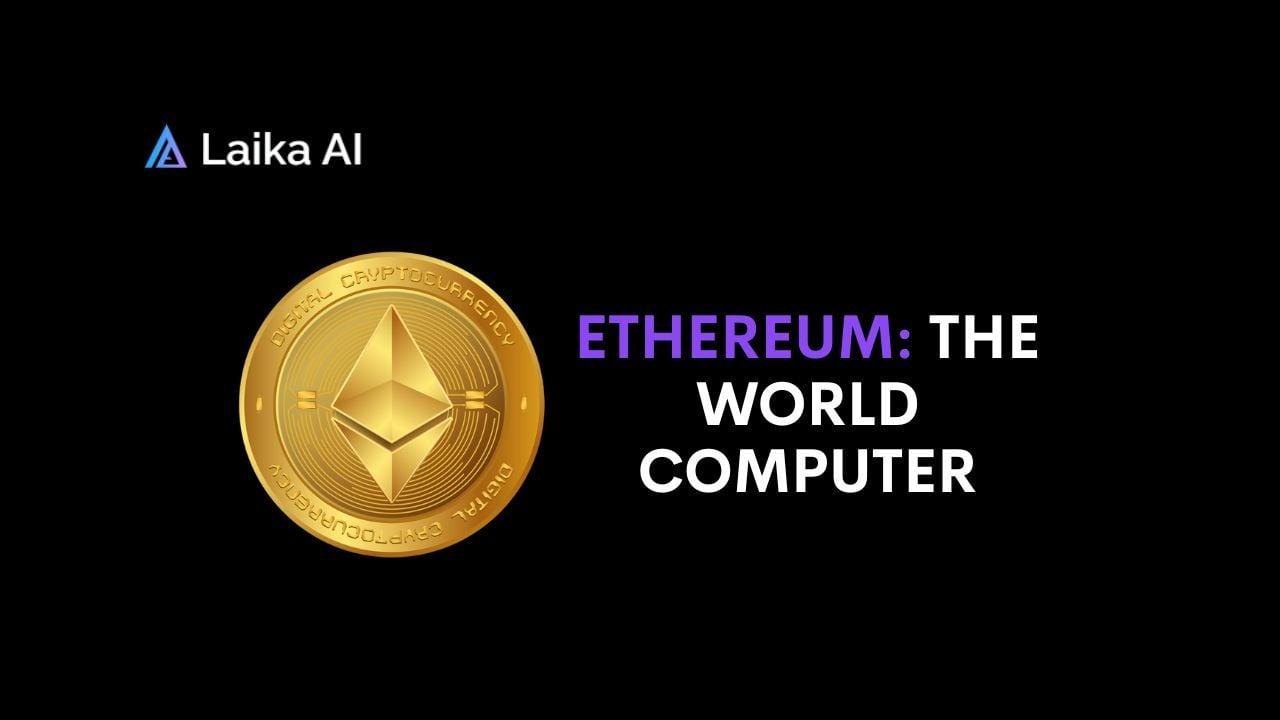
Ethereum has moved far beyond its origins as a simple cryptocurrency. In 2026, it functions as the primary settlement layer for the global digital economy. Following the successful rollout of the Pectra upgrade and the rapid expansion of its Layer 2 ecosystem, Ethereum has solidified its role as the decentralized World Computer.
While newer so-called Ethereum killers have attempted to compete through higher base-layer speeds, Ethereum’s emphasis on security, decentralization, and a modular roadmap has made it the preferred network for institutional capital, mission-critical applications, and large-scale financial infrastructure.
At its core, Ethereum is where decentralized finance, tokenized real-world assets, decentralized identity, and programmable money converge.
What Is Ethereum (ETH)?
Ethereum is an open-source, blockchain-based platform that allows developers to build and deploy smart contracts and decentralized applications. Unlike Bitcoin, which primarily functions as a store of value, Ethereum is a programmable network.
Its native asset, Ether (ETH), is used to pay transaction fees, secure the network through staking, and act as the economic fuel for applications built on top of it. ETH is not just money. It is also a productive asset that earns yield and a consumable commodity required for computation.
Disclaimer: This article is provided for informational purposes only and should not be considered financial or investment advice. Always do your own research before engaging with cryptocurrencies or digital assets.
Ethereum’s Modular Evolution
Ethereum is no longer a monolithic blockchain. By 2026, it has fully embraced a modular architecture that separates security, execution, and scalability.
The Beacon Chain (Layer 1)
Ethereum’s base layer serves as the high-security settlement and data availability layer. It prioritizes decentralization and censorship resistance, ensuring that final settlement remains globally verifiable and neutral.
Layer 2 Scaling Solutions
Most transaction execution now occurs on Layer 2 networks such as Arbitrum, Optimism, Base, and multiple zero-knowledge rollups.
These networks deliver near-instant transaction finality with fees often below $0.05, making Ethereum usable at internet scale without sacrificing security.
Restaking and the Universal Security Layer
Through protocols such as EigenLayer, ETH holders can extend Ethereum’s security to other services including oracles, bridges, and data availability layers. This positions ETH as a universal security asset that underpins multiple blockchain systems simultaneously.
Market Performance and Financials
Ethereum’s financial identity has evolved. Institutions increasingly view ETH as a triple-point asset that functions simultaneously as a store of value, a yield-bearing capital asset, and a consumable commodity.
| Metric | Status |
|---|---|
| Current Price | $2,973 USD |
| Market Capitalization | $358 Billion |
| Circulating Supply | 120.3 Million ETH |
| Annualized Staking Yield | 3.2 percent to 4.5 percent |
| All-Time High | $4,891.70 (Nov 2021) |
Explore Ethereum's Live Pricing and other Key financials here
Advantages, Risks, and Challenges
Understanding Ethereum’s long-term outlook requires balancing its powerful network effects with the realities of a multi-chain future.
Advantages
Ethereum has unmatched ecosystem depth, hosting more developers, liquidity, and battle-tested applications than any other smart-contract platform. Total value locked across Ethereum and its Layer 2s exceeds that of all competing ecosystems combined.
Since the EIP-1559 upgrade, Ethereum has operated a deflationary fee burn mechanism. During periods of high network activity, more ETH is burned than issued, reducing total supply over time.
Ethereum is also institutionally validated. The approval of spot ETH ETFs in 2024 opened access for pension funds, endowments, and wealth managers, cementing ETH’s role in traditional portfolios.
Finally, Ethereum’s transition to Proof of Stake reduced energy consumption by more than 99.9 percent, aligning the network with global ESG standards.
Risks
Ethereum’s shift to Layer 2s has fragmented liquidity and user experience. Capital is spread across multiple rollups, increasing complexity for new users and developers.
Smart contract risk remains significant. While Ethereum’s base layer is highly secure, vulnerabilities in applications built on top of it can still result in major losses and temporary market stress.
Staking centralization is another concern. Large portions of staked ETH are controlled by centralized exchanges and liquid staking providers. Regulatory pressure on these entities could challenge censorship resistance.
Challenges
As more activity moves to Layer 2s, Ethereum must ensure that Layer 1 continues to capture value through data availability fees. Maintaining alignment between L2 success and ETH holder value is a central challenge for 2026.
User experience also remains a bottleneck. Managing wallets, bridging assets, and securing private keys is still too complex for mainstream adoption. Closing this usability gap is essential to reaching one billion users.
Ethereum Price Prediction 2026 to 2030
Ethereum’s valuation is increasingly driven by demand for block space, staking yield, and institutional usage rather than retail speculation alone.
2026: Institutional Absorption
As enterprises adopt Ethereum for treasury management, settlement, and supply-chain infrastructure, long-term selling pressure is expected to be absorbed.
Target Range: $5,200 to $6,500Key Catalyst: MaxEB implementation, allowing validators to stake larger balances and improving capital efficiency.
2027 to 2028: The RWA Expansion
By this period, significant portions of real estate, bonds, and private equity are projected to be tokenized on Ethereum Layer 2s.
Target Range: $8,000 to $11,500Key Catalyst: Integration with SWIFT and widespread adoption of programmable money.
2030: Long-Term Outlook
Conservative Case: $15,000Bull Case: $25,000 or higher
This assumes Ethereum captures a meaningful share of global financial settlement volume. Under such conditions, ETH’s deflationary mechanics would significantly amplify scarcity.
The Bottom Line
Ethereum is no longer an experiment. It is the backbone of Web3 and an increasingly critical component of global financial infrastructure.
Despite competition from faster but more centralized chains, Ethereum’s commitment to decentralization, security, and modular scalability has created a moat that is extremely difficult to replicate. For long-term participants, ETH is not merely a speculative asset. It represents an equity-like stake in the future infrastructure of the internet and finance.
The conclusion is straightforward. Ethereum remains the only decentralized network that combines institutional legitimacy with scalable global reach.
Frequently Asked Questions
Is Ethereum still expensive to use?
Mainnet fees can rise during congestion, but most users transact on Layer 2 networks where fees are typically under $0.05.
What happened after The Merge?
The Merge transitioned Ethereum to Proof of Stake in 2022. The current roadmap phase focuses on scalability, resilience, and developer experience.
Can ETH be lost through staking?
Staking risk is low when using reputable providers or properly managed validators. Slashing can occur in rare cases of malicious behavior or prolonged downtime.
How is Ethereum different from Bitcoin?
Bitcoin primarily functions as digital gold. Ethereum functions as a programmable platform for financial and digital infrastructure. Both serve complementary roles.
Where should ETH be stored?
For long-term storage, hardware wallets such as Ledger or Trezor are recommended. For daily use on Layer 2s, smart-contract wallets and mobile wallets are common.
Disclaimer: This article is provided for informational purposes only and should not be considered financial or investment advice. Always do your own research before engaging with cryptocurrencies or digital assets.