Bitcoin Stable Near $78,000 While Ethereum Finalizes 25 Millionth Block Ahead of Glamsterdam
 Crypto market


Last Updated
May 6, 2026
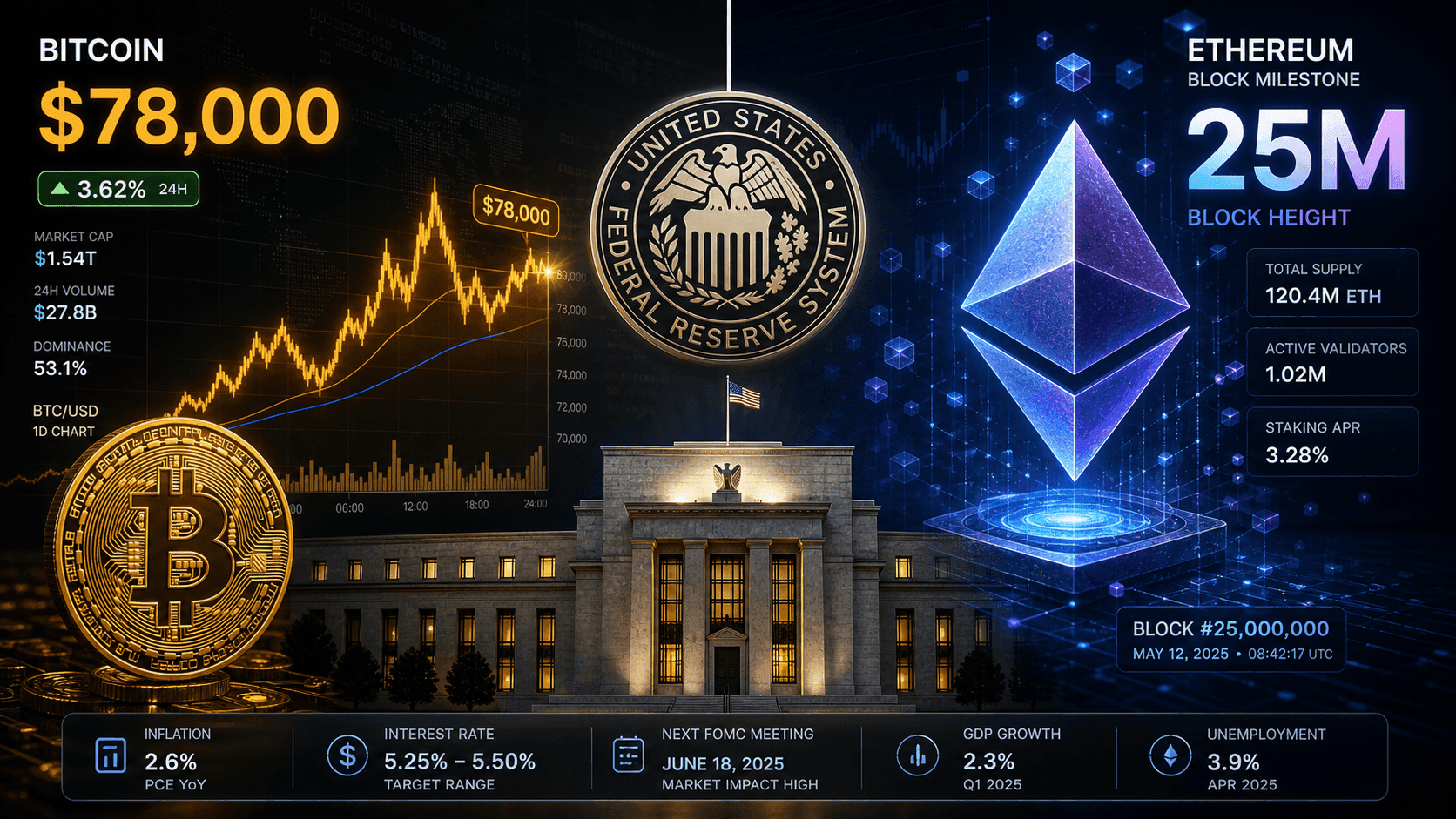
Bitcoin maintained price levels near $78,000 this week, showing resilience amid mixed signals from traditional markets. The Crypto Fear & Greed Index remains neutral, hovering between 46 and 47, indicating traders are neither overly fearful nor greedy. The balance reflects cautious optimism as investors weigh crypto fundamentals against macroeconomic uncertainty.
Ethereum marked a major technical achievement by finalizing its 25 millionth block. The milestone underscores the network’s reliability and long-term growth since its inception. Developers and users are now focused on the upcoming Glamsterdam upgrade, which is set to triple gas limits. The change is designed to boost scalability and lower congestion, potentially drawing more developers and transactions to the Ethereum ecosystem.
Ethereum Trails Bitcoin Despite BlackRock Buy
Despite the network progress, Ethereum continues to face downside risks. Price performance has lagged Bitcoin in recent weeks, raising concerns among traders about relative strength. Institutional activity remains a bright spot. BlackRock recently purchased $49 million worth of Ethereum, signaling continued interest from large asset managers.
For investors tracking institutional exposure, BlackRock’s Bitcoin holdings remain a key benchmark for market sentiment alongside its ETH positions.
Still, market participants say adoption of the Glamsterdam upgrade will be key. If successful, the upgrade could improve throughput and help Ethereum regain momentum. If delays or issues emerge, sentiment may weaken further against Bitcoin.
Fed Rate Cuts May Not Arrive Until 2027
Broader economic policy is adding pressure to crypto markets. Morgan Stanley analysts now expect interest rate cuts to be delayed until 2027. The forecast cites persistent inflation and shifting guidance from the Federal Reserve.
Comments (0)
No comments yet. Be the first!
 Top Stories