Putin and Zelensky Announce Competing Two-Day Ceasefires as War Grinds On
 World news


Last Updated
May 6, 2026
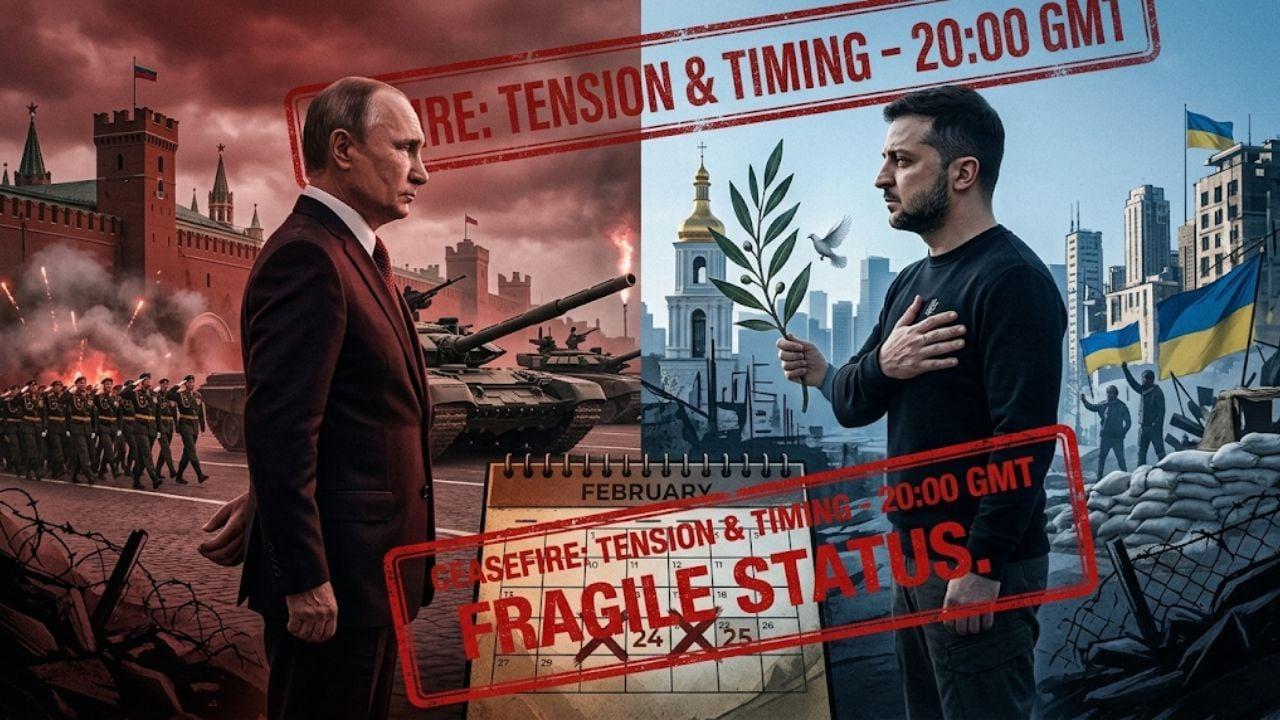
In a surprising development, Russian President Vladimir Putin and Ukrainian President Volodymyr Zelensky have both unilaterally declared conflicting two-day ceasefires. The announcements arrive amid ongoing hostilities and have triggered debate about negotiation prospects and the credibility of temporary truces in the Ukraine war.
Each leader set separate terms for the pause in fighting. The timing and conditions have prompted analysts to question whether the moves are a genuine de-escalation or tactical positioning.
Putin’s Ceasefire Timed With Moscow Military Parade
Putin’s declaration is strategically aligned with a major military parade scheduled in Moscow. The event is intended to project Russian military strength domestically and abroad.
Some analysts view the ceasefire call as an effort to present an image of control and peace during the high-profile display. However, skepticism is widespread. Russia has a documented history of violating similar agreements, and observers doubt Moscow’s willingness to halt operations fully.
The concern is that the announcement serves optics more than substance. Without verifiable monitoring, a unilateral pause could be used to regroup forces rather than pursue diplomacy.
Zelensky Makes Truce Conditional on Russian Compliance
Zelensky’s declaration takes a different approach. He stated that Ukraine would honor a ceasefire only if Russia adheres to its own terms. The conditional stance signals caution and reflects Kyiv’s broader strategy to use any pause as leverage for negotiations.
By placing the burden on Moscow, Zelensky aims to test Russian intent. If Russia breaks the truce, Ukraine could claim the moral high ground internationally. The move is seen by some commentators as a calculated diplomatic step.
Analysts See Tactical Maneuvering on Both Sides
The conflicting declarations have generated significant commentary. Many experts interpret the announcements as tactical. For Putin, the timing supports domestic messaging around the parade. For Zelensky, the conditional offer pressures Russia to show good faith.
Comments (0)
No comments yet. Be the first!
 Top Stories