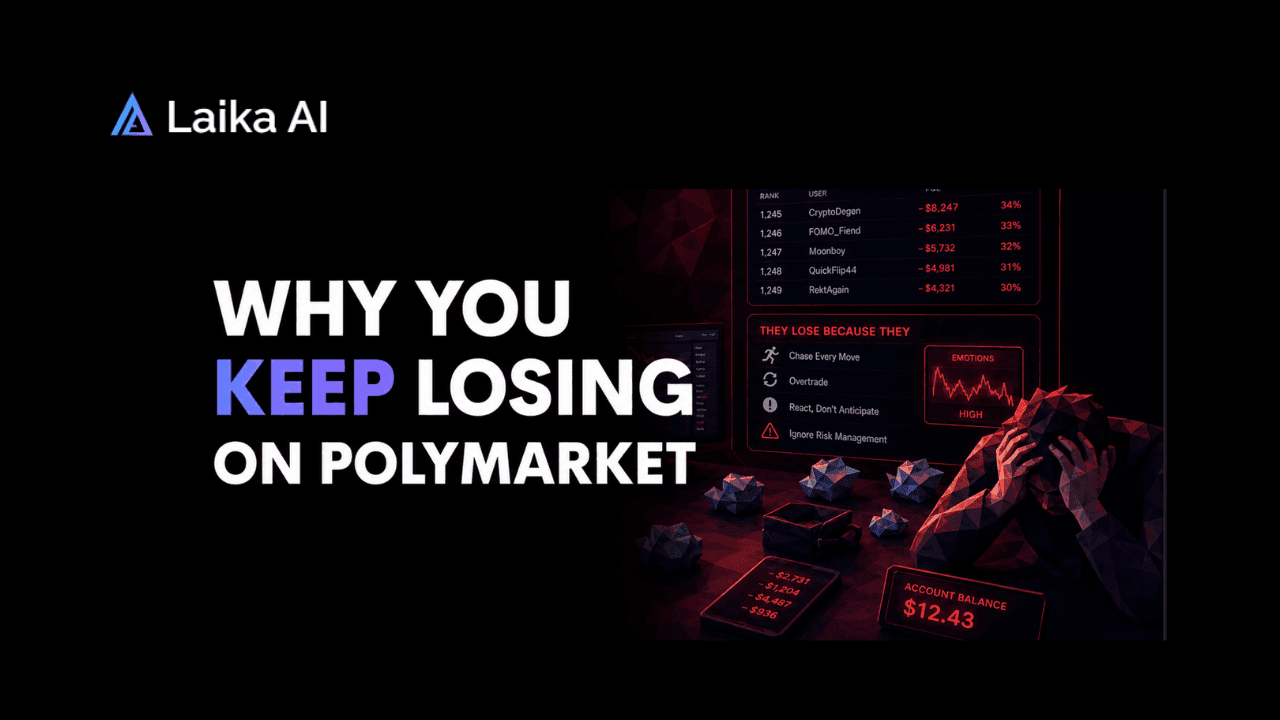
You did the research. You read the news. You were confident. And then the market moved against you anyway.
This happens to most Polymarket traders far more often than it should. And the reason is almost never a lack of information. It is how the human brain processes uncertainty, probability, and loss. Behavioral science has a name for every mistake you are making, and once you see them clearly, you cannot unsee them.
This article breaks down the psychological patterns that drain prediction market accounts and explains exactly how structured AI analysis can interrupt those patterns before they cost you money.
Your Brain Is Not Built for Probability
Prediction markets require you to think in probabilities. Not outcomes. Not narratives. Probabilities. Most people cannot do this naturally, and that gap is where losses live.
The research behind this is not speculative. Daniel Kahneman and Amos Tversky documented it across decades of experiments. Human beings systematically overweight small probabilities and underweight large ones. They anchor on the first number they see. They change their assessments based on how a question is framed rather than on the underlying data.
Polymarket is essentially a machine designed to extract money from people with these tendencies and transfer it to the small percentage of traders who have either trained themselves out of them or built systems that compensate for them.
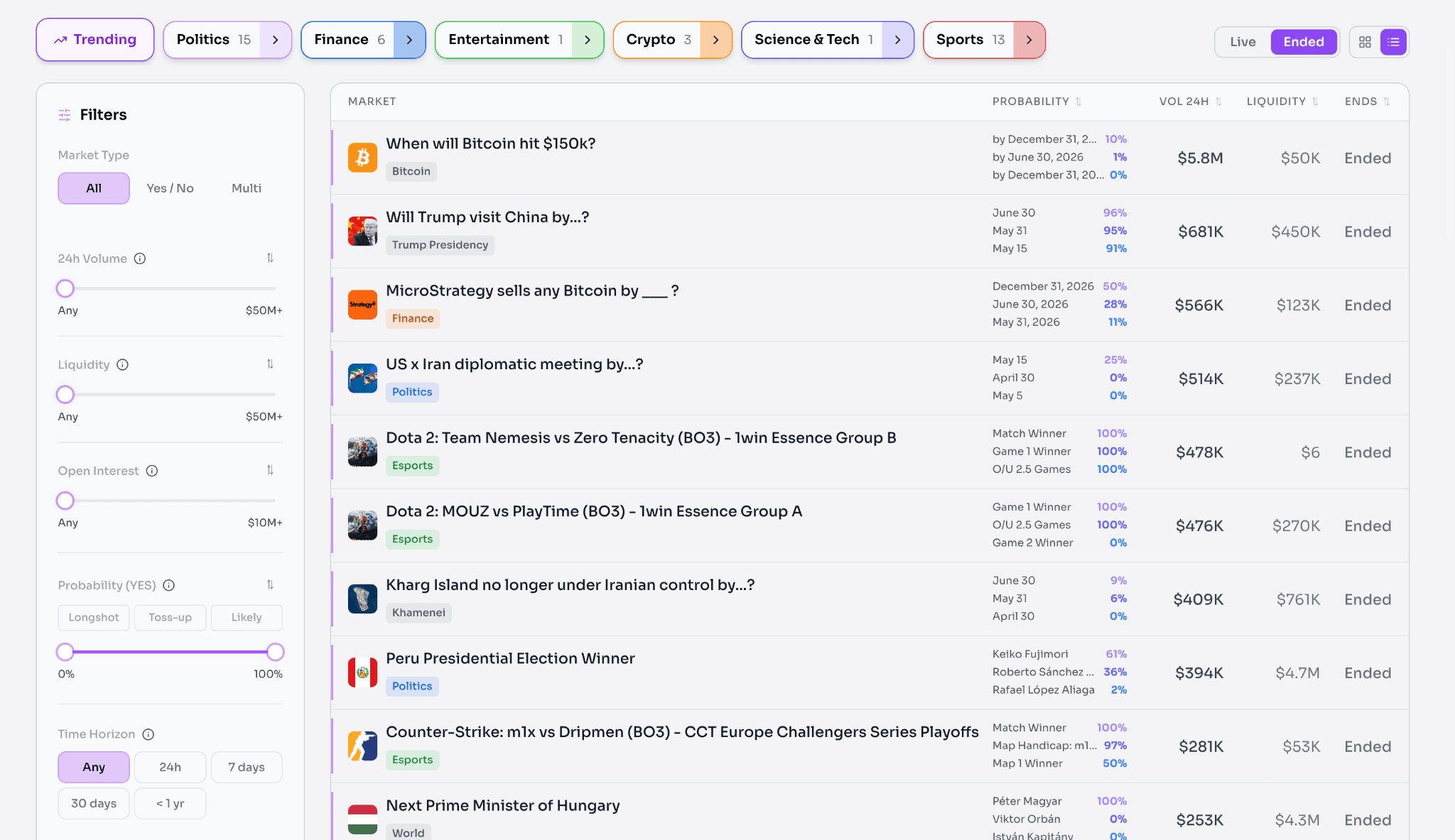
The Six Behavioral Traps Eating Your Edge
Overconfidence in Your Own Read
The most consistent finding in behavioral finance research is that people overestimate the accuracy of their own predictions. On Polymarket, this shows up as buying YES contracts at 75 cents when the true probability is closer to 60 cents, because the narrative in your head feels more certain than the base rate supports.
Overconfidence is particularly dangerous in political and macroeconomic markets, where strong opinions are emotionally rewarding to hold. The more you care about an outcome, the less calibrated your probability assessment tends to be.
Recency Bias and the Last-Headline Effect
When a major news event breaks, prediction market prices move fast. Most retail traders respond to the headline rather than to the actual shift in underlying probability. They buy into markets already pricing in the news, paying for information the smart money already acted on.
Recency bias makes the most recent piece of information feel like the most important piece of information. On Polymarket, that is the mechanism behind most losing trades made in the first hour after a breaking story.
Loss Aversion and the Trap of Holding Losers
Kahneman established that losses feel psychologically approximately twice as painful as equivalent gains feel good. On Polymarket, this produces a specific and expensive behavior: traders hold losing positions far longer than they should because selling locks in the loss emotionally, even when the rational expected value calculation says exit immediately.
You will see this in yourself if you track your trades honestly. The positions you held the longest are almost certainly the ones with the worst outcomes.
Narrative Substitution
Humans are story-processing machines, not probability-calculating machines. When evaluating a Polymarket contract, the brain tends to replace the question "what is the probability of this outcome" with the question "does this story feel true." These are completely different questions with completely different answers.
A vivid, coherent narrative about why something will happen makes the probability feel higher than it is. A fragmented, counterintuitive case for an outcome makes the probability feel lower than it is. Skilled traders exploit this constantly by fading retail sentiment on narrative-heavy markets.
Anchoring to Opening Prices
The first price you see on a contract shapes every subsequent assessment you make. If you see a market open at 40 cents and watch it fall to 25 cents, your brain frames 25 cents as cheap relative to 40, even if the true fair value is 15 cents.
Anchoring explains why traders consistently buy falling markets too early and sell recovering markets too late. The reference point is the previous price, not the actual probability of the outcome.
Herding and the Wisdom-of-Crowds Illusion
Polymarket markets are often described as aggregating collective intelligence. This is partly true. But it is also true that prediction market prices can be driven by cascades of similar reasoning, especially in markets dominated by users following the same news sources and interpreting events through the same frameworks.
When everyone on Twitter is saying the same thing about a political event, Polymarket prices often reflect that consensus rather than true underlying probability. Trading against obvious crowd narratives has historically been one of the highest-edge strategies available on the platform, and most retail traders do the exact opposite.
How AI Analysis Changes the Equation
The behavioral traps above have one thing in common: they are all distortions introduced by human cognition. The solution is not to become superhuman. It is to introduce a structured, dispassionate layer of analysis between your emotional read and your actual trade.
This is where AI trading tools on Polymarket have a genuine edge, not in predicting outcomes, but in structuring how you process information before you place a position.
Using LAIKA AI as a Prediction Market Thinking Partner
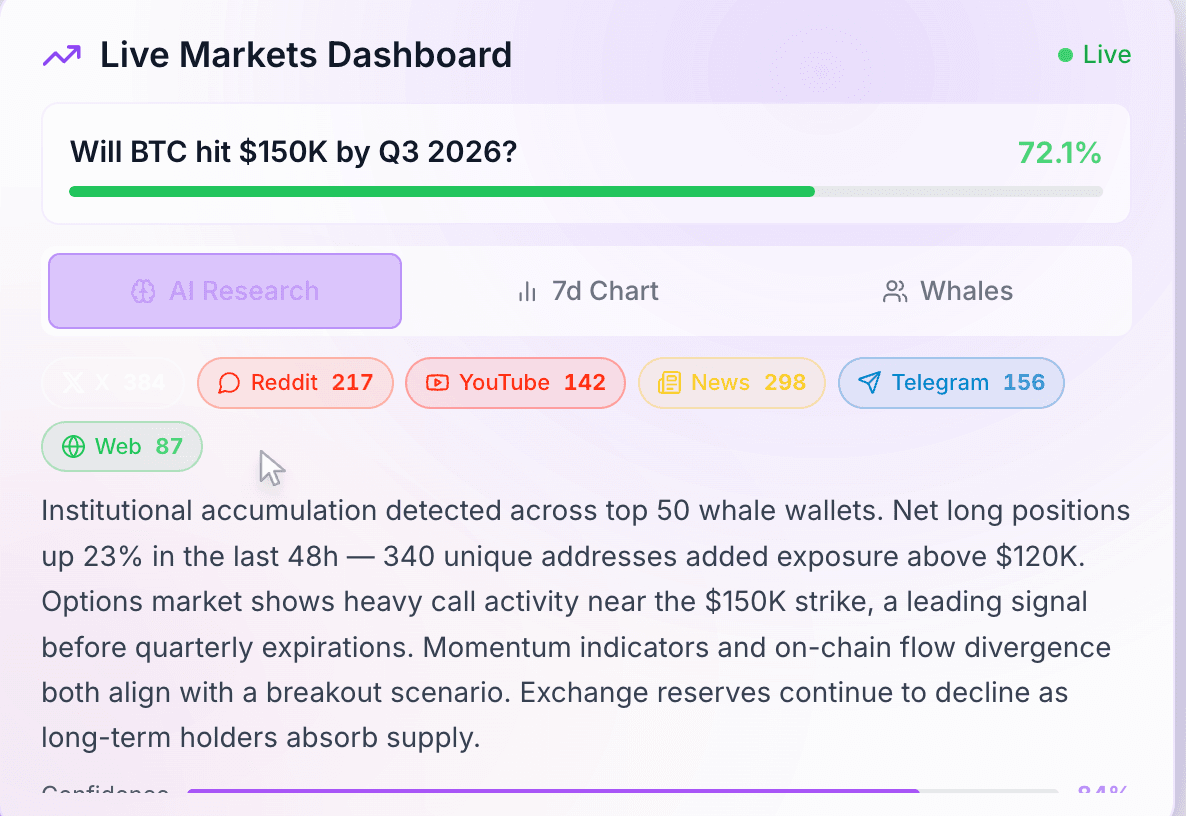
Laika AI uses a large language model with strong capabilities for structured reasoning, probability calibration, and Socratic interrogation of assumptions. Using Claude for prediction market analysis is not about having it tell you what to bet. It is about using it to stress-test your reasoning before you commit capital.
A practical Laika AI prediction market strategy works like this. Before placing any significant position, you describe the market, your thesis, and your confidence level to Laika AI . You then ask it to identify the weakest assumptions in your argument, surface base rates relevant to similar historical events, and construct the strongest possible case against your position.
This process forces you to articulate your reasoning explicitly, which alone is enough to catch overconfident or narrative-driven thinking. Laika AI will consistently surface considerations you overlooked and historical analogues you did not think to check.
What AI Cannot Do
AI analysis removes several of the most common behavioral errors. It does not remove all of them, and it does not give you an information advantage in markets where other participants have better sources.
The ai trading polymarket edge from using structured analysis is calibration, not prediction. You will still be wrong on many trades. The difference is that your win rate on the trades you enter will be higher because you have filtered out the positions driven by overconfidence, narrative, and recency bias rather than genuine edge.
The Calibration Practice That Separates Consistent Winners
Every trader who consistently profits on Polymarket does one thing that most losing traders do not: they track their predictions against outcomes systematically and use that data to update their self-assessment.
If you believe a candidate has a 70% chance of winning and you make ten similar assessments, approximately seven should be correct. If nine are correct, you are underconfident and leaving the edge on the table. If five are correct, you are overconfident and paying too much for your positions.
This calibration loop is unglamorous. It requires record-keeping. It requires honest confrontation with your own track record. Most traders skip it entirely and operate on an unchanged self-assessment no matter what their actual results say.
AI analysis tools can accelerate this process by helping you articulate specific probability estimates before each trade and retrieve them accurately for review afterward.
Frequently Asked Questions
Why do most traders lose on Polymarket?
Most losses come from behavioral biases rather than information deficits. Overconfidence, loss aversion, recency bias, and narrative-driven thinking cause traders to systematically misprice their own probability estimates and make entry and exit decisions driven by emotion rather than expected value.
How can I use Claude for Polymarket trading?
Use Claude as a pre-trade analysis partner. Before placing a position, describe your thesis and ask Claude to identify weak assumptions, surface relevant base rates, and construct the best possible counter-argument. This structured process interrupts overconfident and narrative-driven thinking before it costs you money.
What is the most common behavioral mistake on prediction markets?
Loss aversion produces the most consistently expensive behavior. Traders hold losing positions far longer than rational expected value calculations justify because selling locks in an emotional loss. Setting explicit exit conditions before entering a trade is the most reliable intervention.
Does AI analysis give you an edge on Polymarket?
The edge is calibration, not prediction. AI tools help you identify which trades are based on genuine edge versus behavioral bias, filter out low-quality positions, and structure your reasoning more rigorously. You will still lose individual trades. Your overall win rate on positions you enter should improve.
What is a Polymarket AI analysis workflow?
A structured workflow involves writing your raw thesis before research, running it through a structured AI session to stress-test assumptions and surface base rates, comparing your calibrated probability estimate to the market price, and setting exit conditions before entry. Tools like Laika AI complement this by surfacing on-chain data and smart money signals alongside your AI reasoning layer.
Why does narrative substitution hurt prediction market traders?
The brain naturally replaces the question of probability with the question of whether a story feels true. Vivid, coherent narratives inflate perceived probability. Counterintuitive cases feel lower probability than they are. Sophisticated traders exploit this systematically by fading narrative-heavy retail sentiment, which is why trading with popular narratives on Polymarket tends to be a losing strategy.