There is a specific advantage that exists in prediction markets today that did not exist two years ago.
You can upload a 40-page polling methodology document to Claude, ask it to identify the three factors most likely to bias the results in a Pennsylvania Senate race, and get an accurate analysis in 90 seconds. You can paste breaking news about Fed policy, request probability estimates for rate cut scenarios, and receive structured reasoning based on historical precedent in under two minutes.
The limiting factor in Polymarket trading has always been information processing speed. Markets move when news breaks. The trader who reads the headline, understands the implications, checks the current Polymarket price, and places the trade in four minutes beats the trader who does the same process in eight minutes.
Claude does not make you smarter. It makes you faster. And in markets where price edges close within minutes of new information, speed is the difference between profit and watching the opportunity disappear.
This article covers how professional Polymarket traders actually use Claude AI in 2026, the specific prompts and workflows that generate trading edge, which tasks Claude handles better than human analysis, where Claude fails and creates costly errors, and how to integrate Claude with other tools like Laika Labs for systematic prediction market trading.
What Claude Actually Does for Prediction Market Trading
Claude is not a trading bot. It does not place orders for you. It does not connect to your Polymarket account. It does not automate execution.
What Claude does is process information and generate analysis faster than you can read and think. The trading edge comes from using Claude to handle the research bottleneck while you handle decision-making and execution.
Information processing at scale
A political prediction market depends on understanding polls, demographic trends, early vote data, and campaign dynamics. On election night, dozens of data points are released every hour. County-level results. Exit polls. Needle updates. Vote count percentages by precinct.
A human can process maybe three or four of these per hour while cross-referencing historical patterns and current market prices. Claude can process thirty at the same time.
You paste the raw data. Claude extracts the relevant signals. You get summaries highlighting what matters instead of spending fifteen minutes reading crosstabs that tell you nothing useful.
Document analysis for specialized markets
Economic prediction markets like Fed rate decisions depend on understanding FOMC minutes, Fed governor speeches, and economic data releases. These documents are dense. A Fed minutes release is 8,000 words of central banker language designed to say as little as possible while telegraphing future policy.
Claude reads the 8,000 words in ten seconds, identifies the three sentences that actually matter, and tells you whether the language shifted dovish or hawkish compared to the previous release.
You would have found the same information reading carefully for twenty minutes. Claude found it in ten seconds.
Pattern recognition across historical data
Sports prediction markets benefit from understanding how teams perform in specific contexts. Home vs away. Rest days. Playoff pressure. Injury situations.
You can paste Claude a dataset of 200 previous games matching similar conditions and ask: based on historical performance in these specific contexts, what is the probability range for the outcome?
Claude identifies patterns in minutes that would take you hours to manually sort through spreadsheets.
Real-time news synthesis during breaking events
When major news breaks during market hours, five to ten articles are published within minutes from different sources. Bloomberg. Reuters. Twitter. Local news. Each covers a slightly different angle.
Claude reads all of them simultaneously, synthesizes the common facts versus speculation, and tells you what is confirmed versus what is rumor. You make trading decisions based on confirmed information while others are still trying to figure out which sources to trust.
The actual edge this creates
The edge is not that Claude gives you information nobody else has. Everything you paste into Claude is public. The edge is the speed of synthesis. You process information in two minutes that takes others fifteen minutes. In fast-moving markets, that thirteen-minute gap is when the price edge exists.
By the time the slower traders finish their analysis, the market has already moved. You already placed your trade at the old price.
Specific Claude Workflows for Different Market Categories
Different prediction market categories require different Claude usage patterns. Here is what actually works for each major category.
Political markets
Pre-election polling analysis
You paste a new poll into Claude with this prompt
"Analyze this poll for bias and reliability. What is the sample size, methodology, likely voter screen, party weighting, and any obvious methodological issues? Compared to this pollster's historical accuracy in this state. Give me an adjusted probability estimate accounting for known biases."
Claude processes the poll, identifies that the sample overweights college-educated voters by 4 points compared to the state electorate, notes that this pollster historically runs 2 points Democratic in this state, and adjusts the raw numbers accordingly.
You compare Claude's adjusted probability to the current Polymarket price. If the market price does not reflect the adjustment, you have an edge.
Election night data processing
During election night, results come in by county. You paste county results with this prompt:
"Here are results from these counties showing X candidates performing at Y percentage. Based on 2020 and 2022 results in these same counties, and accounting for what percentage of expected vote is counted, what is the implied statewide margin?"
Claude runs the math, compares to historical baseline, and gives you a projection. If Polymarket is still trading based on outdated assumptions, you trade the gap.
Campaign finance analysis
You download campaign spending reports and paste them into Claude:
"Analyze where this campaign is spending money in the final two weeks. What does the geographic distribution tell us about their internal polling and strategy?"
If a candidate is spending heavily in districts they should be winning easily, Claude identifies this as a signal of weakness. If the market has not priced in that weakness, you have an information edge.
Economic indicator markets
Fed meeting preparation
Before FOMC meetings, you paste recent Fed speeches and economic data into Claude:
"Based on these Fed governor speeches from the past two weeks and this recent CPI data, what is the probability distribution for rate decisions at the upcoming meeting? What language in the speeches signals dovish or hawkish positioning?"
Claude identifies the relevant signals and gives you probability estimates. You compare Polymarket pricing and look for discrepancies.
Economic data interpretation
When employment data releases, you paste the report into Claude immediately:
"Analyze this job report. What is the headline number, what is the underlying trend in wage growth, what does labor force participation indicate, and how does this compare to Fed's stated employment targets?"
Claude processes the full report in seconds while you are still reading the headline. You understand whether the data is dovish or hawkish for Fed policy while the market is still reacting to the surface-level headline number.
Sports markets
Injury impact analysis
When a key player injury is announced, you paste Claude the player's statistics and team performance with and without them:
"This player is injured. Based on team performance in games they missed this season and last season, and accounting for opponent strength in those games, what is the expected point differential impact?"
Claude calculates the impact. You compare how much the betting line or Polymarket price moved and identify if the market over-reacted or under-reacted.
Playoff scenario modeling
You paste playoff bracket scenarios into Claude:
"Based on these team's regular season records, strength of schedule, and playoff performance history, what are the probability ranges for each advancing through each round?"
Claude builds a probability tree. You compare Polymarket prices at each stage and find the markets that are mispriced relative to the model.
Advanced Claude Techniques for Prediction Market Edge
Basic Claude usage is pasting documents and asking questions. Advanced usage is building systematic workflows that compound advantages over time.
Creating custom analysis frameworks
You can train Claude on your specific analytical approach by providing it with examples of how you analyze markets.
Example framework prompt:
"I am going to show you five examples of how I analyzed past political polls and what I concluded. Learn my framework. Then apply it to new polls I paste going forward using the same methodology."
You paste five historical examples with your reasoning. Claude learns your specific approach to weighting pollster quality, adjusting for demographic sampling, and accounting for turnout models.
Now every new poll you paste gets analyzed using your proven framework automatically, saving you the repetitive work while maintaining consistency.
Where Claude Fails and Creates Losses
Claude is powerful but it has specific failure modes that cost traders money if they trust it blindly.
Hallucinating data that does not exist
Claude sometimes invents statistics or facts that sound plausible but are completely false. This is called hallucination and it is Claude's biggest weakness.
Example of dangerous hallucination:
You ask Claude: "What was voter turnout in Pennsylvania's 2022 midterm election?"
Claude responds: "Voter turnout was 54.3% of registered voters."
The actual number was 50.8%. Claude made up 54.3% because it sounds like a reasonable turnout number.
If you trade based on Claude's hallucinated 54.3% number in your turnout model, your entire analysis is wrong.
How to prevent this:
Never trust Claude's factual claims without verification. Use Claude for analysis and synthesis of information you provide, not for retrieving information from its training data. Always paste the source data into Claude rather than asking it to remember facts.
Overconfidence in probabilistic estimates
When you ask Claude for a probability estimate, it gives you a specific number like "62% probability." That number feels authoritative. It is often wrong.
Claude is guessing based on patterns in its training data. It has no special knowledge about future events. Its probability estimates are sometimes useful frameworks for thinking, but they are not oracles.
Example of harmful overconfidence:
You ask Claude: "Based on this poll, what is the probability candidate X wins?"
Claude responds: "Based on the polling data, there is a 73% probability of victory."
You see 73% and think this is a calculated figure. It is not. Claude made a rough estimate based on similar situations in its training data. The real probability might be 60% or 85%. Claude does not know.
If you size your Polymarket position based on Claude's 73% as if it were precise, you are making a mistake.
How to prevent this
Treat Claude's probability estimates as starting points for your own analysis, not as final answers. Ask Claude to explain its reasoning. Check if the reasoning makes sense. Adjust the probability based on factors Claude might have missed.
Inability to access real-time information
Claude's training data has a cutoff date. It does not know what happened yesterday unless you tell it. If you ask Claude about recent events without providing the information yourself, it will either tell you it does not know or it will hallucinate.
Example of real-time blindness
You ask Claude on election day: "Who is winning the Pennsylvania Senate race right now?"
Claude cannot answer this. It has no access to current election results unless you paste them. If it tries to answer anyway, it is making something up.
How to prevent this
Always provide Claude with the current information you want it to analyze. Do not ask about recent events. Paste news articles, data releases, or real-time information into the conversation and ask Claude to analyze what you provided.
Difficulty with nuanced political or cultural context
Claude understands explicit information well. It struggles with implicit context, cultural nuance, and reading between the lines of political messaging.
Example of context failure:
A politician gives a speech using specific coded language that signals a policy shift to insiders. You paste the speech to Claude and ask: "What is the politician signaling here?"
Claude reads the literal words and misses the subtext that political experts would immediately recognize.
If you trade based on Claude's literal interpretation, you miss the actual signal.
How to prevent this
Use Claude for data processing and pattern matching. Use your own judgment for interpreting political subtext, cultural signals, and human behavior. Claude is a tool for handling information volume, not for understanding human psychology.
Integrating Claude with LaikaAI for Systematic Trading
Claude is excellent at processing information you feed it. The problem is knowing what information to feed it and when.
This is where Laika Labs integrates with Claude usage to create a complete trading system.
The information flow problem
Using Claude effectively for Polymarket trading requires:
- Knowing which markets are active and liquid
- Monitoring news sources for relevant information
- Identifying when new information has dropped that needs analysis
- Tracking which information you have already analyzed versus what is new
- Organizing analysis across dozens of markets simultaneously
Doing this manually means you spend more time managing information flow than actually trading.
How Laika Labs solves the monitoring bottleneck
Laika monitors Polymarket continuously, tracks news across 200+ sources relevant to prediction markets, and alerts you when new information drops that affects markets you care about.
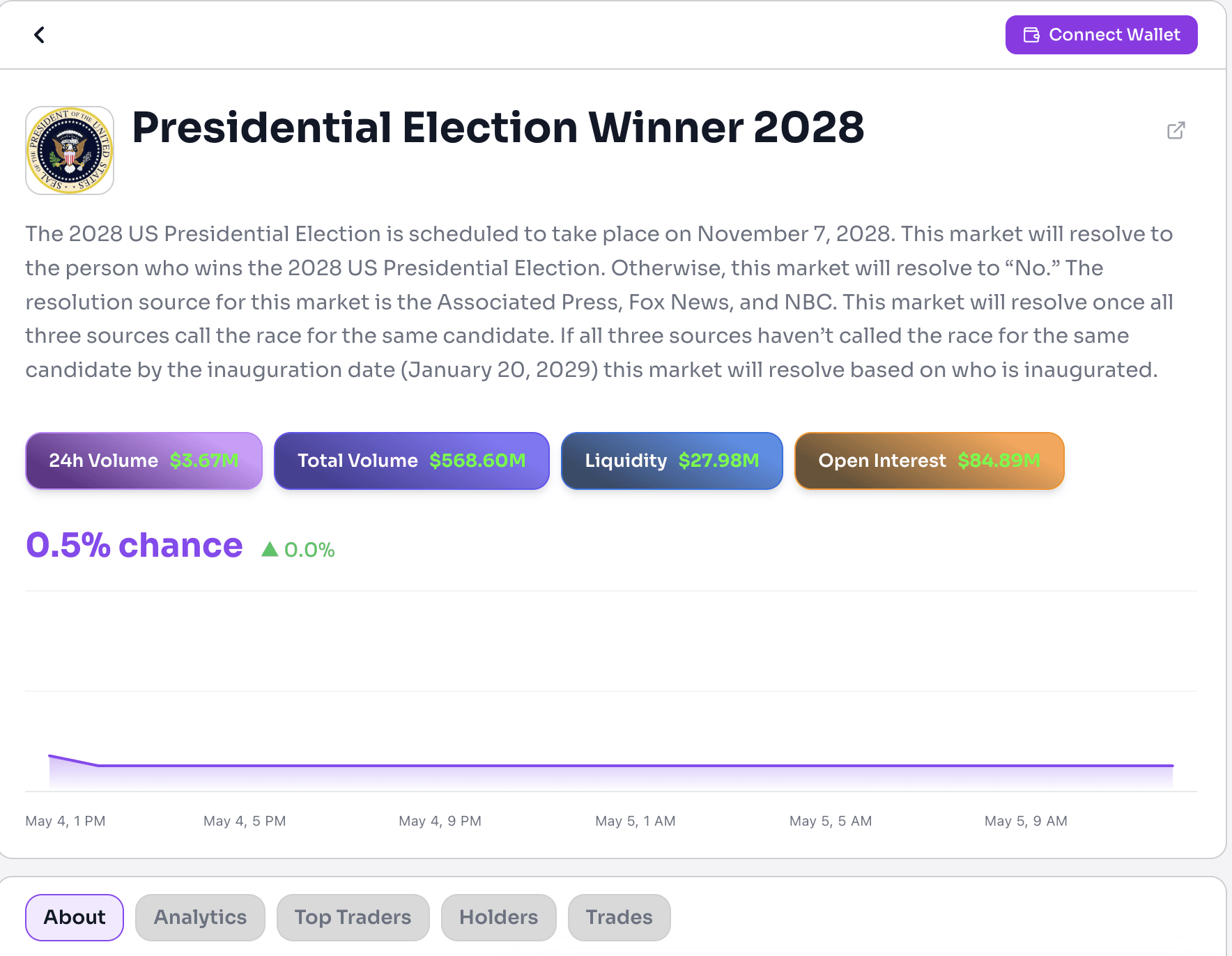
Instead of manually checking news sites and wondering what to paste into Claude, Laika surfaces the specific articles and data releases that matter. You paste those into Claude for analysis. Claude processes them. You trade based on the synthesis.
Example workflow
- Laika alerts you that a major poll just released in a Senate race you are tracking
- You click through to the poll from Laika's alert
- You paste the poll into Claude with your analysis prompt
- Claude identifies methodological issues and adjusts the numbers
- You compare Claude's adjusted probability to current Polymarket price shown in Laika
- You place the trade if an edge exists
Without Laika, you would need to manually monitor news sites, figure out which polls matter, remember which markets you are tracking, and constantly refresh Polymarket to check prices. With Laika, the monitoring is automated and you focus your time on Claude analysis and trading decisions.
Cost and Access Considerations
Claude is not free beyond basic usage limits. Understanding the cost structure helps you decide if it is worth it for your trading volume.
Claude pricing tiers
Claude offers free tier access with daily limits on conversations and message length. For serious trading usage, you need Claude Pro subscription at $20 per month or Claude API access billed by token usage.
API access for automation
If you want to build automated workflows where Claude processes information without manual copy-paste, you need API access. API pricing is based on tokens processed.
For typical trading usage analyzing 20-30 documents daily, API costs run $100-30 monthly depending on document length and complexity.
Whether API access is worth it depends on whether you are building systematic automated workflows or just using Claude for occasional manual analysis.
Frequently Asked Questions
Can Claude place Polymarket trades automatically?
No. Claude cannot connect to your Polymarket account or execute trades. It is an analysis tool, not a trading bot. You use Claude to process information and generate analysis, then you manually place trades based on that analysis through Polymarket's interface or API.
Is Claude better than human analysis for prediction markets?
No. Claude is faster than human analysis at processing large volumes of information, but it lacks human judgment about context, cultural nuance, and implicit signals. The best approach combines Claude's speed at information processing with your judgment about what the information means.
How much does it cost to use Claude for trading?
Claude offers a free tier with daily usage limits. For serious trading usage, Claude Pro costs $20 per month and provides higher limits. API access for automated workflows costs $10-30 monthly depending on usage volume. The cost is negligible compared to trading edge generated.
What types of Polymarket markets does Claude help with most?
Claude excels at markets requiring information synthesis from multiple sources like political elections requiring poll analysis, economic indicators requiring Fed policy interpretation, and sports markets requiring historical performance pattern recognition. It struggles with markets depending on cultural context or implicit human behavior signals.
Can Claude predict Polymarket outcomes accurately?
No. Claude cannot predict the future. It can analyze current information and historical patterns to estimate probabilities, but its estimates are rough guesses not precise predictions. Always treat Claude's probability estimates as starting points for your analysis, not as final answers.
Does Claude have access to real-time Polymarket prices?
No. Claude does not have direct access to Polymarket or any real-time data. You must paste current prices into Claude if you want it to compare its analysis to market pricing. Laika Labs integration helps by providing current prices alongside Claude analysis.