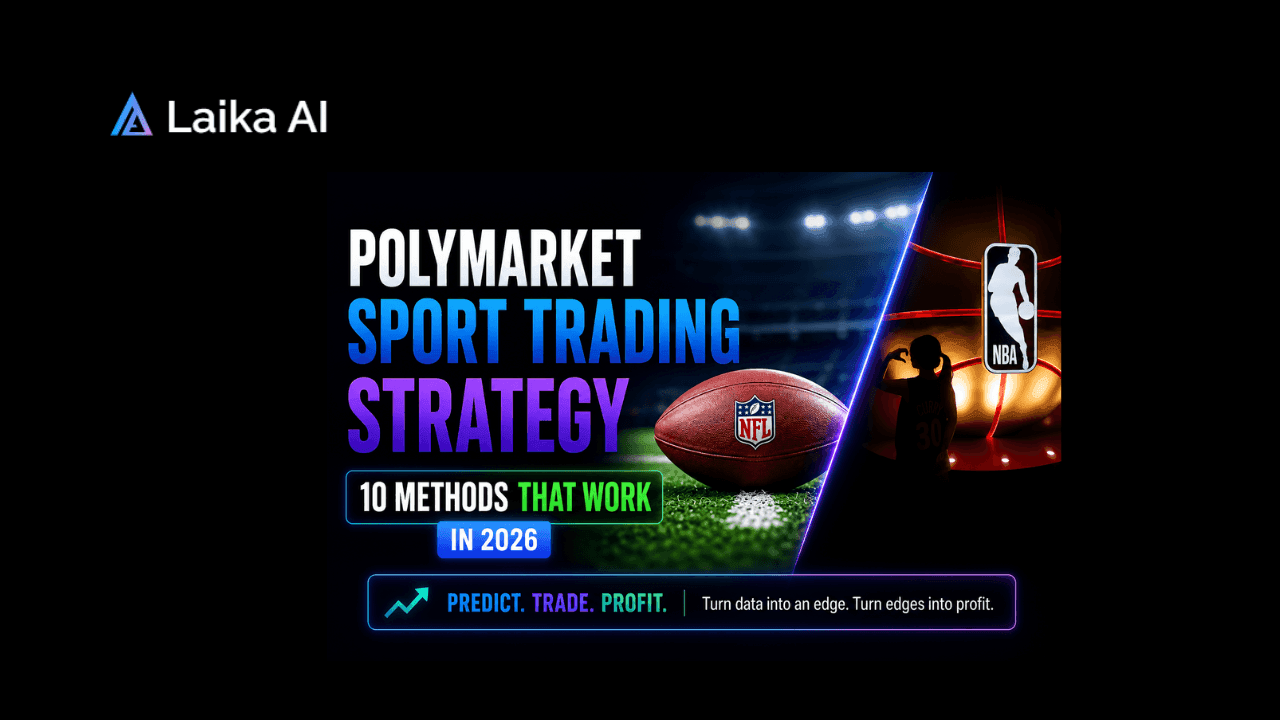
Most Polymarket sports traders are not losing because sports are unpredictable.
They are losing because they trade like fans, not like traders.
A fan bets the team they believe in. A fan chases hype during the Super Bowl. A fan uses a market order because they want it right now. Every one of those behaviors costs money in a market where disciplined participants are sitting on the other side of your trade waiting to take it.
A 2026 analysis of Polymarket sports contracts found over 65 percent of retail participants generated negative returns across a 90 day period. The same pattern shows up on every prediction market platform in the world. The culprit is always the same: favorite longshot bias, emotional decision making, and sloppy execution.
The structural reality of Polymarket sports trading is this. Longshot contracts priced under 15 cents win far less often than their price implies. Heavy favorite contracts above 80 cents are chronically undervalued by casual money. Mid range contracts near 50 cents carry peak uncertainty and worst risk adjusted returns. Liquidity providers using limit orders consistently beat market order takers over time.
If you want to extract money from Polymarket sports markets, stop thinking like a fan. Start thinking like a market maker. Here is exactly how.
Method 1: Fade the Public in Hyped Sports Events
Major sports events pull casual money into prediction markets. That money does not care about probability. It cares about narrative. The favorite feels like they will win. The popular team feels unstoppable. Casual participants flood one side of the market and prices drift away from true probability.
This is your opportunity.
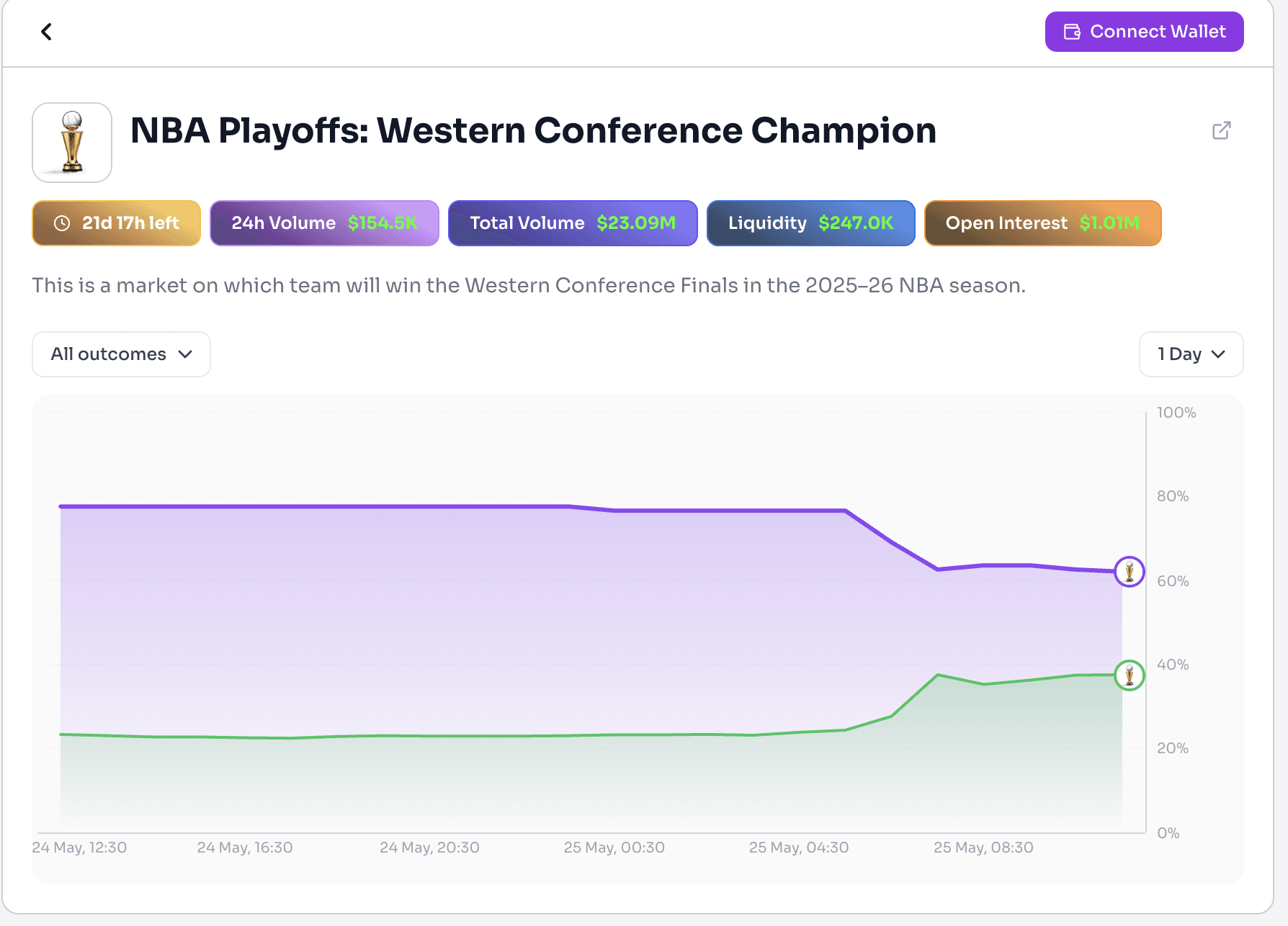
Identify a high profile sports event generating heavy public interest. Super Bowl. NBA Finals. Champions League knockout rounds. Check Polymarket pricing against sharp sportsbook lines.
When Polymarket shows a team at 68 cents and sharp books price them at 61 percent, the 7 cent gap is public bias, not true probability. That gap is your edge.
Sell the inflated side using a limit order. You become a maker, not a taker. You earn the spread instead of paying it.
The rule is simple. Only act when the gap between Polymarket price and sharp probability exceeds 6 cents after transaction costs. Below that, fees eat the edge before it pays out. Apply this across 30 to 50 qualifying setups per year and the math compounds into something meaningful.
Most Polymarket traders rely on headlines, emotions, and market momentum. That’s why they lose.
Polymetric by Laika AI gives you a real trading edge with AI-powered market analysis, whale wallet tracking, probability breakdowns, sentiment monitoring, and live market intelligence across politics, crypto, sports, and macro events.
If you're trading Polymarket without data, you're trading blind.
Check Polymetric
Method 2: Use Sharp Sportsbook Lines as Your Probability Anchor
Polymarket does not employ oddsmakers. Prices are set by the crowd.
Sharp sportsbooks employ professional quants who set lines with precision built on millions of data points. Their lines are the closest available estimate of true probability in any sports market. This creates a specific, repeatable edge: use sharp lines to identify when Polymarket prices are wrong.
Find a Polymarket sports contract with significant volume, at least 200,000 dollars. Pull the corresponding line from a sharp book and convert to implied probability. Compare. If Polymarket shows 55 cents and the sharp line implies 48 percent, Polymarket is overpriced by 7 cents. Sell the overpriced side or buy the underpriced side depending on direction.
Two rules matter here. Never use public betting percentage sites as your anchor. Public money does not move sharp lines. Sharp money does. These are completely different things. And only act when the gap exceeds 6 cents after costs. Below that, you are fighting fees for no edge.
Method 3: Always Trade as a Maker, Never a Taker
This is the single most important execution rule on Polymarket.
Takers use market orders. They buy at the ask and sell at the bid. They pay the full spread every single time. On a 6 cent wide market, a taker loses 3 cents per contract on entry and another 3 cents on exit. The event has not even started and they are already down 6 cents.
Makers use limit orders. They set their price and wait. They earn the spread instead of paying it.
Here is what that looks like in practice. A basketball championship contract sits at 50 cents fair value. Bid is 47 cents. The ask is 53 cents. A market order buyer pays 53 and immediately holds a position worth 50 cents. They start down 3 cents before tip off. A limit order buyer places a bid at 49 cents, waits for a fill, and starts ahead of fair value.
The only valid exception is breaking news where price moves significantly within seconds. A major injury confirmed 90 minutes before tip off. A red card in soccer at minute 20. A starting lineup surprise one hour before game time. In those moments, speed beats patience. In every other situation, patience pays.
Method 4: Arbitrage Between Polymarket and Other Prediction Platforms
Polymarket is not the only prediction market pricing sports outcomes.
Kalshi, Metaculus, and other platforms price the same events independently. Their crowds are different. Their information flow is different. Prices diverge. When they diverge enough, near risk-free profit appears.
Here is a real example of how it works. Champions League Final. Manchester City to win. Polymarket prices them at 44 cents. Kalshi prices them at 51 cents. Same outcome, 7 cents apart, on two different platforms.
Buy on Polymarket at 44 cents. Sell on Kalshi at 51 cents. If City wins, you gain 56 cents on Polymarket and lose 49 cents on Kalshi. Net profit is 7 cents minus costs on both sides. If City loses, you lose 44 cents on Polymarket and gain 51 cents on Kalshi. Net profit is still 7 cents minus costs on both sides. The result is the same regardless of the actual outcome.
The challenges are real. You need capital deployed on multiple platforms simultaneously. Prices close fast. Arbitrage windows on major events last 5 to 30 minutes before other participants close the gap. Only target opportunities where the spread exceeds 5 cents after all transaction costs. Below that, the math does not work.
Method 5: Trade Correlated Contracts as a Pair
Polymarket lists multiple contracts around the same sports event. These contracts are logically correlated but price independently based on which crowd is looking at each one at any given moment.
When prices become inconsistent with each other, structural profit appears.
Consider this. A team lives in the NBA Finals. Their championship contract sits at 22 cents. Their win probability for the current game sits at 55 cents. A team in the Finals with a 55 cent game win probability cannot also have only a 22 cent championship probability. The math does not hold. One of these is deeply mispriced. Buy the championship contract and sell the game contract. One corrects in your favor.
The same pattern appears in player performance markets nested within team result markets. A quarterback throwing over 2.5 touchdowns is strongly correlated with his team winning the game. When both markets sit above 60 cents simultaneously and one probability is already baked into the other, at least one is overstated.
The rule for pair trading is strict. Only execute in sports you understand deeply. You need to know the true correlation between two outcomes before trading the divergence. Guessing correlation is not an edge. It is a different kind of gambling.
Method 6: Exploit the Small Market Team Discount
This edge repeats in every sport, every season, without exception.
Small market teams get systematically underpriced on Polymarket regardless of their actual performance. Large market teams carry a brand premium that has nothing to do with winning probability. The crowd prices familiarity, not math.
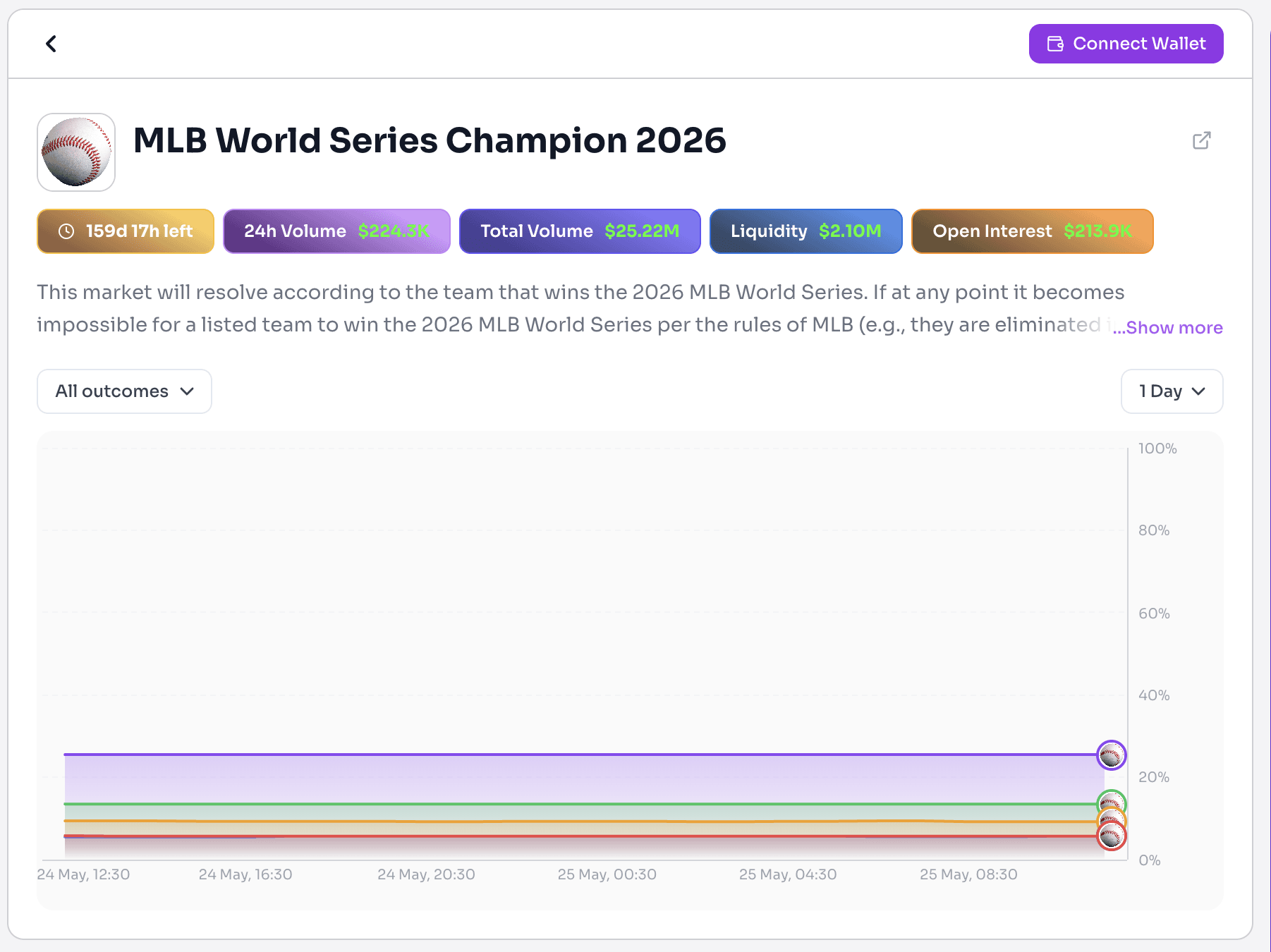
The Tampa Bay Rays in MLB are the permanent example. A team that posts the best record in the American League gets priced at 7 cents for the World Series while the New York Yankees at a worse record sit at 10 cents purely because more people recognize the Yankees name.
Based on performance metrics and playoff odds models, the Rays true championship probability in that scenario is 10 to 11 percent. The market gives them 7. That is a 3 to 4 cent edge on the team with the better record, available simply because the crowd does not pay attention to them.
This pattern shows up in soccer with smaller European clubs, in the NHL with non-traditional hockey markets, and in college sports constantly. The framework is the same everywhere. Find a team outperforming their market price based on actual results. Buy them. Wait for the market to catch up.
Method 7: Time Entries Around Scheduled Information Releases
Polymarket sports prices move on real world information. Injury reports. Lineup confirmations. Weather for outdoor events. Travel schedules. Referee assignments in soccer.
Most casual traders react to news after the price has already moved. The edge is positioned just before or immediately after information drops, before the broader market fully processes it.
The key is understanding when scheduled information releases. NFL injury reports are released Wednesday, Thursday, and Friday before game day. NBA availability reports drop 90 minutes before tip off. Soccer lineups confirm one hour before kick off. These are not random events. They are scheduled windows where the price is about to move based on known information.
When a star player is listed questionable, the contract might sit at 50 cents. If they are ruled out, price drops to 35. If cleared, price rises to 58. You know the information is coming. Position before it lands.
Set limit orders on both sides of the current price. You catch the move in whichever direction it breaks. You profit from the magnitude of the move, not the direction, as long as the move exceeds your transaction costs on the winning side.
One strict rule applies. Exit positions within 24 hours on sports markets. Sports contracts resolve fast. Your edge has a short shelf life. If your reasoning changed, get out. Do not sit in a position hoping the price recovers.
Method 8: Buy the Injury Overreaction Window
When a key player injury breaks publicly, Polymarket moves 10 to 15 cents within the first two hours.
That initial reaction is almost always excessive.
The crowd does not know injury severity yet. They see a name and panic. The market prices as if the player is out for the season when the actual situation may be a game time decision or a minor issue managed carefully by team trainers. Injury severity takes 24 to 48 hours to become genuinely clear through official reports and practice observations.
The structural opportunity has three distinct phases. In the first two hours after news breaks, the market panics and prices swing excessively. From 2 to 24 hours, injury severity begins to clarify through practice reports and team statements. From 24 to 72 hours, prices adjust to accurate assessment as real information replaces panic.
The strategy is to wait out the panic window, assess the actual injury impact using official reports and historical context for that player, and buy at depressed prices if the overreaction is clear. Do not enter during the panic. Enter during the clarity phase when you have real information and the crowd is still pricing on fear.
This pattern is consistent enough to be its own systematic strategy across NBA, NFL, and soccer markets where injury news is reported quickly and crowd reaction is predictably excessive.
Method 9: Build Portfolios in Golf and Racing Markets
Golf and motorsport winner markets have a structural characteristic that makes single position betting almost always a losing approach.
In major golf tournaments, the top favorite is priced at 12 to 15 cents. Their historical win rate in that pricing tier is 8 to 10 percent. The market overprices them by 3 to 5 cents consistently because casual participants identify the famous name and bet the favorite.
Mid tier players priced at 5 to 8 cents each win at a combined historical rate of 18 to 22 percent. Their combined market price typically sits at 25 to 30 cents. That gap is persistent and exploitable in every single major.
The strategy is never to bet a single favorite. Build a portfolio of 4 to 5 players priced between 5 and 8 cents each. Spread across different playing styles, different strengths for the specific course conditions, and different psychological profiles under pressure. The portfolio captures the systematic underpricing of mid tier players while eliminating the variance of backing a single outcome.
The Indianapolis 500 shows the same pattern. Top 3 favorites win only 35 percent of the time. Drivers priced 6 to 10 cents win approximately 40 percent of the time despite having an expected win rate of only 28 to 32 percent based on price. Build a portfolio of 3 to 4 drivers in that range and let the historical edge work over time.
Method 10: Apply Playoff Experience Value in Elimination Games
Markets undervalue playoff experience in high pressure elimination situations. This is one of the most consistent and quantifiable edges in all of sports prediction markets.
Teams with championship winning players on their roster in the past 3 years win elimination games at a 68 percent rate when favored. The expected rate based on market pricing is 60 percent. They win Game 7s as favorites at 62 percent. The expected rate is 55 percent.
That 5 to 8 percentage point gap is not noise. It is a structural pattern driven by the fact that casual bettors do not weight experience appropriately in high pressure situations. They look at the current season record and recent momentum. Experienced championship teams look at the moment differently and perform accordingly.
The application is straightforward. When a team with recent championship experience faces elimination or a Game 7 and is priced as the favorite, buy them at market price. The edge is built into the historical data. You do not need to analyze anything beyond confirming the championship experience and the current pricing.
This works most consistently in the NBA and NHL playoffs where series length creates multiple elimination game opportunities each postseason.
The Mistakes Destroying Most Polymarket Sports Traders
Trading your favorite team is the most expensive mistake on the platform. You have watched them for fifteen years. You believe in them. The market disagrees. Emotion is not edge. Probability is edge. These are different things and they point in different directions more often than fans want to admit.
Using market orders on low volume contracts is the second most expensive mistake. A 10 cent spread on a 50 cent contract means you lose 20 percent of notional before the game starts. You can read the outcome correctly and still lose money. That is not a trading problem. That is a liquidity problem you chose to enter.
Following Twitter and Reddit sentiment is the third mistake. Public sentiment is already in the price. By the time a viral take predicts a team will win, the market absorbed it hours ago. You are not getting ahead of anything. You are buying the top of the sentiment wave at the worst possible price.
Skipping the order book check before entry costs money that a 10 second check would have saved. Always look at the bid ask spread before entering any contract. If the spread exceeds 5 cents, either use a limit order at mid price and wait, or skip the market entirely.
Over-concentrating on one event feels justified at the moment. The Super Bowl seems obvious. The World Cup Final feels like a certainty. The biggest events attract the most casual money and the most violent mispricing in both directions. Diversifying across 10 to 20 contracts beats putting everything into one game regardless of how confident you feel.
Holding through resolution when conviction is gone is the final mistake. You can exit Polymarket sports contracts before they resolve. If the reason you entered is no longer valid, exit. Hope is not a strategy. Neither is stubbornness.
Frequently Asked Questions
How much can you realistically make trading sports on Polymarket?
Disciplined traders applying limit orders, sharp line arbitrage, and proper position sizing can realistically target 15 to 25 percent annual returns on deployed capital. Top performers applying multiple methods systematically may reach 40 to 60 percent annually. Casual traders should expect to lose 20 to 30 percent annually, mostly from spread costs and emotional decisions made in the first month.
Is Polymarket legal for sports trading?
Polymarket operates as a decentralized prediction market accessible globally with some regional restrictions. US residents have historically faced access limitations following a 2022 CFTC settlement. Check current terms and applicable law in your jurisdiction before depositing capital.
What sports generate the best trading opportunities on Polymarket?
NFL, NBA, Champions League, and major UFC events generate the strongest volume and tightest spreads. March Madness and the Super Bowl create peak seasonal mispricing due to massive casual money inflows that distort pricing across the entire market simultaneously.
How is Polymarket different from a sportsbook?
Traditional sportsbooks set the line. A professional quant adjusts it in real time as money comes in. At Polymarket, the crowd sets the price. There is no professional on the other side constantly adjusting for your information. That creates persistent inefficiency. Persistent inefficiency creates opportunity for disciplined traders that simply does not exist against a sharp professional sportsbook.
Should I ever use market orders?
Only when breaking news drops within minutes of game time and the market has not yet moved. Every other situation calls for limit orders exclusively.
How do I find true probability for a sports outcome?
Use sharp sportsbook lines as your primary anchor. Convert American odds or European decimal odds to implied probability. Remove the vig. Compared to Polymarket pricing. The gap between them is your starting point for identifying edges.
How long do arbitrage windows last between platforms?
On major events, gaps between Polymarket and Kalshi or other platforms typically last 5 to 30 minutes. Check both platforms simultaneously during live markets. If you see a gap above 5 cents after costs, move fast. It will not stay open.