Most people treat prediction markets like a casino. They pick a side, cross their fingers, and hope. That is not trading. That is gambling with extra steps.
The traders making consistent money on Polymarket and Elon Musk prediction markets are doing something fundamentally different. They are treating these markets like a skill game, building repeatable processes, exploiting specific edges, and compounding small wins over hundreds of resolved positions.
This guide covers exactly how they do it, from understanding the mechanics to executing the specific strategies that separate profitable traders from the 97% who bleed out slowly.
What Polymarket Actually Is and Why It Creates Opportunity
Polymarket is a decentralized prediction market platform where traders buy and sell contracts on real-world outcomes. Every contract is priced between 0 cents and 100 cents. That price represents the implied probability of the outcome occurring. A contract at 30 cents means the market believes there is a 30% chance of that outcome resolving YES. If it does resolve YES, the contract pays out $1. If it resolves NO, it pays out nothing.
The opportunity exists because Polymarket prices are set by human traders, and human traders make systematic errors. They overreact to breaking news. They anchor to round numbers. They heard popular narratives. They hold losing positions too long and exit winning positions too early.
Every one of those errors is a pricing inefficiency. Every pricing inefficiency is a potential edge for traders who have built systems to identify and exploit them consistently.
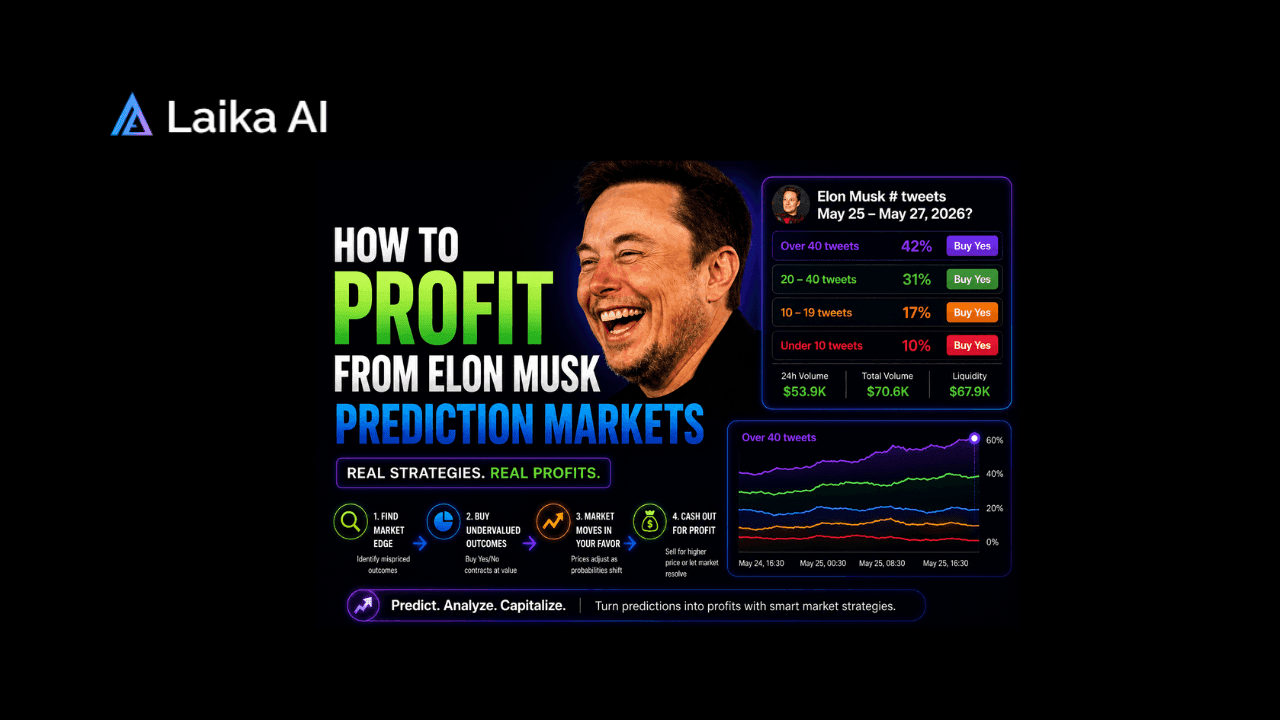
The Elon Musk category on Polymarket is one of the most active and consistently mispriced corners of the entire platform. Elon markets cover everything from Tesla stock price thresholds and X platform user numbers to DOGE budget cuts and SpaceX launch timelines. Because Elon Musk generates enormous media attention and emotional reactions, the crowds that trade his markets are particularly prone to the behavioral biases that create exploitable mispricings.
Why Elon Musk Markets Are a Special Opportunity
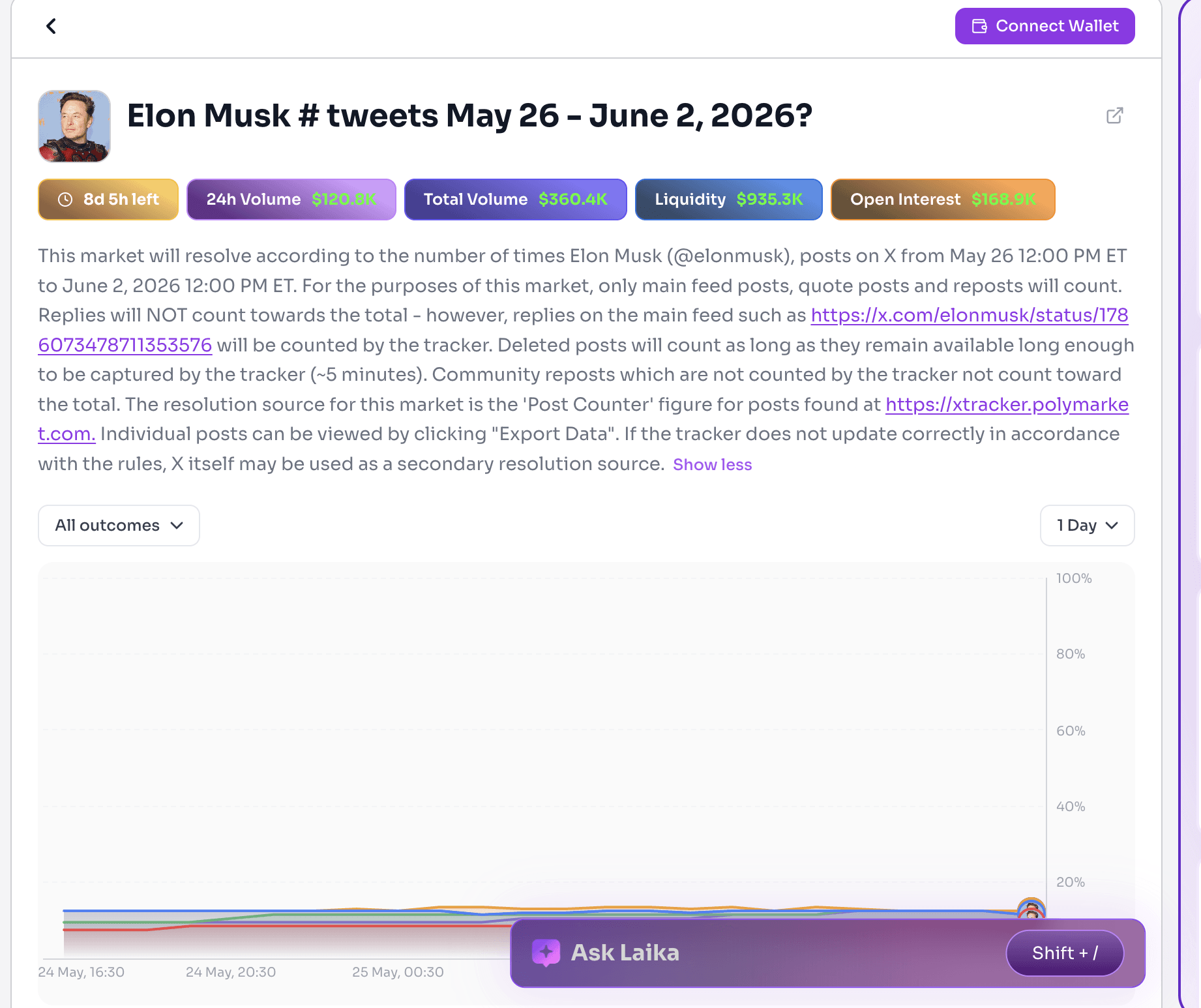
Elon Musk is the most traded individual on Polymarket. That sounds like a reason to be cautious. It is actually a reason to pay close attention.
High volume markets have tighter spreads and better liquidity, which means you can enter and exit positions efficiently. But the Elon markets also attract a specific type of trader, the emotionally engaged retail participant who has strong feelings about Musk and lets those feelings drive their probability assessments.
People who admire Musk systematically overestimate the probability that his predictions and timelines will be correct. People who distrust him systematically underestimate it in the opposite direction. Both groups create persistent mispricings that a dispassionate, data-driven trader can exploit repeatedly.
The key insight is that you are not trading your opinion of Elon Musk. You are trading the gap between what the crowd believes and what the actual base rate of similar events suggests is true.
The Core Strategies for Consistent Profits
Base Rate Arbitrage
This is the single highest-edge strategy available on Polymarket and Elon markets specifically.
Base rate arbitrage works by identifying markets where the crowd's implied probability deviates significantly from the historical base rate of similar events. Elon Musk has a documented track record on specific categories of predictions, particularly product launch timelines. He consistently announces timelines that turn out to be optimistic. SpaceX launch windows, Tesla production targets, Neuralink milestones, and X platform feature rollouts all share a pattern of initial enthusiasm followed by delay.
The Polymarket trading workflow for base rate arbitrage looks like this. First, identify a market where Elon has announced a specific timeline or target. Second, research the historical base rate of similar announcements from the same category, whether SpaceX has hit previous launch windows, whether Tesla has met production timelines in prior years. Third, compare that base rate to the current market price. If the market is pricing a 65% chance of an event that similar events have resolved YES only 40% of the time historically, that is a NO position with a meaningful edge.
This strategy requires research and patience. It does not require being right about any individual outcome. It requires being right about probabilities across a portfolio of similar positions.
News Lag Trading
Markets on Polymarket move when information moves. But they do not always move at the same speed.
News lag trading exploits the gap between when information becomes available and when it fully propagates into market prices. This is most common in secondary and prop markets that receive less attention than the main winner markets. A piece of information that moves the primary Elon market by 8 percentage points might only move a related secondary market by 2 percentage points in the same time window, creating a temporary arbitrage opportunity.
The practical execution of this strategy requires monitoring multiple related markets simultaneously and having a clear framework for how information in one market should theoretically affect prices in related markets. AI analysis tools accelerate this process significantly. Sentiment Fade
The sentiment fade strategy is built on a simple and well-documented behavioral pattern. When Elon Musk tweets something dramatic, market prices move in the direction of the tweet. When media coverage of a story peaks, market prices reflect maximum narrative saturation. In both cases, the initial price movement tends to overshoot the genuine probability shift.
Sentiment fading means waiting for that overshoot and then taking the opposing position once momentum exhausts itself. You are not predicting what will happen. You are predicting that the crowd has overreacted to recent information and that prices will mean-revert toward base rates.
The entry timing for sentiment fades is the most critical execution detail. Entering too early means fighting the momentum of the initial move. Entering too late means the overcorrection has already happened and the edge is gone. The practical rule of thumb is to wait for price stabilization after an initial move before entering a fade position. When a market moves 15 points in an hour and then holds flat for several hours, that stabilization often signals that the initial momentum is exhausted and mean reversion is the higher-probability outcome.
The Patience Position
This strategy is the closest thing to genuine passive income generation available on prediction markets, and it is chronically underutilized by retail traders who prefer constant activity.
Patience positions work by identifying markets where the true probability is significantly higher than the current market price and holding the position until resolution or until the market corrects. The key requirement is that the position must be sized appropriately as a fraction of your overall bankroll so that you can hold through temporary adverse price movements without being forced to exit.
Elon markets frequently create patience position opportunities in the aftermath of negative news cycles. When a major story breaks that casts doubt on a specific outcome, market prices often overcorrect downward, creating YES positions that are priced well below their genuine probability. Traders who have done the base rate research and are confident in their probability estimate can enter these positions after the initial sell-off and hold patiently for resolution.
The return profile on patience positions is not dramatic in any single trade. A position entered at 40 cents on an outcome you believe has a 60% true probability generates an expected value of 50 cents per dollar wagered, a 25% expected return per resolved market. Across 50 such positions over the course of a year, compounded at reasonable position sizes, that expected return creates meaningful passive income without requiring active daily management.
Bankroll Management and Position Sizing
No strategy generates passive income if your bankroll is wiped out by a single bad run. Position sizing is not a boring administrative detail. It is the mechanism that keeps you in the game long enough for your edge to compound.
The standard framework for prediction market bankroll management adapts the Kelly Criterion to account for the higher variance of individual event markets. Full Kelly sizing is theoretically optimal but practically dangerous for traders who do not have perfectly calibrated probability estimates. Most experienced Polymarket traders use a fractional Kelly approach, sizing each position at 25% to 50% of the full Kelly recommendation.
In practice this means that even a position where you have genuine confidence in a meaningful edge should rarely represent more than 3% to 5% of your total bankroll. A strong edge across 30 to 40 simultaneous positions is far safer and more profitable than concentrating that same capital in 3 to 4 high-conviction trades.
The diversification principle applies directly to Elon markets. Because multiple Elon Musk markets are often correlated, meaning that a single news development can move several related markets simultaneously, you need to account for that correlation when sizing positions. Three Elon Tesla markets that all respond to the same quarterly earnings report are not three independent positions. They are one bet with three contract legs.
Building a Repeatable Trading Workflow
Passive income from prediction markets does not come from trading constantly. It comes from having a system that generates quality trade signals, executing selectively on the highest-edge opportunities, and managing existing positions with discipline.
A practical weekly workflow for Elon and Polymarket trading looks like this.
One session per week is dedicated to market scanning. You review all open Elon markets, identify any new markets that have launched, and flag positions where the current market price appears to deviate significantly from your base rate estimates. You are not making trade decisions in this session. You are building a watch list.
A second session covers research on the flagged markets from your watch list. For each flagged market, you pull the relevant historical data, assess the specific base rate that applies, and calculate the implied edge at current market prices. You set entry price targets for the positions that meet your minimum edge threshold, typically a gap of at least 10 percentage points between your probability estimate and the market price.
Trades are entered when markets reach your target prices, which may happen within days or may take weeks. Waiting for your price is one of the discipline habits that separates consistent earners from impatient traders who chase positions at unfavorable prices.
Once per week you also review open positions against any new information that has emerged. If new developments materially change the base rate of an open position, you reassess. If the position thesis remains intact, you hold.
Using LAIKA AI Tools to Scale Your Edge
The limiting factor for most Polymarket traders who have a genuine analytical edge is research time. Identifying base rates, monitoring multiple markets simultaneously, and catching news lag opportunities before they close all require attention that a single trader
For real-time signal monitoring across the full range of active Elon and FIFA markets, the Laika AI Polymarket tool provides on-chain position tracking and smart money movement alerts that give individual traders access to the same data layer that sophisticated market participants are watching. It is the infrastructure layer that connects your research-driven approach to live market dynamics.
The Compounding Math Behind Prediction Market Income
The passive income case for prediction market trading rests on compounding. It is worth making the math explicit.
Assume you start with $5,000 in trading capital. You apply base rate arbitrage and patience position strategies, averaging 15% return on deployed capital per month across resolved markets. You reinvest all profits. At that rate, your capital grows to roughly $9,100 after six months and approximately $16,600 after twelve months. Those are not guaranteed numbers. They are the output of a specific edge applied with consistent discipline and appropriate bankroll management.
The traders who fail to reach those outcomes are almost always making one of two errors. They are either oversizing individual positions, meaning one bad run erases months of gains, or they are abandoning their system during losing streaks and chasing losses with undisciplined trades.
The market does not reward activity. It rewards calibrated judgment applied consistently over time.
Common Mistakes That Eliminate Your Edge
Trading Elon markets with a directional opinion about Elon Musk himself is the fastest path to consistent losses. Your personal view of whether he is a visionary or a charlatan is irrelevant to whether a specific SpaceX launch happens within a specific window. Base rates do not care about your prior.
Ignoring resolution criteria is the second most common expensive mistake. Every Polymarket contract has specific resolution rules that determine exactly what needs to happen for the market to resolve YES or NO. Traders who skim the resolution criteria and assume they know what the market is measuring frequently discover at resolution that the market measured something subtly different from what they expected. Read the full resolution criteria for every market before entering a position.
Overtrading during high-volatility news cycles is the third major error. When Elon tweets something that moves ten markets simultaneously, the temptation to trade all of them is strong. In practice, rapid multi-market moves during breaking news are exactly when pricing is most chaotic and your edge is smallest. The discipline to stay out during maximum volatility and wait for prices to stabilize is a skill that takes time to develop but pays reliably once established.
Frequently Asked Questions
How much capital do you need to start trading on Polymarket?
There is no minimum deposit requirement on Polymarket. Practical trading with meaningful position sizes typically starts around $500 to $1,000, which gives you enough capital to spread across 15 to 20 simultaneous positions at appropriate sizing.
Are Elon Musk markets on Polymarket legal to trade?
Polymarket operates under CFTC oversight as a regulated prediction market. Availability depends on your jurisdiction. US traders can access Polymarket following the platform's regulatory compliance framework..
How long does it take to see consistent profits from prediction market trading?
Most traders who develop a genuine edge begin to see it reflected in their results after 50 to 100 resolved positions. Below that sample size, variance is too high to distinguish skill from luck. Plan for a learning period of three to six months before drawing any conclusions about whether your strategy is working.
What is the biggest risk in Polymarket trading?
Resolution risk is the most underestimated danger. A market can resolve differently from what you expected based on the specific resolution criteria, oracle decisions, or edge cases in the rules.
Can you automate Polymarket trading strategies?
Polymarket has an API that allows programmatic interaction with markets. Sophisticated traders do build automated systems for specific strategies, particularly news lag trading where speed is critical. Building reliable automation requires technical capability and rigorous testing.How do AI tools improve Polymarket trading performance?
AI tools improve performance in two distinct ways. First, they accelerate the research and base rate analysis phase, helping traders process more markets with greater rigor in less time. Second, real-time signal tools like Laika AI surface on-chain position movements and market anomalies that individual traders cannot monitor manually across dozens of simultaneous markets.