Here is something that does not exist anywhere else in financial markets.
When a hedge fund buys $80 million in S&P 500 futures, you find out weeks later in a 13F filing. When a whale on Polymarket buys $80,000 of YES shares on a Federal Reserve decision market, you can see the wallet address, the exact timestamp, the price paid, and the full position size within seconds of the transaction confirming.
No dark pool. No institutional veil. Every trade is permanently public on the Polygon blockchain.
That transparency creates a genuine and widely underused opportunity. The problem is not finding whale trades. The problem is finding the right whales, reading their moves correctly, and entering before the price has already moved against you. Most people who try to copy whales on Polymarket do it wrong. They find a big position after it has already moved the price. They copy the wrong wallets. They size incorrectly. They end up buying the top of a move that smart money made hours earlier.
This article is about doing it right.
Why Whale Copying Works on Polymarket Specifically
Only 7.6% of Polymarket wallets are profitable according to laika Analytics data from early 2026. That 7.6% is not lucky. Analysis of their trading patterns shows consistent behaviour: concentrated activity in specific market categories, disciplined position sizing, and entry timing that frequently occurs before the initial consensus move.
When a wallet with a verified track record of accurate calls enters a market aggressively, that position carries real information. They would not risk their own capital without strong reasoning. You have access to that reasoning signal, expressed as a blockchain transaction, in real time.
Traditional markets are designed specifically to prevent this. Prime brokers, dark pools, and algorithmic order slicing exist specifically to hide institutional order flow from retail traders. Polymarket has none of that infrastructure. The most sophisticated participants on the platform are broadcasting their highest-conviction positions to anyone willing to look.
The catch is that looking effectively requires a system, not just a block explorer tab open in your browser.
Step 1: Find the Right Whales to Follow
This is where most copy traders fail before they even begin. They find the leaderboard, sort by profit, and start copying the top wallet. That is exactly backwards.
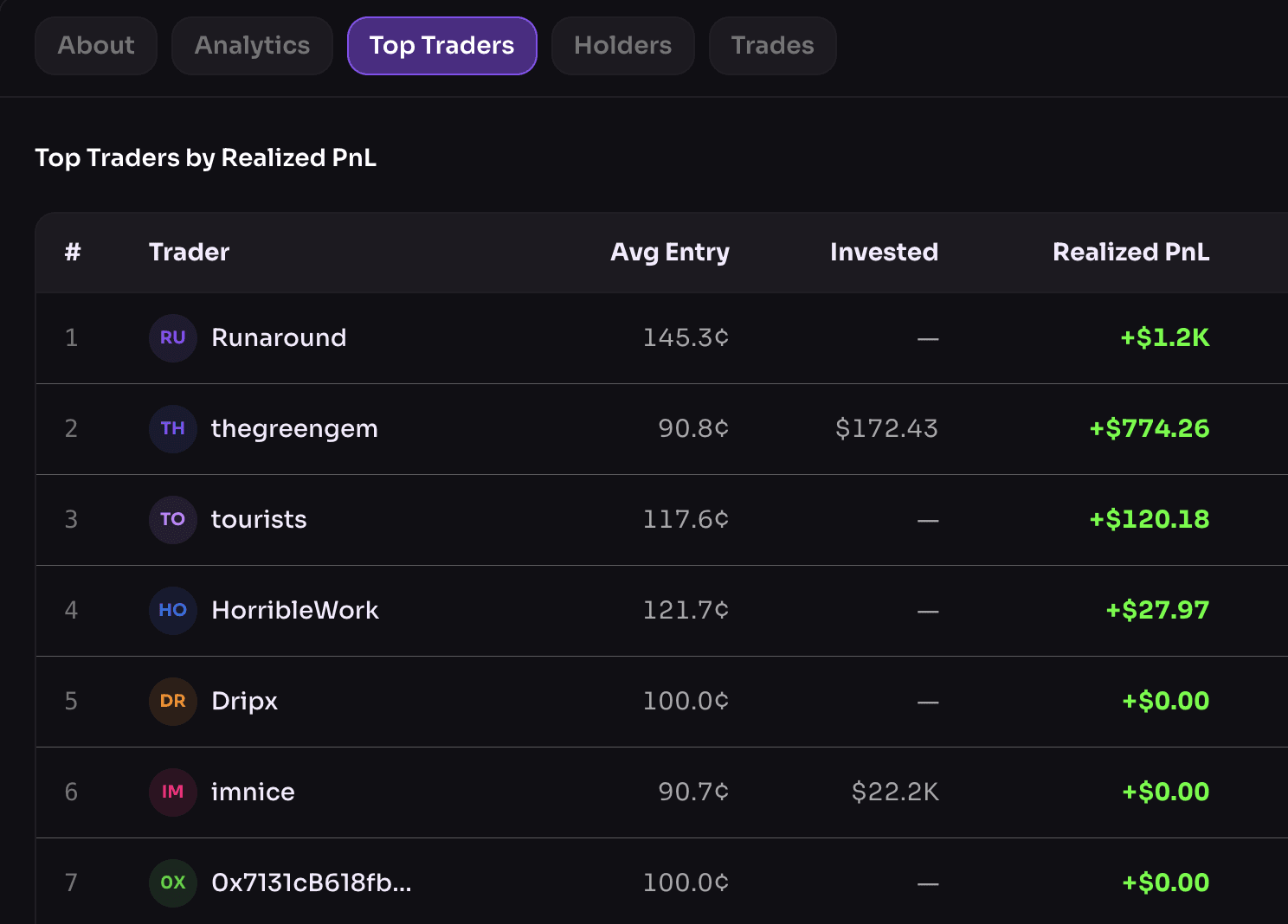
The wallets at the very top of the Polymarket leaderboard often got there through one or two massive concentrated bets that hit. A wallet that made $1.1 million from a single position on RFK health policy markets is not a repeatable signal source. It is a one-time concentrated bet that happened to be right. If you follow that wallet expecting the same edge on their next trade, you are following a survivor, not a system.
The wallets worth copying share four specific characteristics, all of which are verifiable on-chain.
More than 200 resolved markets in the past 24 months. A trader going 8 for 10 is noise. A trader going 130 for 200 is a meaningful signal. Volume of resolved positions is the minimum filter before anything else.
Win rate above 55% with a positive P&L to match. Win rate alone is deceptive. Some wallets show high win rates because they never close losing positions, letting them expire worthless rather than recording them as resolved losses. Check both the win rate and the actual profit figure together.
Consistent performance in at least two or three market categories. Random wins across unrelated categories suggest luck. Consistent profits in political markets, or consistent profits in economic indicator markets, or consistent profits in sports, suggest genuine domain expertise in that category. Category-consistent performance is the signal. Random cross-category wins are noise.
Active in the past 90 days. A whale who dominated 2024 US election markets may have no relevant edge in 2026 crypto markets. Recency matters. Check their last three months specifically, not their all-time record.
Tools for finding qualifying wallets
Polymarket's leaderboard: The starting point. Sort by total profit, then manually check each wallet's category distribution, trade count, and recency before treating them as a signal source.
Laika AI: Rather than manually checking dozens of wallets across multiple tools, Laika monitors Polymarket's on-chain activity continuously and surfaces the specific wallet movements worth your attention in real time. When a wallet that passes the four criteria above enters a new market, Laika flags it so you can investigate before the price has already adjusted. This is the monitoring gap that manual tools cannot close at scale.
Step 2: Understand What Type of Whale You Are Looking At
Not all large Polymarket positions mean the same thing. Before you copy any trade, you need to identify which type of trader made it.
The category specialist. This whale consistently profits in one or two market categories and loses or avoids everything else. Political markets, sports, or economic indicators. Their edge is domain knowledge. When they make a move in their specialty, it is a high-signal event. When they make a move outside it, it is meaningless.
The quant or arbitrageur. This whale appears to bet on both YES and NO in the same market, or makes moves that seem contradictory. They are often running delta-neutral strategies, cross-market arbitrage, or liquidity provision trades. Copying one leg of their trade without understanding the full structure will likely lose you money even when their overall strategy is profitable. Identify these wallets and exclude them from your copy list entirely.
The news trader. This whale enters markets immediately after breaking news and exits quickly. Their edge is speed, not research depth. By the time you see their position and act on it, the window has likely already closed. These wallets are interesting to watch but difficult to copy profitably at manual execution speed.
Step 3: Time Your Entry Correctly
This is the step that determines whether you capture value from a whale signal or buy into the top of a move they already made.
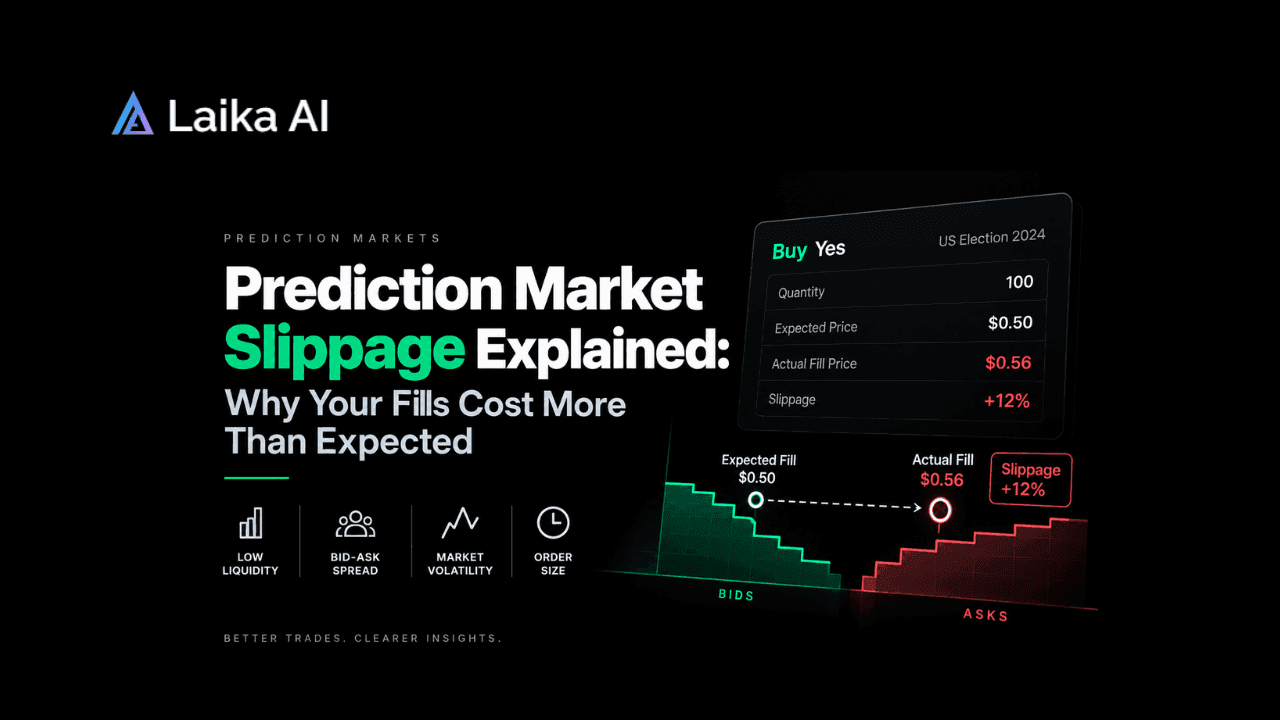
When a large Polymarket whale submits a significant market order, something specific happens mechanically. They work through available liquidity at each price level. A market showing YES at $0.62 might have contracts available at that price, more at $0.63, more at $0.64. A whale buying a large position exhausts those levels sequentially. Anyone looking to buy YES after the whale has finished executing finds a meaningfully different market, sometimes 3 to 7 cents higher, from what existed two minutes earlier.
If your process is: see whale trade on leaderboard, open market, place order, you are almost always buying after the price impact. You are not copying the whale's trade. You are buying the market response to their trade.
Entry approaches ranked by effectiveness
Laika AI alerts with fast manual execution (practical middle ground). Laika AI monitors Polymarket on-chain activity and sends real-time alerts when tracked high-performing wallets enter new positions. With Laika's alert open on your phone and Polymarket open on your desktop, an experienced trader can execute a copy order within 30 to 60 seconds of the original move. That is fast enough to capture a meaningful entry price, though not quite as tight as a fully automated system.
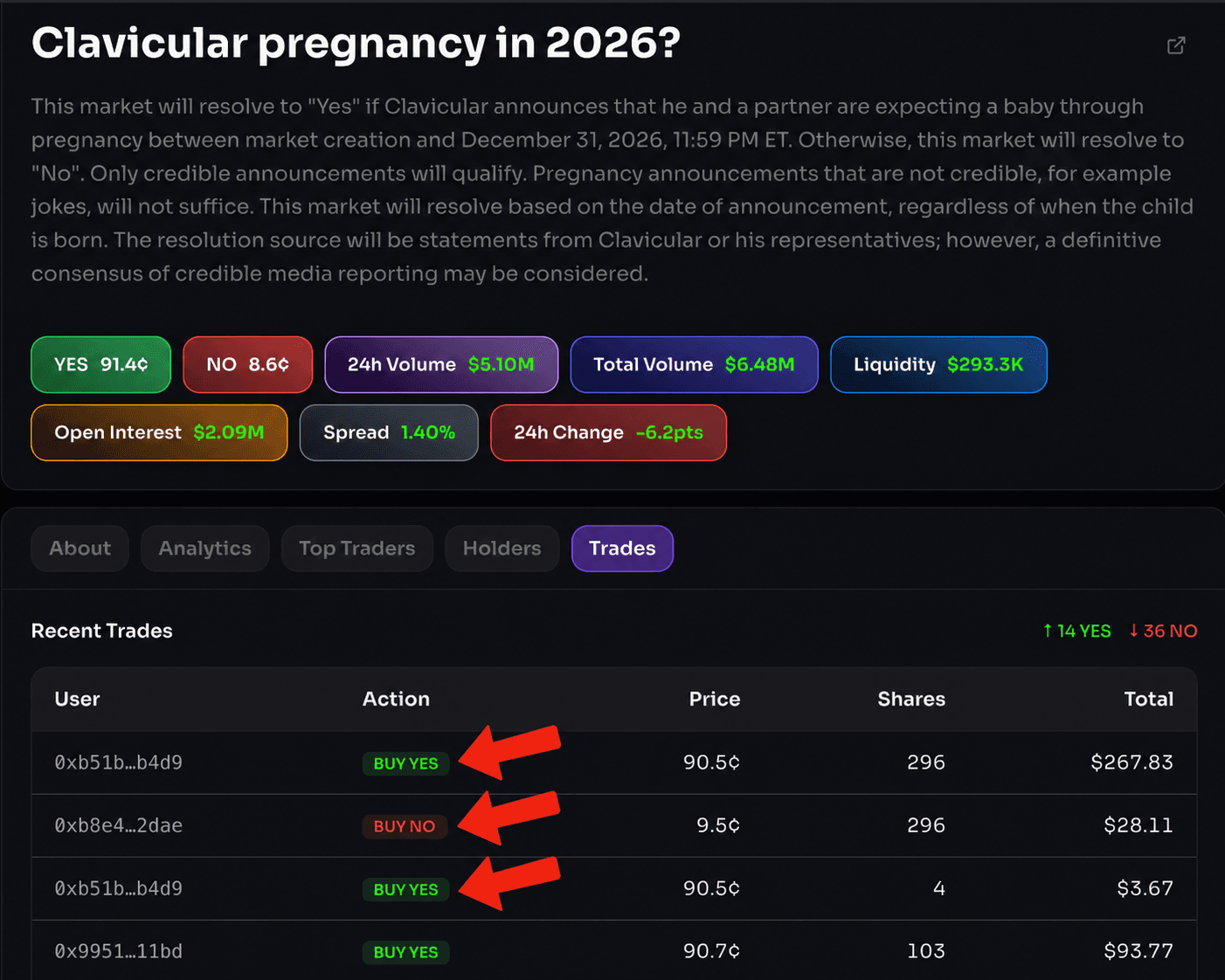
Manual leaderboard checking (least effective). Checking the leaderboard or individual wallet addresses manually and then placing orders is typically 5 to 20 minutes behind whale moves. In liquid markets, the price has already adjusted. This approach works only for very long-duration markets where the whale's signal has value over days rather than minutes.
Step 4: Size the Position Correctly
This is the error that most copy traders make even when they find the right whale and enter at a reasonable price.
A whale with a $2 million portfolio committing $40,000 to a position is risking 2% of their capital. If you have $5,000 and you copy that exact $40,000 position, you have allocated eight times your entire portfolio. The dollar amount is irrelevant. The percentage of your capital at risk is what matters.
The correct sizing framework:
- If the whale is risking approximately 2% of their portfolio, you risk approximately 2% of yours
- Never copy a single wallet with more than 20% to 30% of your total allocated copy-trading capital
- Follow three to five wallets across different categories rather than concentrating on one
- Apply a per-trade hard cap regardless of how confident you feel about the signal
A whale suffering a losing streak will feel manageable if you sized proportionally. A whale suffering a losing streak when you absolutely will damage your bankroll before you have had time to notice the pattern.
Step 5: Know When Not to Copy
The sell side of copy trading gets far less attention than the buy side. Most guides tell you when to enter. Almost none tell you when to skip.
Skip the trade when the market has already moved significantly. If you detect a whale entered at $0.35 and the current price is $0.52, you are not copying their trade. You are entering a different trade with a different risk-reward profile. The edge they identified was at $0.35. At $0.52, the market may have already corrected to fair value.
Skip the trade when market liquidity is below $100,000 in total volume. In thin markets, your own copy order can move the price unfavourably. You end up paying more than the whale paid simply because your order is arriving after theirs has already consumed the available liquidity.
Skip the trade when the whale is outside their specialist category. If the political markets specialist you follow just entered a 5-minute Bitcoin price market, that is not a signal in their area of expertise. It is a random trade from a wallet you follow for unrelated reasons.
Skip the trade when you cannot identify the resolution criteria. Before entering any copied position, read the market rules. Whales sometimes enter markets with resolution criteria that are more nuanced than the headline implies. If you cannot understand exactly what triggers a YES payout on the contract you are about to buy, do not buy it.
The Monitoring Problem This All Creates
Running a serious copy-trading operation on Polymarket means tracking multiple wallets across multiple market categories simultaneously, monitoring entry prices relative to whale execution prices in real time, checking market liquidity before each entry, and staying aware of new positions the moment they happen rather than 20 minutes later.
Doing this manually is not realistic. You would need to have Dune Analytics dashboards, Polymarket market pages, and wallet tracking tools all open simultaneously, refreshing constantly, while still having time to evaluate individual trades before the entry window closes.
This is the monitoring problem that Laika AI is built to solve. Rather than building your own monitoring infrastructure or manually checking a dozen tools, Laika watches Polymarket's on-chain activity continuously, tracks the movements of verified high-performing wallets, and surfaces the specific signals worth your attention before the price has already moved.
When a sharp wallet that passes the four qualifying criteria enters a new position, Laika flags it. When a market you are already monitoring shows unusual volume or a significant price move, Laika flags that too. Instead of reacting to Polymarket hours after something has happened, you are seeing what is happening as it happens.
Frequently Asked Questions
What is a Polymarket whale?
A Polymarket whale is a trader with a large capital base and a verified track record of profitable high-conviction bets on the platform. Because Polymarket runs on the Polygon blockchain, every whale's full trade history, open positions, and win rate are publicly visible. The most valuable whales to follow are category specialists with more than 200 resolved positions, a win rate above 55%, and consistent profits in a specific market type rather than random wins across all categories.
Is copying Polymarket whale trades legal?
Yes. Reading publicly available on-chain blockchain data and making your own independent trading decisions based on it is legal. All Polymarket trades are permanently public on the Polygon blockchain. You are observing public information and acting on it independently. This is structurally different from insider trading in traditional markets, where material non-public information is involved.
How fast do I need to be to copy whale trades effectively?
Speed depends on the market type. In short-duration markets with high volume, a 5-minute delay after whale entry can mean paying 5 to 10 cents more per share than the whale paid. In long-duration markets resolving in 30 or more days, a 30-minute delay rarely costs meaningful price disadvantage. Automated copy trading platforms detect and execute within 15 seconds. Laika AI alerts combined with fast manual execution can achieve 30 to 60 second entry. Manual leaderboard checking is typically 5 to 20 minutes behind.
How many wallets should I follow?
Three to five wallets across different market categories is the practical range for most traders. Following fewer than three creates excessive dependence on a single track record. Following more than eight makes it difficult to track performance meaningfully and dilutes the signal from each individual wallet. Start with two or three, monitor for 30 days, and expand only after you understand the pattern of each wallet you are following.
Disclaimer: This article is for educational purposes only. Prediction market trading involves real financial risk. Always conduct your own research before placing any trade.