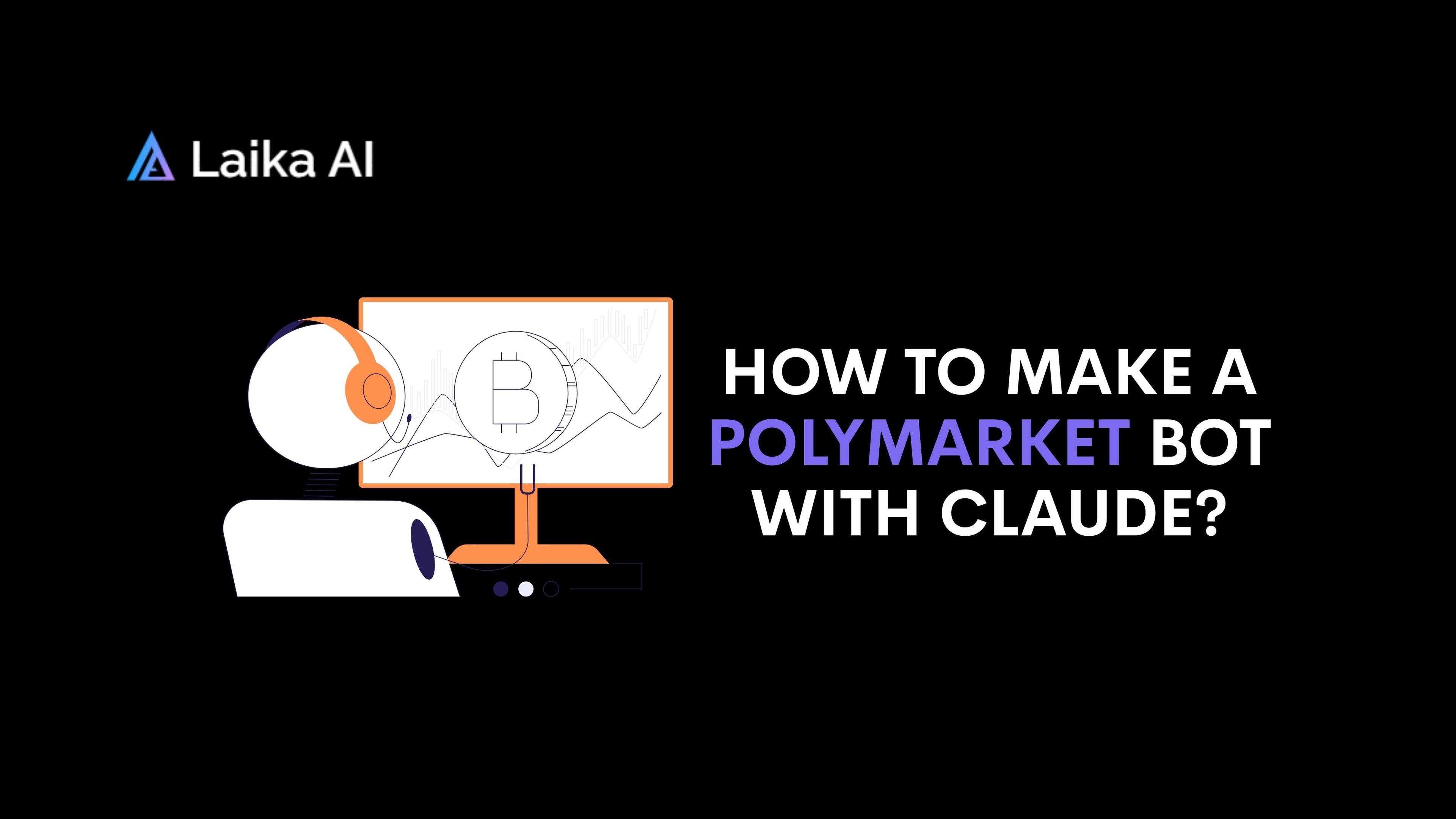
Something significant happened in March 2026. A Claude-powered trading bot converted $1,000 into $14,216 in exactly 48 hours on Polymarket, logging a 1,322% return while the trader slept. The viral social media post detailing this feat garnered over 1.2 million views, highlighting the potential of AI in prediction markets. That same week, a competing setup using the OpenClaw framework was completely liquidated in the same timeframe.
These are not isolated anecdotes. On-chain data shows 92.4% of Polymarket wallets lose money. But the wallets that win are increasingly not human at all. Crypto traders are increasingly using AI tools from Anthropic, particularly its Claude models, to build automated trading bots for prediction markets like Polymarket. These bots scan news, analyze probabilities, and place trades automatically.
The numbers getting attention are remarkable. In January 2026, a trader turned $313 into $414,000 in one month on Polymarket, not through luck or insider information, but with an automated trading bot that executed thousands of precise trades while they slept. A separate system reportedly generated $2.2 million in two months by exploiting price lags between Polymarket and centralised exchanges. Most recently, Mario Nawfal shared a post showing a Claude-powered bot growing $1 into $3.3 million on Polymarket, with the video tracking the bot's activity from August 9, 2025 through April 2, 2026.
Before you dismiss these as social media hype, understand this: the Polymarket API explicitly supports automated strategies, like arbitrage bots that place orders when Polymarket's price is out of line with another market, or market makers who continuously place both buy and sell orders around a probability. Polymarket's own official GitHub repository, titled Polymarket/agents, provides the infrastructure for exactly this kind of automation.
This guide covers everything you need to understand and build a Claude-powered Polymarket trading bot in 2026. You will learn how Polymarket's API architecture works, how Claude integrates as the analytical reasoning layer, what trading strategies actually work in live conditions, how to build and test a basic bot step by step, and the risks and regulatory questions you need to understand before deploying real capital.
What Is Polymarket and Why Does Automation Matter?
Polymarket is the world's largest decentralised prediction market. It is an on-chain prediction market platform where users trade shares based on the outcomes of future events. These events can range from whether Bitcoin will hit $100,000 by March 2026 to whether it will rain in New York tomorrow. The structure of these markets is straightforward: they operate on YES/NO binary outcomes, with shares priced between $0.00 and $1.00.
The price of a share directly reflects the probability of the event. If a YES share is priced at $0.20, it implies a 20% chance of the event happening. If the event occurs, you earn $0.80 in profit. If it does not, you lose your $0.20.
The structural case for automation
Bots execute in milliseconds while manual traders take 10 to 30 seconds. Bots follow rules with no panic selling or FOMO buying. They monitor 500+ markets simultaneously, which is impossible manually.
The reasons automation dominates are structural. Opportunities often appear briefly across different markets. For example, when correlated events diverge in pricing, a bot can exploit these inefficiencies instantly, while a manual trader may not even notice them. Prediction markets reward consistent probability assessment, not gut reactions. Automated systems enforce strict rules: buy when implied probability drops below model output, sell when it exceeds fair value, rebalance exposure as time passes.
Polymarket's infrastructure for bots
Polymarket employs a hybrid system that combines off-chain order matching through a Central Limit Order Book (CLOB) for fast transactions with on-chain settlement on the Polygon blockchain.
The platform provides three distinct API layers that bots use:
- Gamma API: Market discovery and metadata
- CLOB API: Order placement and execution
- Data API: Historical trades, positions, and wallet activity
Understanding the Polymarket API Architecture
Before building a Claude bot, you need to understand the technical infrastructure your bot will interact with.
The three API components
1. Gamma API (Market Data)
The Gamma API is the discovery layer. It provides:
- All active and tradable markets with metadata
- Current YES and NO token prices
- Market volume, open interest, and liquidity depth
- Event information and resolution criteria
# Fetch all active markets
import requests
response = requests.get("https://gamma-api.polymarket.com/markets")
markets = response.json()
2. CLOB API (Order Execution)
The CLOB trading API handles order placement. The API allows automated strategies like arbitrage bots that place orders when Polymarket's price is out of line with another market, or market makers who continuously place both buy and sell orders around a probability.
Polymarket provides official SDKs:
- Python: py-clob-client (official, maintained by Polymarket)
- JavaScript/TypeScript: @polymarket/clob-client (official)
from py_clob_client.client import ClobClient
from py_clob_client.clob_types import ApiCreds, OrderArgs, OrderType
client = ClobClient(
host="https://clob.polymarket.com",
key=PRIVATE_KEY,
chain_id=137, # Polygon mainnet
creds=ApiCreds(api_key=API_KEY, secret=SECRET, passphrase=PASSPHRASE)
)
3. Data API (Analytics)
The Data API allows bots to:
- Monitor specific wallet addresses for copy trading
- Track historical trade patterns
- Analyse market movement data
Authentication requirements
The bot needs three API credentials to operate: two from Polymarket (private key and wallet address) and one from Anthropic (Claude API key). All three are stored in a .env file in the same directory as the script, loaded at startup.
POLYMARKET_PRIVATE_KEY=your-private-key
POLYMARKET_FUNDER_ADDRESS=your-wallet-address
ANTHROPIC_API_KEY=your-anthropic-api-key
Critical security note: These values grant full access to your Polymarket funds and Claude API account. Never commit them to version control. Never share them. Store them only in environment variables or a secure secrets manager.
What Role Does Claude Play in a Polymarket Bot?
Claude is not the trading execution layer. It is the analytical reasoning layer. This distinction is critical to understanding how these bots actually work.
Claude as the probability estimation engine
Claude-powered bots aim to find situations where the market probability appears wrong. For instance, if a market implies a 40% chance of an event but the model's analysis suggests 60%, the bot buys Yes shares.
The AI analyzes large streams of information such as breaking news, government filings, economic data releases, and social media posts. By summarizing and scoring this information in real time, the bot can react faster than human traders.
The Claude tool use pattern
When Claude encounters a question like "Will BTC hit $150K by June 2026?", it can pull up recent price data, news, and analyst opinions before forming a view. After Claude finishes reasoning, it calls an answer tool with its structured response: a decision, confidence level, and reasoning object.
A working Claude response looks like this
{
"decision": "Yes",
"confidence": "Medium",
"reasoning": "Based on current momentum and institutional inflows,
Bitcoin reaching $150K by June 2026 is plausible but
uncertain. The current price at $82K implies a 32%
market probability but macroeconomic signals suggest
this may be underpriced."
}
What Claude can and cannot do
Claude can:
- Analyse market question text and assess probability
- Incorporate web search results (when enabled) to update estimates
- Generate trading logic and Python code for execution
- Reason about correlated markets and portfolio exposure
- Identify likely mispricings based on available information
Claude cannot:
- Execute trades directly (code must call the Polymarket API)
- Access real-time data without a web search tool or data pipeline
- Guarantee accuracy of probability estimates
- Predict outcomes reliably in genuinely uncertain markets
Large language models can help interpret information and generate trading logic, but they are still probabilistic systems. They can misread context, overfit patterns, or make poor decisions unless they are tightly constrained by rule-based code and risk limits. Anthropic's own documentation makes clear that Claude is an API-accessible reasoning model and tool-using assistant, not a purpose-built market-making engine.
The Four Core Bot Strategies That Work on Polymarket
Strategy 1: Probability Mispricing (Fundamental Analysis)
This is the most common Claude-powered strategy. The bot compares Claude's estimated probability against the current market price and trades when the gap exceeds a threshold.
How it works:
- Fetch active markets from Gamma API
- Send each market question to Claude with relevant context
- Claude returns an estimated probability with confidence
- If Claude's estimate diverges from market price by more than X%, place an order
- Exit when market price converges to fair value
Example implementation logic:
def analyze_and_trade(market):
question = market['question']
current_price = market['yes_price']
# Ask Claude for probability estimate
claude_estimate = ask_claude(question)
# Calculate edge
edge = claude_estimate - current_price
if edge > 0.10 and claude_estimate['confidence'] == 'High':
# Significant underpricing detected, buy YES
place_order(market['token_id'], 'YES', current_price, size=50)
elif edge < -0.10 and claude_estimate['confidence'] == 'High':
# Significant overpricing detected, buy NO
place_order(market['token_id'], 'NO', 1-current_price, size=50)
Strategy 2: Latency Arbitrage (Price Feed Divergence)
Another strategy involves arbitrage. Claude-generated scripts scan multiple prediction markets for price differences.
A separate system generated $2.2 million in two months by exploiting price lags between Polymarket and centralised exchanges (Binance, Coinbase) and Chainlink oracle discrepancies.
One documented case involved a Polymarket account that turned $50 into $435,000 through latency arbitrage. A developer reverse-engineered the strategy and claimed to have rebuilt it in Rust using Claude in about 40 minutes. Polymarket updates BTC contract prices slower than real price feeds, so the bot exploits that lag.
What this strategy requires:
- Real-time data feeds from centralised exchanges (Binance WebSocket, Coinbase WebSocket)
- Polymarket WebSocket connection for contract prices
- Sub-100ms execution capability
- Dedicated infrastructure close to Polymarket's servers
Strategy 3: Copy Trading (Wallet Mirroring)
When the target wallet places a new trade, the bot detects it, evaluates risk, and attempts to place the copy order. The bot uses Polymarket's CLOB where the bot signs orders, the API handles order flow, and settlement remains non-custodial on-chain. The Data API is the discovery layer that finds new trades from the wallet you want to copy.
A Polymarket copy trading bot mirrors the actions of selected wallets. If a trusted trader buys shares in a market, the bot replicates the trade proportionally. This approach appeals to users who believe certain participants possess superior information or forecasting skill.
Claude's role in copy trading is primarily in the wallet selection and filtering logic: analysing historical performance, identifying genuine edge versus luck, and filtering out trades that fail risk criteria.
Strategy 4: Liquidity Provision (Market Making)
The market maker strategy monitors the order book for the target market, places limit orders on both bid and ask sides, and profits from the spread as orders fill. Orders are placed at a fixed spread around mid-price, automatically cancelled and replaced as market moves, and maintain balanced inventory on both sides.
Polymarket's fee structure includes maker rebates, meaning liquidity providers earn on every filled order rather than paying fees. This strategy is consistent but requires significant capital to generate meaningful absolute returns.
Step-by-Step: Building a Basic Claude Polymarket Bot
This section walks through building the minimal viable Claude bot described in Robot Traders' documented implementation, which is the most clearly detailed publicly available example as of April 2026.
Prerequisites
- Python 3.10 or higher
- A funded Polymarket account on Polygon mainnet (USDC.e)
- An Anthropic API key from platform.claude.ai
- Basic Python knowledge
Step 1: Install dependencies
pip install py-clob-client anthropic python-dotenv requests
Step 2: Set up your environment
Create a .env file:
Step 3: Build the market fetcher
Step 4: Build the Claude analysis layer
Step 5: Build the execution layer
Step 6: Build the main trading loop
Step 7: Run in dry run mode first
Risk Management: The Layer Most Bots Skip
Automated trading without risk controls is asking for disaster. Your bot needs multiple safety mechanisms. Essential risk controls include maximum position size per market, daily loss limits that pause trading if exceeded, minimum account balance checks before placing orders, exposure limits across all open positions, and market filters to avoid certain types of bets.
The five non-negotiable risk controls
1. Maximum position size per market
Never commit more than a fixed percentage of your total balance to any single market. A 5% maximum means one bad call cannot destroy your capital base.
MAX_POSITION_PCT = 0.05
balance = get_account_balance()
max_size = balance * MAX_POSITION_PCT
2. Daily loss limit
If the bot loses more than X% in a single day, it stops trading automatically.
DAILY_LOSS_LIMIT = 0.15 # 15% of starting balance
if daily_loss > DAILY_LOSS_LIMIT * starting_balance:
print("Daily loss limit reached. Pausing until tomorrow.")
sleep_until_next_day()
3. Market filters
Exclude markets where Claude has no informational edge: highly liquid markets where prices are already efficient, markets resolving in less than 24 hours where resolution risk is high, markets with less than $50,000 in total volume where liquidity is insufficient.
4. Confidence gating
The confidence gating approach filters out trades where Claude's confidence is below a threshold. Only High confidence signals proceed to order placement.
5. Kill switch
A manual override that immediately cancels all open orders and stops the bot. Essential for situations where the bot behaves unexpectedly.
Documented Performance and Survivorship Bias
The headline numbers from Claude Polymarket bots are real but require careful interpretation.
What the on-chain data actually shows
A Claude-powered trading bot turned $1,000 into $14,216 in 48 hours on Polymarket. Another wallet grew $313 into $438,000 in a single month. But on-chain data shows 92.4% of Polymarket wallets lose money.
Data comparing humans and bots using comparable techniques showed that while computers cleared approximately $206,000 with win rates exceeding 85%, humans employing similar strategies made around $100,000. Even when their core strategy was correct, humans often lost any advantage due to poor stake sizing, late entries, and insufficient risk controls.
The survivorship bias problem
For every viral screenshot of a bot turning $1,000 into $14,000, there are hundreds of bots that lost money quietly. In contrast to the Claude bot's 1,322% return, a competing setup using the OpenClaw framework was liquidated during the same 48-hour period.
The headline-grabbing profits also came with this sobering context: these systems can lose money just as quickly. Market conditions change. Strategies that worked in February 2026 might fail completely by March.
The bot advantage is narrowing
The prevalence of automated technologies has sparked discussions about fairness. AI bots with win rates of 85 to 98% are eroding human liquidity and probability aggregation, enabling front-running, market-making exploits, and concentration of advantage.
As more bots compete for the same mispricings, the windows close faster and the edge deteriorates. The $40 million earned by arbitrage traders between April 2024 and April 2025 is unlikely to be replicated at the same scale in 2026 with many more bots competing.
Infrastructure Requirements for Serious Bot Operations
The basic Python script above will work in dry run and for low-frequency trading. Serious operations require more.
Minimum viable infrastructure
Dedicated VPS: Speed is critical in prediction markets. When a pricing discrepancy arises, you are competing with other bots to act first. Hosting your bot on a VPS close to Polymarket's infrastructure can shave milliseconds off your response time, often the difference between securing a profitable trade or missing out.
Polygon RPC node: You need dedicated Polygon RPC nodes and near-zero latency infrastructure. Public RPC nodes introduce variable latency. Dedicated nodes from QuickNode, Alchemy, or Infura are necessary for strategies where speed matters.
WebSocket connections: Polymarket documentation states it recommends WebSocket API for live order book updates rather than polling. For latency-sensitive strategies, polling the REST API is too slow.
API cost considerations
A serious Polymarket operation can consume $3,000 to $10,000 per year in API costs alone when running 24/7 with Claude. Each call to Claude costs tokens. For a bot analysing 50 markets every 5 minutes, the token consumption adds up quickly. Strategies to manage this:
- Cache Claude responses for markets that have not changed significantly
- Use shorter, more focused prompts
- Only call Claude for markets where preliminary filters suggest potential
- Use Claude Haiku for initial screening, Claude Sonnet for final analysis
Regulatory and Legal Considerations
Polymarket's regulatory position
Polymarket operates in a regulatory grey area. It is a decentralised platform on Polygon blockchain. Polymarket paid a $1.4 million CFTC settlement in 2022 for operating unregistered prediction markets. It subsequently acquired QCX, a CFTC-registered derivatives exchange, in 2025 to facilitate a regulated US re-entry.
Are Polymarket trading bots legal?
Whether prediction market trading bots are legal in the US: Polymarket itself operates in a regulatory grey area as a decentralised platform on Polygon blockchain. The legality of running trading bots on such platforms is not clearly established.
The position varies by jurisdiction. Automated trading is standard practice in traditional financial markets and is not inherently illegal. The question is whether the platform itself is operating legally in your jurisdiction. US users face specific restrictions related to Polymarket's history with the CFTC.
Terms of service considerations
Polymarket's terms of service permit automated trading through the official API. The platform provides official SDKs precisely for this purpose. However, strategies that manipulate prices, conduct wash trading, or exploit bugs in the platform's smart contracts are prohibited and could result in account termination.
Real-World Case Studies: What the Data Shows
Case Study 1: The 5-Minute BTC Latency Bot
One trader built three bots running on two wallets, trading on Polymarket's 5-minute Bitcoin price up/down market. Claude Code built a Python bot in about 10 minutes, roughly 4,000 lines of code. The trader went from prompt to the first trade very quickly.
The strategy exploits the lag between real-time BTC price feeds (from Binance/Coinbase WebSockets) and Polymarket's contract price updates. When BTC moves significantly in a 30-second window, the corresponding 5-minute contract has not yet repriced. The bot buys the directionally correct contract before the market catches up.
Case Study 2: The NBA Swarm Model
Someone trained a swarm model on three years of NBA data. The results trading on Polymarket generated $1.49 million. The model used historical game data to generate probability estimates for individual game outcomes, then compared them against Polymarket's implied probabilities to find systematically mispriced sports contracts.
The Honest Risk Disclosure
Technical risks
- API outages can leave positions unmanaged during volatile periods
- Network congestion on Polygon can delay order execution
- Software bugs in your code can cause unintended trades
- Private key exposure through insecure storage leads to fund loss
Strategy risks
There is the risk of over-optimisation. Strategies that perform well on historical data may degrade in live conditions due to changing participant behaviour.
Claude's probability estimates are based on training data and web search results. They can be wrong. A bot that consistently acts on Claude's estimates in markets where Claude has no genuine informational edge will lose money systematically.
Market risks
- Polymarket's fee structure has changed in 2026, including removal of the 500ms taker delay and new dynamic fees, which have squeezed margins for many existing strategies
- Increasing competition from other bots means mispricings disappear faster
- Liquidity can be insufficient to enter or exit large positions at fair prices
Platform Comparison: Where to Run Your Claude Bot
Getting Started: Your 30-Day Roadmap
Week 1: Foundation
- Create a Polygon wallet and fund with a small amount of USDC
- Get an Anthropic API key from platform.claude.ai
- Clone the Polymarket/agents repository from GitHub
- Run the bot in dry run mode and observe its output
Week 2: Strategy development
- Identify which market categories produce the most High confidence signals from Claude
- Track Claude's predictions against actual outcomes to measure accuracy
- Identify the gap between Claude's estimates and market prices across different market types
- Read Polymarket's official API documentation at docs.polymarket.com
Week 3: Paper trading
- Switch to a paper trading mode that simulates orders without placing them
- Track your theoretical P&L over 7 days
- Refine confidence thresholds based on observed accuracy
- Stress test your risk management logic
Week 4: Live deployment
- Start with the absolute minimum capital, $10 to $50 USDC
- Set conservative position size limits of $5 maximum per trade
- Monitor every trade manually for the first week
- Keep daily loss limit at 20% of starting balance
Frequently Asked Questions
What exactly does Claude do in a Polymarket trading bot?
Claude serves as the analytical reasoning layer. It takes a market question like "Will the Fed cut rates in May 2026?" and returns a structured probability estimate with confidence level and reasoning. The bot's execution code then compares this estimate against the current market price and places an order if the gap exceeds a threshold. Claude does not execute trades directly. All trading logic and order placement is handled by separate code calling the Polymarket CLOB API.
How much does it cost to run a Claude Polymarket bot?
A serious Polymarket operation can consume $3,000 to $10,000 per year in API costs when running 24/7. For a lighter bot analysing 20 markets every hour, you might spend $50 to $200 per month on Claude API credits depending on the model used. Claude Haiku is significantly cheaper than Claude Sonnet for high-volume screening. Infrastructure costs for a VPS start at around $10 to $60 per month depending on specifications.
Do I need to know Python to build a Polymarket bot?
The fastest way to make a Polymarket bot is PredictEngine's AI builder, which turns plain English into a working trading bot. No Python, no APIs, no server setup. For custom implementations, Python is the most supported language with Polymarket's official py-clob-client SDK. Claude can generate the Python code for you from a description of your strategy, though you will need basic technical knowledge to set up the environment, handle errors, and deploy safely.
Is it legal to use a Claude bot for Polymarket trading?
In most jurisdictions outside the US, using an automated bot through Polymarket's official API is legally permitted. Polymarket explicitly supports automated trading and provides official SDKs for this purpose. US users face specific regulatory questions related to Polymarket's CFTC history. The legality is more about platform access than about the bot itself. Always check your local laws and the platform's current terms of service.
How accurate are Claude's probability estimates?
Claude's probability estimates are not systematically validated for prediction market accuracy. They reflect the model's training data and any web search results incorporated at inference time. In markets with clear factual signals such as Federal Reserve decisions based on recent economic data, Claude can identify mispricings effectively. In genuinely uncertain markets such as election outcomes or sports results, Claude's edge over the crowd is limited. Never assume Claude's estimate is correct.
What was the biggest documented win from a Claude Polymarket bot?
Mario Nawfal shared documentation of a Claude-powered bot growing $1 into $3.3 million from August 2025 through April 2026. For shorter timeframes, a Claude-powered bot achieved a 1,322% return on $1,000 in 48 hours in March 2026. These are extreme outliers. The median Claude bot outcome is likely a loss given that 92.4% of Polymarket
Disclaimer: DYOR. This article is for educational purposes only. Automated trading on prediction markets involves significant financial risk including total loss of capital. Past performance of any bot or strategy does not guarantee future results.