Laika AI
Last Updated
April 15, 2026

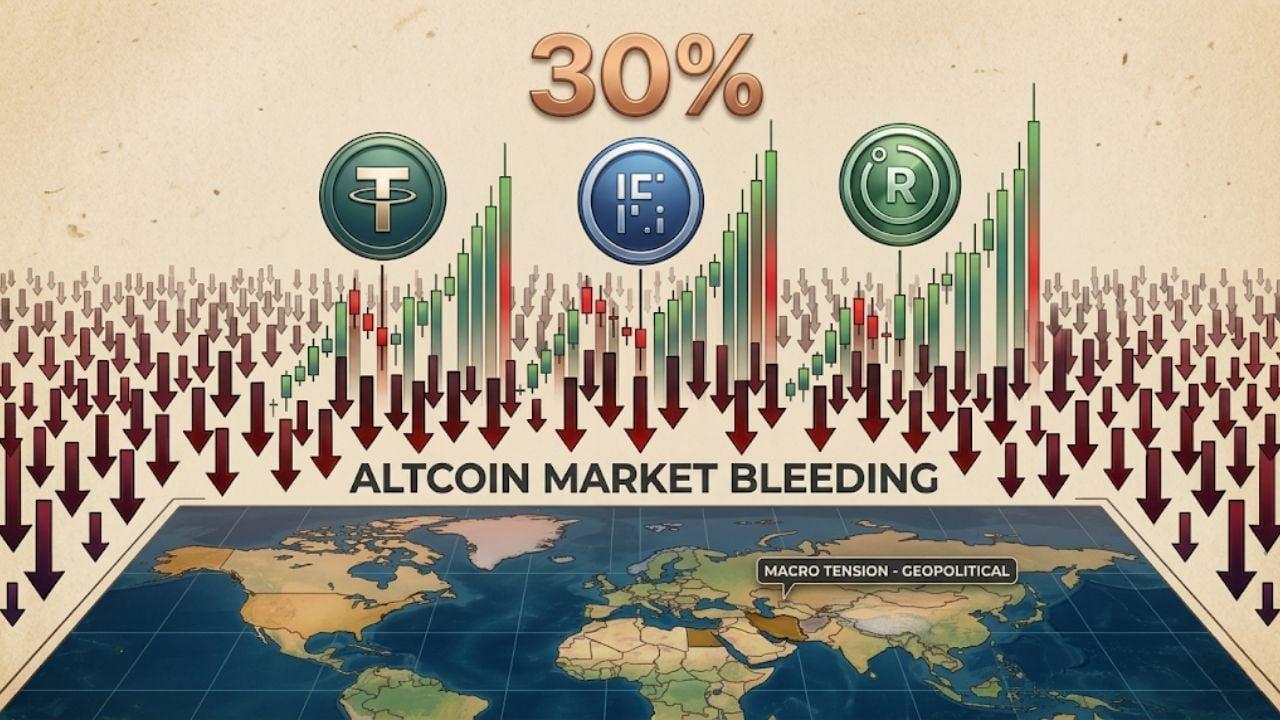
The AI-crypto convergence trade has broken decisively from the rest of the digital asset market. The aggregate market cap of AI tokens has climbed approximately 30% over the past 30 days, making the AI sector the only crypto category holding positive year-to-date territory as broader altcoins continue to bleed capital. Leading the advance: TAO (Bittensor) up 67.5%, FET (Fetch.ai / ASI Alliance) up 44%, and RNDR (Render Network) up 21%.
The rally is unfolding against a backdrop of easing macro pressure, with the US dollar trading near a six-week low and improved risk appetite among investors following progress in ceasefire negotiations between the United States and Iran.
Bittensor's TAO has been the standout performer across all major crypto categories over the past month. The decentralized AI training network operates on a fixed supply of 21 million tokens, mirroring Bitcoin's scarcity model, and completed its first halving in December 2025, cutting daily issuance from 7,200 to 3,600 TAO. The supply-side tightening, combined with accelerating institutional interest, has supported aggressive price appreciation.
Institutional infrastructure is also being built fast. Grayscale has an active S-1 filing to convert its Bittensor Trust into a spot ETF, and publicly listed companies, including xTAO and TAO Synergies, have established multi-million dollar TAO treasuries. The network now supports 128 active subnets, with each subnet functioning as a specialized AI computation layer rewarding performance with token emissions.
For deeper insights into the accelerating wave of institutional crypto adoption driving projects like Bittensor, see this analysis:
No comments yet. Be the first!
TAO currently trades around $265, recovering from a sharp governance-driven dip in mid-April following the exit of subnet operator Covenant AI, which sold approximately $10.2 million in tokens. Technically, the $240 to $250 zone is the key support level. A hold there would confirm the longer-term uptrend; a break below opens a path toward $200. Despite short-term volatility, the 30-day price action remains firmly positive.
FET and RNDR: AI Agent Demand and the GPU Compute Supercycle
FET, the native token of the Artificial Superintelligence Alliance (a merger of Fetch.ai, SingularityNET, and Ocean Protocol), has gained 44% over the past 30 days. The token powers autonomous AI agent deployment and decentralized data trading infrastructure. Renewed institutional attention toward agentic AI, which refers to self-directing AI systems capable of executing multi-step tasks on-chain without human intervention, has placed FET directly in the path of capital looking for on-chain AI exposure.
Render Network's RNDR posted a 21% gain over the same period. The protocol operates a decentralized marketplace for GPU compute, allowing AI developers and content creators to access rendering and inference power at below-market cloud rates. NVIDIA's March 2026 GTC keynote projected $1 trillion in total chip demand through 2027, a macroeconomic data point that sent AI tokens broadly higher by reinforcing the GPU compute scarcity thesis that underpins Render's value proposition.
Recent market intelligence highlights how decentralized AI projects like TAO and Render are leading the broader crypto growth cycle amid these developments:Decentralized AI: TAO & Render Lead Crypto Growth.
The broader altcoin market had a difficult Q1 2026. Total altcoin market cap fell approximately 40% from late 2025 highs as retail participation contracted and macroeconomic uncertainty weighed on risk assets. Against that backdrop, the AI sector's positive YTD performance is a meaningful divergence. Analysts attribute it to genuine utility demand: AI tokens are not pure narrative plays. Bittensor charges real fees for subnet compute, renders bills for GPU jobs dispatched, and the ASI Alliance generates revenue from agent service deployments. That fee-revenue floor provides a value anchor that speculative altcoins lack.
According to data tracked by Spotted Crypto, the total AI crypto market cap stood at approximately $22.6 billion across 919 projects as of March 2026, with Bittensor leading at roughly $3.2 to $3.4 billion. Tokens with verifiable on-chain revenue are pulling ahead of pure-narrative competitors, a pattern consistent with the broader market's shift toward utility-driven asset selection.
The AI token rally is receiving a meaningful macro tailwind. The US dollar index has fallen to near six-week lows, trading around 98.36 as of April 15, pulled down by improved risk appetite linked to ceasefire negotiations between the United States and Iran following US-Israel strikes on February 28, 2026. The current ceasefire window is set to expire on April 21, and ongoing diplomacy, including signals from Iran's Foreign Minister that talks have progressed on several issues, has kept geopolitical risk premiums in check for now.
Dollar weakness typically correlates with improved performance across risk assets, including cryptocurrencies. With the DXY index trading near its overnight low of 98.297, the environment remains supportive for speculative capital rotation into higher-beta assets. AI tokens, positioned at the intersection of the two most dominant macro narratives in technology (artificial intelligence) and finance (crypto infrastructure), are capturing a disproportionate share of that rotation.
Three variables will determine whether the AI token momentum extends or corrects in the near term. First, the Iran ceasefire outcome before the April 21 deadline. A breakdown in talks could reignite dollar strength and dampen risk appetite across crypto markets. Second, TAO's ability to hold the $240 support zone and absorb ongoing governance concerns around Bittensor's decentralization model. Third, Grayscale's Bittensor ETF application decision, expected in August 2026, which could open a fresh institutional capital channel into the AI crypto sector.
For now, AI tokens are running a narrative that the rest of the crypto market cannot match: real revenue, real infrastructure demand, and a macro environment pointing toward dollar weakness and improved risk appetite. Whether that combination sustains the 30-day momentum into Q2 remains the central question for traders positioned in TAO, FET, and RNDR.