The Quick Answer
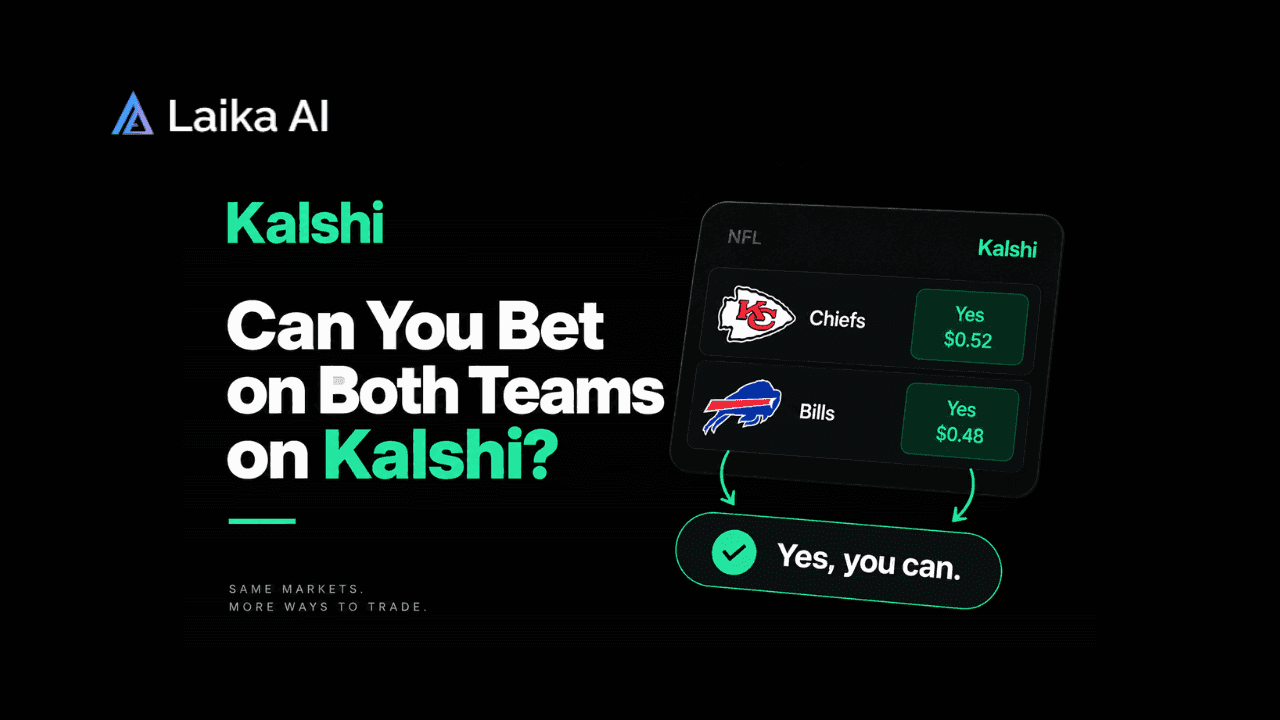
Yes, you can bet on both teams on Kalshi. You can hold a YES contract and a NO contract on the same market at the same time, and nothing on the platform stops you. Oddsshopper's reporting states this directly: the exchange has no rule against it and no house to object.
That last part is the detail most people miss, and it's the whole reason the answer is yes without a caveat. A sportsbook takes the other side of your bet, so letting you win both ways would cost the book money. Kalshi doesn't work that way. Once you understand why, the rest of this guide is about when holding both sides is actually useful, not just legal.
Why The Answer Is Yes: An Exchange Has No House
Kalshi allows both-sides positions because it isn't a bookmaker taking the other side of your trade. It's an exchange matching buyers and sellers, the same structural role a stock exchange plays between someone buying shares and someone selling them. There's no counterparty with a business interest in your outcome, so there's no reason to block a trade that happens to touch both sides of a market.
A sportsbook sets odds, takes your bet against its own book, and profits on the spread between what it pays winners and collects from losers. If a bettor could freely buy both sides of the same line at the same book, the book would be handing back its own edge. That's why some sportsbooks watch it. On Kalshi, there's no edge to protect in that sense, because Kalshi doesn't set the price and doesn't lose money when a market resolves either way. It collects a transaction fee on the trade itself, not a stake in the outcome.
That structural difference is exactly what one r/sportsbetting user was probing when they asked whether betting both sides across two nearby casinos in Washington would let them "win regardless of the outcome," and whether there'd be consequences. At two competing sportsbooks, the answer depends on each book's own policy, because each book is a separate business with its own line and its own risk. On a single exchange like Kalshi, the question doesn't even apply the same way, because you're trading against other users through the order book, not against the house.
"Both Teams" Is The Same Question
If you searched for whether you can bet on both teams, you're asking the same question as whether you can hold both sides of a Kalshi market. Kalshi's markets aren't framed as Team A versus Team B the way a sportsbook line is. They're framed as a single yes-or-no question: will this specific outcome happen. Betting on "the other team" on Kalshi means buying the NO contract on that same question, or buying YES on the mirrored market if one exists separately.
That framing matters because it changes what "both teams" actually means in practice. On a two-outcome market, YES and NO are the only two positions there are, so holding both is definitionally holding both teams. If you want to see how that market structure plays out in actual trades, Kalshi's trading strategies for 2026 covers how traders use correlated markets, including ones where taking positions on both sides of related questions is the strategy itself, not a side effect.
A Worked Example: What Holding Both Sides Costs
Here's the mechanism in numbers, using a simple illustrative case rather than a live market. Say a Kalshi market's YES contract is trading at 60 cents and its NO contract is trading at 45 cents. Buy one of each and you've spent $1.05 total to guarantee a $1.00 payout no matter which side resolves true. You've locked in a 5-cent loss before fees, because the two prices summed to more than a dollar.
Now flip it: YES at 55 cents and NO at 40 cents. Buy one of each for 95 cents total, and whichever side wins pays you $1.00. That's a locked-in 5-cent profit before fees, and it exists purely because the two prices summed to less than a dollar. This is the entire logic behind holding both sides on an exchange: you're not betting on an outcome anymore, you're betting on whether the two prices are priced consistently with each other.
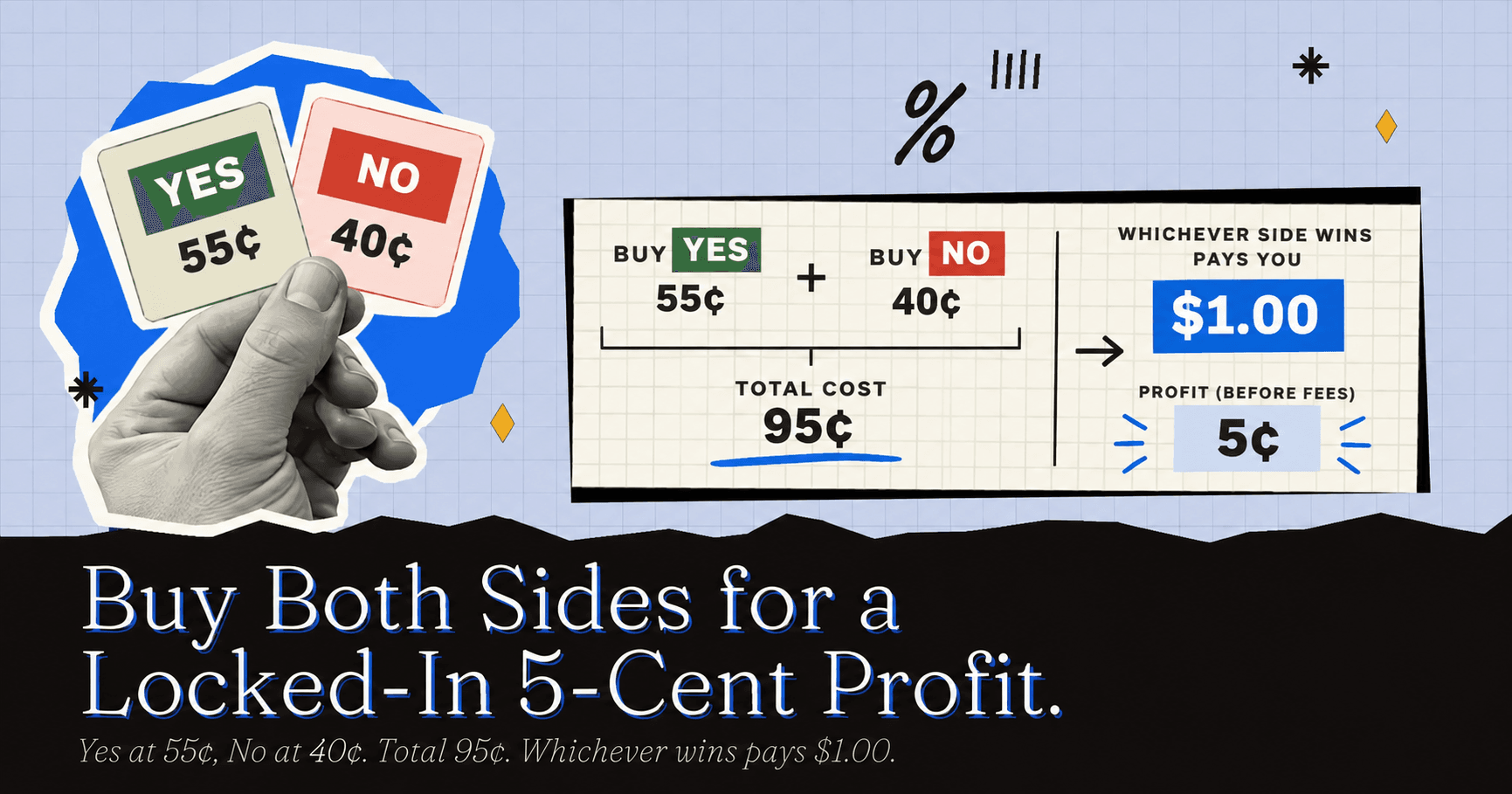
Fees change this math in practice, and where those numbers add up is exactly the sort of side-by-side comparison a fee breakdown between Kalshi and Polymarket is built to answer, since a 5-cent theoretical edge can disappear entirely once a per-contract fee is subtracted from it.
The Three Times Buying The Other Side Is The Right Move
Holding both sides isn't something you do by default. It solves three specific situations, and outside those three, buying the side you don't believe in just cuts your own position in half.
1. Closing Out A Position
Buying the other side is often the fastest way to close a position you already hold, because Kalshi doesn't require you to wait for a market to settle to get out of it. If you're long YES and want out, buying NO in the same size neutralizes your exposure, since the two positions pay off against each other regardless of the eventual result.
2. Hedging: Protecting A Profit Or Capping A Loss
If a market has moved in your favor since you opened your position, buying the other side locks in part of that gain instead of leaving it exposed to a late reversal. The same move works in reverse: if a position has moved against you, buying the opposite side caps how much further you can lose, at the cost of also capping any recovery.
3. A Real Price Discrepancy
This is the case in the worked example above. When YES and NO are priced so that buying one of each costs less than a dollar, buying both isn't a hedge or an exit, it's a bet that the two prices themselves are wrong relative to each other. For a deeper look at how traders find and act on this kind of mispricing across markets, Kalshi's arbitrage strategy for correlated markets walks through the same logic applied across related contracts rather than a single one.
The Risk Shape Does Not Take The Day Off
None of the three legitimate reasons above turn holding both sides into a risk-free move by default. Buying both sides only guarantees a profit when the combined price is below a dollar before fees, and it only guarantees a loss-free exit when the sizes match exactly. Get the sizing wrong, or buy in after the price gap has closed, and you can hold both sides and still lose money.
This is where "can you bet on both teams on Kalshi" and "should you" split apart. The exchange has no rule against it, but the market has no obligation to hand you a discrepancy worth trading. We track live pricing across Kalshi and Polymarket as part of our own wallet and market data tools, and gaps like the one in the worked example above close fast once other traders notice them.
If you're weighing whether the strategy is worth the fee cost and the effort of watching for gaps, Kalshi's regulatory standing next to Polymarket is worth reading alongside this, since the platform you're trading on affects how reliably these prices behave in the first place.
Reading Two Prices That Sum To A Dollar
The fastest way to check whether holding both sides is worth it is to add the two prices together. On a two-outcome Kalshi market, YES and NO should sum to close to $1.00 most of the time, because that's what keeps the market efficient. When they sum to noticeably less than a dollar, buying both locks in the difference as profit. When they sum to noticeably more, buying both locks in the difference as a loss, and selling both, if you're able to, is the profitable side of that same gap.
That single check, add the two prices and see how far from a dollar they land, is the entire tool you need to evaluate whether a both-sides trade on Kalshi is worth taking. Everything else in this guide is context for that one number.
Where This Leaves You
You now know the answer is yes, you know why an exchange structure makes it yes without exception, and you know the three situations where buying the other side actually serves a purpose: closing out, hedging, and trading a price gap. The next time you're looking at a Kalshi market, add the two prices together before you decide whether holding both sides is worth the fee. If you want the fuller picture of how Kalshi's exchange model works before you put money into either side, Kalshi's founder and market structure is the right starting point, and a complete guide to making money on Kalshi is the logical next stop once the mechanics feel familiar.
Frequently Asked Questions
Can you bet on both teams on Kalshi?
Yes. Kalshi has no rule against holding YES and NO on the same market at once, because it's an exchange with no house taking the other side of your trade.
Is betting on both sides the same as arbitrage on Kalshi?
Only when the two prices sum to less than a dollar. If YES and NO together cost less than $1.00, buying both locks in the difference as profit before fees. If they sum to more than a dollar, holding both locks in a loss instead.
Why can't you do this at a sportsbook the same way?
A sportsbook takes the other side of your bet and profits on the spread between what it pays out and collects, so letting you freely bet both sides at the same book cuts into its own edge. Kalshi collects a transaction fee rather than taking a side, so it has no equivalent reason to restrict it.
Does holding both sides on Kalshi guarantee a profit?
No. It only guarantees a profit when the combined price of YES and NO is below a dollar before fees are counted, and the position has to be sized correctly on both sides. Buying both without checking the combined price can just as easily lock in a loss.