Laika AI
Last Updated
April 3, 2026

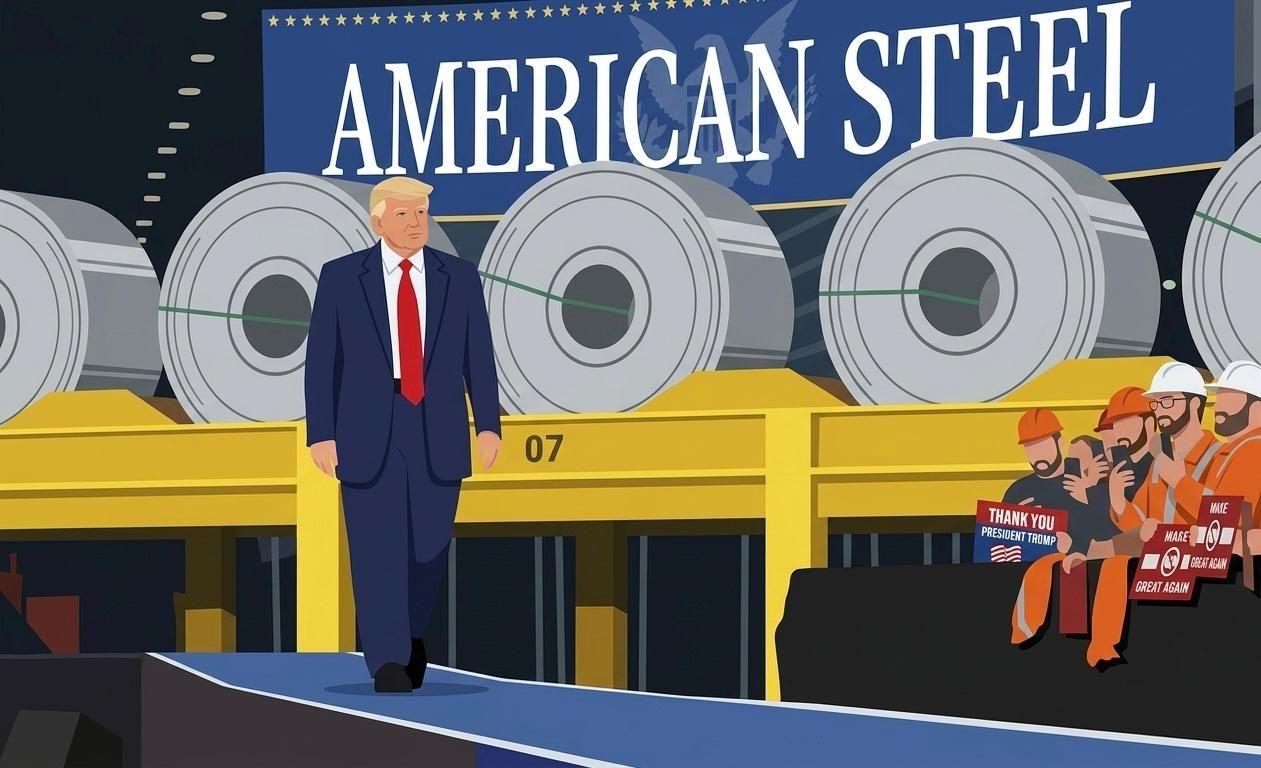
President Donald Trump signed a sweeping tariff proclamation on April 2, 2026, imposing a 50% duty on core steel, aluminum, and copper imports and a 25% rate on a broad range of derivative metal products, with the measures taking effect on April 6 and carrying significant implications for global supply chains, manufacturing costs, and broader risk asset sentiment.
The White House fact sheet accompanying the April 2 proclamation lays out a tiered tariff structure that significantly expands the scope of Section 232 metal duties. At the top of the rate schedule, articles made entirely or almost entirely of steel, aluminum, or copper face a 50% tariff on their full assessed value. This category covers foundational industrial inputs, including steel coils, aluminum sheets, and copper rod, the raw material inputs that flow into virtually every segment of the manufacturing economy.
Derivative articles, defined as products substantially made of these metals but not composed entirely of them, face a 25% flat tariff on full value. The White House provided specific examples to illustrate the breadth of this category: steel cooking appliances, silverware, diesel-engine trains, and semi-trailer trucks all fall under the derivative classification. The practical reach of the 25% tier is therefore considerably wider than the core metal category, touching finished goods that consumers and businesses encounter directly.
Additional provisions add further nuance to the framework. Certain metal-intensive industrial equipment and electrical grid infrastructure will carry a 15% tariff rate through 2027, a carve-out designed to moderate the cost impact on energy infrastructure buildout without abandoning the broader protectionist posture. Products manufactured abroad using entirely US-sourced steel, aluminum, or copper face a 10% rate, creating an incentive structure that rewards foreign manufacturers who source their inputs domestically. Goods in which these metals constitute 15% or less of total value by content are exempt from the new framework entirely.
No comments yet. Be the first!
The proclamation includes a notable geographic distinction. Imports of core steel and aluminum from the United Kingdom will face a 25% tariff rather than the standard 50%, with derivative goods from the UK subject to a 15% rate. This preferential structure reflects the existing bilateral trade relationship between Washington and London without altering previously negotiated arrangements with the European Union, Japan, or South Korea, all of which remain governed by their prior agreements.
The differential treatment of the UK introduces a new variable into trade diplomacy, signaling that the administration is willing to negotiate country-specific carve-outs within the broader tariff architecture while maintaining pressure on trading partners that have not secured similar arrangements.
The April 2 proclamation does not emerge in isolation. It is the latest step in a multi-year escalation of Section 232 metal policy under the current administration. A February 2025 overhaul eliminated most existing exceptions to the tariff framework, removing the flexibility that had allowed certain trading partners and product categories to avoid the full impact of earlier duties. A June 2025 hike raised the rate on core steel and aluminum to 50%, and copper was added to the framework at the same rate in July 2025.
The April 2026 action extends this trajectory by applying the tariff framework more consistently across the full value of imported goods and broadening the derivative category to capture a wider range of finished products. A senior administration official, speaking anonymously ahead of the announcement, described the changes as a simplification of existing policy intended to create greater fairness for domestic businesses navigating import competition.
The immediate economic consequence of the new rates will be felt most acutely in import-reliant manufacturing and construction sectors. Industries that depend on foreign metal inputs face a material cost increase effective April 6, a timeline that leaves little room for supply chain adjustment or alternative sourcing arrangements.
Domestic metal producers stand to benefit from reduced import competition, which is the stated rationale for the policy. However, downstream manufacturers who consume steel, aluminum, and copper as inputs rather than producing them will absorb higher input costs that may translate into price increases across finished goods ranging from industrial machinery to consumer appliances.
There is no direct mechanical link between metal tariffs and cryptocurrency markets, but the broader macroeconomic environment shaped by aggressive trade policy carries indirect weight for digital assets. Tariff escalation contributes to inflationary pressure by raising input costs across the manufacturing base, complicating the Federal Reserve's path toward rate cuts and keeping real yields elevated. That environment has historically created headwinds for risk assets including Bitcoin and Ethereum.
Additionally, the prospect of retaliatory measures from affected trading partners after April 6 introduces geopolitical uncertainty that tends to suppress risk appetite across asset classes. Traders watching the crypto market through a macro lens will be monitoring Cabinet decisions on additional derivative classifications, the response posture of major trading partners, and any signals from the Fed on how the tariff environment factors into its monetary policy calculations through the remainder of 2026.