Laika AI
Last Updated
April 7, 2026

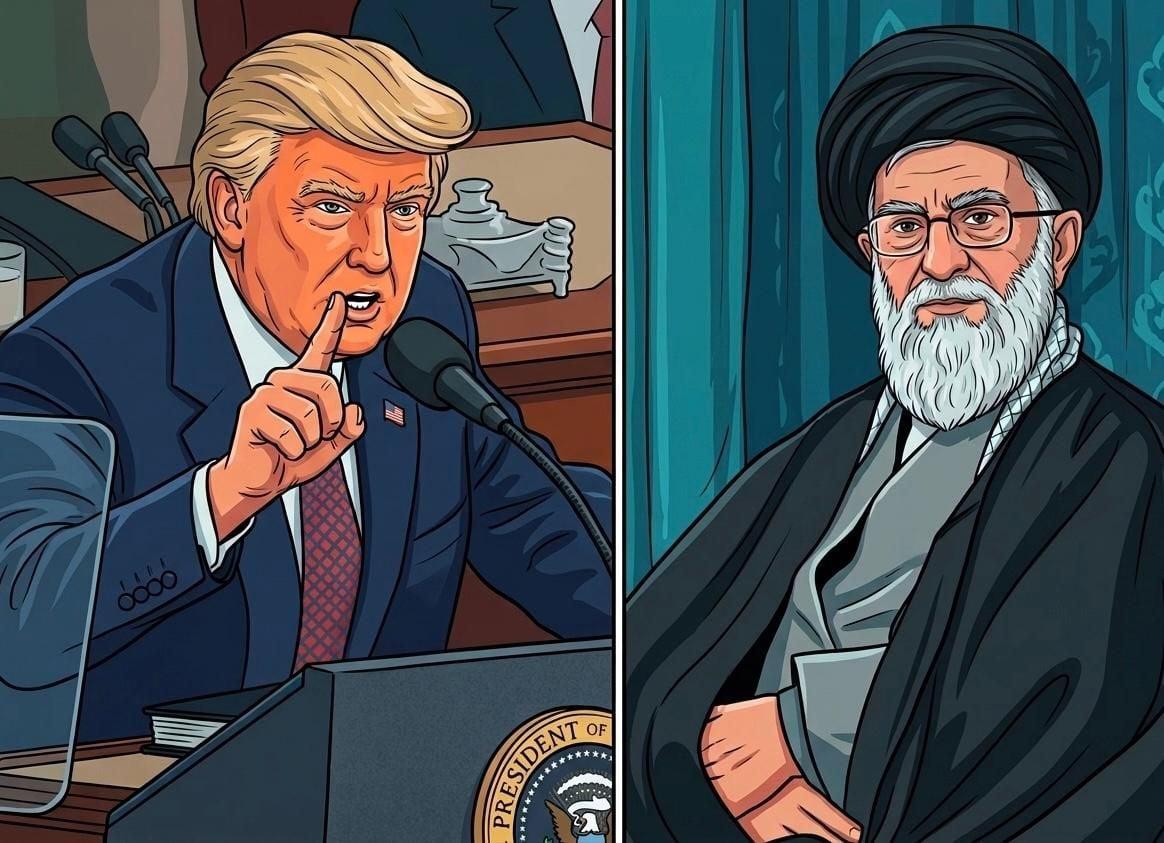
President Donald Trump declared on Monday, April 6, that his ultimatum requiring Iran to finalize a nuclear agreement by 8 PM Eastern Time on April 8 is firm and will not be extended, raising the immediate prospect of expanded US military action against Iranian civilian infrastructure and sending risk assets into a state of acute uncertainty.
Speaking to reporters on Monday, Trump left little ambiguity about the status of his negotiating timeline with Iran. When asked directly whether the April 8 deadline might be pushed back as it has been previously, he responded with two words that markets immediately began pricing: highly unlikely.
The president elaborated by stating that Iran has had sufficient time to reach an agreement, framing the deadline not as a pressure tactic subject to further negotiation but as the terminal point of a diplomatic window he considers to have already been generous. The ultimatum requires Tehran to finalize terms by 8 PM Eastern Time on Tuesday, April 8, 2026, a hard stop that Trump indicated he intends to enforce.
The firmness of the language marks a notable shift from prior statements in which flexibility remained implied if not explicit. By characterizing an extension as highly unlikely and citing Iran's accumulated negotiating time, Trump has narrowed the diplomatic space considerably and placed the burden of the next move squarely on Tehran.
In the days leading up to the deadline, Iran submitted a 10-point peace proposal in response to the ongoing negotiations. Trump acknowledged the submission and described it as significant, a characterization that suggests the proposal contained elements the administration viewed as worthy of consideration rather than dismissing it outright.
No comments yet. Be the first!
However, significant did not translate into adequate. Trump told reporters that he gave Iran a chance and they had not taken it, a formulation that frames the 10-point document as a missed opportunity rather than a foundation for continued talks. US officials separately described Iran's response as maximalist, a diplomatic term indicating that Tehran's opening position was far from American negotiating requirements and would require substantial movement to bridge the gap.
The two-phase framework under discussion involves an initial 45-day ceasefire as a first step, followed by comprehensive peace negotiations. That structure suggests the US has been willing to accept a phased approach rather than demanding a complete agreement upfront, but Iran's 10-point proposal apparently did not align sufficiently with even that more flexible framework.
The consequences Trump has attached to a failure to reach a deal before the deadline are severe and specifically enumerated. He indicated that without an agreement by 8 PM on April 8, the United States would authorize extensive strikes on Iranian civilian infrastructure, citing bridges and power plants as explicit targets.
The deliberate targeting of civilian infrastructure represents a significant escalation in the stated war aims of the US campaign. Prior justifications for military action under Operation Epic Fury centered on nuclear program degradation, missile stockpile destruction, and proxy network disruption. Expanding the target set to include power generation and transportation infrastructure signals a willingness to impose direct costs on Iranian civilian life at a scale that goes beyond the military and strategic targets previously emphasized.
Iran has responded to the threat by asserting it would retaliate against energy and water facilities across Gulf nations if the US proceeds with expanded strikes. That counter-threat introduces a regional dimension to the potential escalation, placing the energy infrastructure of US-aligned Gulf states, including Saudi Arabia and the UAE, within the declared scope of Iranian retaliation.
Adding a further layer of complexity to the diplomatic picture, Israeli Prime Minister Benjamin Netanyahu has privately cautioned Trump against pursuing a ceasefire agreement, according to Israeli officials. The nature of Netanyahu's concern reflects a divergence in strategic calculus between Washington and Jerusalem that has been building throughout the conflict.
Israel's interest lies in ensuring that any agreement reached does not leave Iran's remaining military and nuclear infrastructure intact in ways that could reconstitute a threat over a shorter timeline than American negotiators may be accounting for. A ceasefire that halts US operations before those objectives are fully achieved would be viewed in Jerusalem as strategically premature regardless of its diplomatic optics.
For financial markets, the combination of a hard deadline, explicit infrastructure strike threats, and Gulf-wide retaliation warnings has created a risk environment that is difficult to hedge cleanly. Bitcoin and Ethereum are trading with elevated sensitivity to each headline out of Washington and Tehran as the 8 PM deadline approaches.
The binary nature of the outcome creates two sharply divergent market scenarios. A last-minute agreement that averts expanded strikes would likely trigger a rapid risk-on response, with Bitcoin potentially pushing toward and through the $100,000 resistance level as geopolitical fear premiums unwind. A breakdown in talks followed by confirmed infrastructure strikes could send oil prices surging, compress risk appetite across equities and crypto simultaneously, and test Bitcoin's $80,000 support level as safe-haven demand competes with broader liquidity tightening.
Oil futures, Hormuz shipping updates, and any statement from Iranian officials in the hours before the deadline will serve as the most immediate leading indicators of which scenario is materializing. With 8 PM on April 8 now hours away, markets are watching every development in real time.