Laika AI
Last Updated
April 17, 2026

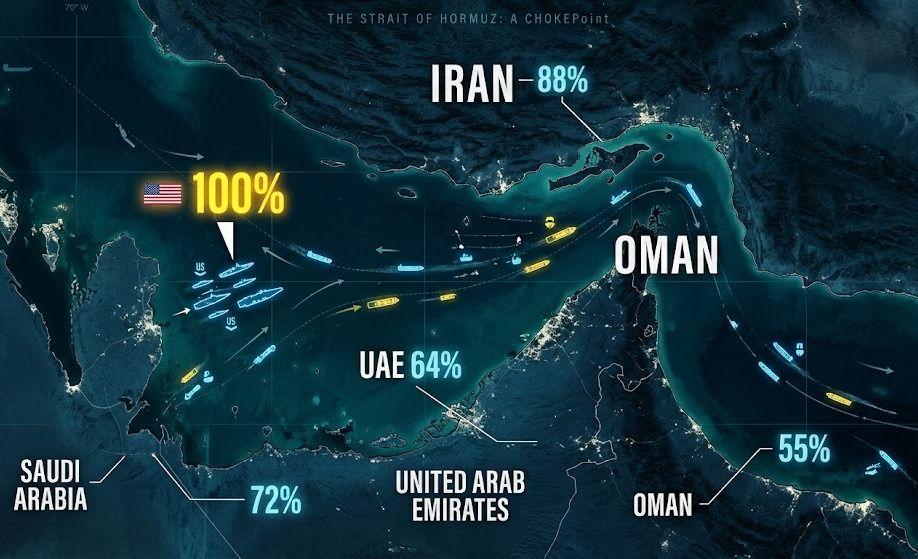
A newly active Polymarket prediction market is tracking which countries will send warships through the Strait of Hormuz before April 30, 2026, with the United States priced at a certainty of 100% while every other nation assessed in the market sits below 10%, reflecting the stark asymmetry in military presence and intent across the world's most strategically loaded waterway.
The Strait of Hormuz is the narrow passage connecting the Persian Gulf to the Gulf of Oman and the broader Arabian Sea. Roughly 20% of the world's oil supply moves through this corridor on any given day, making it one of the most consequential geographic chokepoints in global energy markets and international security.
Any disruption to transit through the strait, whether through military confrontation, blockade, or escalating naval standoffs, carries immediate implications for oil prices, shipping insurance rates, and the energy security calculations of importing nations across Asia, Europe, and beyond. It is that combination of strategic importance and current geopolitical tension in the region that has made the strait the subject of active prediction market attention heading into the final weeks of April 2026.
Among all nations covered by the Polymarket market, only the United States has been priced at 100%, a reflection of the country's entrenched and continuous naval presence in the region through the Fifth Fleet, which is permanently based in Bahrain and routinely conducts transit and patrol operations throughout the Persian Gulf and surrounding waters.
No comments yet. Be the first!
The 100% pricing is effectively a resolved market in practical terms. Traders are not speculating on whether US warships will transit the strait but rather acknowledging an operational reality that has persisted for decades. The United States has maintained a consistent naval presence in and around the Hormuz corridor as a core element of its regional military posture, and there is no credible scenario under which that transit activity would cease before the April 30 deadline.
Among the European countries assessed in the market, France carries the highest probability at 7.35%, followed by Germany at 2.95% and the Netherlands at 2.4%. Italy is priced at 3.6% while Greece sits at 1.65%, rounding out the European picture with a cluster of low but non-zero probabilities that reflect the possibility of individual naval deployments without representing high trader conviction.
France's relatively elevated position among European nations is consistent with its history of independent naval deployments in the Indo-Pacific and Middle Eastern regions, where it maintains overseas territories and strategic interests that occasionally prompt transit activity through sensitive maritime corridors. Germany, the Netherlands, Italy, and Greece all participate in NATO naval operations but are less frequently associated with independent deployments through the strait outside of coalition frameworks.
India is priced at 3.6% and Pakistan at 4.65%, placing both South Asian naval powers in a similar range to the lower-tier European nations. The United Kingdom sits at 4.5%, a figure that reflects its reduced but still active global naval presence following years of fleet contraction and its ongoing commitments to regional security partnerships.
Canada is the lowest-priced named nation in the market at 0.55%, consistent with its limited history of independent naval deployments to the Persian Gulf region outside of specific multinational mission frameworks.
The clustering of these nations in the 1% to 7% range suggests that traders view confirmed, independently verifiable warship transits through the narrowest point of the strait as an unlikely but not impossible occurrence for each within the remaining timeframe.
A notable gap in the market data involves the regional powers most geographically proximate to the strait itself. Saudi Arabia, Qatar, Kuwait, the United Arab Emirates, and Bahrain have all not yet established market prices, leaving their naval intentions unquantified within the Polymarket structure.
The absence of pricing for these nations reflects a genuine analytical difficulty. Gulf Cooperation Council navies operate extensively within the Persian Gulf and have strategic reasons both to transit and to avoid transiting the strait depending on the prevailing diplomatic and military environment. The lack of established markets may also reflect thinner liquidity on these contracts as traders find the resolution criteria harder to apply to nations whose naval movements receive less consistent international media coverage.
The market resolves strictly on confirmed transits through the narrowest section of the Strait of Hormuz itself. Broader naval operations conducted within the Persian Gulf or the Gulf of Oman do not qualify, nor does a general military presence in the region without a documented passage through the defined transit zone.
This specificity creates meaningful distance between what might count as regional military engagement and what the market will recognize as a qualifying event. A nation could deploy warships to the Persian Gulf, conduct exercises in close proximity to the strait, and maintain a visible naval presence throughout the period without triggering a "Yes" resolution if those vessels do not physically pass through the designated transit corridor.
Resolution depends on credible reporting from established news organizations or official confirmation from national governments or military commands, adding a verification layer that filters out unconfirmed or contested claims about naval movements in a region where information is frequently contested.