Laika AI
Last Updated
April 13, 2026

A brief but deliberately mysterious post on X directed at prominent venture capitalist Marc Andreessen has set crypto and tech circles speculating about undisclosed developments tied to Starlink, arriving at a moment when SpaceX's potential IPO trajectory and the emerging intersection of satellite technology with blockchain ecosystems are both drawing significant market attention.
The post is short, pointed, and carefully vague. Directed at Andreessen's X handle with the message that the poster has some news for him about Starlink, accompanied by a stifled laughter emoji and the phrase launching soon, it contains just enough specificity to generate genuine curiosity without confirming anything at all.
No follow-up clarification has been provided by the poster. Andreessen has not publicly responded. No official announcement from SpaceX, Starlink, or any identifiable partner organization has been connected to the tweet in available reporting. What exists is a post that has traveled through crypto and tech social media on the strength of its implications alone, a dynamic that reflects how primed both communities currently are for news at the intersection of satellite technology, venture capital, and blockchain integration.
The immediate context that gives the post its energy is Andreessen's own recent commentary. The a16z co-founder publicly described Starlink as one of the world's least understood technological successes, praising its rapid global expansion and underappreciated strategic impact. That statement from one of Silicon Valley's most followed voices provided the setup. The cryptic reply delivered the intrigue.
No comments yet. Be the first!
Andreessen's characterization of Starlink as underappreciated is not a casual observation from someone outside the sector. As a partner at Andreessen Horowitz, one of the most influential venture capital firms in technology, his public assessments of major technology platforms carry the weight of someone who has examined the competitive landscape closely and arrived at a considered view.
Starlink's trajectory by any conventional metric is remarkable. The low-Earth orbit satellite internet service has expanded to provide connectivity across geographies that terrestrial infrastructure cannot reach economically, serving markets from remote rural communities to maritime and aviation operators. The subscriber base has grown at a pace that traditional telecommunications build-outs cannot match, and the latency improvements achieved through the low-Earth orbital design have made Starlink competitive with fixed broadband for an expanding range of use cases.
The praise also arrives in the context of serious speculation about SpaceX's IPO timeline and valuation. Coverage has cited potential valuations in the range of $175 trillion for the broader SpaceX enterprise, a figure that, if even directionally accurate, would make it among the most valuable companies ever to consider a public listing. Whether and when SpaceX pursues a public offering, and whether Starlink would be spun out separately, are questions that have been circulating in venture and institutional investor circles for some time without definitive resolution.
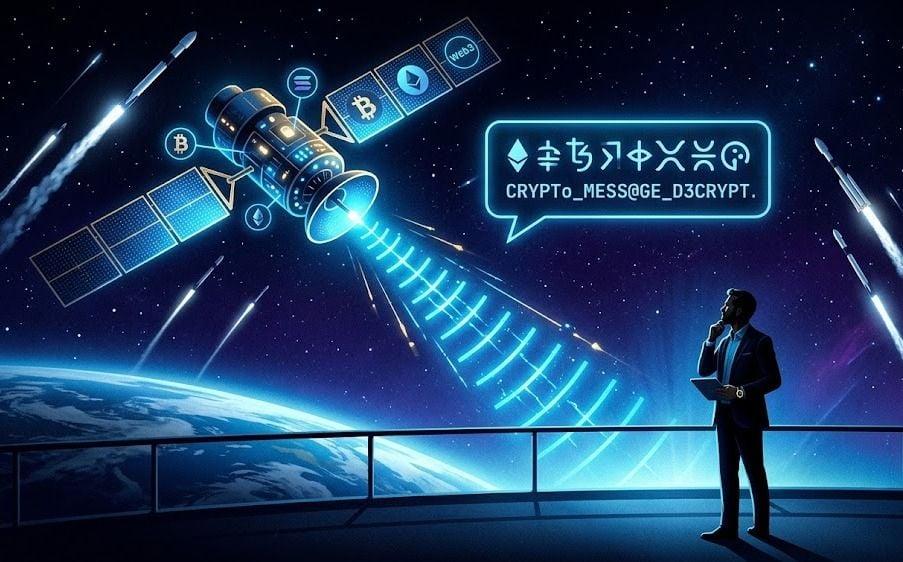
The tweet's audience reception in crypto communities reflects genuine and growing interest in satellite-blockchain convergence as an emerging technology category. Several conceptual applications have been discussed within Web3 developer circles, though none have confirmed Starlink's involvement at this stage.
Tokenized satellite access rights represent one speculative framework, in which blockchain-based ownership or subscription mechanisms could govern access to satellite connectivity services, potentially enabling peer-to-peer bandwidth trading or programmable service agreements. Crypto payment rails for Starlink subscriptions represent a more straightforward integration that would align with the broader trend of major technology services accepting digital asset payments. DeFi-enabled connectivity models, in which smart contracts automatically manage service level agreements and payment settlements for satellite bandwidth, represent a more technically ambitious but architecturally coherent application.
None of these applications has been linked to the specific tweet or to any confirmed SpaceX or Starlink development roadmap. They represent the speculative space that the community is populating in the absence of confirmed details, driven by the genuine convergence of timing between Andreessen's comments, the IPO speculation cycle, and the tweet's deliberately teasing phrasing.
For crypto investors trying to determine whether the tweet merits positioning attention, the key distinction is between confirmed announcements and social media speculation. In the current environment, viral ambiguity in tech and crypto circles can generate short-term sentiment movement in AI-blockchain hybrid tokens and space-tech adjacent projects, but that movement tends to be fragile and reverses quickly when announced developments fail to match speculative expectations.
The signals worth tracking are SpaceX's official communications, any follow-up posts from the original tweeter with substantive detail, Andreessen's eventual response if one comes, and Starlink subscriber growth figures that would contextualize any service expansion announcement. Until one of those concrete developments materializes, the tweet remains precisely what it presents itself as: a tease with a launch date that nobody outside its author currently knows.