Laika AI
Last Updated
April 10, 2026

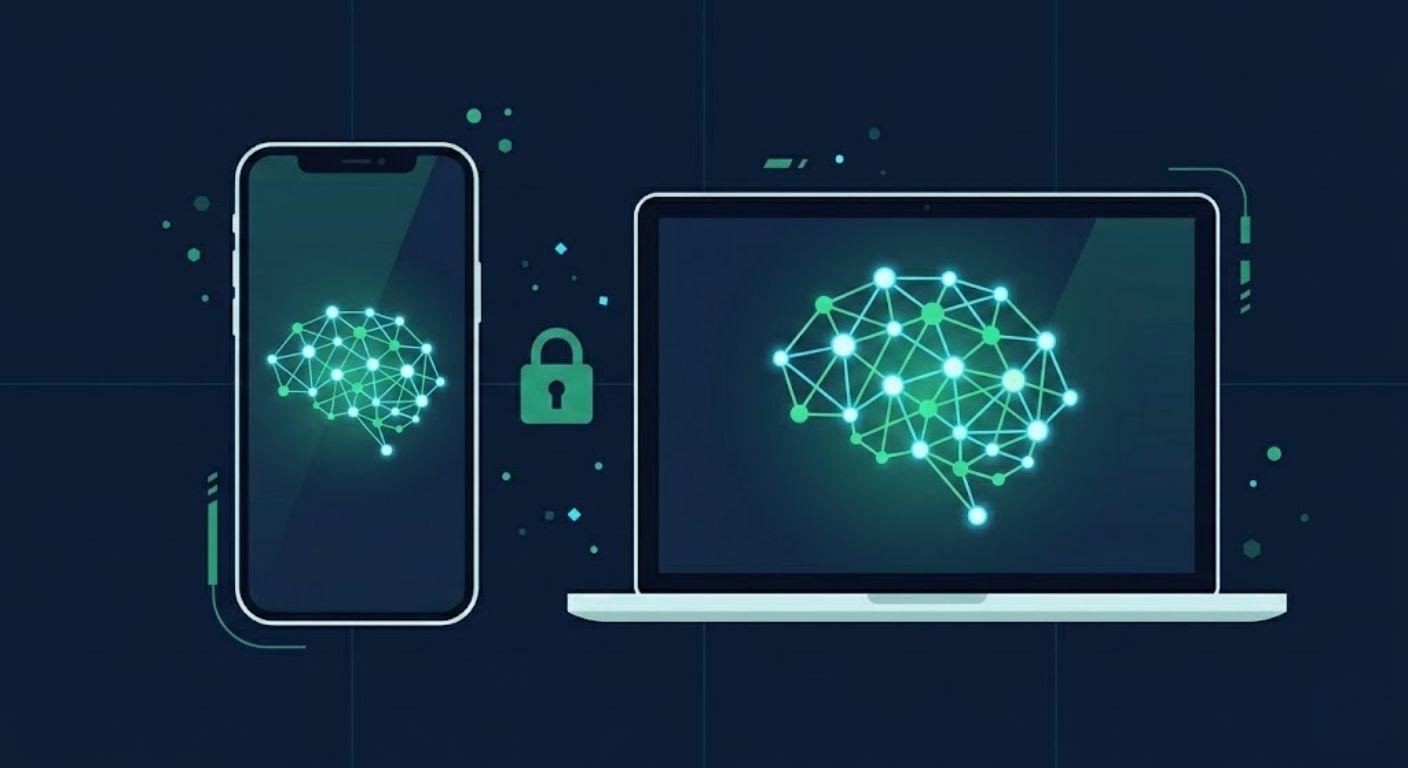
Tether the issuer of the leading stablecoin USDT, has officially entered a new phase of its artificial intelligence strategy. On April 9 2026, the company announced the release of QVAC SDK, an open-source cross-platform software development kit that lets developers build, run and fine-tune AI applications directly on everyday consumer devices.
The toolkit supports iOS, Android, Windows, macOS and Linux from a single codebase, eliminating the need for cloud servers and addressing long-standing concerns around latency, data privacy and connectivity in traditional AI systems.
According to Tether, the QVAC SDK handles core AI workloads, including text generation, speech processing, visual recognition and real-time translation. Developers can now create applications that function fully offline or in low-connectivity environments, making advanced intelligence accessible even in regions with limited internet infrastructure.
The launch marks a practical step toward local-first AI. Instead of relying on centralized data centres, the SDK distributes models and inference tasks across user devices themselves. This approach reduces dependency on big tech cloud providers and opens the door for permissionless private AI tools built by independent developers. Analysts trackinginstitutional crypto adoption note this shift reflects a broader move toward sovereign, infrastructure-independent technology stacks.
No comments yet. Be the first!
At the heart of the SDK lies QVAC Fabric, a customized branch of the popular llama.cpp inference engine. Tether integrated additional open-source components, such as whisper.cpp for speech-to-text and Bergamot for on-device translation. The entire stack exposes a unified interface so developers can mix and match capabilities without rewriting core application logic.
Holepunch protocol powers peer-to-peer model distribution and delegated inference. Devices in a local network can share model updates and compute resources, creating a decentralized swarm for AI tasks. Early benchmarks shared by Tether indicate memory usage drops by approximately 78 percent through BitNet and LoRA optimizations making high-performance models viable on standard smartphones and laptops.
The QVAC SDK builds on more than a year of steady investment. Since mid-2025, Tether has poured resources into its QVAC division, releasing QVAC Workbench, a mobile-optimized local AI environment and two massive synthetic datasets, Genesis I and II totaling 148 billion tokens focused on STEM and logic reasoning.
These datasets were designed to train independent models outside centralized labs. Combined with the new SDK, they form a complete pipeline from data preparation to on-device deployment. Industry observers note that Tether has committed roughly 4 billion dollars to AI initiatives, positioning the stablecoin giant as one of the largest corporate backers of decentralized intelligence. For a deeper look athow Tether and USDT fit into the broader crypto landscape, the company's trajectory underscores a deliberate expansion well beyond stablecoin issuance.
Tether frames the QVAC SDK as a direct counter to cloud-dominated AI platforms. By keeping data and computation on user devices, the toolkit enhances privacy and reduces censorship risks. Applications can operate without constant internet access or third-party oversight, appealing to users and enterprises wary of data harvesting.
For the broader crypto ecosystem, the move could strengthen USDT utility. AI agents powered by QVAC SDK may soon interact with decentralized networks, smart contracts and on-chain data using local inference for faster, cheaper execution. Developers are already discussing potential integrations with DeFi protocols and autonomous trading tools that run entirely on mobile hardware.
Analysts expect the SDK to accelerate mainstream on-device AI adoption. With major operating systems covered from a single codebase, hobbyists, startups, and large institutions can experiment without prohibitive cloud costs or compliance hurdles. GitHub activity and early app releases on supported platforms will serve as key metrics in the coming weeks.
Tether has not disclosed immediate token-related plans, but the timing aligns with growing interest in AI-crypto convergence. If developer uptake matches the hype, the SDK could become a foundational layer for the next wave of decentralized applications. The release also arrives as AI productivity tools see rapid expansion across platforms, with guides like this overview ofAI tools for Claude across Chrome, Excel, and desktop workflows reflecting just how quickly on-device and cross-platform AI is entering everyday use.
Tether has hinted at future expansions, including decentralized training fine-tuning support and toolkits for robotics or brain-computer interfaces. These features remain unverified, and no release timeline has been confirmed. The company emphasized that the current SDK already delivers production-ready capabilities for text, speech, vision and translation workloads.
Watch for initial open-source contributions, community-built applications and any partnership announcements in the coming days. As the crypto industry shifts toward real-world utility, Tether's latest release signals a maturing intersection of stablecoins and artificial intelligence.