Laika AI
Last Updated
April 14, 2026

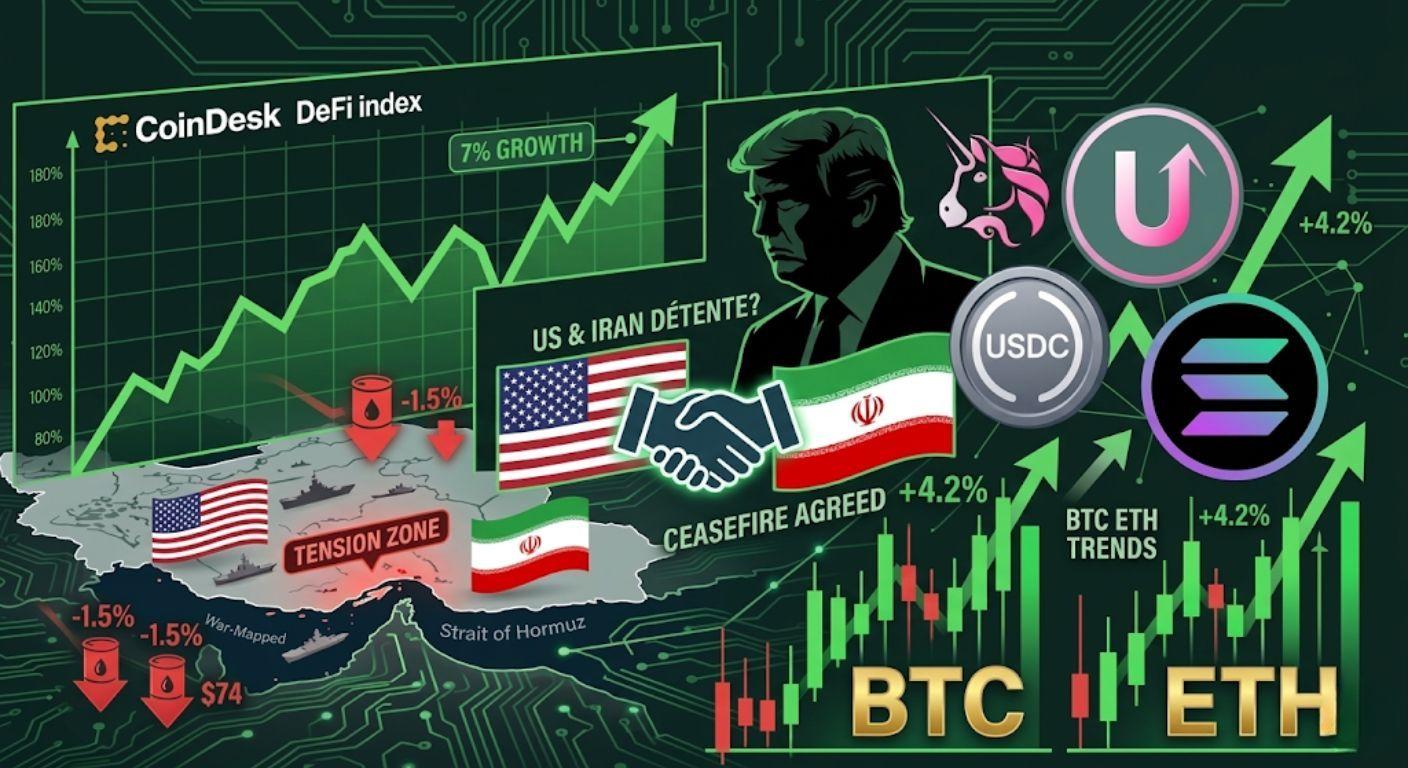
DeFi protocols and tokens posted strong gains on Wednesday as easing geopolitical tensions around Iran lifted broader risk appetite in global markets. The CoinDesk DeFi Select Index advanced approximately 7 percent over the past 24 hours, comfortably outpacing both Bitcoin and Ethereum in the short term rally.
The optimism stems from fresh signals that peace negotiations between the United States and Iran could still advance despite earlier setbacks. US President Trump indicated willingness to resume talks aimed at resolving the ongoing conflict that began with strikes on February 28, 2026. Reports also noted progress on several discussion points raised by Iran's foreign ministry officials, even without a finalized agreement.
This de escalation mood contributed to a softer US dollar, which traded near six week lows against a basket of currencies. The dollar index hovered around 98.361 after touching an overnight low of 98.297. Analysts pointed to weakened oil prices as a key driver behind the improved sentiment. Lower energy costs typically support risk assets, including cryptocurrencies, by reducing inflation fears and freeing capital for higher yielding investments. Some analysts have also flagged that macro relief events of this nature can mask underlying structural risks in crypto markets, as seen in recent scrutiny overalleged Bitcoin price manipulation tied to institutional players like Jane Street.
The current two week ceasefire arrangement is scheduled to expire on April 21, leaving a narrow window for further diplomatic efforts. Market participants appear to be pricing in the possibility of extended talks or a longer term resolution that would reopen critical shipping lanes.
No comments yet. Be the first!
DeFi tokens often exhibit higher beta during periods of rising risk appetite. With reduced macro uncertainty, investors rotated into decentralized finance protocols that offer yield opportunities and composable financial primitives. The CoinDesk DeFi Select Index capturing this segment outperformed the broader CoinDesk 20 index, reflecting sector specific strength.
Several underlying factors supported the move. Improved liquidity conditions across decentralized exchanges encouraged trading activity. Lower perceived tail risks from geopolitical flashpoints allowed leveraged positions in DeFi to perform well without immediate unwinding pressure. Newer DeFi-adjacent tokens, including emerging assets like theSKR token, also drew attention from traders seeking higher-beta exposure during the rally window.
Beyond macro tailwinds, two notable protocol developments enhanced the DeFi user experience and cross-chain capabilities.
Privy, the embedded wallet infrastructure provider, introduced native token swaps powered directly by the Uniswap API. Developers building applications on Privy can now enable seamless asset exchanges through a single API call without implementing custom swap logic. This integration taps into Uniswap's extensive liquidity across 18 chains and over 10 million assets, delivering competitive pricing and fast routing times around 200 milliseconds.
The update makes on-chain asset conversion feel more like built-in wallet functionality rather than a bolt-on feature. Payments, remittances, and other on-chain applications gain smoother user flows as a result.
Separately, Circle activated cross-chain forwarding support for USDC to Solana via its Cross Chain Transfer Protocol (CCTP). The enhancement automates destination chain execution for USDC transfers, reducing friction and operational complexity for developers and end users. CCTP already facilitates native burn and mint transfers of USDC across multiple blockchains, and the new Solana forwarding improves speed and reliability for routes involving the high-throughput network. For those less familiar,Solana's architecture as a high-speed blockchain makes it a natural fit for stablecoin routing at scale, where settlement latency directly affects user experience.
These upgrades arrive at an opportune moment when DeFi activity benefits from renewed market confidence. Easier wallet interactions and smoother stablecoin movement across chains can accelerate capital deployment into lending, trading, and yield farming protocols.
The Iran related developments exerted clear influence on traditional markets as well. Oil prices retreated amid hopes that the Strait of Hormuz could see improved transit conditions over time. The waterway remains a critical chokepoint for global energy supplies, and any sustained reopening would ease supply concerns that had previously weighed on risk sentiment.
Equity futures and other risk assets mirrored the positive tone in crypto. The combination of softer dollar conditions and declining oil supported a broad based recovery in growth oriented sectors.
Within crypto, major assets such as Bitcoin and Ethereum recorded solid but more modest gains compared with the DeFi segment. Solana also participated in the upswing, partly aided by the positive CCTP news that strengthens its interoperability with USDC liquidity.
While the short-term reaction favored risk assets, participants remain cautious about the fragility of the current ceasefire. The April 21 expiration date serves as a near term focal point for potential renewed volatility depending on negotiation outcomes.
Should talks progress constructively, further upside in DeFi and broader crypto could materialize as macro headwinds continue to fade. Conversely, any deterioration in the diplomatic track might prompt a quick reversal toward safe haven flows.
For now, the combination of geopolitical relief and concrete DeFi infrastructure improvements has created a constructive environment. Developers and users alike stand to benefit from more accessible tools such as Privy native swaps and expanded Circle CCTP functionality on Solana.
The coming days will test whether the current risk appetite can sustain itself through the ceasefire window. Market observers will watch dollar movements, oil prices, and on-chain DeFi volumes closely for confirmation of the trend.