Laika AI
Last Updated
May 6, 2026

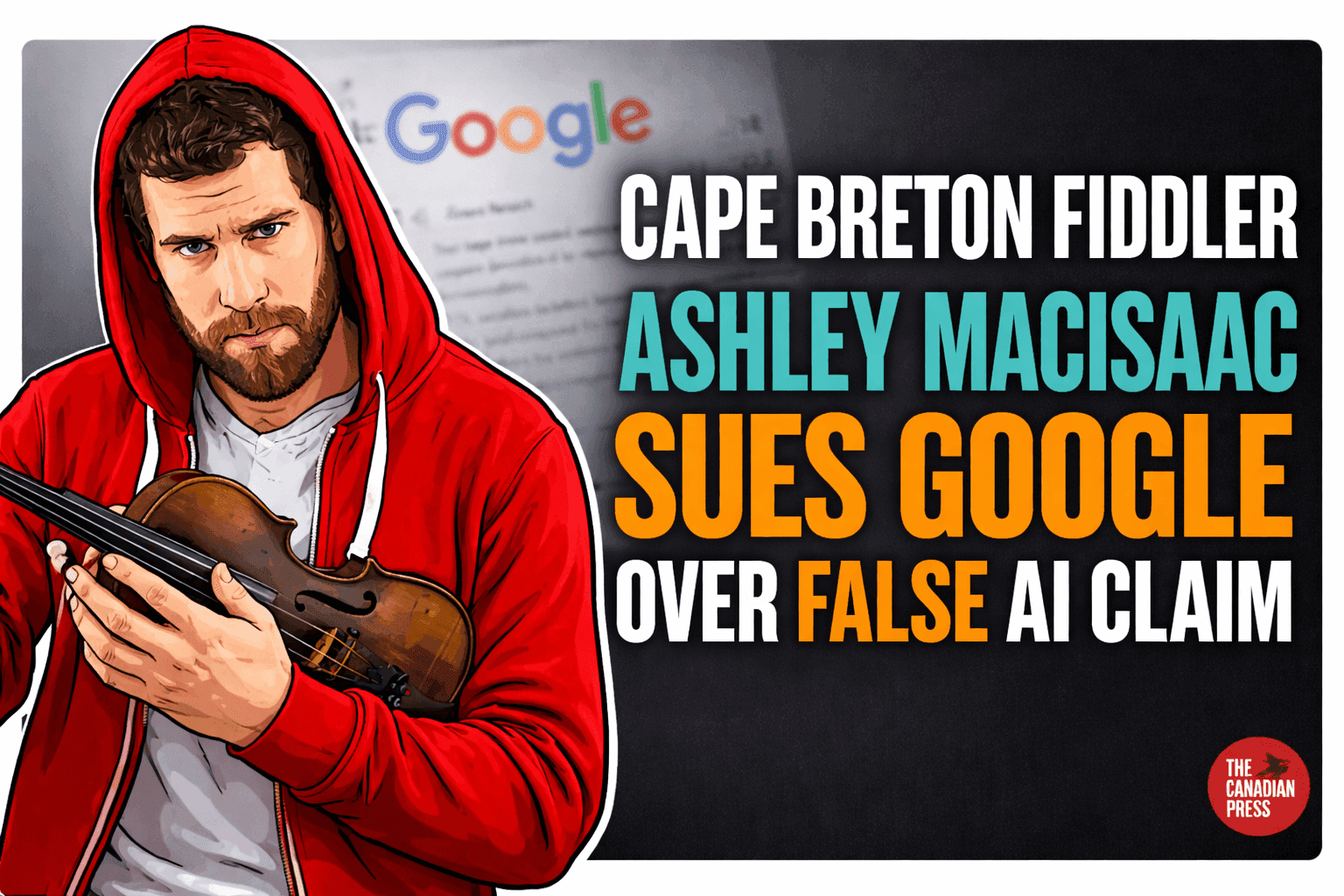
A Canadian fiddler who gained public recognition decades ago has filed a defamation lawsuit against Google after the company's AI tool generated an overview falsely identifying him as a sex offender, a fabricated claim that led directly to the cancellation of concert engagements and inflicted what the plaintiff describes as serious financial and emotional harm.
The fiddler discovered the damaging allegation while researching his own name online, a routine exercise that took an alarming turn when Google's AI-generated overview surfaced a statement falsely linking him to sex offender status. The AI tool, which aggregates and synthesizes information from across the web to produce summarized responses, presented the false claim in the authoritative format that characterizes AI-generated overviews, a format that many users treat as factually verified rather than algorithmically assembled.
That presentation format is central to the harm the plaintiff is alleging. A false claim buried in a forum post or an obscure webpage carries limited reach and limited credibility. The same false claim surfaced and presented as an AI-generated summary at the top of a search result carries the implicit endorsement of one of the world's most trusted information platforms, amplifying both its visibility and the degree to which readers are likely to accept it as accurate.
The result in this case was immediate and concrete. Concert organizers who encountered or were informed of the AI-generated claim moved to cancel the fiddler's engagements, translating what began as an algorithmic error into direct financial loss and reputational damage that the plaintiff argues cannot be undone simply by correcting the AI's output after the fact.
The lawsuit frames the AI tool's output as defamation, specifically as a false statement of fact that was disseminated to a wide audience and caused quantifiable harm to the plaintiff's reputation and livelihood. Defamation law in most jurisdictions requires demonstrating that a false statement was made, that it was communicated to third parties, that it concerned the plaintiff, and that it caused harm. On those basic elements, the fiddler's case appears to have a foundation.
No comments yet. Be the first!
The complicating factor is the question of intent and knowledge. Traditional defamation standards require showing that the defendant made the false statement either knowingly or with reckless disregard for its truth or falsity. AI systems do not possess intent in the legal sense that human defendants do, and Google will almost certainly argue that its AI tool did not knowingly generate a false claim but rather produced an output based on its training data and retrieval mechanisms without any human actor making a deliberate editorial choice to defame the plaintiff.
How courts resolve that tension between traditional defamation doctrine and the mechanics of AI-generated content is the core legal question this case will force into the open, and it is one that legal systems across multiple jurisdictions are not yet equipped with clear frameworks to answer.
This lawsuit is not an isolated incident in the broader landscape of AI accountability disputes. There have been multiple documented cases of AI systems generating harmful, false, or misleading information about real individuals, ranging from fabricated legal citations produced by AI chatbots to false criminal allegations similar to the one at the center of this case.
The pattern points to a structural vulnerability in how large language models and AI overview systems handle information about individuals. These systems are optimized to produce fluent, confident, and contextually coherent outputs, but that fluency does not correlate with factual accuracy, particularly when the underlying training data contains errors, outdated information, or content that the system incorrectly associates with a specific person.
For individuals who lack the resources or platform to rapidly correct AI-generated misinformation about themselves, the consequences can be severe and lasting. Reputation damage caused by a widely circulated AI output does not disappear when the AI corrects its error, because the correction reaches only a fraction of the audience that encountered the original false claim.
Critics of Google and the broader AI industry are using this case to amplify calls for more rigorous oversight of AI-generated content, particularly when that content makes specific factual claims about identifiable individuals. The argument is that companies deploying AI tools capable of generating and distributing information at scale have a responsibility to implement verification mechanisms, error detection systems, and rapid correction protocols that are proportionate to the potential harm their systems can cause.
As the conversation around responsible AI deployment continues to evolve, the distinction between AI systems that assist human judgment and those that replace it entirely has become increasingly important, a tension that Laika AI's examination of how AI tools function best as a market radar rather than an autonomous decision-making brain captures directly, with the same principle applying equally to information retrieval as it does to financial analysis.
Google has not made a detailed public statement about the specific lawsuit at the time of this report, but the company has previously acknowledged that its AI overview feature can produce errors and has made incremental adjustments to how it handles sensitive queries.
If the court rules in the fiddler's favor, the decision could establish a significant precedent for how AI-generated content is treated under existing defamation law and whether tech companies can be held liable for harmful outputs produced by their AI systems without a human editorial decision being involved in the specific content generated.
A ruling against Google would likely accelerate internal reviews of AI overview systems across the industry and could prompt legislative action in multiple jurisdictions to establish clearer liability frameworks for AI-generated content. It would also signal to individuals who have suffered reputational harm from AI-generated false claims that the legal system offers a viable avenue for redress, a signal that could open the door to a wave of similar cases.
The financial and reputational stakes involved for tech companies in that scenario are substantial. Just as unexpected legal developments have reshaped revenue models and investor expectations in other technology sectors, a landmark AI defamation ruling could alter how platforms price, deploy, and limit their AI-generated content features, with downstream effects on valuations and business models that investors will need to factor into their assessments, much as markets have already begun doing in response to other platform liability shifts seen in SoFi's Q1 earnings and Chime's exit as signals of a broader tech platform accountability reckoning.
The Canadian fiddler's lawsuit arrives at a moment when the question of who bears responsibility for AI-generated harm is moving from academic discussion into active litigation across multiple countries. The outcome of this case will not resolve that question definitively, but it will contribute to the body of precedent and public pressure that is gradually forcing tech companies and regulators to develop more concrete answers.
For individuals, the case serves as a reminder that AI-generated information about real people carries real consequences and that the speed and authority with which AI systems present information does not guarantee its accuracy. For tech companies, it is a signal that the era of treating AI output errors as minor technical issues with limited legal exposure may be drawing to a close.