Laika AI
Last Updated
April 8, 2026

The hybrid blockchain protocol joins an elite consortium of traditional finance heavyweights, marking a significant step for real-world asset tokenization in commodities markets.
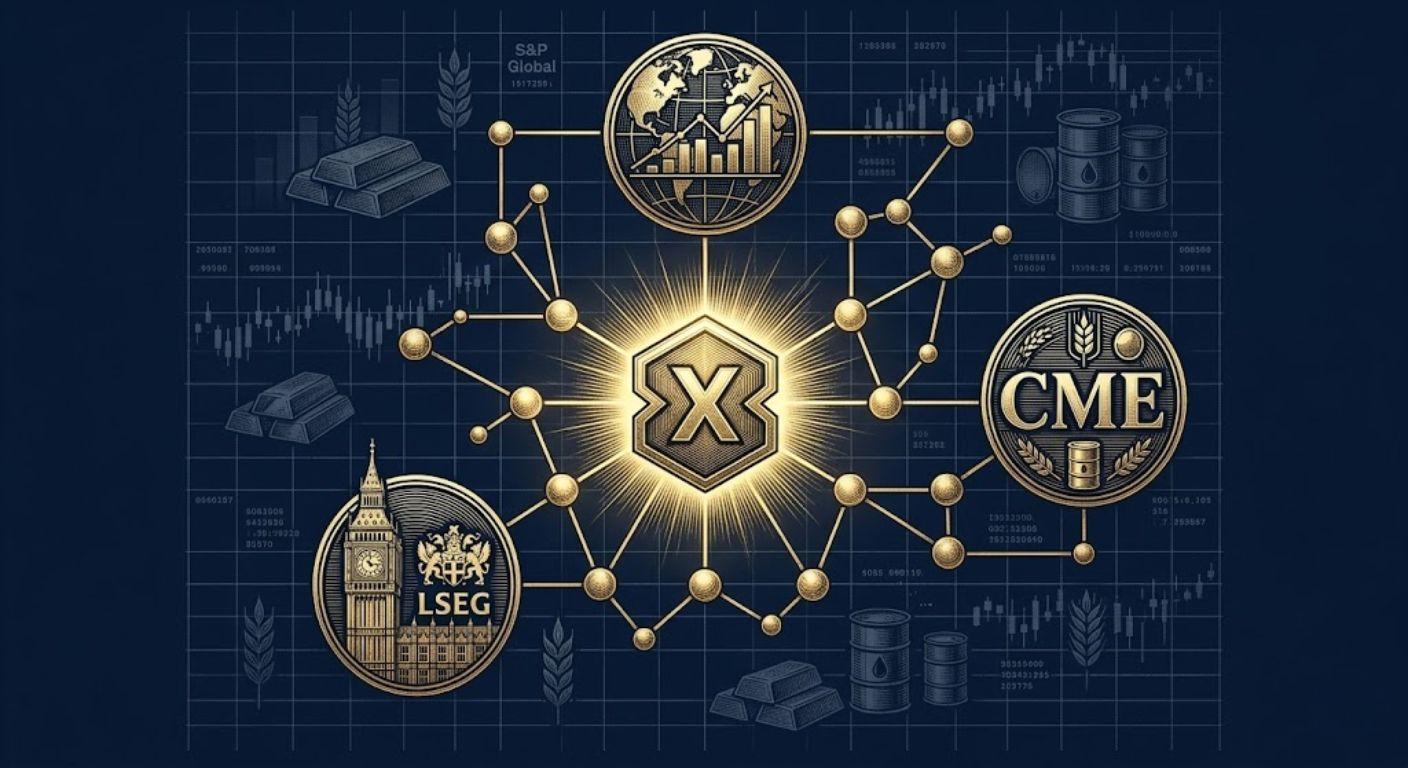
XDC Network has officially joined the Commodities Trading Club, a prestigious consortium that counts S&P Global, CME Group, and the London Stock Exchange Group (LSEG) among its members. The move makes XDC the only public blockchain participant in the group, a distinction that places the protocol at the intersection of enterprise blockchain adoption and traditional commodities markets.
The announcement signals a deepening relationship between decentralized infrastructure and the conventional financial system, commonly referred to as TradFi. For XDC Network, which has built its reputation around a hybrid blockchain architecture designed for institutional use, the membership represents a natural extension of its core value proposition. Analysts trackingXDC Network's price trajectory through 2026 and beyond suggest that institutional partnerships of this nature could serve as significant catalysts for long-term value growth.
The Commodities Trading Club's primary focus is on the growing intersection of trade finance and digital assets. The consortium is exploring how blockchain technology can modernize commodities markets through RWA tokenization, specifically the conversion of physical and financial assets into programmable digital tokens on a blockchain.
No comments yet. Be the first!
XDC Network's participation will center on enabling tokenized trade instruments, including letters of credit, bills of lading, and other financial documents central to global commodities trading. These instruments, which have traditionally relied on paper-based or legacy digital systems, stand to benefit significantly from the transparency, settlement speed, and interoperability that blockchain infrastructure offers.
The consortium's focus on real-world assets aligns directly with XDC's existing strengths. The protocol has previously partnered with trade finance platforms and has established frameworks for integrating with non-crypto-native systems, a technical capability that becomes critical when bridging blockchain rails with established institutional workflows.
One of the key reasons XDC Network stands out in this context is its hybrid blockchain model. Unlike fully public or fully private networks, XDC operates a dual-layer architecture that allows public verifiability while maintaining the privacy controls that regulated financial institutions require. This makes it practical for use cases in commodities trading and trade finance, where data sensitivity and compliance are non-negotiable.
The protocol's existing integrations with platforms like TradeFinex and its compatibility with ISO 20022 financial messaging standards further position XDC as a bridge between DeFi infrastructure and legacy financial systems.
The timing of this membership reflects broader momentum in RWA tokenization across global markets. Major institutions, including BlackRock, JPMorgan, and Franklin Templeton, have accelerated their own tokenization programs in recent years, and consortia like the Commodities Trading Club represent the institutional coordination layer that often precedes large-scale adoption. The expanding role of firms like BlackRock in the digital asset space, including their push intocrypto ETF products, underscores how rapidly institutional appetite for blockchain-based financial instruments is maturing.
For XDC Network, being the sole public blockchain in this group is strategically significant. It offers visibility among decision-makers at firms that collectively influence trillions of dollars in annual commodities volumes. If even a fraction of traditional trade finance instruments migrate to tokenized formats on the XDC Network, the resulting on-chain activity could meaningfully expand the protocol's utility and adoption.
At this stage, the partnership does not come with publicly announced deliverables or implementation timelines. The collaboration appears to be in an exploratory and relationship-building phase, with specific projects or pilots yet to be confirmed. That said, participation in a consortium of this caliber rarely stays at the discussion stage for long, given the operational scale of the members involved.
For the XDC ecosystem, this development is a credibility signal as much as a commercial opportunity. It suggests that institutions operating at the highest levels of global commodities infrastructure are taking enterprise blockchain solutions built on public networks seriously, with XDC Network positioned as a leading candidate to support that transition.