Laika AI
Last Updated
April 8, 2026

VeChain has officially launched its StarGate staking dashboard on January 19, 2026, at app.stargate.vechain.org, introducing a redesigned staking experience that dramatically lowers the barrier to entry for VET holders. The upgrade reduces the minimum staking requirement to just 10,000 VET, equivalent to approximately $200 at current market values, opening VeChain staking to a significantly broader participant base.
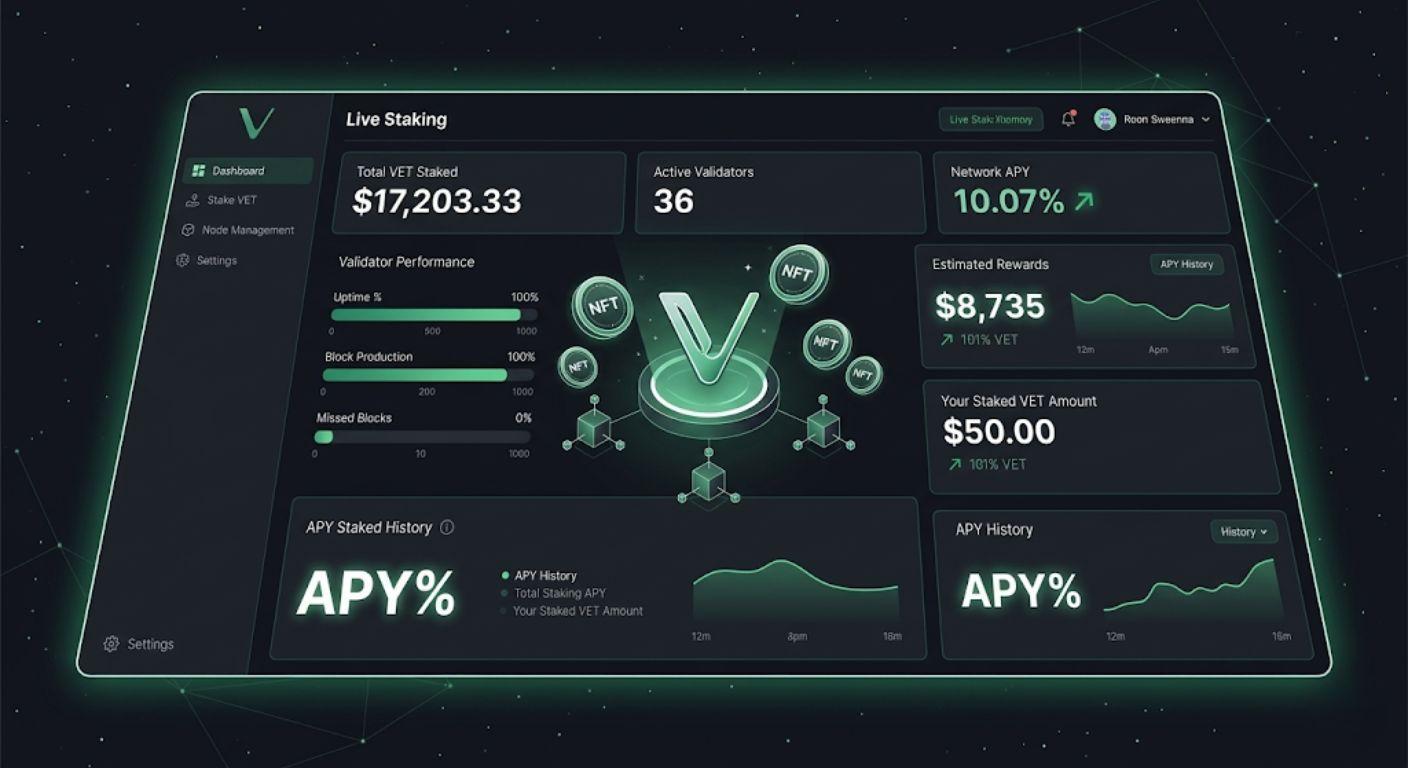
The StarGate dashboard is VeChain's upgraded staking interface, built to improve transparency, accessibility, and performance tracking for both new and existing stakers. The platform features live monitoring tools, real-time APY displays, and a comprehensive validator performance ranking system, giving users full visibility into how their staked VET is performing at any given moment.
Top validators on the StarGate platform are currently delivering APY rates between 5% and 8%, providing competitive returns within the VeChain ecosystem. The dashboard enables users to compare validator performance directly, empowering informed staking decisions without needing third-party tools.
One of the standout features of the StarGate upgrade is the introduction of Delegator NFTs. Each staking position on the platform is now represented by a unique NFT assigned to the staker. This means that staking positions are tokenized, and when a user wishes to unstake their VET, they must burn the corresponding Delegator NFT to complete the withdrawal process.
No comments yet. Be the first!
This mechanism introduces a novel layer ofon-chain accountability and composability to VeChain staking, aligning with broader DeFi trends where liquidity and staking positions are represented as tradeable or burnable tokens.
The StarGate dashboard upgrade is a direct evolution of the Hayabusa upgrade, which established VeChain's transition to a Delegated Proof of Stake (DPoS) consensus model. Under this model, VTHO rewards are now tied directly to network usage and staking activity rather than static issuance, creating a more dynamic and usage-sensitive reward structure.
The impact of the Hayabusa upgrade on staking participation has been substantial. Total staked VET surged from 2.52 billion to 13 billion following the Hayabusa transition, reflecting strong community confidence in the updated consensus model. The StarGate dashboard now builds on that foundation, offering the infrastructure to sustain and grow this participation rate.
By reducing the minimum staking threshold, VeChain is signaling a clear strategic intent: to decentralize staking participation and reduce concentration among large holders. Previously, higher minimum thresholds limited staking primarily to well-capitalized VET holders. At 10,000 VET, a threshold now accessible to retail participants, VeChain staking enters a new phase of inclusivity.
The upgrade maintains reward tiers across all staking levels, ensuring that both smaller and larger stakers continue to receive proportional VTHO rewards based on their contribution to the network.
The StarGate upgrade positions VeChain as a blockchain that is actively iterating on user experience alongside its technical infrastructure. With live validator rankings, real-time APY data, Delegator NFT integration, and a significantly reduced minimum staking entry point, VeChain is making a strong case for retail adoption of its staking ecosystem.
As the network continues to evolve post-Hayabusa, the StarGate dashboard stands as a concrete step toward a more decentralized, transparent, and accessible VeChain staking environment for VET holders worldwide.