Laika AI
Last Updated
March 18, 2026

Artificial intelligence is no longer just answering questions. It is booking flights, comparing prices, filling out forms, and completing purchases on behalf of real users across the open web. This fast-growing behavior, widely referred to as agentic commerce, is reshaping how humans interact with digital economies.
But as AI agents multiply and gain purchasing power, a critical question has emerged: how does any platform, merchant, or service know whether it is dealing with a genuine human or an autonomous program acting without oversight?
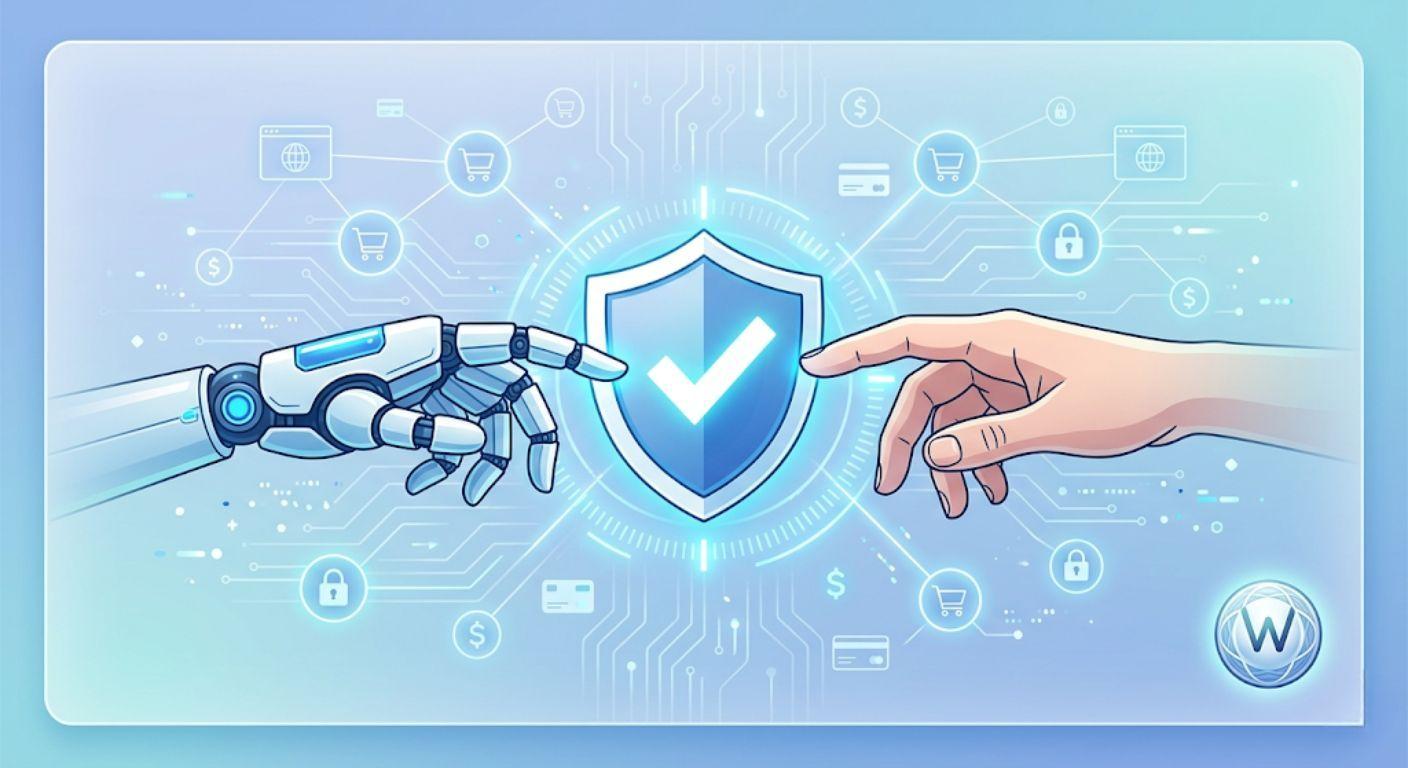
Tools for Humanity, the company behind the World ID digital identity network, believes it has a foundational answer. The company has releasedAgentKit, a new beta tool purpose-built to bring human verification into the infrastructure layer of agentic commerce.
AgentKit is designed to serve as a trust bridge between AI agents and the platforms they interact with. At its core, the tool allows developers building agentic applications to embed human verification checks directly into their workflows.
When an AI agent attempts to perform a sensitive action, such as making a purchase, accessing a financial service, or submitting a form on a user's behalf, AgentKit can verify that a real, verified human is the authorized principal behind that action. The verification draws on World ID's existing biometric proof-of-personhood infrastructure, which uses iris-scanning hardware to issue privacy-preserving credentials without storing personal data.
No comments yet. Be the first!
The timing of the AgentKit release is not accidental. Agentic commerce has moved from a niche research concept to a commercial reality within a remarkably short window. Major technology platforms, browser developers, and e-commerce operators are actively integrating AI agent capabilities into their products.
With that expansion comes serious risk. Without reliable mechanisms to distinguish humans from agents, platforms face exposure to fraudulent transactions, automated scalping, account takeovers conducted by rogue agents, and regulatory liability around consent and authorization.
AgentKit addresses these risks by giving developers a standardized, composable verification layer they can integrate without building bespoke identity infrastructure from scratch. For startups and enterprises alike, this removes one of the most significant technical and compliance barriers to deploying agentic systems responsibly.
The release of AgentKit represents a meaningful expansion of the Tools for Humanity product surface beyond its original identity verification use case. While World ID was initially positioned as a solution to bot detection on social platforms and cryptoairdrops, AgentKit signals an ambition to embed human verification across the entire stack of AI-native commerce.
This repositioning places Tools for Humanity at the intersection of two of the most consequential technology shifts of the current era: the proliferation of large language model agents and the tokenization of digital economic activity.
For the World network and its associated WLD token ecosystem, a successful AgentKit rollout could substantially expand the real-world utility of proof-of-personhood credentials, driving new developer integrations and user adoption well beyond the existing World App base.
AgentKit is currently available in beta to developers building agentic applications. Tools for Humanity has indicated that feedback gathered during the beta period will shape the protocol's feature set ahead of a broader release.
As agentic commerce continues to scale, the infrastructure that governs trust, authorization, and accountability between humans and their AI representatives will become some of the most strategically valuable technology on the internet. AgentKit is an early bid to define that standard.