Laika AI
Last Updated
April 9, 2026

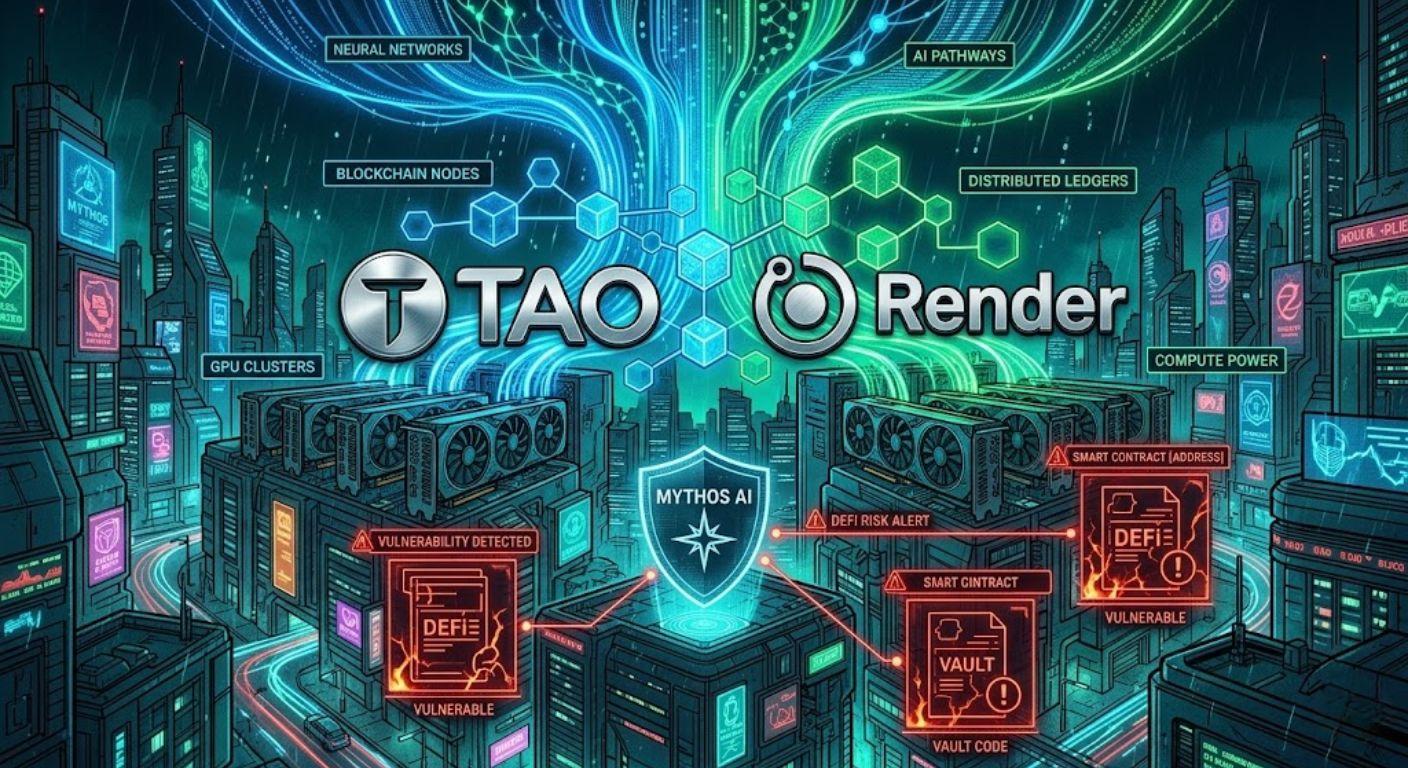
Decentralized artificial intelligence infrastructure has overtaken every other narrative in cryptocurrency markets this year. Bittensor, with its native token TAO and Render Network with RENDER have posted the strongest year to date gains among major assets and are now widely regarded as the clearest leaders of theAI blockchain convergence.
Analysts point to two powerful forces behind the move. First, the structural need for distributed computing and machine learning networks that operate without reliance on centralized cloud providers. Second, a sharp rise in demand for AI-driven security tools following high-profile discoveries in decentralized finance protocols.
Mythos AI released its latest vulnerability report in late March 2026. Using proprietary large language models trained on historical on chain data, the project surfaced previously undetected exploits in three major DeFi lending platforms and two automated market maker contracts. The findings triggered immediate liquidity withdrawals totaling over 180 million dollars across affected pools and forced several protocols to pause operations for emergency upgrades.
The report did more than expose risks. It created an immediate market for next-generation auditing solutions that combine artificial intelligence with real-time blockchain monitoring. Developers and auditors now seek tools capable of scanning smart contracts at deployment and continuously during live operation.
Bittensor has positioned itself at the center of this shift. The network rewards participants who contribute machine intelligence and model outputs through a peer-to-peer marketplace. As demand for AI auditing models grows, more developers are staking TAO to run inference nodes and earn yield. On chain metrics show active validator count up 47 percent since January, and daily token emissions are being claimed at record rates.
No comments yet. Be the first!
Render Network supplies the complementary hardware layer. Its decentralized GPU marketplace allows AI teams to rent compute power globally without long term cloud contracts. With large language model training runs becoming more frequent and more expensive, Render has seen utilization rates climb above 85 percent. RENDER token holders benefit from both rental fees and governance rights over network expansion.
Market data reflects the momentum. TAO has climbed more than 210 percent year to date, while RENDER has gained 185 percent. Combined market capitalization of the two projects now exceeds 14 billion dollars. Trading volumes on major exchanges have consistently ranked both tokens in the top 15 by 24-hour activity.
Industry observers note that the AI blockchain convergence extends beyond price action. Several Layer 1 and Layer 2 chains have announced native integrations with Bittensor subnets for on-chain inference. Render has signed memorandums with two prominent DeFi protocols to provide dedicated GPU clusters for real time risk modeling.
The security angle remains the strongest catalyst. Traditional auditing firms have begun licensing Mythos AI-derived models to enhance their own offerings. One mid-sized auditor reported a 65 percent reduction in false negatives after integrating the new tools. Venture capital inflows into AI-powered security startups have tripled in the first quarter of 2026, according to on-chain funding trackers.
Challenges remain. Scalability of decentralized inference still lags behind centralized alternatives in some benchmarks. Regulatory clarity aroundAI model ownership and data provenance on public blockchains is also pending. Yet participants view these as solvable engineering problems rather than barriers to adoption.
Looking ahead, most forecasts point to continued leadership for decentralized AI infrastructure through the remainder of 2026. With Mythos AI-style discoveries likely to become routine, the premium on proactive AI auditing will only increase. TAO and RENDER stand to benefit directly from both the compute demand and the security demand sides of the equation.
The sector has moved from experimental narrative to production-grade infrastructure in under 18 months. For investors and builders alike, the message is clear: the convergence of artificial intelligence and blockchain is no longer a future theme. It is the dominant growth engine of the current cycle. Investors broadening their digital asset exposure may also find value in exploring alternative stores of value, such astokenized gold as a complementary portfolio consideration.