Laika AI
Last Updated
April 15, 2026

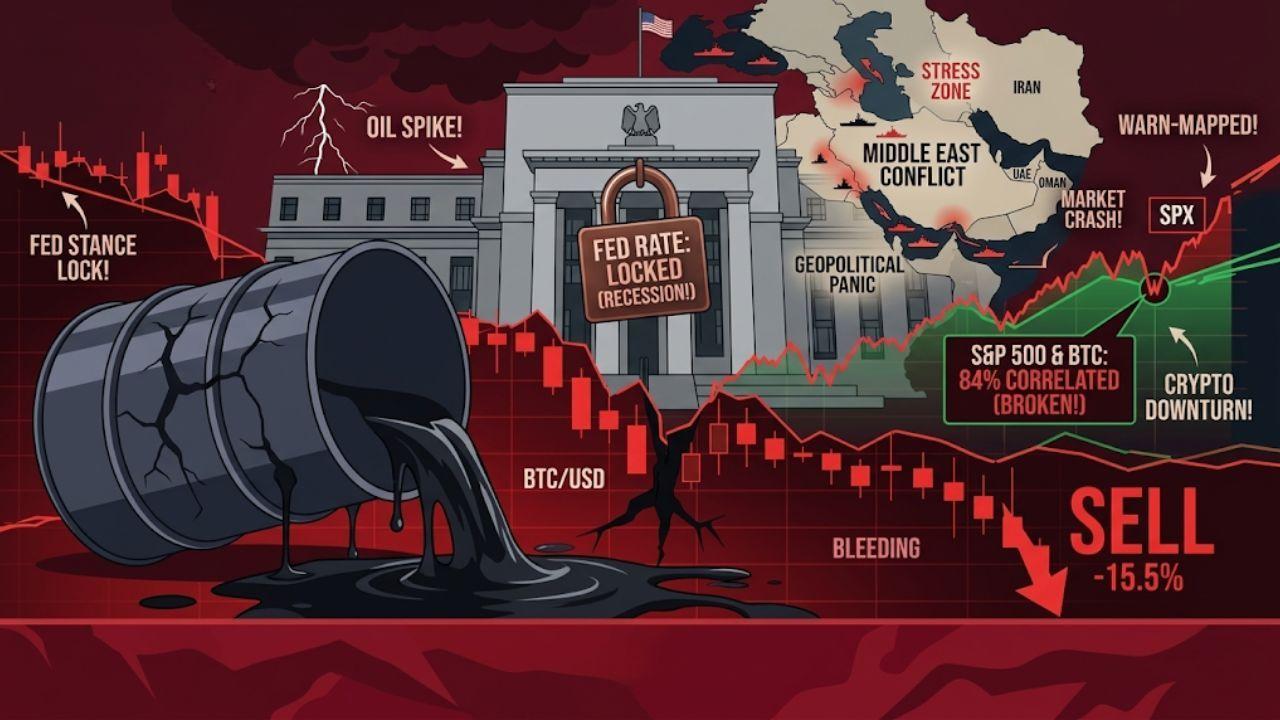
Oil prices have remained elevated above the $100 per barrel mark as ongoing Middle East tensions keep supply risks high. At the same time, the Federal Reserve is expected to hold interest rates steady during its upcoming FOMC meeting on April 28 and 29. These combined factors create persistent headwinds for the crypto sector, particularly Bitcoin.
Market participants continue to monitor traditional finance indicators closely. The strong link between BTC and broader equities has made digital assets more vulnerable to shifts in macro conditions than in previous cycles.
Middle East tensions have kept oil benchmarks elevated. Brent crude and West Texas Intermediate have traded above $100 in recent sessions despite occasional dips from ceasefire hopes. Disruptions around key shipping routes have added a risk premium that supports higher energy costs.
Analysts note that any escalation or prolonged uncertainty in the region could push prices even higher. Higher oil acts as a tax on global growth. It feeds into inflation expectations and forces central banks to remain cautious with policy easing. This environment typically weighs on risk assets, including crypto.
Recent diplomatic signals have introduced some volatility. Hopes for progress toward ending the conflict have at times softened oil prices and boosted risk appetite. However, the fragile nature of any truce means the upside risk for energy costs remains intact.
The Federal Reserve is widely anticipated to keep its benchmark rate unchanged at the April FOMC meeting. With inflation concerns still present and economic data showing resilience, policymakers appear in no rush to cut rates aggressively.
No comments yet. Be the first!
This stance contrasts with earlier expectations of faster easing. A Fed on hold means borrowing costs stay higher for longer. That environment tends to favor safer assets over speculative ones like Bitcoin and altcoins. Investors concerned about protecting their holdings during this period of macro uncertainty should consider reviewing options forthe best crypto hardware wallets to ensure their assets remain secure.
Investors will watch the post-meeting statement and projections for any hints about future moves. Even small shifts in tone could move markets. The meeting itself serves as a key catalyst in the coming days.
Bitcoin currently shows an 84 percent correlation with the S&P 500. This tight relationship means moves in traditional stock markets translate quickly into crypto price action.
When equities face pressure from higher oil or tighter financial conditions, BTC tends to follow. The asset has increasingly behaved like a risk-on instrument rather than an independent store of value in recent months.
This correlation stands notably higher than levels seen in earlier bull markets. It underscores how macro factors now dominate crypto narratives. Institutional involvement and growing integration with traditional finance have driven this shift. Some analysts have also raised concerns about potentialBitcoin price manipulation through institutional ETF vehicles, adding another layer of complexity to understanding BTC's current price behavior.
Traders report that any weakness in the S&P 500 on oil or Fed news quickly spills over into Bitcoin and the broader digital asset market. The effect is magnified during periods of heightened volatility.
The US dollar has traded near six-week lows against a basket of currencies. Optimism around potential diplomatic progress in the Middle East has reduced safe-haven demand for the greenback. A weaker dollar can sometimes support risk assets, yet the combination of elevated oil and steady Fed policy continues to cap upside.
Investors appear to be balancing two forces: relief from ceasefire talks and caution over unresolved energy and inflation risks. This mixed sentiment keeps crypto trading ranges relatively tight despite occasional relief rallies.
Persistent macro headwinds mean crypto participants must stay attuned to developments outside the blockchain space. Traditional indicators such as oil prices, central bank decisions, and equity correlations now play a larger role in daily price discovery.
DeFi protocols, NFT platforms, and other on-chain activities can also feel the ripple effects. Higher energy costs and elevated borrowing rates may slow retail and institutional inflows into digital assets. Understanding thetop crypto narratives driving markets in 2026 can help investors identify which sectors may show resilience despite these broader headwinds.
Some analysts suggest that once oil stabilizes and the Fed begins easing, crypto could regain momentum. Until then, volatility tied to macro events is likely to remain the dominant theme.
Key focus areas include the outcome of the April FOMC meeting and any updates on Middle East negotiations. The ceasefire expiration around April 21 adds another layer of timing pressure.
Traders should also monitor BTC correlation levels. Any sustained drop below current highs could signal a return to more independent price behavior. Conversely, continued tight linkage would keep crypto firmly in the macro spotlight.
Oil above $100 and a Fed on hold represent classic headwinds for risk assets. For Bitcoin and the wider crypto market, navigating these conditions requires careful attention to global economic signals alongside on-chain metrics.
As the FOMC meeting approaches, market participants will likely position defensively. The interplay between energy prices, monetary policy, and digital assets continues to shape the near-term outlook for crypto.