Laika AI
Last Updated
May 6, 2026

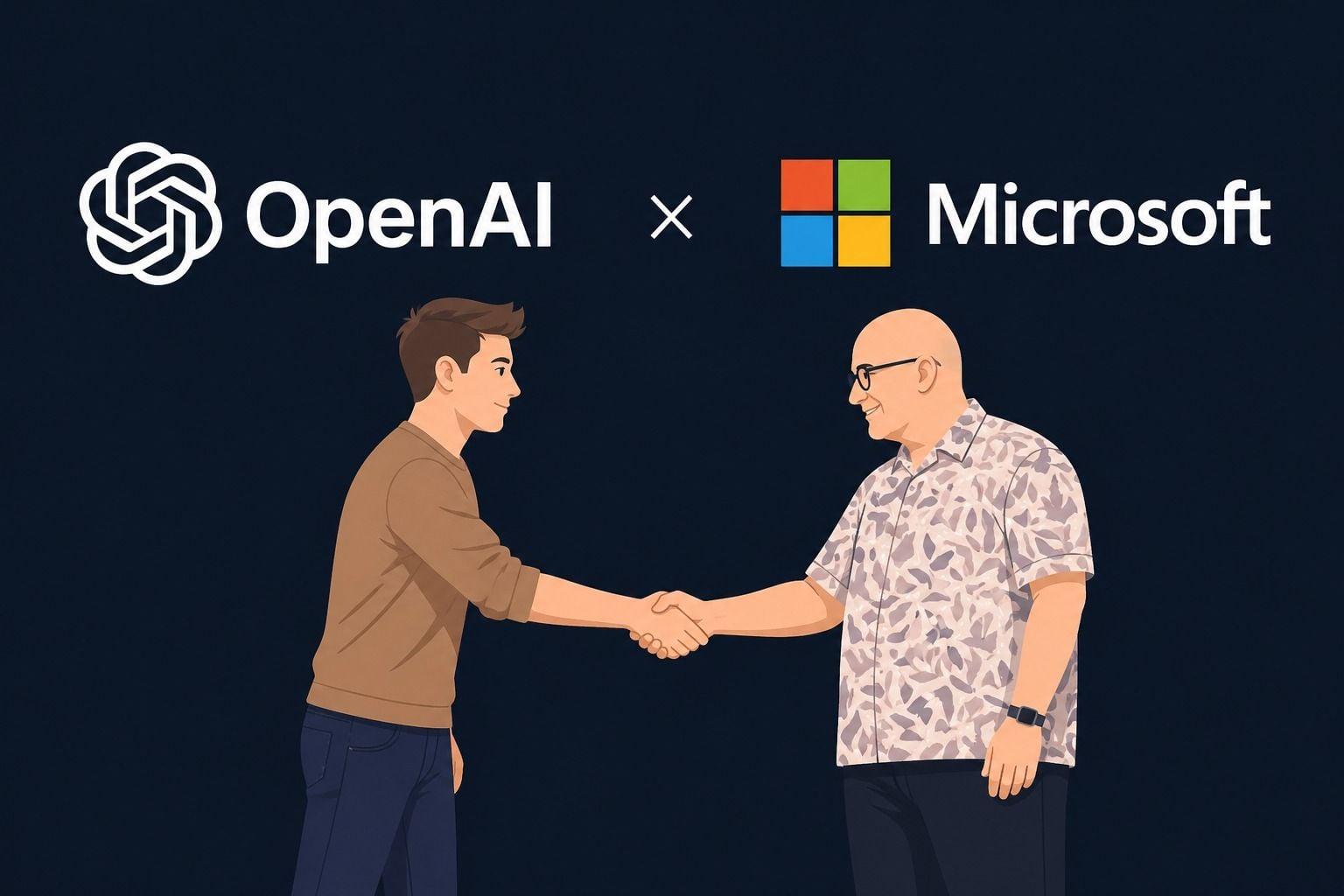
Microsoft and OpenAI have reportedly revised the foundational terms of their multi-billion-dollar partnership, eliminating the exclusive access arrangement that has governed OpenAI's model distribution since the relationship began and removing the revenue-sharing clause tied to the achievement of artificial general intelligence, in a restructuring that carries significant implications for the competitive dynamics of the enterprise AI market.
The Microsoft-OpenAI partnership, structured around Microsoft's multi-billion-dollar investment and Azure's role as OpenAI's exclusive cloud provider, has been one of the defining commercial arrangements in the modern AI industry. For competitors seeking to offer comparable AI capabilities through their own cloud platforms, the exclusivity embedded in the original agreement represented a structural barrier that Microsoft leveraged aggressively to differentiate Azure's enterprise AI offering from Amazon Web Services, Google Cloud, and other providers.
The reported elimination of that exclusivity represents a fundamental change in the competitive architecture of the enterprise AI market. With OpenAI's models potentially available for integration into competing cloud platforms, the differentiation that Microsoft built around exclusive model access must now be rebuilt on other foundations, whether through superior integration, pricing, Azure-specific features, or the depth of Microsoft's own AI product development beyond the OpenAI relationship.
The restructuring does not necessarily signal a deterioration in the relationship between the two organizations. Both parties have publicly maintained that the revised terms reflect a mutual strategic reassessment rather than a breakdown in collaboration. But the competitive implications of the change are real regardless of the diplomatic framing, as every cloud provider that gains the ability to offer OpenAI's models to their enterprise customers represents a reduction in the exclusivity premium that has been one of Azure's most powerful growth drivers.
No comments yet. Be the first!
The revenue-sharing arrangement that the original Microsoft-OpenAI partnership contained included provisions specifically tied to the achievement of artificial general intelligence. Under those terms, the revenue-sharing structure between the companies would shift upon the realization of AGI milestones, reflecting the assumption embedded in the original agreement that AGI represented a near-term and transformative event that would fundamentally alter the commercial value of OpenAI's technology.
The removal of that clause carries a meaning that goes beyond the immediate financial implications for either company's revenue model. It represents a recalibration of expectations about AGI's timeline and the commercial framework appropriate for a period in which transformative AI capabilities are advancing rapidly but true artificial general intelligence remains undefined and unrealized.
The original AGI clause was a product of a moment in the AI industry when the pace of capability advancement made AGI feel imminent enough to warrant specific contractual provisions. The restructuring suggests that both Microsoft and OpenAI have reached a more measured assessment of that timeline, one in which building sustainable commercial relationships around current and near-term AI capabilities is more strategically sound than structuring agreements around milestone events whose definition and timing remain genuinely uncertain.
That recalibration has broader industry implications. If the two organizations most closely associated with the AGI narrative are revising their commercial frameworks away from AGI-contingent terms, it signals a maturing of institutional expectations around what advanced AI will deliver and when, potentially moderating the hype cycle that has driven AI investment valuations to historically elevated levels.
The practical market consequence of ending OpenAI's exclusivity with Microsoft is that competing cloud providers can now pursue integrations with OpenAI's model portfolio that were previously unavailable or contractually constrained. Amazon Web Services, which has built its own AI model strategy primarily around its Bedrock platform and Anthropic investment, gains the ability to offer OpenAI's models alongside its existing AI portfolio, potentially creating a more compelling multi-model offering for enterprise customers who want optionality rather than commitment to a single AI provider.
Google Cloud, which competes directly with Azure for enterprise AI workloads while simultaneously developing its own Gemini model family, faces a more complex dynamic. The availability of OpenAI's models on Google Cloud would expand its AI catalogue but could also introduce competitive pressure on Gemini adoption within Google's own customer base, creating a tension between platform completeness and proprietary model preference that Google's product and sales teams would need to navigate carefully.
For enterprise customers, the end of exclusivity is unambiguously positive. Access to OpenAI's models through multiple cloud providers creates negotiating leverage, reduces vendor lock-in risk, and enables the multi-cloud AI strategies that most large organizations prefer for resilience and cost management reasons.
From Microsoft's perspective, the restructuring reflects a recognition that the AI market has evolved faster and more broadly than the original exclusive arrangement anticipated. When the partnership was structured, Azure's exclusive access to OpenAI's models was a decisive competitive differentiator in a market where comparable alternatives did not exist. The subsequent emergence of capable competing models from Google, Anthropic, Meta, Mistral, and numerous other providers has diluted that exclusivity's practical value even before the contractual terms changed.
By accepting the end of exclusivity in exchange for revised revenue-sharing terms that better reflect the current market, Microsoft may be positioning itself to benefit from OpenAI's broader commercial success across all platforms rather than limiting its upside to the share of AI workloads that it could capture exclusively through Azure. If OpenAI's models achieve widespread enterprise adoption across multiple cloud environments, Microsoft's equity position and revenue-sharing arrangements allow it to participate in that growth regardless of which cloud platform hosts the inference workloads.
The Azure platform itself faces the challenge of rebuilding differentiation through means other than exclusivity, but Microsoft's depth of integration between OpenAI's models and its enterprise software portfolio, including Office, Teams, Dynamics, and GitHub Copilot, provides a product-level moat that survives the end of infrastructure exclusivity.
For the cryptocurrency and AI blockchain ecosystem, the Microsoft-OpenAI restructuring reinforces a broader narrative about the increasing accessibility of frontier AI capabilities that benefit decentralized AI infrastructure projects. As OpenAI's models become available across multiple cloud platforms, the argument for decentralized AI infrastructure becomes more about sovereignty, cost efficiency, and censorship resistance rather than capability access, shifting the competitive positioning of projects like Fetch.ai, SingularityNET, and CUDOS toward their unique structural advantages rather than model capability comparisons with centralized providers.