Laika AI
Last Updated
April 9, 2026

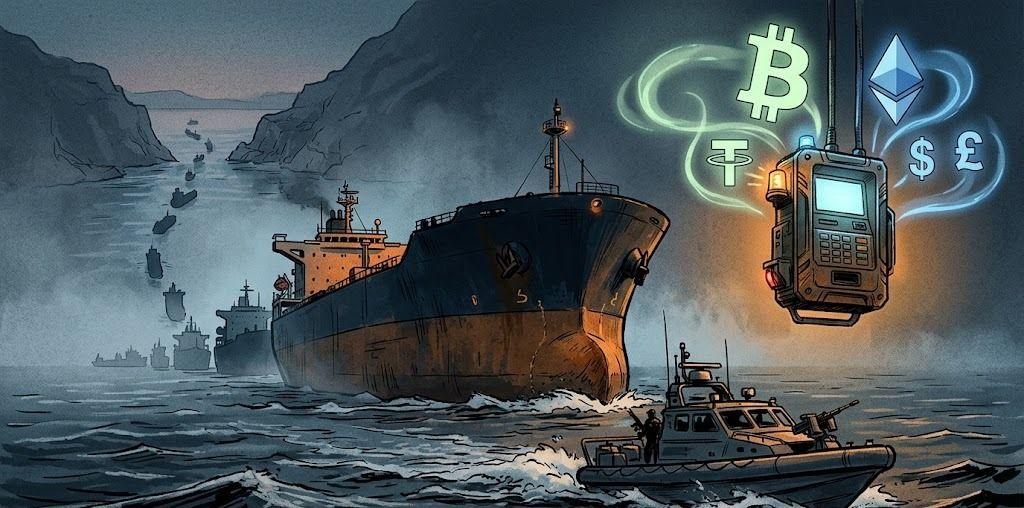
Three commercial vessels have transited the Strait of Hormuz since the April 8 ceasefire took effect, a trickle that stands in sharp contrast to the approximately 1,000 ships reportedly queued on both sides of the Persian Gulf, as confusion over Iran's cryptocurrency toll system, IRGC approval requirements, and unspecified fee amounts brings the reopening to a near standstill.
President Trump's announcement of a two-week ceasefire with Iran on April 8, 2026, framed as a double-sided pause conditional on Iran reopening the Strait of Hormuz, generated immediate relief across energy and financial markets. The reality on the water has been considerably more constrained.
As of April 8, only three commercial vessels had successfully navigated the strait since the ceasefire took effect. That figure, set against a backdrop of roughly 1,000 ships waiting on both sides of the Persian Gulf for clearance to transit, illustrates the gap between the diplomatic announcement and operational execution that now defines the Hormuz situation.
Industry security officials have advised operators against moving prematurely, warning that proceeding before new transit protocols are formally clarified exposes crews, vessels, and cargo to heightened and potentially unquantifiable risk. The caution is not theoretical. The ceasefire's terms explicitly state that safe passage is conditional on coordination with Iran's armed forces, a requirement that introduces a human approval layer into every transit decision.
No comments yet. Be the first!
The most operationally disruptive element of Iran's reopening framework is the toll collection mechanism, which requires ship operators to pay passage fees in digital currencies. Payments were previously routed through cryptocurrency and Chinese yuan, a system that already operated outside conventional international shipping finance infrastructure. Under the new framework, that requirement has been formalized in a way that creates significant procedural uncertainty for operators accustomed to standardized port fee structures.
Iran's Supreme National Security Council has specified that each tanker must email Iranian authorities with full cargo details before transit. Iran will then communicate the toll amount to the operator in digital currencies, with the fee structure appearing to be assessed on a per-vessel, per-cargo basis rather than through a published tariff schedule.
That process introduces multiple friction points simultaneously. Operators face uncertainty about the final fee amount before committing to transit. The digital currency payment requirement raises questions about which specific cryptocurrencies or digital assets are accepted, what exchange rate benchmarks apply, and who within a vessel's ownership and charter structure bears ultimate responsibility for the payment. For large tankers with complex ownership arrangements spanning multiple jurisdictions, resolving that final question alone can require days of internal coordination.
Beyond the payment question, every non-diplomatic vessel seeking to transit the strait requires explicit approval and documentation clearance from the Islamic Revolutionary Guard Corps before passage is permitted. The IRGC vetting requirement transforms what would otherwise be a straightforward navigational transit into a state-mediated approval process with no published timeline for decisions.
Shipping operators have no clear visibility into how quickly IRGC approvals are being processed, what documentation standards apply, or what grounds exist for denial. In a commercial environment where vessel scheduling, cargo commitments, and charter party obligations create tight time constraints, the absence of published processing timelines makes operational planning extremely difficult.
The combination of the email-based cargo disclosure requirement, the undetermined cryptocurrency toll amount, and the IRGC documentation check creates a three-stage approval sequence that must be completed before any vessel can safely proceed. With 1,000 ships in the queue and a processing infrastructure that has not been publicly described in terms of capacity or staffing, the backlog has every structural condition needed to persist well beyond the immediate post-ceasefire period.
The operational bottleneck at Hormuz exists within a ceasefire that all parties continue to describe as fragile. Iranian ballistic missiles were reported striking central Israel on April 8 itself, the same day the ceasefire took effect, though the pause does not formally cover Israel's ongoing conflict with Hezbollah in Lebanon. That carve-out creates a situation where active military exchanges continue in the region even as the ceasefire nominally holds along its defined parameters.
Negotiators from both sides are reportedly scheduled to meet in Pakistan on April 11 to begin formalizing a broader peace agreement, using Iran's 10-point proposal as the working framework. The outcome of those talks will be determinative for whether the two-week ceasefire window extends into something more durable or expires with the underlying conflict dynamics unresolved.
For digital asset markets, the Hormuz bottleneck introduces a nuanced read on the ceasefire's market impact. The announcement itself generated risk-on sentiment and provided Bitcoin with upside momentum as geopolitical fear premiums began unwinding. A stalled reopening that fails to clear the 1,000-vessel backlog in any meaningful timeframe partially undermines that sentiment by keeping oil supply uncertainty elevated longer than markets initially priced.
The cryptocurrency toll requirement itself carries a separate and potentially significant implication for on-chain payment infrastructure. If Iran's digital currency toll system processes at scale across hundreds of vessel transits, it would represent one of the largest real-world applications of cryptocurrency in sovereign toll collection ever recorded, a development with broader implications for how state actors engage with digital payment rails under sanctions pressure.