Elderly Hibakusha Lead New York March Urging Global Nuclear Ban
 World news

Last Updated
May 6, 2026
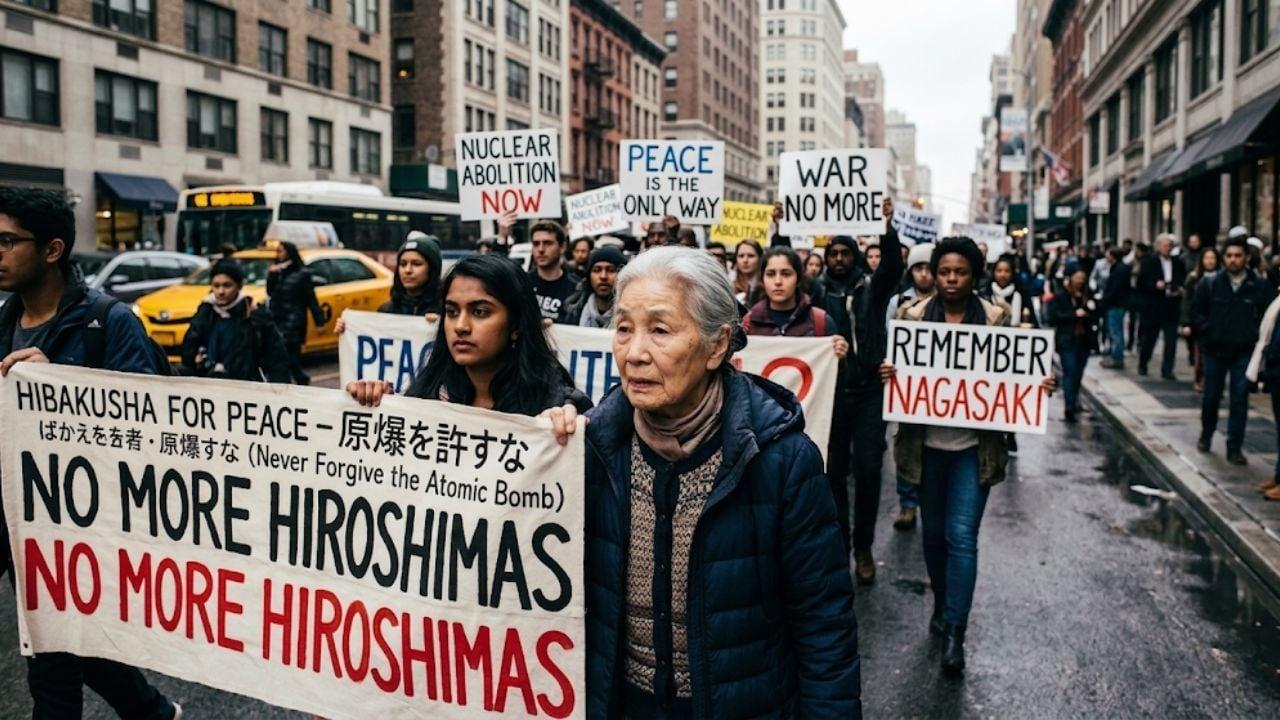
NEW YORK — Survivors of the 1945 atomic bombings of Hiroshima and Nagasaki, known as hibakusha, marched through New York City on Sunday to demand the abolition of nuclear weapons. The demonstration was timed ahead of an upcoming nuclear disarmament conference, highlighting renewed urgency around nuclear non-proliferation amid rising global tensions, including recent developments in peace talks tied to Iran and oil markets.
March Begins at Public Library With Anti-War Song
The procession started at the New York Public Library. Participants, including U.S. peace activists and hibakusha, sang "Genbaku o Yurusumaji," a Japanese anti-atomic bomb song. Marchers chanted "No more Hiroshimas, no more Nagasakis" to raise awareness of the humanitarian cost of nuclear warfare.
Organizers said the event aimed to center survivor voices in current disarmament policy debates. Many hibakusha are now in their 80s and 90s, making public testimony increasingly urgent.
Survivors Share Lasting Health and Trauma Impacts
The hibakusha spoke about long-term radiation illness, cancer, and generational trauma stemming from the August 1945 bombings. The attacks killed over 200,000 people and left survivors facing decades of health complications and social stigma.
"Our bodies still carry the bombs," one survivor told the crowd through a translator. "We speak so no one else will." Their testimonies have become central to the global nuclear disarmament movement, providing firsthand evidence of the weapons' impact on civilians.
Disarmament Conference Faces Geopolitical Challenges
Comments (0)
No comments yet. Be the first!
 Top Stories