Laika AI
Last Updated
March 16, 2026

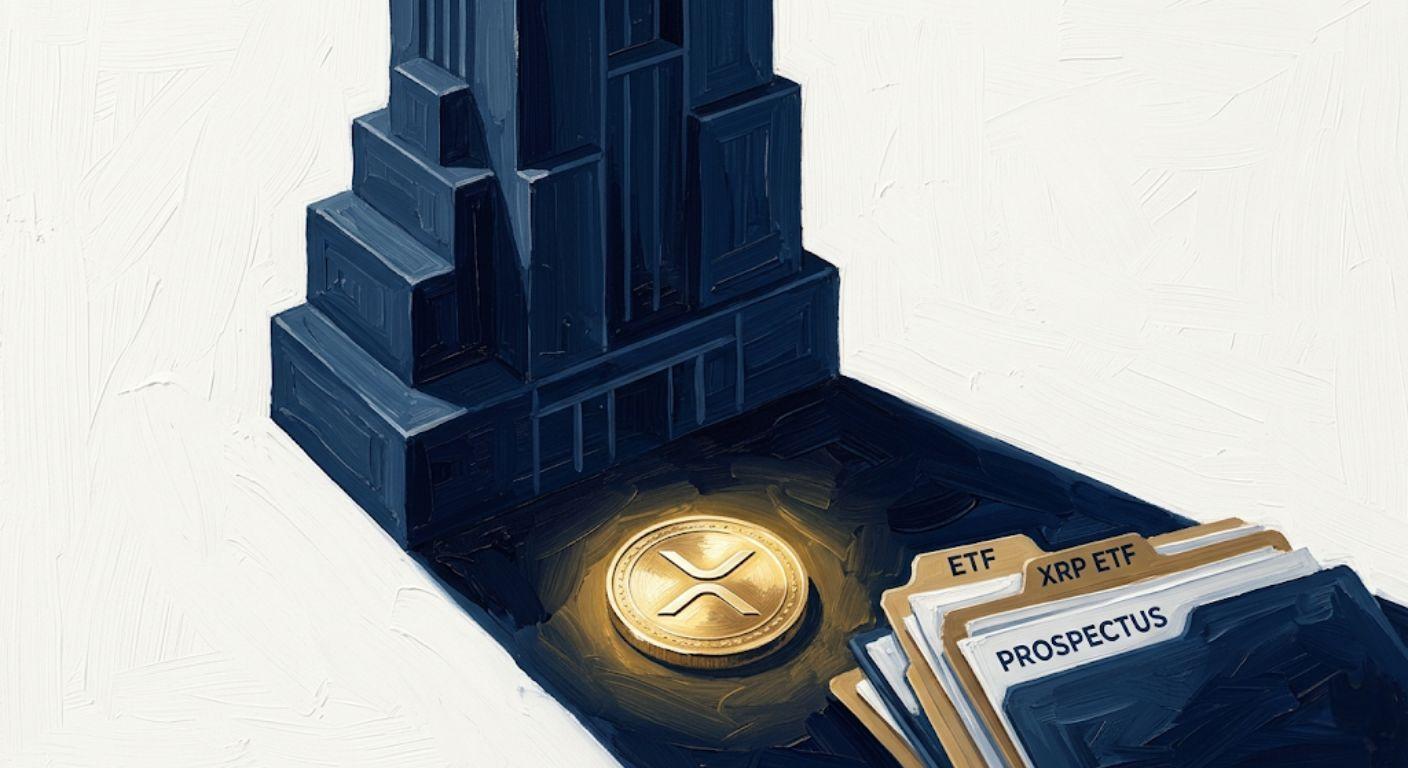
Goldman Sachs has quietly become the dominant institutional force in the nascent spot XRP ETF market, holding nearly 73% of all disclosed institutional holdings, a position that signals a structural shift in how Wall Street approaches digital asset exposure.
Rather than concentrating its exposure in a single fund, Goldman Sachs spread its allocation across four issuers. According to Q4 2025 13F disclosures reviewed by Bloomberg Intelligence, the bank placed roughly $40 million in the Bitwise XRP ETF, approximately $38 million each in the Franklin XRP Trust and the Grayscale XRP ETF, and around $36 million in the 21Shares XRP ETF.
This diversified approach reflects a methodical portfolio construction strategy, one that hedges against issuer-specific risk while maintaining sizable exposure to XRP as an asset class. Millennium Management, the closest institutional rival, held just $23.1 million, less than one-sixth of Goldman's reported stake, underscoring how far ahead the Wall Street bank sits in this nascent market.
The first spot XRP ETF came to market in November 2025, launched by Canary Capital. The product category emerged following the August 2025 settlement of the U.S. Securities and Exchange Commission's long-running lawsuit against Ripple Labs, which had cast regulatory uncertainty over XRP for nearly five years.
In the roughly four months since those products launched, spot XRP ETFs collectively drew in $1.4 billion in net inflows, with total assets under management reaching $1.44 billion by early March 2026. Net outflows were recorded on just nine trading days during that stretch, a notably stable inflow pattern given the continued volatility across broader crypto markets.
No comments yet. Be the first!
Bloomberg Intelligence analysts James Seyffart and Eric Balchunas were quick to add context to the institutional narrative. Seyffart noted that disclosed 13F filings capture only a fraction of total ETF ownership, since most investors fall below the $100 million reporting threshold required by U.S. securities law. Balchunas pointed to XRP's historically loyal retail community, often described as "XRP super fans", as likely comprising the majority of the funds' remaining 84% of assets.
The data from the top 30 disclosed institutional holders amounted to roughly $211 million in aggregate, representing just 16% of the $1.2 billion in total XRP ETF assets at year-end 2025. That disparity highlights a structural feature of this market: individual retail investors, many of whom hold XRP as a long-term conviction trade, likely drive the bulk of fund flows.
Goldman's entry does not exist in isolation. On the infrastructure front, Binance recently integrated Ripple's RLUSD stablecoin onto the XRP Ledger, a token that now carries a market capitalization of approximately $1.59 billion. Meanwhile, institutional utilization of XRP for cross-border settlements continues to expand, with banks including SBI Holdings, Santander, and PNC reported to be processing monthly transaction flows exceeding $15 billion through XRP-based channels.
Standard Chartered has also revised its XRP price target upward to $2.80, implying close to 100% upside from current levels. Broader institutional forecasts place XRP's year-end 2026 range between $3.00 and $8.00, though such projections carry significant uncertainty in a market still heavily influenced by macro sentiment and regulatory developments.
Despite the milestone Goldman filing, XRP's spot price has remained subdued in recent weeks, trading below the $1.50 resistance level. Technical analysts have pointed to a descending channel pattern and constrained altcoin liquidity as factors limiting near-term upside. Some analysts note that ETF holdings do not immediately translate into equivalent spot demand, as institutional exposure through structured vehicles does not always reflect in direct token purchases.
Market observers broadly interpret Goldman's position as meaningful institutional validation nonetheless. Major banks rarely enter a nascent asset class at scale without substantial due diligence, and a $153.8 million allocation spread across four products signals a long-term conviction that this space merits serious attention.