Laika AI
Last Updated
May 6, 2026

Hangzhou-based AI startup DeepSeek has unveiled its latest V4 Pro model, marking a notable step in China's push for AI self-sufficiency. The release, which occurred on April 24, 2026, positions the model as a strong contender against leading US closed-source systems while running primarily on domestic hardware.
V4 Pro features 1.6 trillion parameters and a context window of one million tokens. DeepSeek claims it rivals top models from OpenAI and Google in several benchmarks, particularly in agentic coding and reasoning tasks. The company also launched a lighter V4 Flash variant with 284 billion parameters for faster, cheaper deployment. The launch comes amid speculation around other large-scale efforts like the rumored Hunter Alpha secret 1T parameter AI on OpenRouter and DeepSeek V4 speculation.
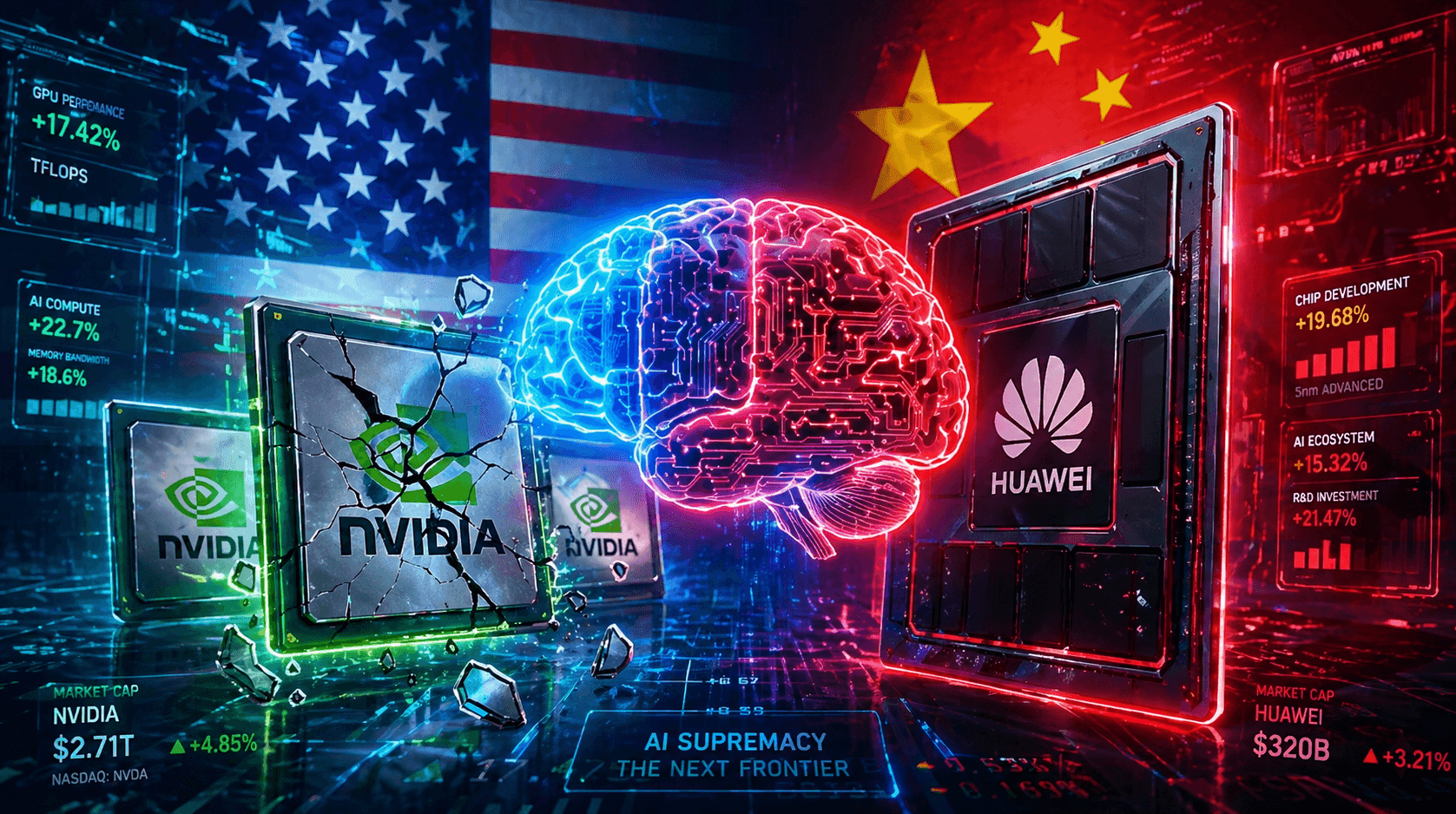
What sets this launch apart is its deep optimization for Huawei Ascend 950 chips. Huawei quickly announced full support for the DeepSeek V4 series across its Ascend supernode clusters. Industry observers note this as one of the first frontier-level AI models designed and validated specifically for non-American hardware infrastructure, moving beyond reliance on Nvidia GPUs for inference.
Pricing stands out as a key advantage. DeepSeek V4 Pro reportedly delivers output at around $3.48 per million tokens, significantly lower than rates charged by leading US providers such as OpenAI and Anthropic. DeepSeek indicated that costs could drop further once Huawei scales production of the Ascend 950 processors later in 2026.
This cost efficiency could accelerate AI adoption among smaller organizations, developers, and regions with budget constraints. Analysts suggest it may broaden access to advanced AI capabilities beyond premium US offerings like ChatGPT or Gemini.
No comments yet. Be the first!
The development revives memories of last year's DeepSeek R1 release, which triggered a sharp sell-off in US tech stocks amid fears of eroding American dominance. Many later viewed that downturn as an overreaction, noting continued reliance on US hardware and software stacks at the time.
NVIDIA CEO Jensen Huang recently described a scenario where a major model like DeepSeek runs first on Huawei platforms as potentially damaging for the United States. He emphasized the strategic importance of maintaining a global AI ecosystem built on American technology. The geopolitical stakes are rising as US leaders coordinate AI strategy, including the Trump AI tech council with Zuckerberg, Ellison, Jensen Huang, and David Sacks. Despite such concerns, some in the tech community have downplayed the immediate threat.
The Huawei Ascend 950 integration challenges the long-standing perception that frontier AI development requires Nvidia hardware. While training details may still involve mixed infrastructure, the successful optimization for inference on Chinese silicon demonstrates the growing viability of an independent tech stack.
This progress arrives against a backdrop of US export controls aimed at limiting advanced chip access to Chinese entities. Beijing has invested heavily in domestic semiconductor alternatives to reduce such dependencies.
For US firms, the implications extend to valuations and competitive strategy. NVIDIA, Google, and other leaders have benefited from strong hardware and software moats. A viable lower-cost alternative could pressure margins and force accelerated innovation.
Beyond commercial dynamics, the DeepSeek V4 Pro launch carries national security dimensions. Governments worldwide view AI as critical for technological and economic superiority. Advances by Chinese labs may intensify debates over supply chain resilience and export policies.
For global users, particularly in emerging markets, more affordable high-performance models could speed up AI integration in education, healthcare, and enterprise applications. However, questions remain about the exact performance gap. DeepSeek acknowledges that V4 Pro trails the absolute latest US closed models by an estimated three to six months in some areas.
Investors and technology leaders will watch closely how markets respond to this development. While immediate stock reactions appear muted compared to last year's event, sustained cost and performance advantages could reshape long-term competitive balances.
The DeepSeek V4 Pro rollout underscores a broader trend: rapid iteration in open-source and regionally optimized AI models. As hardware options diversify, the AI landscape may become more fragmented yet more accessible.
This evolution highlights the interplay between technological breakthroughs, cost dynamics, and international competition in shaping the future of artificial intelligence.