Laika AI
Last Updated
April 8, 2026

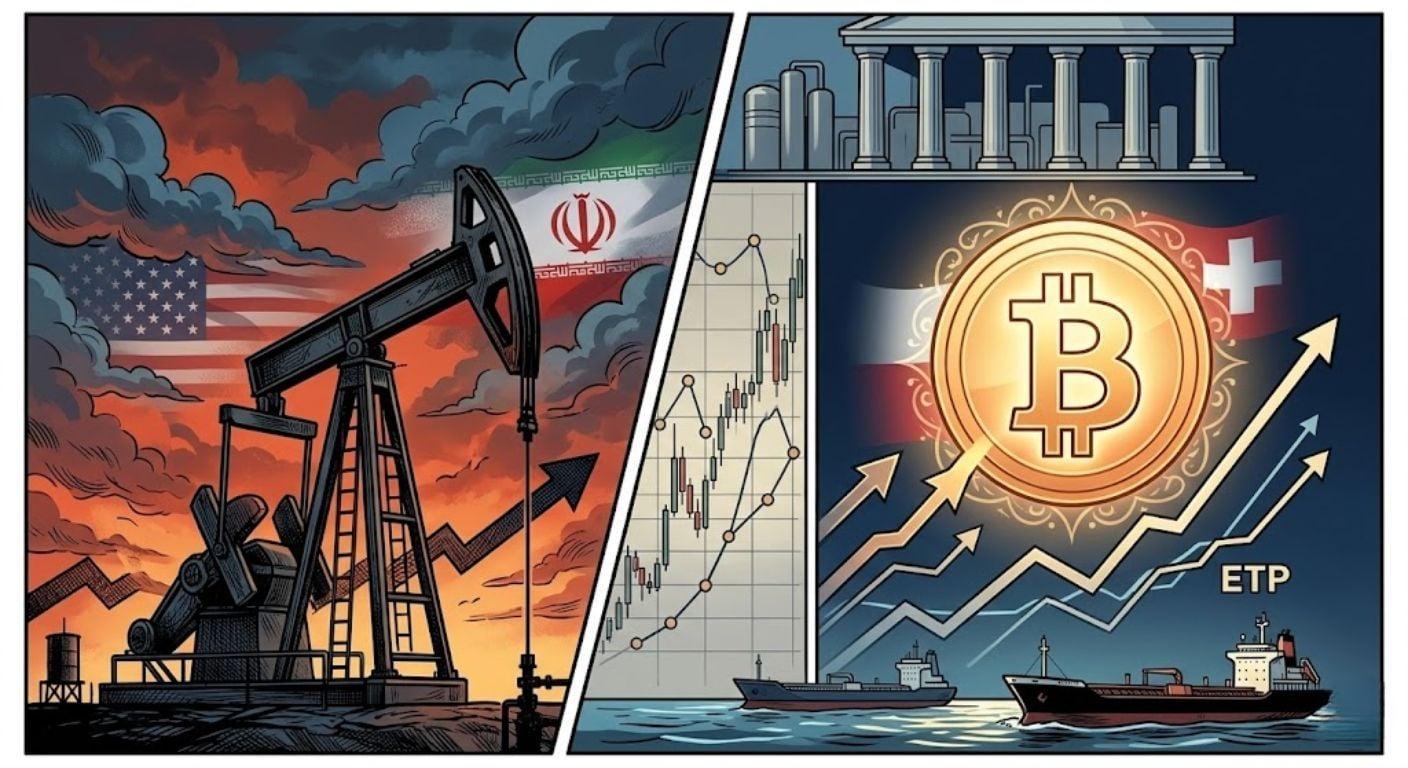
Iran-US diplomatic friction and crude oil weakness are dragging on crypto markets, even as institutional money quietly flows into XRP and Bitcoin products in Europe.
Bitcoin (BTC) and Ether (ETH) have spent much of the past two months locked in a narrow trading band, and fresh geopolitical risk from escalating Iran-US tensions is giving traders little reason to break out. The standoff, which has injected fresh uncertainty into global energy markets, is pushing oil prices lower and amplifying pressure on risk assets across the board, including digital currencies.
Historically, sharp moves in crude prices have correlated with swings in investor sentiment toward speculative assets. When oil slides on demand-destruction fears tied to conflict risk, capital tends to retreat from higher-beta positions. Bitcoin, despite its growing narrative as a macro hedge, has not been immune to this dynamic in the current cycle.
Both Bitcoin price andEthereum price have failed to establish decisive directional momentum since early February. BTC has repeatedly tested resistance without a clean breakout, while ETH has mirrored the hesitation. Analysts tracking on-chain activity note that trading volumes remain subdued, and options markets reflect low conviction among participants on either side of the range.
No comments yet. Be the first!
Away from the price action, a notable structural shift is unfolding in European institutional flows. Switzerland has emerged as the dominant force in global crypto ETP inflows, accounting for nearly 70% of total net capital entering exchange-traded products during the latest reporting period. The figures, drawn from fund flow data, underline Switzerland's status as a mature and well-regulated hub for digital asset investment vehicles.
The Swiss market benefits from a clear regulatory framework under FINMA oversight, which has allowed multiple issuers to list crypto ETPs on the SIX Swiss Exchange. Institutional and semi-institutional investors in the region appear comfortable allocating through these regulated wrappers even during periods of macro uncertainty.
Within Switzerland's dominant share,XRP ETP products contributed more than half of all inflows, a striking development given XRP's traditionally lower profile among institutional allocators compared with Bitcoin and Ethereum. The surge in XRP-linked product demand may reflect growing optimism around Ripple's regulatory clarity following legal proceedings in the United States, as well as broader interest in alternatives to the two largest crypto assets during a period of consolidation.
Bitcoin ETPs still attracted meaningful capital, but the outsized contribution from XRP products suggests that institutional interest is broadening beyond the traditionalBTC-only thesis. Asset managers in the region appear willing to express diversified exposure across the crypto asset class through structured, exchange-listed instruments.
Market participants are keeping a close eye on any developments in Iran-US diplomatic channels that could ease energy market tensions and restore risk appetite. On the data side, upcoming US inflation readings and Federal Reserve commentary will shape expectations for dollar liquidity, a key driver of Bitcoin price direction.
In the meantime, the divergence between muted spot price action and steady crypto ETP inflows out of Switzerland points to a market where institutional accumulation may be occurring quietly beneath the surface, even as short-term traders sit on the sidelines waiting for a macro catalyst.