Laika AI
Last Updated
March 27, 2026

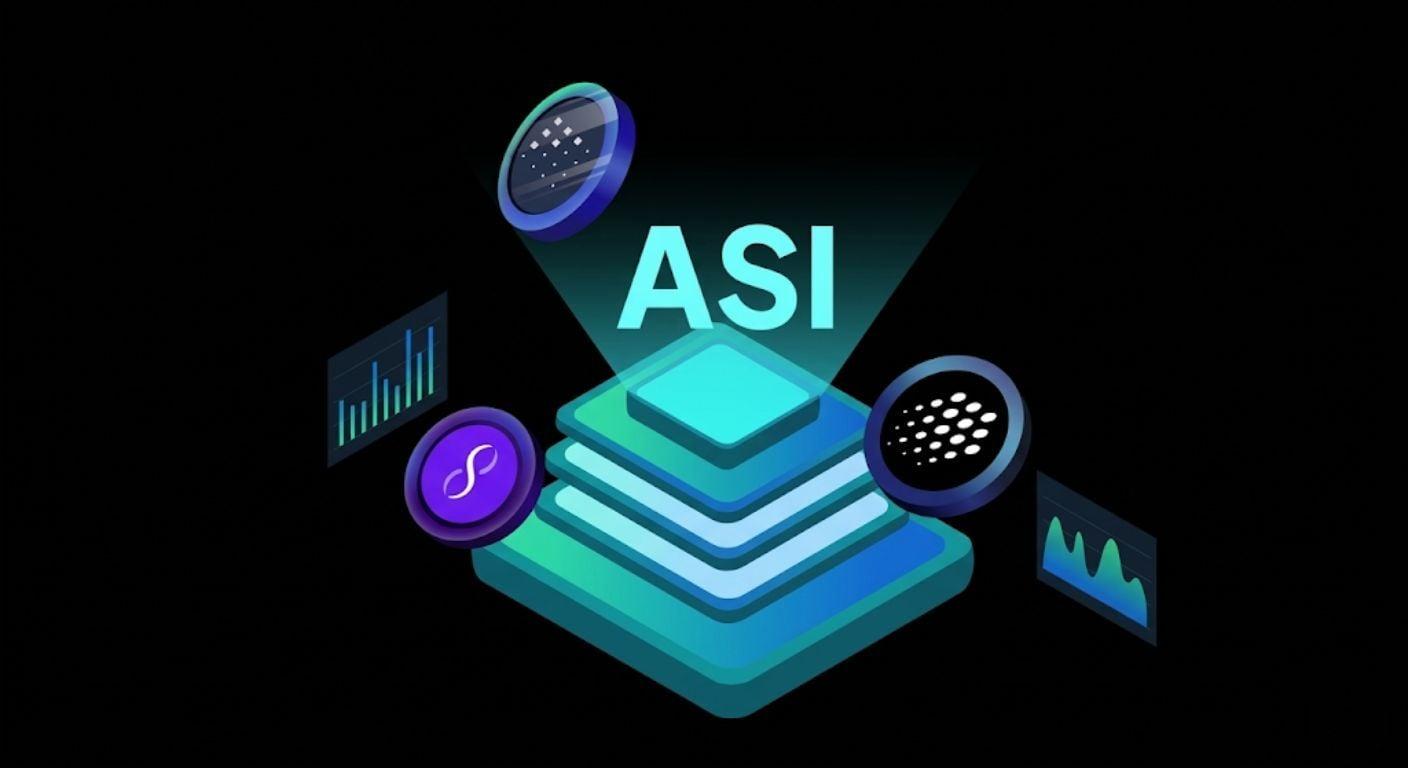
The Artificial Superintelligence Alliance is moving forward with one of the most significant token consolidation events in blockchain history. The alliance, formed through the strategic merger of Fetch.ai, SingularityNET, and Ocean Protocol in 2024, is unifying its three native tokens, FET, AGIX, and OCEAN, into a single asset called the ASI token.
This consolidation represents more than a technical rebrand. It is a structural realignment of three independent AI ecosystems into one unified economic and governance layer, signaling a bold new direction for decentralized artificial intelligence infrastructure.
Each of the three projects brought distinct capabilities to the table. Fetch.ai contributed autonomous AI agent technology and a decentralized machine learning network. SingularityNET brought an open marketplace for AI services, and Ocean Protocol added a framework for decentralized data sharing and monetization.
Together, the Artificial Superintelligence Alliance aims to create a permissionless infrastructure for AI services, one that no single corporation or government controls. The 2024 merger formalized this vision, and the token consolidation is the next logical step in making that vision economically coherent.
The token merger follows a fixed conversion ratio, resulting in a unified ASI token supply of approximately 2.63 billion tokens. Holders of FET, AGIX, and OCEAN will convert their assets into ASI at predetermined rates, tying the economic performance of all three ecosystems into a single, larger base.
No comments yet. Be the first!
The final merger date is confirmed as a roadmap item for 2026 to 2027, though the specific date is yet to be announced. This timeline gives token holders and ecosystem participants adequate runway to prepare for the transition.
The ASI token is not merely a rebranding exercise. It will serve as the core utility and governance asset across the entire Artificial Superintelligence Alliance ecosystem. Key functionalities include the following.
Network Governance: ASI token holders will participate directly in protocol upgrade decisions, giving the community a meaningful voice in how the network evolves.
Transaction Fees: Users will pay in ASI for computational resources and AI agent services across the decentralized network.
Staking and Validation: Validators will stake ASI to secure the network and earn staking rewards, creating an incentive structure aligned with long-term ecosystem health.
Currently, the FET token serves as the interim utility asset across the ecosystem while the full ASI transition is completed.
The consolidation is also designed to address practical deployment challenges that have historically fragmented decentralized AI efforts. By unifying governance under a single token, the alliance reduces coordination friction between the three communities and creates a more coherent framework for attracting developers, enterprises, and institutional participants.
A unified governance structure also makes it easier to implement ecosystem-wide upgrades, security responses, and partnership agreements without requiring separate votes across three independent token communities.
The ASI token merger stands as one of the clearest examples of blockchain AI projects moving beyond competition toward collaboration. At a time when centralized AI giants are consolidating power, the Artificial Superintelligence Alliance is betting that decentralized, community-governed AI infrastructure can offer a credible alternative.
Whether the alliance can deliver on this vision will depend heavily on execution over the coming 12 to 18 months. For now, the token consolidation sends a clear signal that the era of fragmented blockchainAI ecosystems may be giving way to something far more unified and ambitious.