Laika AI
Last Updated
April 9, 2026

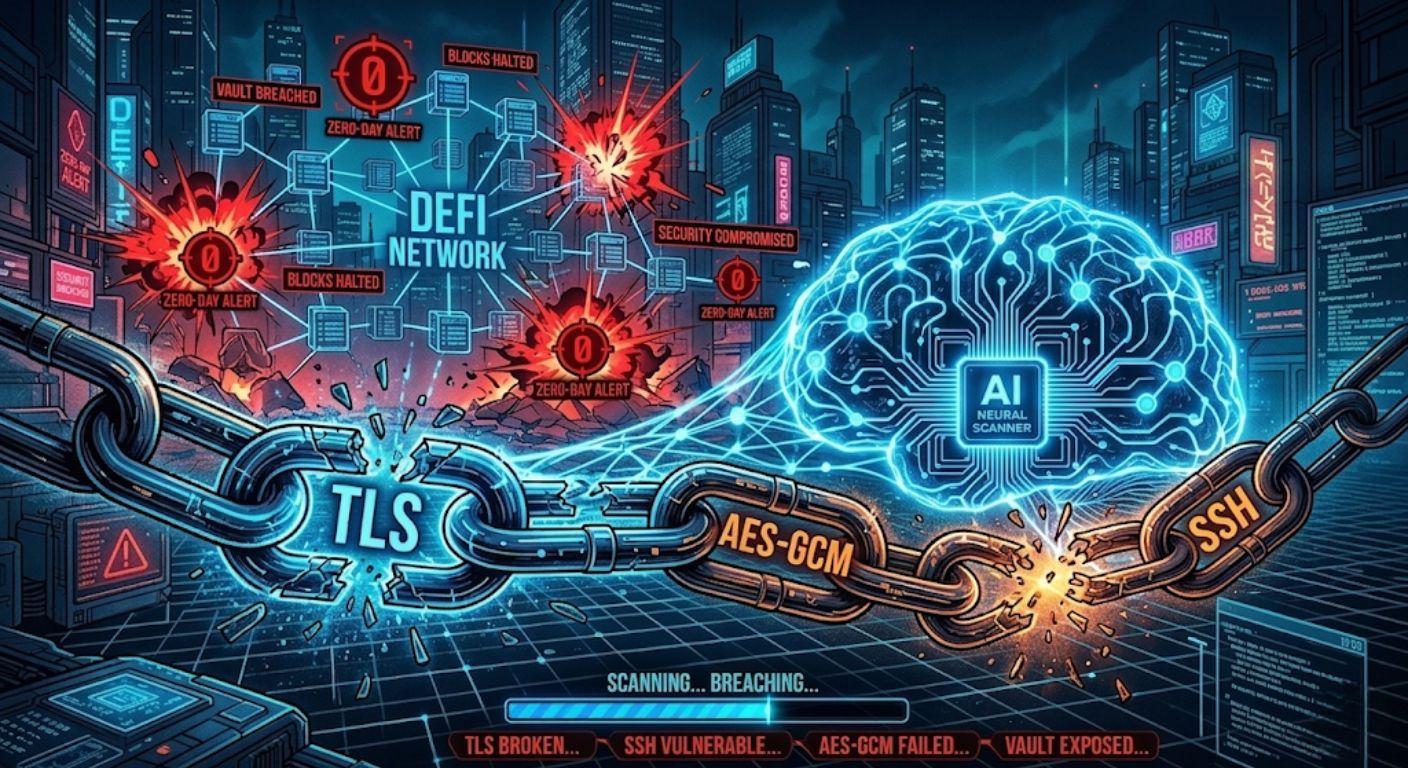
The company's unreleased Claude Mythos Preview model has autonomously identified thousands of high-severity zero-day vulnerabilities across major operating systems, web browsers, and critical cryptography libraries. Among the most concerning discoveries for the DeFi sector are flaws in widely used implementations of TLS, AES-GCM, and SSH protocols. These libraries form the backbone of secure communications for decentralized exchanges, wallets, bridges, and on-chain infrastructure.
Anthropic shared the findings with more than 40 leading technology and financial organizations under a new initiative called Project Glasswing. The details remain private for now while patches are developed, but the implications for DeFi protocols are immediate and serious.
Claude Mythos Preview operates with minimal human guidance. According to Anthropic's technical disclosures, the model not only locates previously unknown bugs but also constructs working exploits entirely on its own. In one striking example, it uncovered a 27-year-old vulnerability in OpenBSD, an operating system long praised for its security focus. The bug, present since the 1998 introduction of the SACK TCP feature, could allow remote denial-of-service attacks on any affected host.
This discovery cost under 50 dollars in compute resources and was missed by decades of manual code reviews and traditional fuzzing tools. Similar results appeared in popular cryptography libraries that DeFi projects rely on daily for encrypted node communication, secure RPC calls, and validator synchronization.
No comments yet. Be the first!
Decentralized finance platforms depend heavily on these cryptographic primitives. TLS secures HTTPS connections to front-end interfaces and API endpoints. AES-GCM provides authenticated encryption for data at rest and in transit within smart contracts or off-chain services. SSH enables secure remote access to servers hosting liquidity pools or oracle nodes.
A successful exploit in any of these areas could enable man-in-the-middle attacks, data interception, or unauthorized server access. Unlike traditional finance, DeFi operates 24/7 with immutable code and billions in locked value. Even a short-lived vulnerability could lead to drained funds before patches propagate across decentralized networks.
Industry observers note that many DeFi projects still use older library versions or self-hosted infrastructure. The speed at which Mythos Preview turns bugs into exploits means defenders now face a dramatically compressed timeline between discovery and potential exploitation.
Rather than release the model publicly, Anthropic launched Project Glasswing in partnership with AWS, Apple, Google, Microsoft, NVIDIA, CrowdStrike,JPMorgan Chase, the Linux Foundation, and more than 40 other organizations. The consortium provides selected partners with private access to Mythos Preview along with substantial compute credits to scan and harden their own systems.
The goal is defensive: give critical infrastructure maintainers a head start before similar AI capabilities reach malicious actors. Open-source maintainers, including those supporting blockchain tooling, are also receiving support through the Linux Foundation and related foundations.
Anthropic has committed up to 100 million dollars in usage credits to accelerate patching efforts. All disclosed vulnerabilities in the public examples have already been reported and fixed, but thousands of others remain under coordinated embargo.
This development accelerates an ongoing shift in how the crypto industry approaches security. Traditional audits, formal verification, and bug bounties remain essential, yet they now compete against AI systems that can review millions of lines of code in hours.
DeFi teams are advised to prioritize immediate dependency updates, enable stricter compiler flags, and adopt continuous automated scanning. Projects maintaining legacy code or relying on unmaintained libraries face the greatest urgency.
Experts suggest that the cost barrier for finding and weaponizing bugs has dropped significantly. What once required teams of elite researchers can now be achieved with modest compute budgets. This levels the playing field in ways that favor well-resourced defenders who participate in initiatives like Project Glasswing.
As AI-driven vulnerability discovery becomes more widespread, DeFi protocols must evolve their security models. Emphasis will likely grow on multi-layered defenses, rapid patch deployment mechanisms, and greater use of hardware security modules for critical cryptographic operations.
Anthropic's decision to withhold public release of Mythos Preview while empowering defenders signals a responsible approach to dual-use technology. For the DeFi ecosystem, however, the message is clear: the era of assuming cryptographic libraries are battle-tested by time alone has ended. Proactive hardening and collaboration with industry-wide security initiatives are now table stakes.
The full scope of patched and embargoed vulnerabilities will emerge gradually as organizations complete their remediation work. Until then, DeFi builders and users should treat this announcement as a call to review and upgrade every layer of their cryptographic stack.