South Korea Circuit Breakers Fire as Middle East War Sends Markets Into Freefall
 Top 100
Last Updated
March 4, 2026
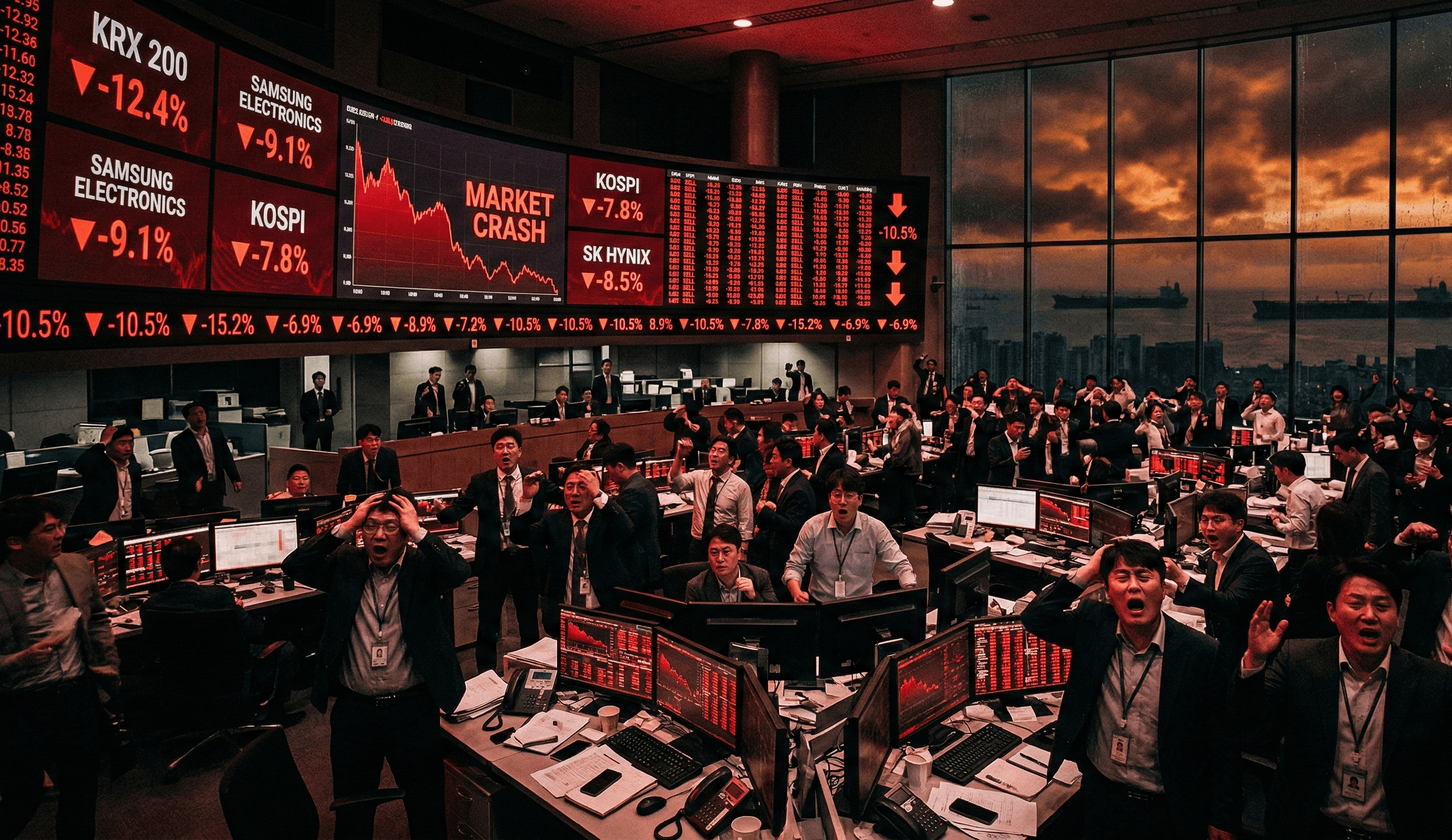
South Korea's Kospi and Kosdaq each plunged more than 10%, triggering automatic trading halts as the Middle East conflict drove a historic global exodus from risk assets.
South Korea's stock exchange was forced to suspend trading on Wednesday after escalating conflict in the Middle East sparked one of the sharpest single-session selloffs the country has seen since August 2024.
Both the Kospi and Kosdaq indexes fell more than 10% during morning trading in Seoul, automatically triggering circuit breakers' emergency mechanisms designed to pause trading when markets move too fast for orderly price discovery.
The rout wasn't isolated to South Korea. Japan's Nikkei and Topix fell nearly 4%, Hong Kong's Hang Seng dropped 3%, and China's Shanghai Composite shed 1.3%, according to Google Finance. Thailand's stock exchange, another major Middle East oil importer, slid 7.8% on the day.
Oil dependency drives the panic
Analysts were quick to point out South Korea's acute vulnerability to Middle East instability. "South Korea imports 94% of its oil, with 75% coming from the Middle East," noted Bianco Research CEO Jim Bianco. "So it is easy to see why its investors are panicking."
Comments (0)
No comments yet. Be the first!
 Top Stories